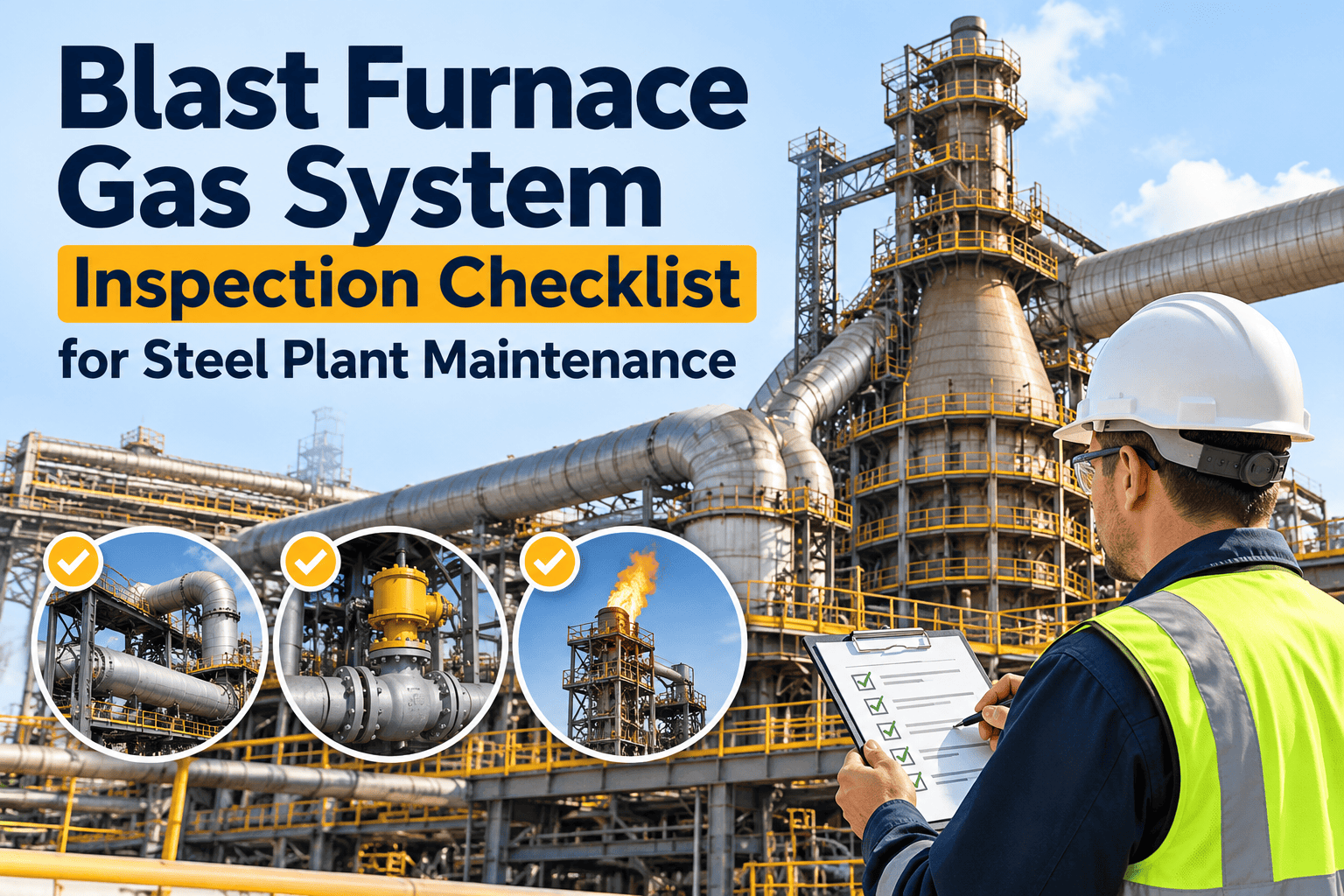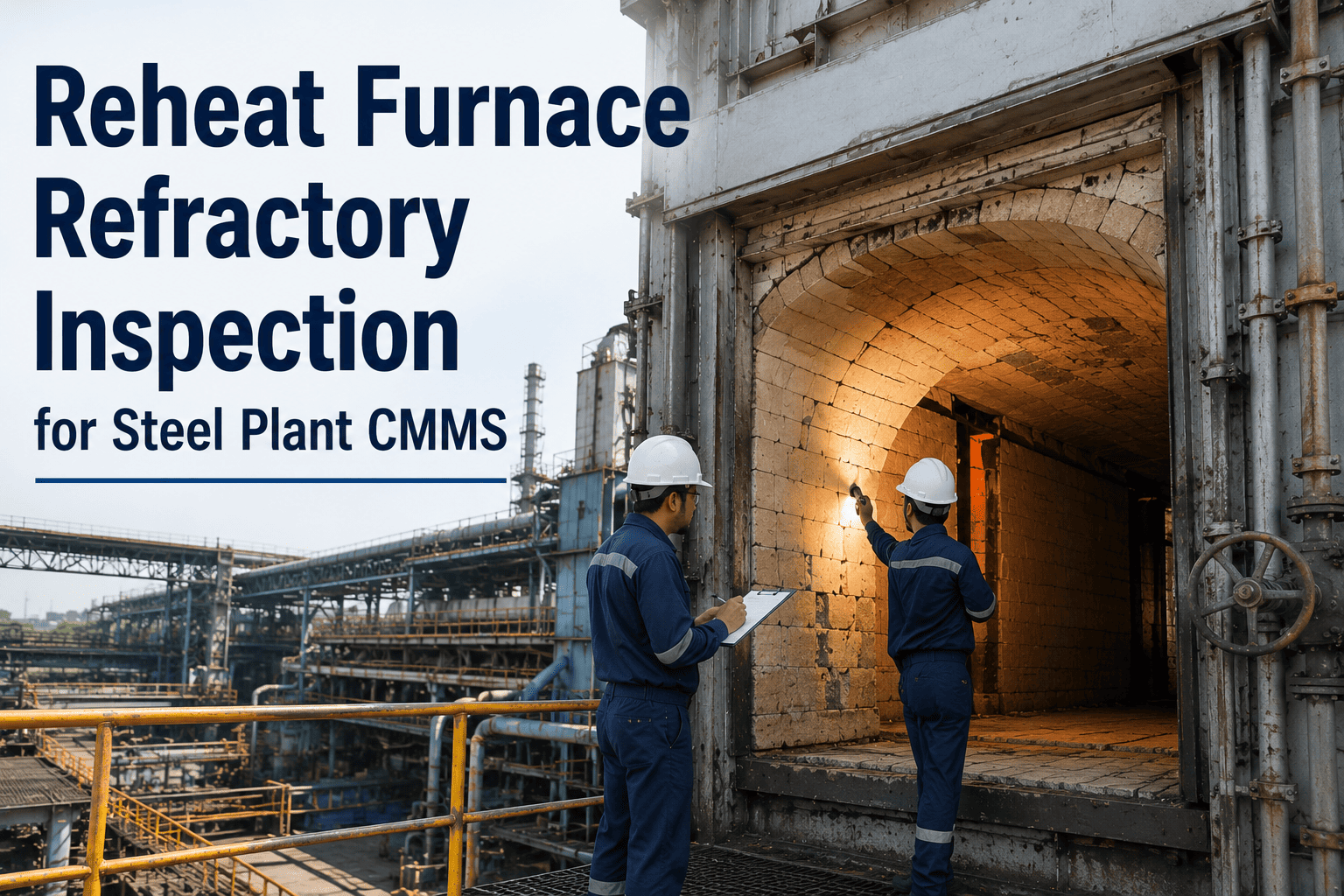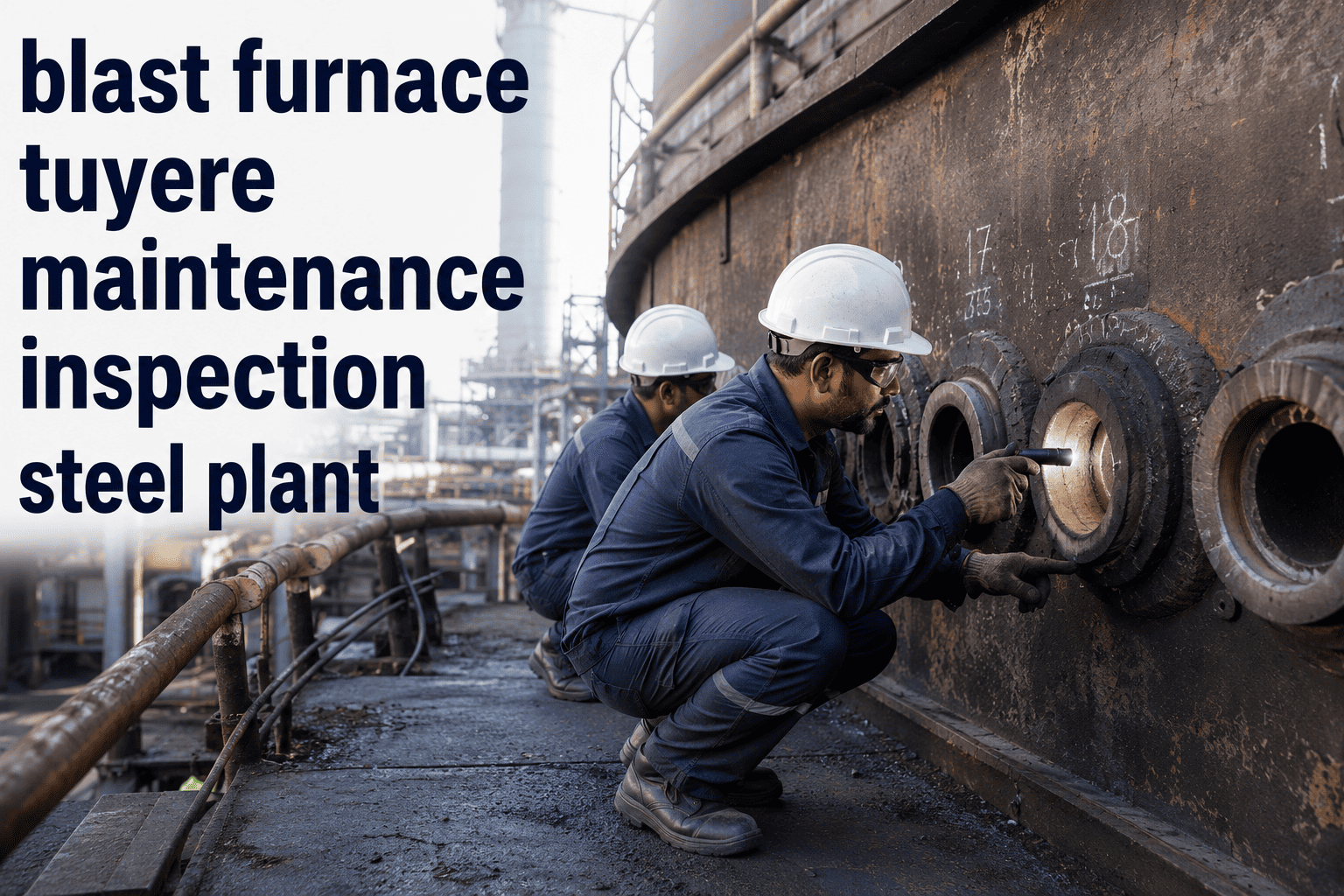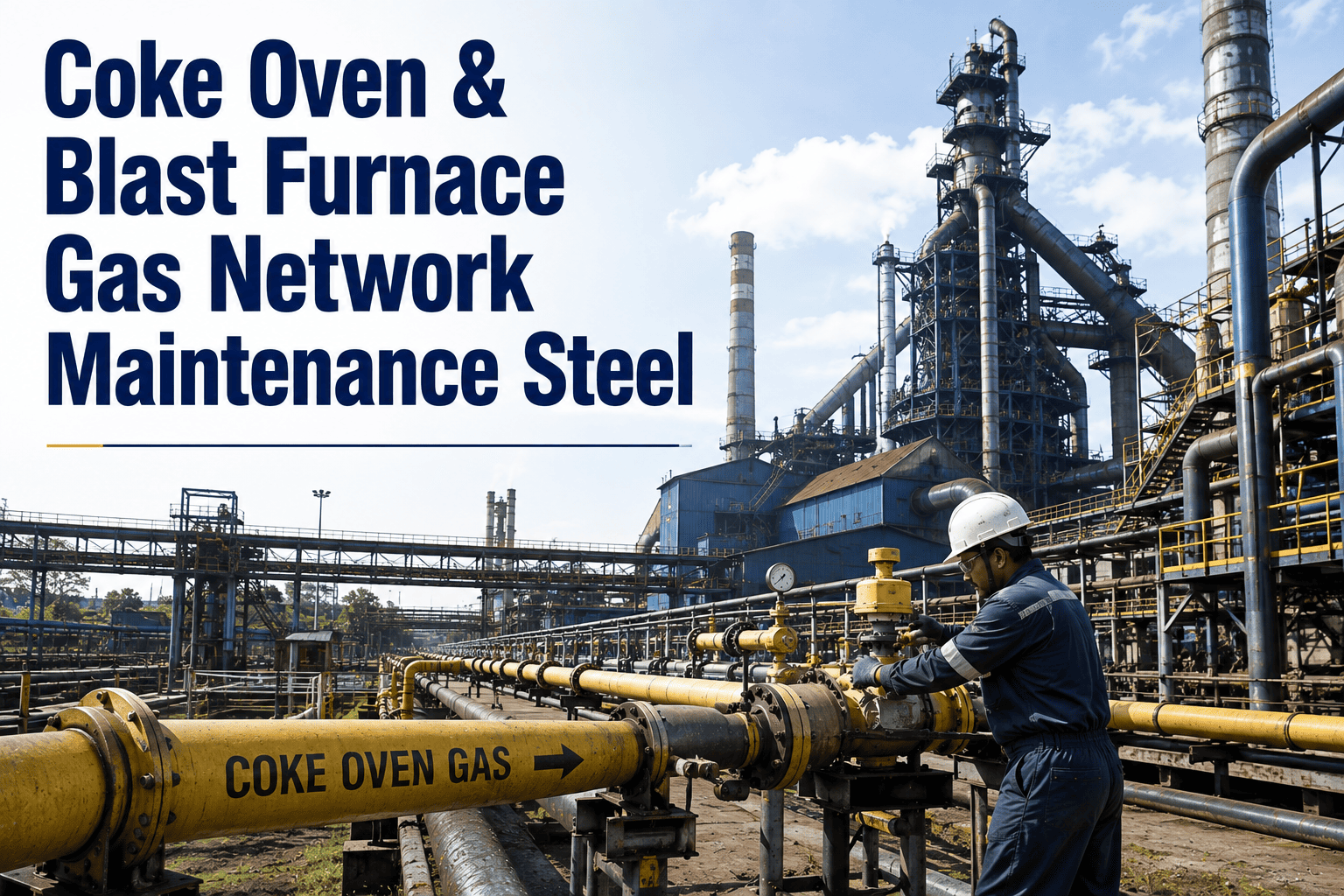
Every integrated steel plant runs on two invisible fuel lines that most people never think about: coke oven gas from the by-product plant and blast furnace gas recovered from the ironmaking process. Together these two gases can cover 30–40% of a plant's total energy demand, firing reheat furnaces, boilers, hot blast stoves, and the power house. A single missed inspection on a gas holder seal, a drifting ESP rapper, or an untested safety interlock can trip an entire mill within minutes and leave operators scrambling for backup fuel at a steep premium. This guide walks maintenance and safety leaders through the inspection routines, safety instrumented system checks, and CMMS workflows that keep coke oven gas and blast furnace gas networks running safely, and you can start logging your own gas network assets with a Start Free Trial of Oxmaint.
One bad valve, one skipped proof test — that's all it takes to shut your gas network down
Coke oven gas and blast furnace gas keep the internal energy economy of a steel plant alive. A structured PM program covering gasholders, gas cleaning equipment, mixing stations, and safety instrumented systems is what stands between routine operation and a costly, hazardous shutdown.
How gas actually moves through your plant
Two separate gas streams are cleaned, cooled, buffered, and blended before they ever reach a burner tip. Understanding the path is the first step to maintaining it correctly.
Coal carbonized at roughly 1,245°C flue temperature over a 28-hour coking cycle, releasing raw coke oven gas rich in hydrogen and methane.
Tar, ammonia, naphthalene, and light oil are stripped out, leaving clean, high-calorific coke oven gas ready for the network.
Gas is buffered and pressure-boosted before it enters the plant-wide distribution main.
Top gas at 3–5 bar carries dust, moisture, and residual CO out of the furnace toward the cleaning train.
Venturi scrubbing or electrostatic precipitation removes dust while a top-recovery turbine harvests residual gas pressure as electricity.
Cleaned blast furnace gas is buffered for volume swings before being released into the network.
COG and BFG (and often LDG) are blended to a stable calorific value before distribution to reheat furnaces, boilers, hot blast stoves, and the power house.
Six failure points unique to plant gas networks
Coke oven gas and blast furnace gas networks don't fail the way ordinary process piping does. These are the six patterns that show up most often in incident reviews.
When rapper systems miss their schedule, carbonaceous dust builds up on electrode plates and can smoulder, especially during gas composition swings with higher hydrocarbon content.
Blocked condensate traps in low-lying sections of the distribution main let water accumulate, producing water-hammer events that stress pipe supports and joints.
Underground gate valves installed decades ago are still in service on many mains. Seat wear and corrosion go unnoticed without a documented test-and-inspect cycle.
Safety instrumented functions protecting gasholders and mixing stations lose their designed risk reduction if proof tests are deferred past their scheduled interval.
Piston-type dry holders and water-seal wet holders both depend on seal integrity. A slow leak here shows up first as an unexplained pressure trend, not an alarm.
Fixed CO and H2 detectors that run past their calibration date create invisible risk zones around batteries, gasholders, and the mixing station.
The gas network maintenance timeline
A tiered schedule keeps routine checks separate from deeper diagnostics, so nothing gets skipped when the plant is busy.
Bump test all portable CO and H2 monitors before shift start, verify flare pilot status, and walk the mixing station for audible leaks or odor.
Function-test bleeder valves, verify wet-holder water seal level, and inspect condensate drain traps along the main distribution run.
Calibrate all fixed CO and H2 detectors, verify ESP rapper timer sequences, and inspect gasholder piston travel or dry-seal lubrication.
Pressure-test isolation valve tightness, inspect underground main sections for corrosion at accessible points, and function-test pressure relief valves.
Inspect ESP electrode plates for coating condition and discoloration, service scrubber nozzles, and check mixing station blend-ratio controllers.
Proof-test every safety instrumented function per its assigned safety integrity level, document results, and escalate any component held out of service beyond twice its scheduled frequency.
Composition and alarm thresholds at a glance
Coke oven gas and blast furnace gas behave very differently in the network, which is exactly why their monitoring thresholds differ.
| Parameter | Coke Oven Gas | Blast Furnace Gas | Monitoring Action |
|---|---|---|---|
| Hydrogen content | 40–60% by weight | 1–5% by volume | Trend for network leak signature |
| Carbon monoxide | 3–6% by weight | 20–28% by volume | Alarm at 35 ppm ambient, evacuate at 100 ppm |
| Calorific value | 4,200–4,500 kcal/Nm3 | 800–900 kcal/Nm3 | Blend at mixing station for stable output |
| Network pressure | 150–200 mmWC typical | 0.3–0.5 bar typical | Quarterly relief valve function test |
| Lower explosive limit | Approx. 4.4% | Approx. 35–40% | Continuous fixed detection near sources |
Stop tracking gas network PM on paper and spreadsheets
Oxmaint gives steel plants one asset registry for gasholders, ESPs, mixing stations, and SIS proof tests, with automatic reminders before anything falls overdue.
What a gas network trip actually costs
Gas network downtime rarely stops at one unit. When the mixing station trips, every downstream furnace loses its fuel supply at once.
Gas network maintenance — straight answers
Isolation valves on coke oven gas mains should be function-tested and visually inspected quarterly at minimum, with a full tightness test annually. Older cast valves warrant closer inspection intervals. Track every result in a CMMS so overdue tests are flagged automatically — see how in a Book a Demo session.
ESP fires stem from carbonaceous dust accumulating on electrode plates when rappers fail to dislodge it on schedule, which can smoulder and ignite. Daily rapper verification and hopper-level monitoring are the core preventive steps.
Proof-test intervals depend on the assigned safety integrity level, typically ranging from annually to every three years. Components held out of service beyond twice their scheduled frequency should require management authorization before returning to service.
It blends high-calorific coke oven gas with low-calorific blast furnace gas, and often basic oxygen furnace gas, to deliver a stable calorific value to reheat furnaces and boilers. Drift in blend-ratio controllers shows up as uneven furnace temperatures before it shows up as an alarm.
Yes, primarily by enforcing PM compliance and documenting SIS proof tests the way major hazard facility regulations expect. Plants moving off paper-based tracking typically see PM completion rise sharply within the first year. Start your own asset registry with a Start Free Trial of Oxmaint.
Bring your coke oven gas and blast furnace gas network onto one system
Track gasholders, ESPs, mixing stations, and SIS proof tests from one asset registry, with reminders before anything falls overdue.
Free 14-day trial · No credit card