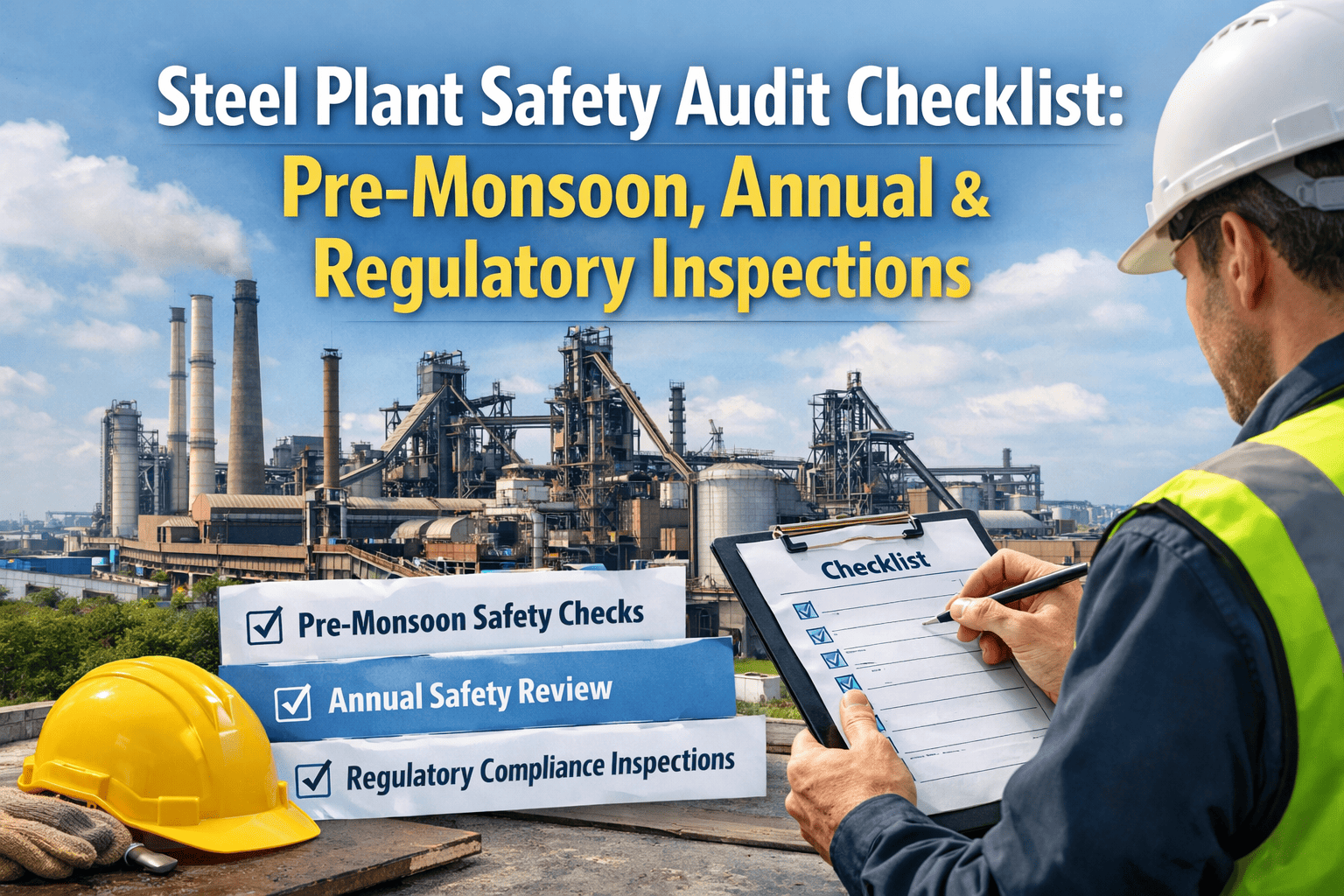
OSHA 1910.179 Crane Inspection Compliance for Steel Mills
By Alex Jordan on June 12, 2026
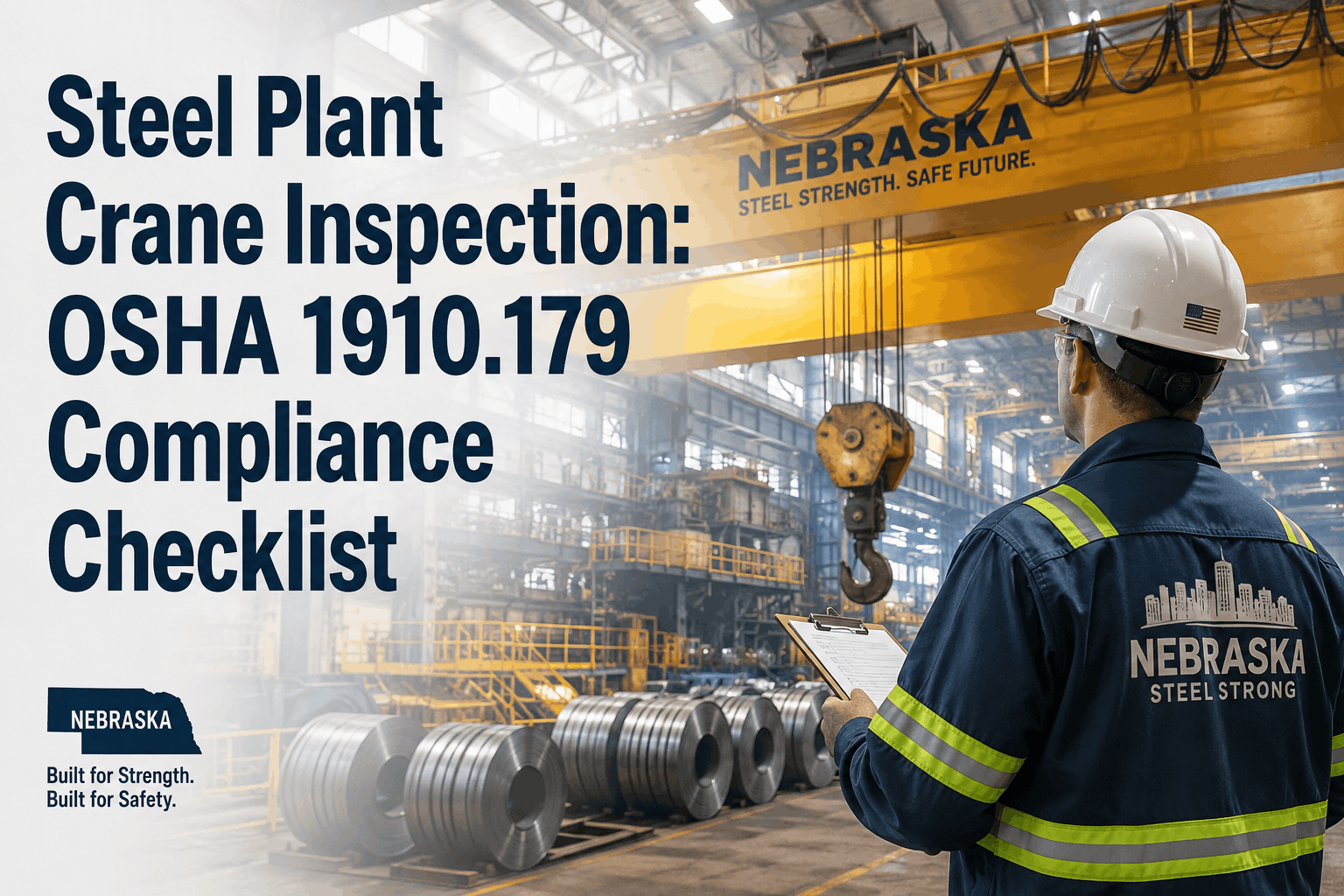
A single overhead crane failure in a steel mill can drop a 50-ton ladle of molten steel, causing catastrophic injury, facility destruction, and OSHA fines exceeding $150,000 — not to mention weeks of production downtime. Yet 40% of steel mill crane violations cited by OSHA under 1910.179 involve frequent and periodic inspections that were either never performed or never documented. The standard is unambiguous: daily, monthly, and annual inspections are required for every overhead crane, hoist, and trolley — with specific thresholds for wire rope wear, hook deformation, brake function, and electrical component condition. OxMaint's crane inspection module automates every OSHA-mandated inspection frequency, generates checklists for each crane component, and stores inspection records with timestamped technician sign-offs — creating the audit trail that proves compliance and prevents citations.
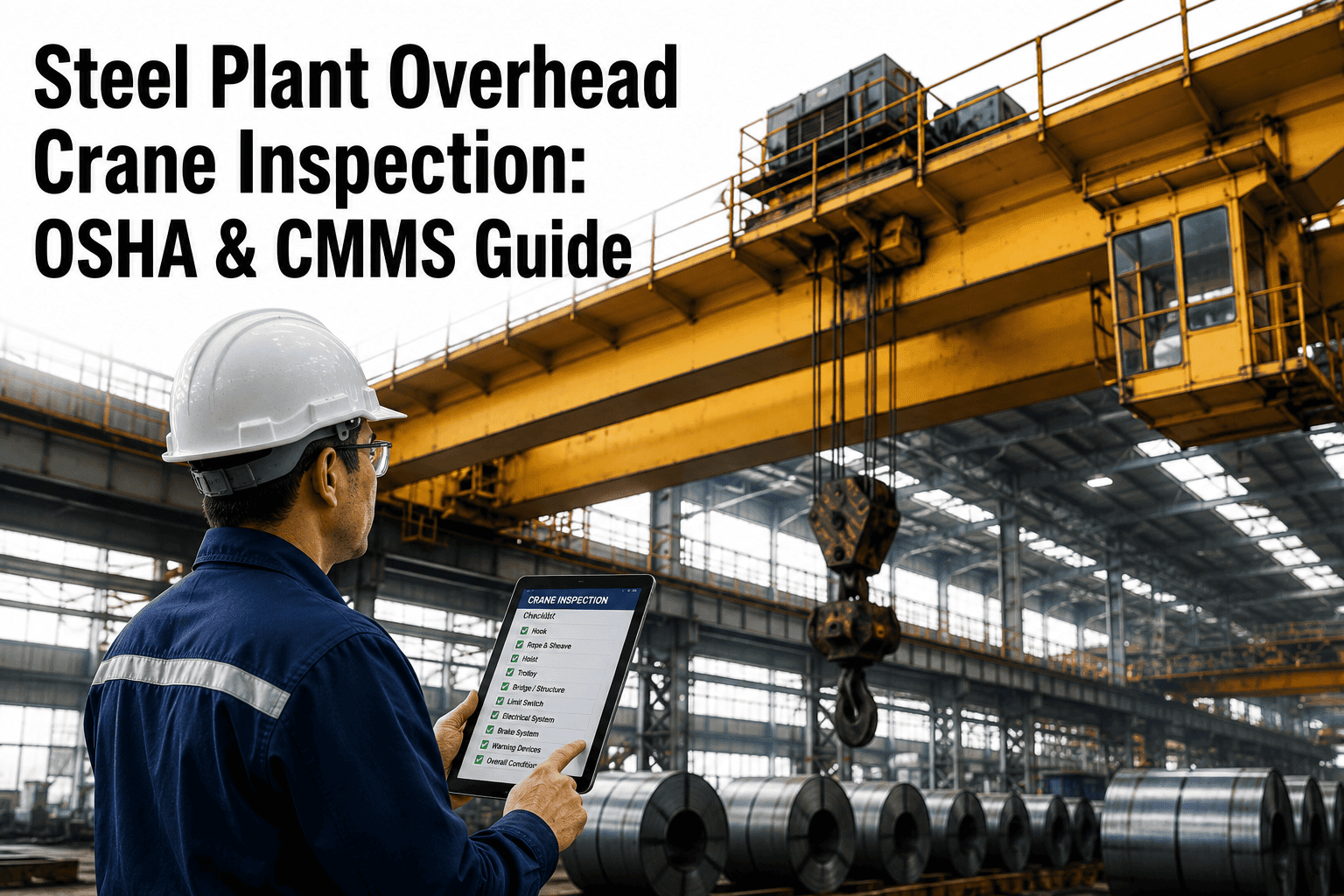
OSHA 1910.179 requires three distinct types of crane inspections, each with different scope, frequency, and documentation requirements. Steel mills that conflate these inspection types (e.g., treating monthly inspections as annual) create compliance gaps that OSHA citations exploit. OxMaint's inspection scheduling engine automatically generates work orders at each required frequency — daily, monthly, and annual — assigned to qualified inspectors with component-specific checklists pre-populated per crane.
OSHA 1910.179 — Crane Inspection Types and Requirements
Daily · Monthly · Annual — each with distinct scope and documentation
Daily
Operator-performed · Start of shift · Visual and functional check
Before each shift: check limit switches, hoist brake, trolley travel, bridge travel, wire rope and hook condition, warning devices, and emergency stops. Documented on operator inspection log. Any deficiency requires immediate reporting and crane taken out of service.
Monthly
Designated competent person · Written record required
Monthly: inspect hoist chains, wire rope end connections, hooks (deformation, cracks, wear), trolley and bridge bumpers, rail clamps, electrical apparatus, and brake system function. Document findings in writing with inspector signature and date.
Annual
Competent person · Comprehensive · Load test as required
Annual (or more frequent for severe service): complete disassembly inspection of critical components, NDT of hooks and load-bearing welds, load test to 110–125% of rated capacity, verification of limit switch and braking system performance. Written certification required.
Daily Inspection — Operator-Performed Requirements Under 1910.179
The daily inspection is the first line of defense against crane failure — and the most frequently cited inspection deficiency in steel mill OSHA inspections. Operators must perform checks before each shift, and deficiencies must be documented and corrected before crane operation. OxMaint's mobile inspection app provides operators with crane-specific checklists, captures signatures and timestamps, and automatically flags deficiencies for supervisory review — eliminating paper logs that get lost or falsified.
Limit Switches
Daily
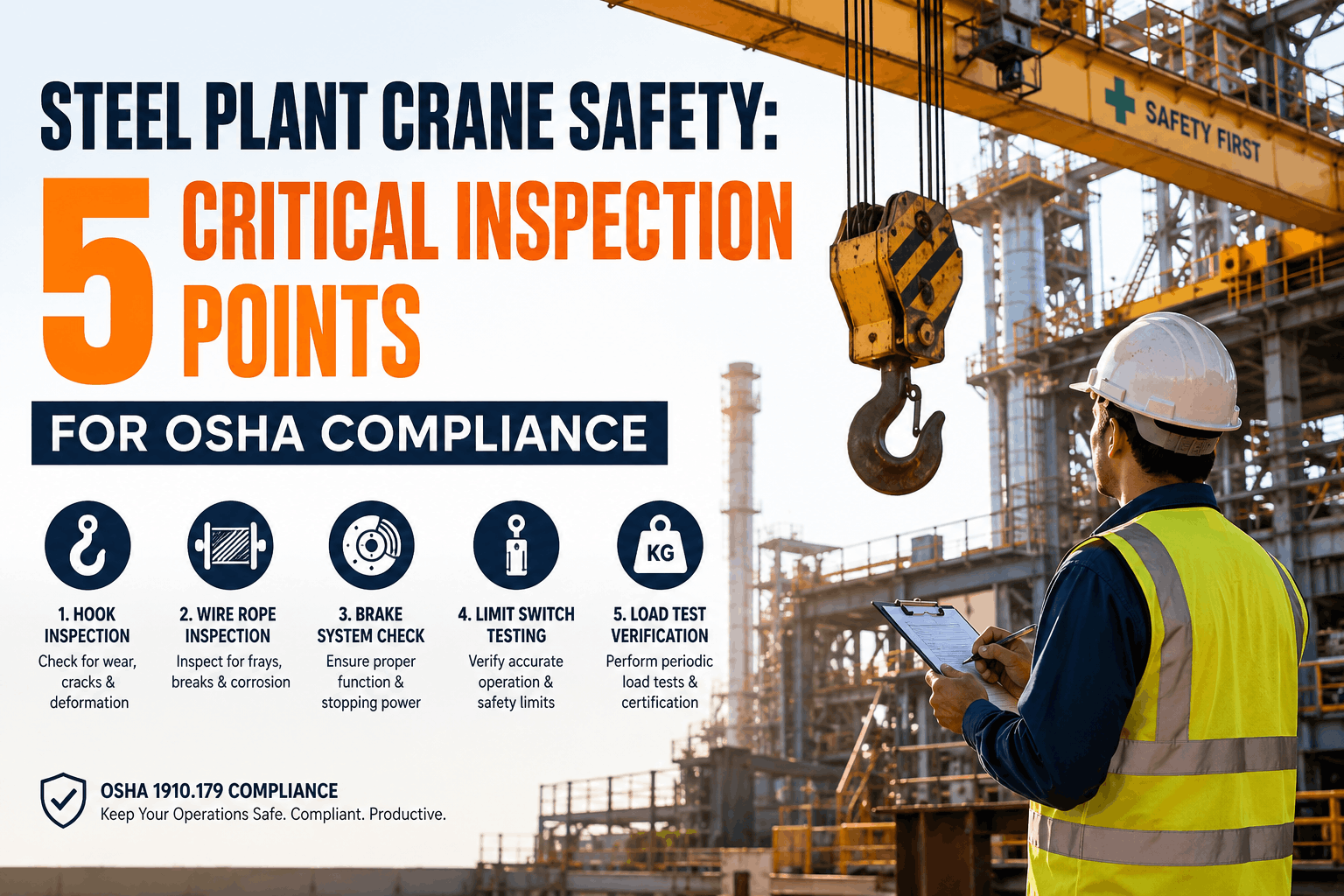
Test all hoist limit switches (upper/lower). Test trolley and bridge travel limits. Failure to stop = out of service until repaired.
Hoist Brake
Daily
Test hoist brake with rated load. Brake must hold load without drift. Listen for unusual noise during engagement.
Wire Rope
Daily
Visual check for broken wires, kinking, crushing, heat damage, or corrosion. One broken wire in load-bearing strand = out of service.
Hook & Latches
Daily
Check hook for deformation, cracks, twist, or throat opening increase >15%. Verify safety latch spring action and closure.
Electrical
Daily
Check pendant cord damage, push button function, emergency stop operation, and warning devices (horn/light).
The monthly inspection must be performed by a designated competent person (not the operator) and documented in writing. OSHA 1910.179 specifies replacement criteria for wire rope, hooks, sheaves, drums, and brakes. Steel mills that exceed these thresholds without replacement are operating in violation — regardless of whether the crane still "works." OxMaint's monthly inspection checklists include all replacement thresholds, automatically flagging out-of-tolerance findings and generating corrective work orders.
Component
Replacement Threshold (1910.179)
Inspection Method
Documentation Required
Wire Rope
6 broken wires in one lay · 3 in one strand · 1 at end connection
Visual + cotton glove run (feels broken wires) · Micrometer for diameter loss
Rope log: date installed, inspections, reason for replacement
Measure lining thickness · Test holding capacity with rated load
Brake inspection record with adjustment and lining measurements
Limit Switches
Failed to stop at limit · Slow response · Sticking mechanism
Operational test in both directions · Check switch actuator
Limit switch test log with dates and pass/fail
Annual Inspection — Load Testing and NDT Requirements
Annual Inspection — Load Testing and NDT Requirements
The annual inspection is the most comprehensive requirement under 1910.179. It must include a full disassembly inspection of critical components (or equivalent NDT), a load test to 110–125% of rated capacity, and verification of all safety devices. Steel mills with ladle cranes or cranes in severe service may require more frequent annual inspections (every 6 months). OxMaint's annual inspection module tracks load test dates, NDT schedules, and certification expirations — ensuring no crane exceeds 12 months without compliance.
Annual Inspection — Critical Requirements Under 1910.179
Load test · NDT · Disassembly · Certification
Load Test
110–125% of rated capacity · Test weight certified · Written report
Test weights must be certified. Hoist rated load to test weight, hold, raise/lower full travel. Brake holding test. No deformation or functional defects permitted. Written report with test weight certificate required.
NDT Requirements
Hook NDT (dye penetrant or mag particle) · Load-bearing welds
Hooks must undergo NDT at least annually (some steel mills require semi-annual for ladle hooks). Load-bearing welds on trolley frames and crane bridge may require NDT per manufacturer or prior findings. Certified NDT technician required.
Disassembly
Critical components · Equivalent NDT may substitute
Annual disassembly of hoist, trolley, and bridge components for internal inspection — or equivalent NDT (e.g., ultrasonic of shafts, magnetic particle of gears) performed by qualified personnel.
Certification
Written report · Inspector signature · Retention required
Annual inspection report must include: inspector name and qualifications, date, findings, corrective actions, load test results, and NDT results. Signed by competent person. Retain for minimum 12 months (longer recommended).
Ladle Crane Specific Requirements — Additional Stringency
Ladle cranes handling molten metal face additional scrutiny under OSHA's general duty clause and industry standards (AISE No. 6 and 7). Many steel mills require semi-annual load testing, monthly NDT of ladle hooks, and redundant braking systems beyond 1910.179 minimums. OxMaint's ladle crane module tracks enhanced inspection frequencies, NDT schedules, and critical spare parts — configurable per crane based on service severity and mill-specific requirements.
Ladle Hook NDT
Semi-Annual
Most steel mills require dye penetrant or mag particle inspection of ladle hooks every 6 months (vs. annual for general hooks). Crack detection critical — ladle hook failure is catastrophic.
Redundant Braking
Required
Ladle cranes require two independent braking systems (primary and secondary) on hoist. Monthly brake test includes both systems — documented separately.
Load Test Frequency
Semi-Annual
Many steel mills ladle cranes require load testing every 6 months (vs. annual for general cranes) due to severe service and safety criticality. Check your mill's specific requirements.
Documentation and Recordkeeping — The Most Common Citation
OSHA citations under 1910.179 are as often for missing documentation as for actual equipment deficiencies. The standard requires written records of all monthly and annual inspections, load tests, and repairs. Steel mills that perform inspections but don't document them are non-compliant — and OSHA will cite accordingly. OxMaint's inspection documentation module creates timestamped, technician-signed records for every inspection — daily, monthly, and annual — stored with audit trails and accessible for OSHA review in under 60 seconds.
OSHA-Required Crane Inspection Records — Retention and Content
Each record must include: inspector name and qualification, date, findings, corrective actions, and signature.
No rope log, missing removal documentation, no diameter measurements
"
Our steel mill received an OSHA citation for missing monthly crane inspection records — even though we had performed the inspections. The inspector couldn't find the paper logs because they were filed in a different office. We implemented OxMaint's digital inspection module and now every monthly inspection is timestamped, signed, and stored in the cloud. Our next OSHA inspection took 20 minutes for the crane portion — the inspector pulled up the logs on our tablet, reviewed three months of records, and moved on. No citations.
Who can perform monthly and annual crane inspections under 1910.179?
Monthly and annual inspections must be performed by a "designated competent person" — someone with knowledge of crane safety standards, inspection procedures, and the specific crane type being inspected. This person may be an in-house engineer or a third-party inspector, but must be qualified. Daily inspections are performed by the crane operator. OxMaint tracks inspector qualifications and certifications to ensure only authorized personnel complete inspections.
What triggers an out-of-service crane under 1910.179?
Cranes must be taken out of service immediately when: wire rope has 6 broken wires in one lay or 3 in one strand, hook throat opening exceeds 15% of original, any visible crack in hook or load-bearing weld, brake fails to hold rated load, limit switch fails to stop motion, or any condition that could affect safe operation. The crane cannot return to service until the deficiency is corrected and verified.
How often must cranes be load tested under 1910.179?
OSHA 1910.179 requires a load test at 110–125% of rated capacity at the time of installation, after major repairs or modifications, and at annual inspection intervals. Cranes in severe service (including most steel mill cranes) may require more frequent load testing — consult manufacturer and your insurance carrier for specific requirements. All load tests must be documented with test weight certification.
What NDT methods are required for crane hooks?
1910.179 does not specify a specific NDT method, but industry practice is dye penetrant (PT) or magnetic particle (MT) inspection. For ladle hooks, many steel mills require both. NDT must be performed by a certified technician (ASNT Level II or equivalent). Results must be documented and retained with the inspection record. Any crack or linear indication is cause for immediate hook replacement.
How does a CMMS help with OSHA crane inspection compliance?
A CMMS like OxMaint automates the three most common compliance gaps: (1) inspection scheduling — daily, monthly, and annual work orders generated automatically, no missed due dates, (2) documentation — timestamped, signed inspection records stored with audit trails, (3) deficiency tracking — findings automatically generate corrective work orders with assigned due dates. Steel mills using CMMS for crane compliance report 90% fewer inspection-related citations during OSHA audits.
Automate OSHA Crane Compliance — Before the Inspector Arrives.
OxMaint schedules every daily, monthly, and annual crane inspection, provides component-specific checklists, stores signed records, and tracks deficiencies to resolution — all in one platform. Free to start.



.png)