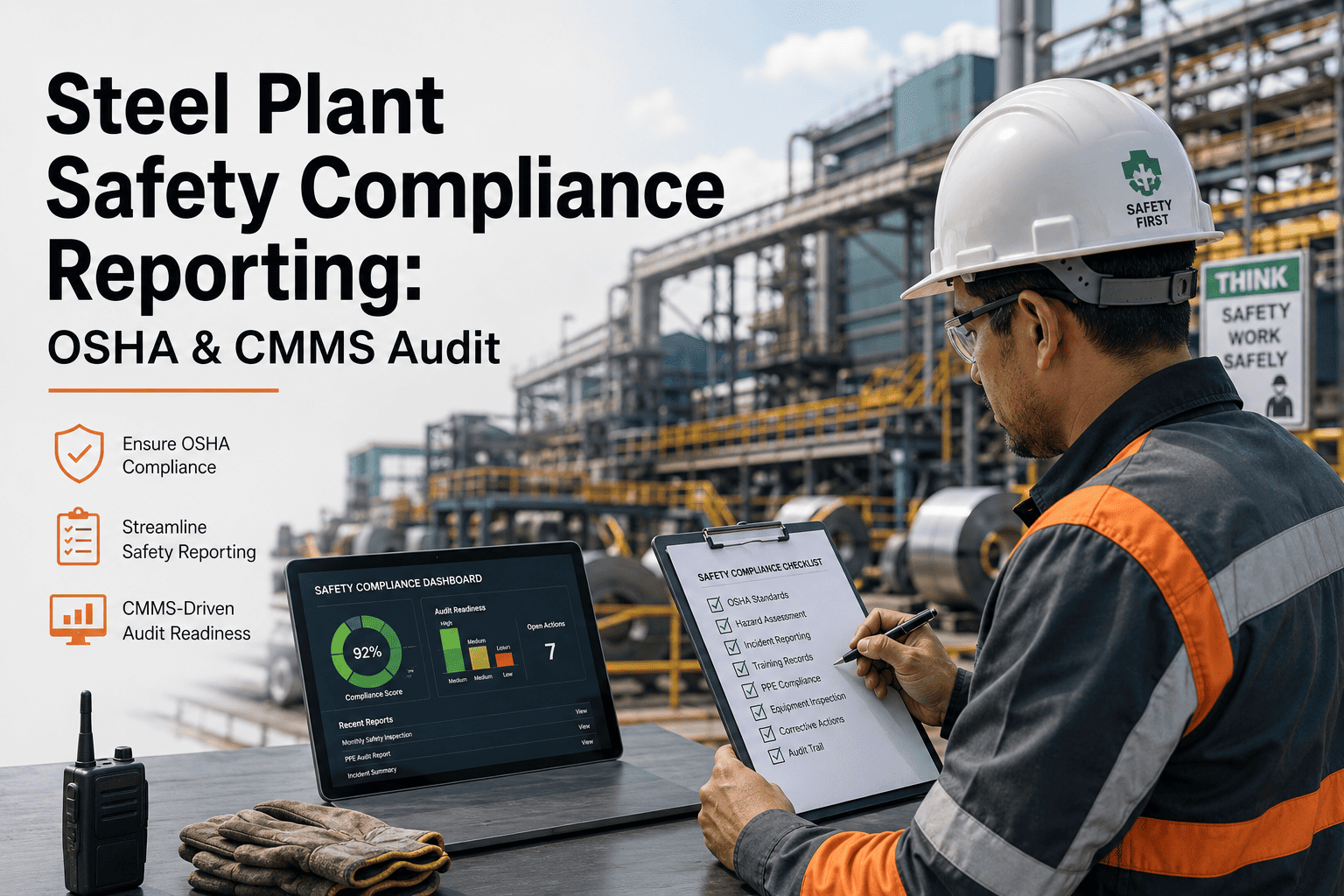
Steel manufacturing plants (NAICS 3311–3312) operate under some of the strictest OSHA oversight in American industry. In fiscal year 2024, Hazard Communication topped the most-cited list for general industry, with Lockout/Tagout and Machine Guarding consistently following. A single willful violation now carries a maximum penalty of $165,514 — and steel plants with multiple citations in one inspection regularly face combined fines exceeding $1 million. Start managing OSHA compliance free on Oxmaint or book a 15-minute demo to see digital audit tracking in action.
OSHA Compliance for Steel Manufacturing: Complete Digital Compliance Guide
Every 29 CFR 1910 standard that applies to steel plants — LOTO, HazCom, PSM, Machine Guarding, Confined Space — with what inspectors look for, what documentation you must have ready, and how a CMMS keeps you audit-ready every day.
The 6 OSHA Standards Most Cited in Steel Manufacturing
These six standards account for the majority of citations issued to steel plants. Each has specific documentation requirements — a written program alone is not sufficient. Inspectors verify that procedures are current, training records exist, and equipment-level records are maintained.
Controls hazardous energy during servicing and maintenance. Steel plants have hundreds of energy isolation points — blast furnaces, rolling mills, hydraulic systems, electrical panels. Each piece of equipment requires a machine-specific written procedure. In 2023, LOTO produced 2,554 citations industry-wide. A fabricated steel manufacturer was cited under the group LOTO provision after two employees removed a motor without following written procedures.
The HazCom Standard requires a written program, SDS for every hazardous chemical on-site, proper container labeling, and documented employee training. Steel plants handle acids, lubricants, coatings, coke oven byproducts, and process gases — each requiring an SDS and training record. The most common gaps: outdated SDS binders, unlabeled secondary containers, and training records that cannot be produced on demand.
PSM applies to steel plants that handle threshold quantities of highly hazardous chemicals — including ammonia, chlorine, hydrogen fluoride, and flammable gases at 10,000 lbs or more. PSM requires 14 elements including Process Hazard Analysis, Mechanical Integrity programs, Management of Change procedures, and Pre-Startup Safety Reviews. Mechanical Integrity alone requires documented inspection and testing of all pressure vessels, piping systems, relief devices, and emergency shutdown systems.
All moving parts of machinery — point of operation, ingoing nip points, rotating parts — must be guarded to prevent employee contact. Rolling mills, shears, straighteners, and conveyors present significant guarding challenges. Inspectors physically inspect machinery on the shop floor and compare condition to maintenance records. Missing guards, guards that have been removed for maintenance and not replaced, and inadequate guarding for the hazard are the three most common citations.
Steel plants contain numerous permit-required confined spaces — tanks, vessels, pits, ducts, tunnels, and boilers. Entry into any of these without a valid permit, atmospheric testing, and an attendant present is a serious violation. The documentation burden is high: each entry requires a completed permit with atmospheric test results, authorized entrant names, and attendant identification. Permits must be available for review during the entry period and retained for 12 months.
Steel plants generate silica dust, metal fumes, coke oven emissions, and process gases requiring respiratory protection in specific areas. A written respiratory protection program, annual medical evaluations, fit testing, and training records are all required. The coke oven standard (1910.1029) applies additional exposure monitoring and medical surveillance requirements to plants with coke production — one of the most documentation-intensive standards in manufacturing.
Oxmaint stores LOTO procedures, training records, inspection logs, confined space permits, and SDS references in one platform — retrievable in under 60 seconds when an inspector walks through your door.
What a Complete LOTO Program Looks Like in a Steel Plant
LOTO is the standard most likely to produce a serious or willful citation in a steel plant — and the one where documentation gaps are most frequently found during inspections. A written program is required. Machine-specific procedures for each piece of equipment are required. Annual audits of each procedure are required. All three must exist and be current.
Must cover scope and purpose, rules for applying and removing lockout/tagout devices, requirements for each type of energy, and enforcement procedures. Generic programs are commonly cited — the program must be specific to your facility's hazards.
A separate written procedure is required for each piece of equipment where unexpected energization could cause injury. For a large integrated steel plant, this typically means 200–500 individual procedures covering blast furnace systems, BOF, casters, rolling mills, and utilities.
Each machine-specific procedure must be reviewed and certified annually by an authorized employee other than the one using the procedure. The audit must be documented with the date, the equipment reviewed, and the employee conducting the audit.
Three categories of employees require different training: authorized employees who apply locks, affected employees who operate equipment, and other employees who work in areas where LOTO is used. All three categories require documented training — not just acknowledgment signatures.
30-Point OSHA Inspection Readiness Checklist for Steel Plants
This checklist covers what compliance officers most frequently request in the first 30 minutes of a steel plant inspection. Every item requires documented evidence — verbal confirmation is not sufficient.
How Oxmaint Replaces the Paper-Based Compliance Scramble
Most steel plants prepare for OSHA inspections the same way — by scrambling through filing cabinets, calling technicians to pull paper records, and hoping nothing is missing. Oxmaint eliminates the scramble by keeping every compliance record in one searchable platform, updated in real time from work order data.
Store all machine-specific LOTO procedures in Oxmaint — linked to the equipment record. Technicians access the correct procedure on mobile before starting any maintenance work. Annual audit due dates are tracked automatically and overdue audits appear on the compliance dashboard.
Log training completions, expiry dates, and employee certifications directly in the CMMS. Filter by standard (LOTO, HazCom, Confined Space) or by employee to see exactly who is current and who is overdue. No spreadsheet. No manual cross-referencing before an inspection.
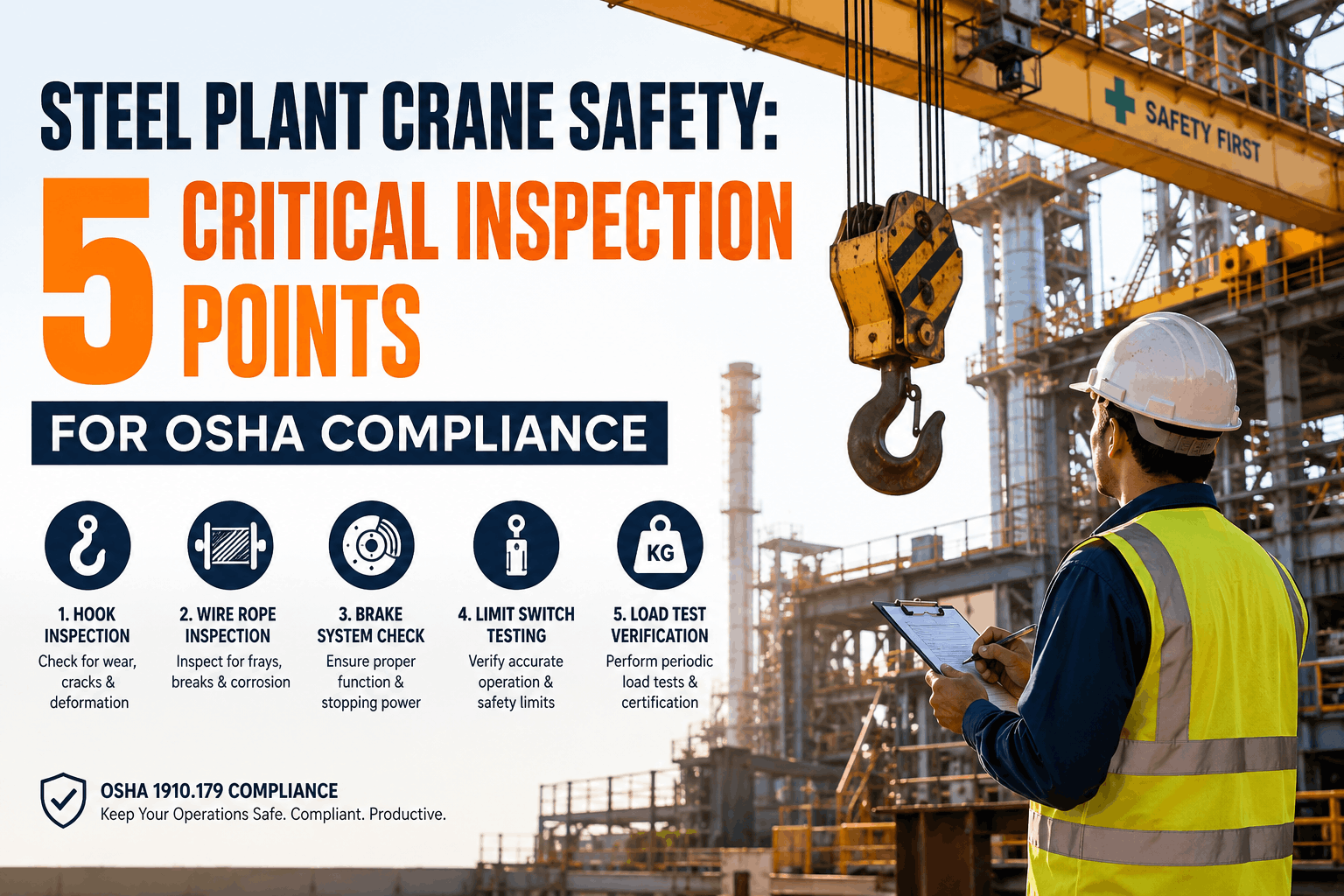
Schedule recurring safety inspections — machine guarding rounds, fire extinguisher checks, crane inspections, confined space surveys — as recurring PMs. Each inspection generates a time-stamped, technician-signed work order that satisfies the documented evidence requirement OSHA inspectors require.
When an audit or inspection identifies a gap, Oxmaint creates a corrective action work order with an assigned owner and due date. Closure is tracked automatically. If a citation is issued, you can demonstrate completed corrective actions with timestamped evidence — reducing failure-to-abate penalties.
Frequently Asked Questions
Oxmaint centralizes LOTO procedures, training records, inspection logs, and corrective actions in one platform — so your team is inspection-ready every day, not just the week before an audit.