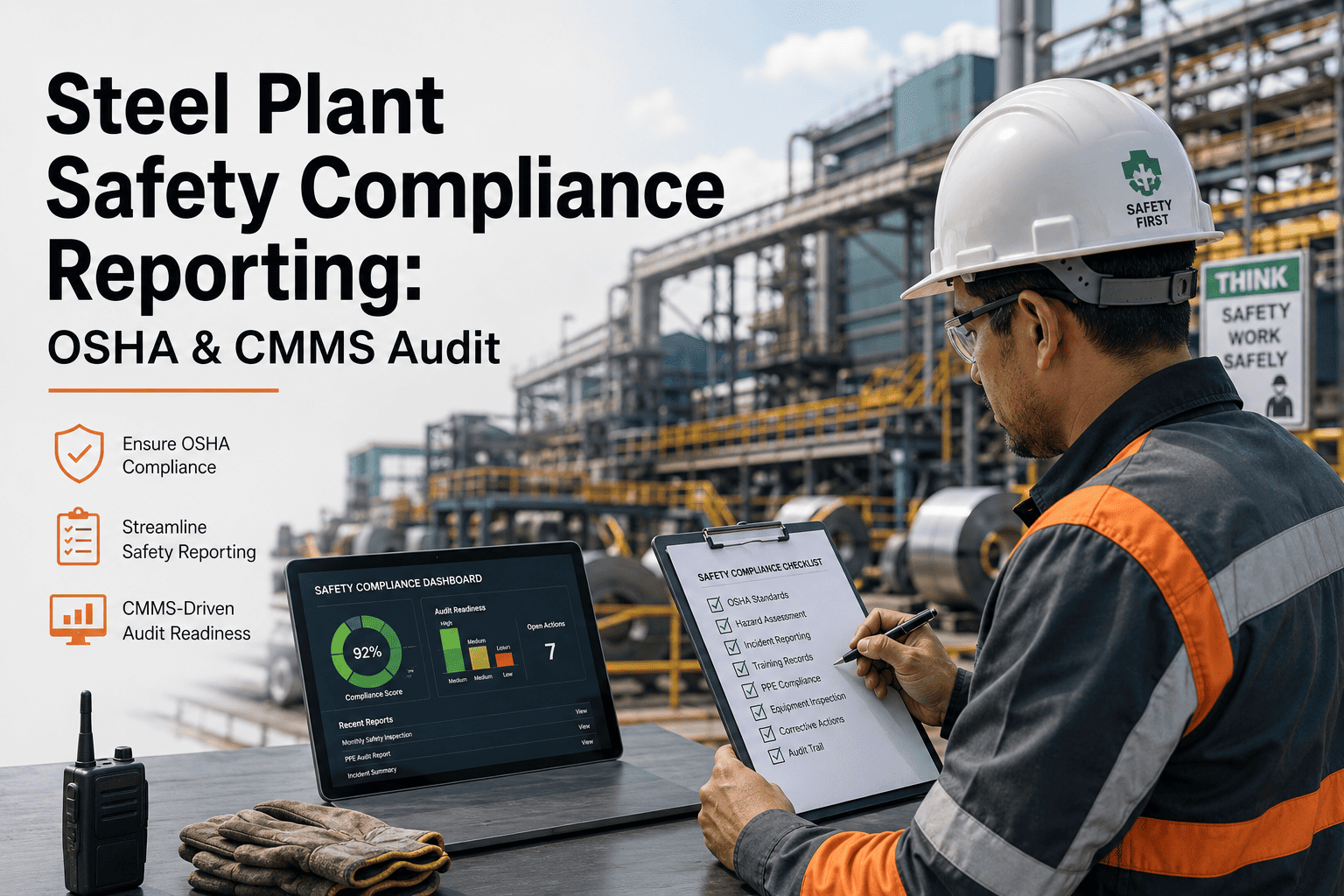
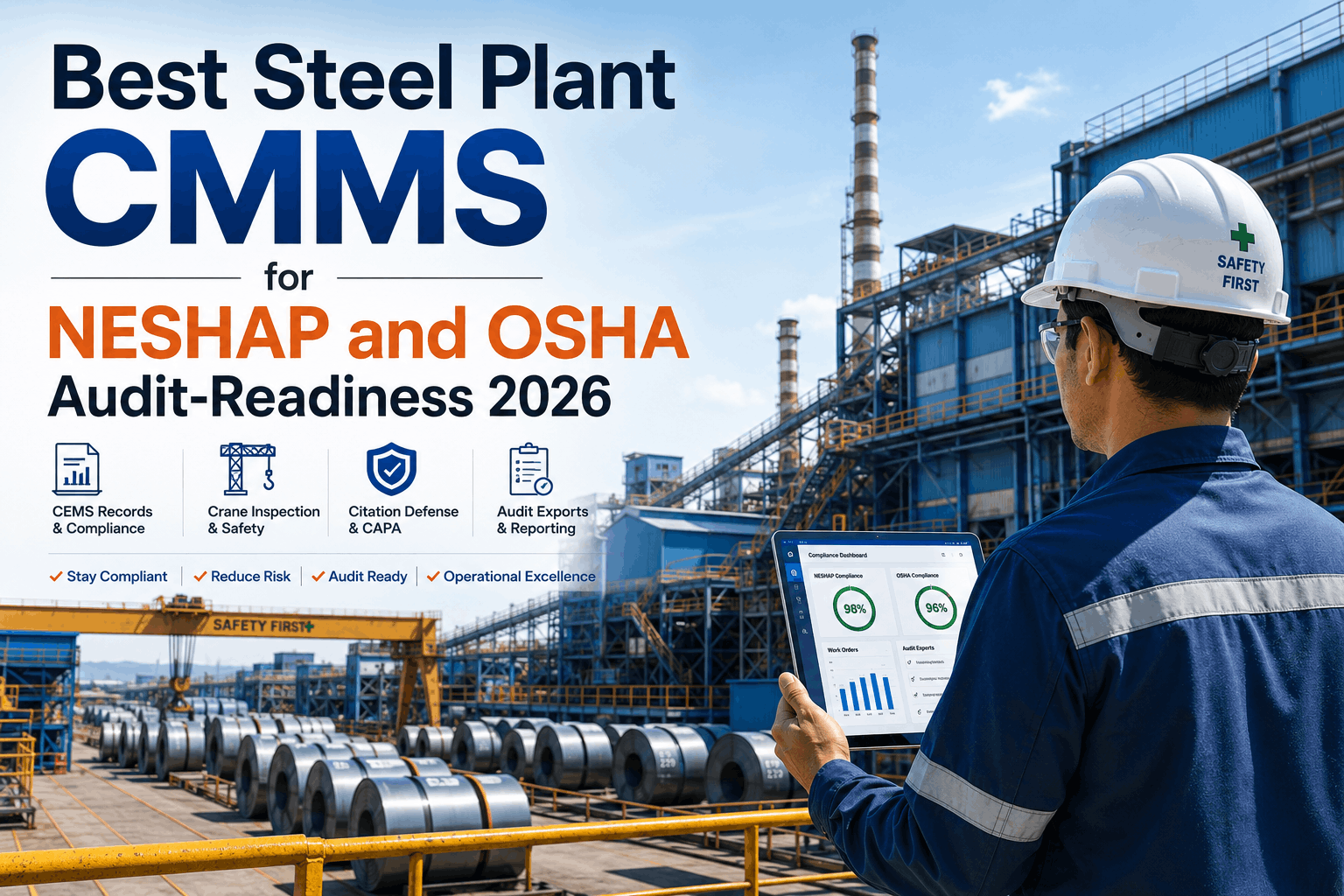
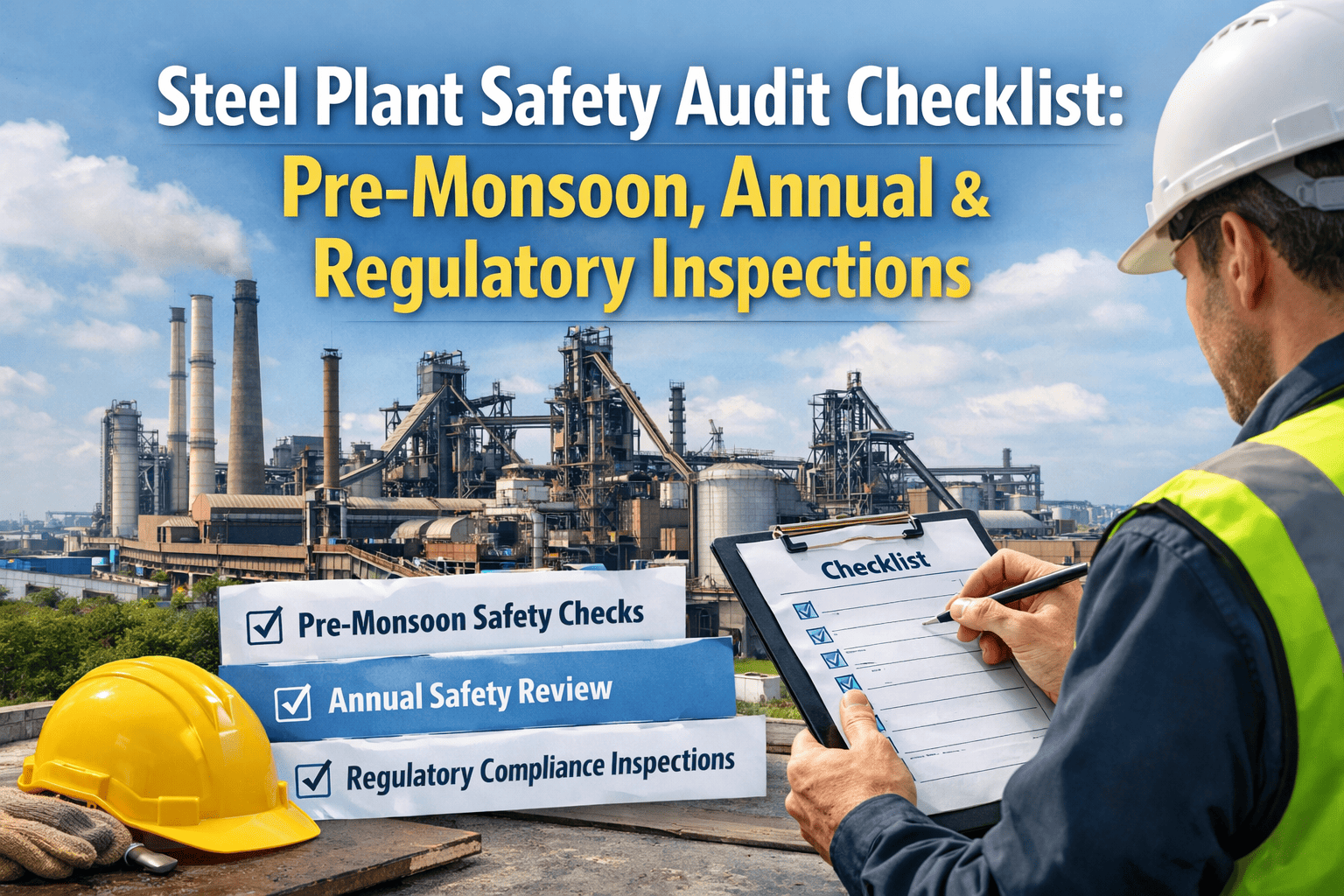
OSHA Compliance for Steel Manufacturing: Complete Digital Compliance Guide
By John Mark on March 12, 2026
Steel manufacturing is one of the most heavily regulated industries under OSHA jurisdiction—and for good reason. Between molten metal, heavy machinery, toxic gases, confined spaces, and extreme temperatures, the hazard profile of a steel plant demands a compliance program that is both comprehensive and continuously maintained. Yet most plants still manage OSHA compliance through paper binders, spreadsheet logs, and manual inspection checklists that create gaps no safety officer can see until an incident—or an inspector—reveals them. Schedule a free compliance audit with our team and discover exactly where your safety program has gaps before OSHA does.
The Regulatory Landscape Every Steel Plant Must Navigate
OSHA enforces dozens of standards that apply directly to steel manufacturing operations. Understanding which standards govern which processes is the foundation of any compliant safety program. Gaps in coverage do not reduce liability—they compound it when an incident triggers a multi-standard citation investigation.
29 CFR 1910.147
Lockout / Tagout
Control of hazardous energy during maintenance on powered equipment across the entire facility
29 CFR 1910.146
Confined Space Entry
Permit-required procedures for furnace interiors, tanks, ducts, and sub-floor service areas
29 CFR 1910.119
Process Safety Management
PSM program requirements for facilities handling highly hazardous chemicals above threshold quantities
29 CFR 1910.1000
Air Contaminants
Permissible exposure limits for metallic dusts, fumes, and gases generated during steelmaking
Penalty Exposure: What Non-Compliance Actually Costs
OSHA violations in steel manufacturing are not administrative inconveniences. They are financial events that can threaten plant viability. Understanding the penalty structure—and the multi-citation exposure that follows a serious incident—is essential context for any investment in digital compliance management.
Other-Than-Serious
Up to $16,550
Per violation. Issued for conditions with no direct link to death or serious injury but still regulatory violations.
Serious Violation
Up to $16,550
Per violation where substantial probability of death or serious physical harm exists. Most common citation category in steel.
Willful / Repeat
Up to $165,514
Per violation. Prior citations for the same standard within five years elevate any new citation to repeat status automatically.
Failure to Abate
Up to $16,550/day
Daily penalties that accrue from the abatement deadline until verified correction. Unmanaged abatement tracking is a common cost multiplier.
Multi-Citation Exposure Is the Real Risk
A single incident at a steel plant typically triggers inspection of every related standard. An arc flash incident can yield simultaneous citations under electrical safety, PPE, lockout/tagout, training records, and incident reporting standards. Total citation packages of $500,000 to over $2 million are documented in OSHA's public enforcement database for integrated steel facilities.
The 8 OSHA Compliance Pillars for Steel Manufacturing
A complete OSHA compliance program for steel manufacturing is built on eight interconnected pillars. Weakness in any single pillar creates vulnerability across the others. Digital compliance management ensures each pillar is continuously maintained rather than periodically reviewed.
01
Written Safety Programs and Procedures
Documentation
OSHA requires written programs for lockout/tagout, confined space entry, hazard communication, respiratory protection, PPE assessment, emergency action plans, and process safety management. Each written program must be current, site-specific, accessible to all employees, and reviewed whenever conditions change. Outdated programs are themselves a citation basis—separate from whether the hazard they address exists.
✓Annual written program review schedule established
✓Revision history documented with change authorization
✓Employee access confirmed and documented
02
Hazard Identification and Risk Assessment
Risk Control
Job hazard analyses for every routine and non-routine task, pre-task risk assessments for maintenance work orders, and periodic process hazard analyses for PSM-covered operations. Steel-specific hazards including molten metal splash, fume inhalation, struck-by risks from overhead cranes, and thermal exposure must be systematically identified, assessed, and controlled before work begins—not after an incident reveals the gap.
✓JHA library linked to every work order type
✓Pre-task risk assessment completed digitally before start
✓PHA revalidation schedule tracked and current
03
Lockout / Tagout Program Execution
Energy Control
LOTO violations are consistently among OSHA's top ten most cited standards across all industries—and steel plants represent a disproportionate share due to the volume and complexity of powered equipment. Machine-specific energy control procedures must exist for every piece of equipment serviced by maintenance personnel. Procedure sheets must be current, available at the point of use, and verified through periodic audits of actual LOTO application—not just documentation review.
✓Machine-specific LOTO procedures for 100% of maintained equipment
✓Annual LOTO audit per authorized employee documented
✓Periodic review triggered by new equipment or process change
04
Employee Training and Competency Verification
Training
Training requirements in steel manufacturing span initial qualification, annual refresher, task-specific authorization, and retraining after incidents or procedure changes. OSHA citations frequently cite training record gaps—not the training itself. Records must demonstrate that specific employees received specific training on specific dates for specific standards. Generic sign-in sheets do not satisfy this requirement. Competency demonstration is also required for certain standards, not merely attendance.
✓Individual training matrix current for all employees and contractors
✓Expiration alerts automated 30 days before deadline
✓Retraining triggers linked to incident reports and procedure updates
05
Inspection, Testing, and Equipment Certification
Inspection
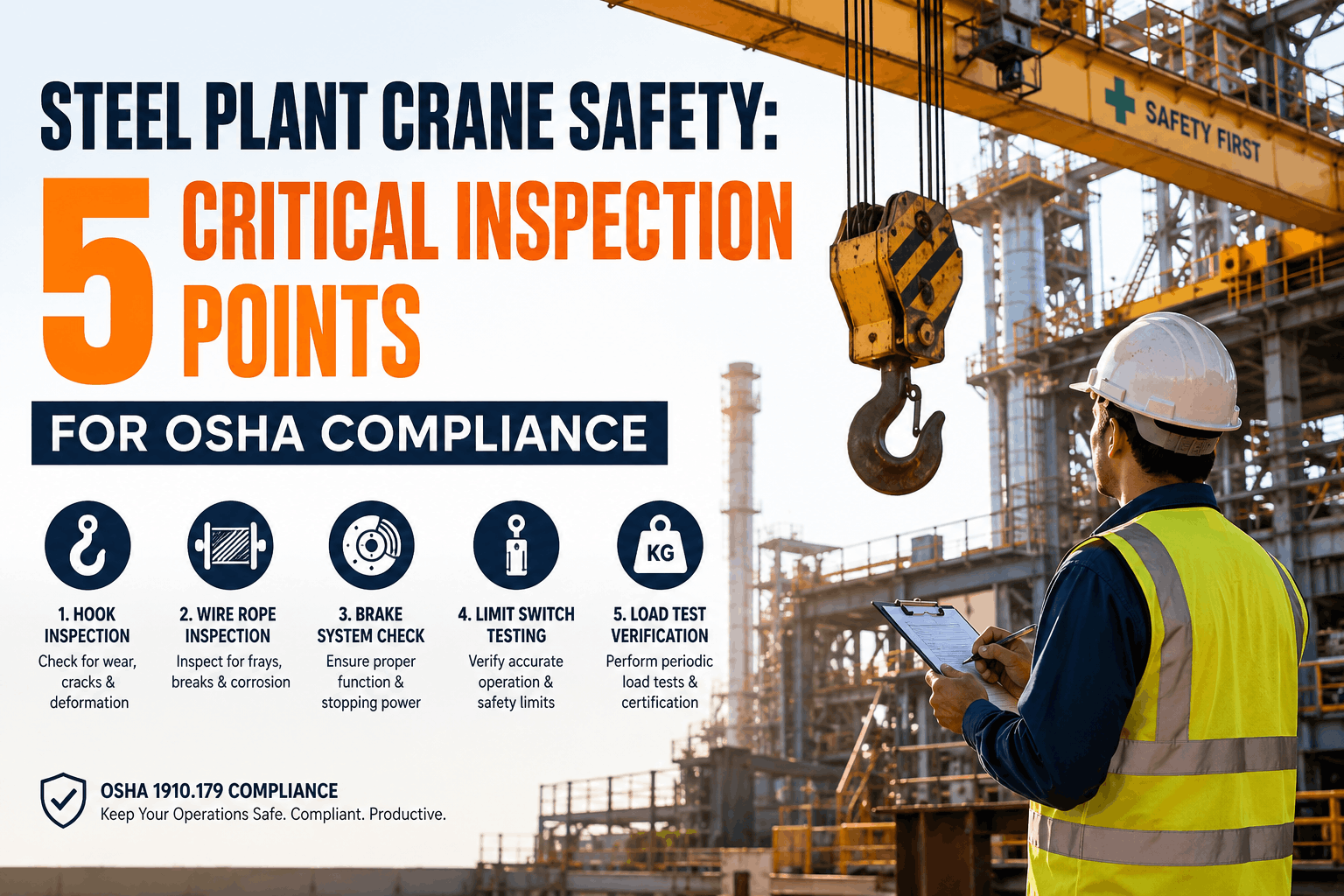
OSHA mandates documented periodic inspection for cranes and hoists, pressure vessels, electrical systems, fire suppression equipment, fall protection equipment, and respiratory devices. In steel plants, crane inspections are particularly consequential given the overhead load hazards in melt shops and casting areas. Inspection records must be retained for the periods specified in each standard—typically three to five years—and must be retrievable on demand during an OSHA inspection.
✓Inspection schedule calendar covers all regulated equipment categories
✓Overdue inspection alerts escalate to plant safety manager
✓Records retained and searchable by equipment ID and date
06
Industrial Hygiene Monitoring and Exposure Control
Hygiene
Steel manufacturing generates airborne exposures to iron oxide fume, manganese, silica, lead, chromium, nickel, and carbon monoxide that are regulated under multiple OSHA standards with distinct PEL values, action levels, and medical surveillance requirements. Air monitoring programs must demonstrate that exposure assessments are conducted at the required frequency, that employees whose exposures exceed action levels are enrolled in medical surveillance, and that engineering controls are evaluated before respirator use is relied upon.
✓Air monitoring schedule per job classification and process area
✓Medical surveillance enrollment triggered by monitoring results
✓Exposure records retained for 30 years per OSHA requirement
07
Incident Reporting, Investigation, and Corrective Action
Incident Management
OSHA 300 log maintenance, 300A annual summary posting, and immediate notification requirements for fatalities and severe injuries are mandatory for all general industry employers. Beyond the recordkeeping requirements, effective incident investigation must identify root causes—not just immediate causes—and drive corrective actions to verified completion. Unclosed corrective actions from prior incidents are frequently cited as evidence of willful disregard during subsequent inspections.
✓OSHA 300 log entries completed within 7 calendar days of recordable
✓Root cause analysis linked to corrective action work orders
✓Corrective action closure rate tracked and reported to leadership
08
Contractor Safety Management and Permit Control
Contractor Control
Steel plants routinely host dozens of contractors performing maintenance, construction, and specialty services alongside production operations. OSHA's multi-employer citation policy means that host employers can be cited for contractor violations when they knew or should have known of hazardous conditions. Contractor qualification, site-specific orientation, permit issuance and control, and monitoring of contractor safety performance are all host employer responsibilities that require documented management systems.
✓Contractor pre-qualification criteria documented and enforced
✓Site orientation completion verified before access granted
✓Active permit register visible to safety team in real time
Ready to Close Your Compliance Gaps?
Paper compliance programs fail OSHA inspections. Digital ones don't.
Oxmaint connects every inspection, training record, permit, and corrective action into one auditable system that proves compliance before an inspector arrives—not after.
of OSHA citations in steel involve record-keeping deficiencies, not the underlying hazard
4.2x
higher likelihood of willful citation when prior citations exist for the same standard
60 days
average abatement period that must be tracked per citation to avoid daily penalty accumulation
High-Risk Operations Requiring Special OSHA Attention in Steel Plants
Certain operations within steel manufacturing carry elevated injury and citation risk and deserve focused compliance attention beyond standard program maintenance. These areas account for the majority of serious incidents and OSHA enforcement actions in the industry.
Critical Risk
Melt Shop and Casting Operations
Molten metal splash, radiant heat exposure, fume generation, and crane operations over personnel create simultaneous multi-standard exposure. PPE requirements, heat stress programs, and overhead hazard controls must be integrated and continuously enforced.
Key Standards: 1910.132, 1910.252, 1910.179
Critical Risk
Blast Furnace and Coke Oven Operations
Carbon monoxide, hydrogen sulfide, and benzene exposures from blast furnace and coke oven operations require continuous gas monitoring, rigorous confined space protocols, and documented emergency response procedures. CO poisoning is a leading cause of fatalities in this area.
Key Standards: 1910.146, 1910.1000, 1910.38
High Risk
Rolling Mill and Processing Lines
High-speed machinery, pinch points, noise exposure exceeding 90 dBA action levels, and vibration hazards across rolling, pickling, and coating lines. Machine guarding compliance and hearing conservation program administration are consistently cited in this area.
Key Standards: 1910.212, 1910.95, 1910.217
High Risk
Electrical Systems and Arc Flash
High-voltage systems powering electric arc furnaces, rectifiers, and motor control centers create arc flash hazards requiring documented incident energy analysis, labeled equipment, and qualified worker training under NFPA 70E as well as OSHA 1910 Subpart S. Energized work permits must be documented for every non-routine task.
Key Standards: 1910.302–1910.399, NFPA 70E
Moderate Risk
Maintenance and Turnaround Work
Planned outages concentrate non-routine, high-hazard tasks—hot work, confined space entry, elevated work, and energized equipment—in compressed timeframes with contractor presence. Permit-to-work systems must be rigorously enforced during these periods, when compliance pressure is highest and incident risk peaks simultaneously.
Key Standards: 1910.147, 1910.146, 1910.23
Moderate Risk
Raw Material Handling and Storage
Coal, coke, iron ore, and scrap handling operations involve mobile equipment traffic hazards, dust explosion risks, and struck-by incidents. Housekeeping programs, pedestrian segregation, and combustible dust management under OSHA's National Emphasis Program require documented, active control programs—not just written policies.
How Digital Compliance Management Transforms OSHA Readiness
The difference between a plant that passes OSHA inspections and one that accumulates citations is rarely a difference in safety culture—it is almost always a difference in system. Digital compliance management platforms create the audit trail, the scheduling automation, and the real-time visibility that paper systems cannot provide at scale.
Paper-Based System
Training records in binders by department. Finding any individual's LOTO certification requires walking to the office and searching manually. During an OSHA inspection, this takes hours and often surfaces missing records.
→
Digital Platform
Individual training matrix searchable by name, standard, or expiration date. Inspector can be shown any employee's complete compliance record in under 60 seconds. Gaps are visible before the inspection, not during it.
Paper-Based System
Monthly crane inspection sheets filed in the crane operator's cab or a shared folder. No centralized tracking of overdue inspections. Deficiencies noted by operators are not always linked to maintenance work orders.
→
Digital Platform
Crane inspections scheduled, assigned, and completed digitally. Deficiencies automatically generate maintenance work orders with priority flags. Overdue inspections alert the safety manager before the next crane operation begins.
Paper-Based System
Confined space entry permits issued on paper, kept at the entry point, and filed after completion. Verifying that all permits were properly closed at shift end requires physical collection. Permit data is not analyzable for trends.
→
Digital Platform
Digital permits issued, monitored, and closed in real time. Safety supervisor can see all active permits plant-wide from any device. Permit data aggregates into monthly reports identifying which spaces are entered most frequently and by whom.
Paper-Based System
Incident corrective actions assigned at investigation meeting and tracked via email follow-up. Status depends on memory and management attention. Unclosed actions from 18 months ago are unknown until the next audit.
→
Digital Platform
Every corrective action is a tracked work order with an owner, due date, and escalation path. Closure rate is visible to plant leadership in real time. OSHA inspectors see a verified, timestamped history of every corrective action—open and closed.
OSHA Compliance KPIs for Steel Plant Safety Programs
Measuring compliance program performance requires metrics that go beyond lagging indicators like injury rates. These KPIs give safety managers leading indicators that reveal program health before failures occur—and the data OSHA inspectors look for when evaluating whether a safety program is genuinely implemented.
Training Compliance Rate
Target: 100%
Percentage of employees current on all required training for their job role. Any value below 100% represents a citation risk for the affected employees on their next workplace entry.
Inspection Completion Rate
Target: 100% on schedule
Percentage of required periodic equipment inspections completed on or before due date. Overdue inspections on active equipment are immediate citation exposure.
Corrective Action Closure Rate
Target: 95% within 30 days
Percentage of incident and audit corrective actions closed by their assigned due date. Low closure rates are evidence of program breakdown that OSHA uses to justify willful classification.
Permit Compliance Rate
Target: Zero unpermitted entries
Ratio of high-hazard tasks completed with required permits versus tasks where permits were bypassed or incomplete. Any unpermitted confined space entry or energized work event is a serious violation.
Near Miss Reporting Rate
Target: Increasing trend
Number of near misses reported per 100 employees per month. A rising near miss rate indicates reporting culture strength—not deteriorating safety. A falling rate in a steel plant signals underreporting, not improvement.
OSHA 300 Recordable Rate
Below industry NAICS average
Total recordable incident rate calculated as (recordables × 200,000) ÷ hours worked. OSHA uses this metric to target facilities for programmed inspections when rates exceed industry benchmarks.
Built for Steel Manufacturing Compliance
Every Inspection. Every Permit. Every Training Record. One Auditable Platform.
Oxmaint gives steel plant safety teams a single system for managing all eight compliance pillars—with automated scheduling, digital record-keeping, real-time visibility, and instant audit-ready reporting. When OSHA arrives, your compliance record is already complete.
Which OSHA standards are most frequently cited in steel manufacturing?
The most frequently cited standards in steel manufacturing include 29 CFR 1910.147 (lockout/tagout), 29 CFR 1910.146 (permit-required confined spaces), 29 CFR 1910.132 (personal protective equipment), 29 CFR 1910.212 (machine guarding), and 29 CFR 1910.1200 (hazard communication). Crane and hoist standards under 1910.179 are also heavily cited given the operational intensity of overhead lifting in melt shops and warehouses. Most citations involve documentation and record-keeping deficiencies rather than the complete absence of safety measures.
Q2
What triggers an OSHA inspection at a steel plant?
Steel plants can be inspected through multiple pathways: programmed inspections targeting facilities in high-hazard NAICS codes with above-average injury rates, unprogrammed inspections following fatalities or severe injuries that must be reported within 8 to 24 hours, referral inspections triggered by complaints from employees or other agencies, and follow-up inspections to verify abatement of prior citations. Steel manufacturing facilities under SIC 3310–3399 are included in OSHA's Steel Industry National Emphasis Program, which means they face a higher base probability of programmed inspection than most general industry facilities.
Q3
How does a Computerized Maintenance Management System help with OSHA compliance?
A CMMS supports OSHA compliance by creating the documented evidence trail that OSHA citations target. It schedules and tracks mandatory equipment inspections with automated reminders and overdue alerts, links safety deficiencies directly to maintenance work orders, maintains digital records of all inspections with time stamps and technician identification, manages lockout/tagout procedure libraries linked to specific equipment assets, and generates the audit-ready reports that demonstrate program implementation. Most OSHA citations in maintained facilities result from gaps between actual practices and the documentation of those practices—a CMMS closes this gap systematically.
Q4
What are the OSHA reporting requirements for serious incidents in steel manufacturing?
OSHA requires employers to notify their nearest OSHA office within 8 hours of any work-related fatality, and within 24 hours of any work-related in-patient hospitalization, amputation, or loss of an eye. Notifications can be made by phone to the OSHA Area Office or via the OSHA website. Separately, all recordable injuries and illnesses must be entered on the OSHA 300 log within 7 calendar days of learning the incident is recordable. The 300A annual summary must be posted from February 1 through April 30 each year. Failure to meet any of these deadlines is itself a separately citable violation independent of the underlying incident.
Q5
How long does OSHA require safety records to be retained in manufacturing?
Retention requirements vary by record type. OSHA 300 logs and related incident records must be retained for five years. Medical records and employee exposure records, including air monitoring data, must be retained for the duration of employment plus 30 years—reflecting the long latency period of occupational diseases linked to chemical exposures common in steel manufacturing. Equipment inspection records generally must be retained for the period specified in each standard, typically three to five years. Training records must be retained for the duration of employment and, for some standards, three to five years beyond. Digital record management systems ensure retention schedules are enforced automatically without relying on manual file management.