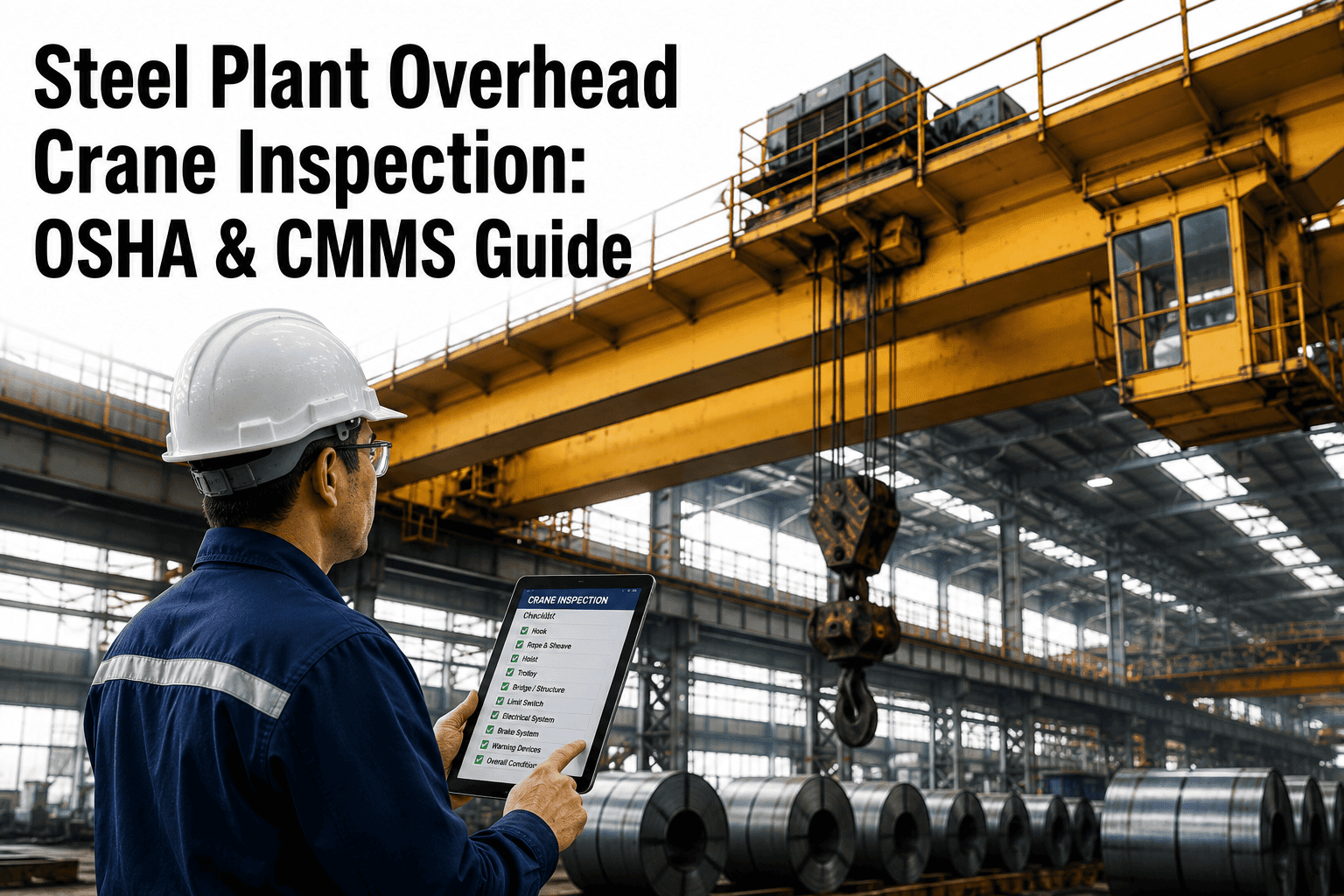
Overhead cranes carry hot metal, coils, slabs, scrap and ladles across almost every area of a steel mill, and a single stoppage can hold up a melt shop, rolling mill or finishing line. They also work in heat, dust, scale and vibration that wear hoists, brakes, ropes and structures much faster than in a general factory. A good inspection programme separates quick pre-shift checks from deeper periodic inspections and gives every defect a clear owner. This checklist follows that structure, and it can be digitised in a steel mill CMMS so every crane has a complete inspection and repair history.
Overhead Crane Inspection Checklist for Steel Plant Maintenance
Digitise inspections of hoists, brakes, hooks, ropes, wheels, limit switches and structure, so every steel mill crane is checked on schedule and every defect is closed out.
Three Inspection Levels, Three Different Jobs
Level 1: Pre-shift operator check
Quick functional checks before the first lift, done by the operator at the start of each shift.
Level 2: Frequent inspection
Visual and functional checks by a qualified person, typically daily to monthly depending on service.
Level 3: Periodic inspection
Detailed inspection with measurement and records, typically every one to twelve months depending on service severity.
Level 1: Pre-shift operator checklist
- Controls respond correctly and every direction is clearly marked
- Upper limit switch tested at low speed with no load on the hook
- Hook latch is present, closes fully and is not bent or loose
- Wire rope sits properly in the drum grooves with no visible kinks or broken wires
- Brakes stop and hold a light test load without drift
- Horn, warning lights and emergency stop work
- Rated capacity is clearly marked and the runway and aisle are clear
- Pendant, cable or radio control is undamaged and the battery is charged
Hoist, Gearbox and Brake Checks
| Done | Checkpoint | What to verify | Frequency | If defective |
|---|---|---|---|---|
| Holding brake lining and gap | Lining thickness, even contact, gap within the maker's setting | Monthly | Adjust or replace before next lift | |
| Brake drum or disc surface | Scoring, glazing, heat cracks, oil contamination | Monthly | Resurface or replace, find the oil source | |
| Brake coil, thruster or release mechanism | Full release, no sticking, no overheating | Weekly | Tag out until corrected | |
| Second brake on ladle hoists | Independent stopping and holding function confirmed | Monthly | Do not lift ladles until restored | |
| Gearbox oil and condition | Level, leaks, noise, temperature, breather condition | Weekly | Top up, repair seals, sample oil | |
| Couplings and guards | Wear, loose bolts, grease leakage, guard fixings | Monthly | Tighten, replace, refit guard | |
| Hoist motor | Temperature, vibration, ventilation passages clear | Weekly | Clean, investigate overload, plan repair | |
| Drum and rope anchorage | Groove wear, cracks, rope clamp or wedge condition | Quarterly | Repair or replace drum, re-terminate rope |
Wire Rope, Sheaves, Hook and Load Block
| Done | Checkpoint | What to verify | Frequency | If defective |
|---|---|---|---|---|
| Broken wires | Count broken wires over one rope lay and in each strand, using standard removal criteria | Daily visual, periodic detailed | Remove rope if limits are reached | |
| Rope diameter | Measure at several points and compare with nominal | Monthly | Replace when reduction exceeds the limit | |
| Rope damage | Kinks, bird-caging, crushing, corrosion, heat damage | Daily | Remove from service | |
| Rope lubrication | Lubricant present, particularly at the core and through bending zones | Monthly | Lubricate with the specified product | |
| Sheaves and equaliser | Groove wear, cracks, bearing play, free rotation | Monthly | Replace worn sheaves, repair bearings | |
| Hook throat and body | Throat opening, twist, wear at the saddle, cracks | Daily visual, periodic measured | Replace if beyond maker or standard limits | |
| Hook latch and nut | Latch spring, locking device for the hook nut | Daily | Repair before lifting | |
| Load block and swivel bearing | Free rotation, no cracks, secure fasteners | Monthly | Repair or replace bearing |
Replace Crane Inspection Binders With a Live Record
Assign each crane its own inspection schedule, capture measurements on a mobile device and create a work order for any rope, hook or brake defect before the next lift.
Travel, Wheels, Rails and Runway
| Done | Checkpoint | What to verify | Frequency | If defective |
|---|---|---|---|---|
| Bridge and trolley wheels | Flange wear, tread cracks, flat spots, bearing noise | Monthly | Measure, plan replacement, check alignment | |
| Skewing or misalignment | Uneven wheel wear, rail contact marks, travel drift | Monthly | Survey alignment and correct | |
| Bridge and trolley gearboxes | Oil level, leaks, temperature, noise | Weekly | Service and sample oil | |
| Crane rails and clips | Rail wear, joints, loose clips, fasteners | Quarterly | Tighten or repair, inform runway owner | |
| End stops and bumpers | Secure fixing, undamaged, correct height | Monthly | Repair before use | |
| Rail clamps on outdoor cranes | Function and secure parking in high wind | Monthly | Repair and restrict use |
Limit Switches and Safety Devices
| Done | Checkpoint | What to verify | Frequency | If defective |
|---|---|---|---|---|
| Upper hoist limit | Stops the hook before contact with the block or structure | Every shift | Tag out the crane | |
| Lower hoist limit and slack rope device | Prevents rope unwinding or going slack beyond the safe point | Weekly | Repair before use | |
| Overload device or load cell | Reads correctly and trips at the setting | Quarterly | Calibrate or replace | |
| Travel limits and anti-collision | Slow down and stop in time before end stops or another crane | Weekly | Repair and test again | |
| Emergency stop and main isolator | Cuts power from the pendant, cab and ground position | Weekly | Tag out until fixed | |
| Warning horn and lights | Audible and visible in the working area | Every shift | Repair promptly |
Structure, Cab and Electrical Systems
- Bridge girders and end trucks. Examine welds, plates and bolted joints for cracks, deformation and corrosion, particularly near trolley rails and end connections.
- Walkways, ladders and handrails. Confirm all are secure, free of scale buildup and meet access requirements for the inspection crew.
- Operator cab. Inspect heat shielding, windows, seat, controls, fire extinguisher and cab air conditioning or filters.
- Conductor bars, festoon and collectors. Check for wear, arcing marks, loose connections and contamination from dust or scale.
- Control panels and resistors. Use thermal imaging to find overheated contactors, drives and connections, and keep enclosures clean and sealed.
- Grounding and earthing. Verify bonding straps and earth connections are tight and intact.
- Runway girders and columns. Report cracks, loose brackets and settlement to the structure owner with photos.
Steel Mill Conditions That Change the Checklist
Ladle cranes in melt shops
Radiant heat shortens life for ropes, brakes and cables, so give these hoists closer, shorter-interval inspections and confirm redundant braking.
Scale and dust
Buildup on girders, collectors and gearboxes hides defects and traps heat, so cleaning belongs in the inspection task.
Magnet and coil cranes
Check magnet cables, tongs, C-hooks and lifting beams as part of the lifting equipment on the crane.
Continuous duty cycles
Cranes working multiple shifts accumulate fatigue faster, so use duty hours and lift counts in planning.
Why Crane Defects Get Missed in Steel Plants
- Hard-to-reach components. Rope drums, trolley rails and bridge brakes sit high above the floor, so inspections are shortened when access is awkward or the bay is busy.
- Production pressure. Cranes rarely stop for long, and a defect that is not an immediate hazard can be deferred without a firm date.
- Heat and contamination. Scale, grease and dust cover cracks, oil leaks and wear marks, so cleaning must come before inspection.
- Paper handover. Notes left on a shift log are easy to overlook, and the next crew may not know a hook, rope or limit switch was already flagged.
- Unclear responsibility. Operators, mechanics, electricians and structure owners each see part of the crane, so a finding needs one owner to be closed.
- Little trend data. Without a history of rope life, brake wear and wheel wear, replacement dates are guesses rather than plans.
What Every Crane Inspection Record Should Contain
Identification
Crane number, bay, rated capacity, duty class, inspection type, date, time and inspector name.
Measurements
Rope diameter, broken wire counts, hook throat opening, brake lining thickness and wheel flange wear.
Findings and photos
Pass or fail result for every checkpoint, with images of any defect and the exact location on the crane.
Closure evidence
Work order number, repair details, parts used, re-inspection result and release to service signature.
Before and After: Crane Inspection on Paper and in a CMMS
Paper checklists
- Reports are stored in binders and are hard to search
- Due dates for periodic inspections depend on a spreadsheet
- Rope and brake wear is not compared with earlier readings
- Defects reach maintenance by phone call or message
Digital crane inspections
- Every report is stored against the crane and searchable
- Inspections are scheduled and overdue ones are flagged
- Measurements are trended to plan replacement
- A failed checkpoint opens a work order immediately
Defect Severity: What to Do With a Finding
Tag out immediately
Defects that affect safe holding or stopping, such as failed brake, damaged hook, rope at removal limit, inoperative upper limit or structural crack. Do not lift until repaired and re-inspected.
Repair this shift or next planned stop
Defects that are developing and could escalate, such as brake wear near limit, oil leaks, worn wheel flange or loose guard.
Plan and monitor
Minor wear, cosmetic damage or trend changes that need scheduling and re-checking at the next round.
Standards and Records That Support Crane Inspection
| Reference | Relevance to steel mill cranes | Record to keep |
|---|---|---|
| OSHA 29 CFR 1910.179 | Overhead and gantry cranes, with requirements for frequent and periodic inspection and for rope and hook inspection | Inspection reports and rope inspection records |
| ASME B30.2 | Overhead and gantry cranes, covering inspection, testing, maintenance and operation | Test records and periodic inspection results |
| Manufacturer manuals | Brake settings, rope specifications, wear limits and lubrication intervals | Maintenance tasks tied to the manual |
| AIST technical report for mill cranes | Design guidance for electric overhead cranes in steel mill service | Crane duty classification and design data |
| Local regulations and company rules | May add inspection, load test and competent person requirements | Certificates and competent person sign-off |
- Apply the edition and local rules that apply at your site, since requirements differ by country
Returning a Crane to Service After a Defect
Isolate and tag
Lock out the main isolator, place the tag and warn the bay so nobody operates the crane or works beneath it.
Repair with approved parts
Use parts that meet the manufacturer specification, such as the correct rope construction, brake lining or hook grade, and record batch details.
Test without load
Run each motion, test limit switches and confirm brakes release and hold before any load is applied.
Load test where required
After major hoist, rope, brake or structural repairs, follow the standard and the manufacturer on test load and witness requirements.
Sign off and release
A qualified person signs the work order, the tag is removed and operations are told the crane is available.
Planning Crane Inspections Around Production
- Use planned outages. Schedule periodic inspections and brake or rope work for mill shutdowns, and prepare parts and permits ahead of the window.
- Stagger cranes in the same bay. Inspecting one crane at a time keeps the other available for lifting and reduces production impact.
- Track duty, not only dates. Cranes that lift heavier loads or run more shifts may need shorter intervals than the calendar suggests.
- Combine tasks. Lubrication, cleaning, thermography and structural checks can share one access window and one permit.
- Review findings monthly. Look at repeat defects by crane and component to decide where design changes or better parts are worthwhile.
Crane Reliability KPIs
How Oxmaint Supports Steel Plant Crane Maintenance
| Maintenance need | Oxmaint capability |
|---|---|
| Crane and component records | Asset management with hoist, brake, rope, hook, wheel and structure records for each crane |
| Scheduled inspections and lubrication | Preventive maintenance by calendar, duty hours or lift count |
| Pre-shift and periodic checklists | Mobile inspections with pass or fail results, measurements and photos |
| Defect repair and tag-out follow-up | Corrective work orders with priority, assignment and sign-off |
| Wire rope, brake lining and wheel stock | Inventory linked to crane tasks and minimum stock levels |
| Audit and management reporting | Dashboards and compliance records by crane, bay or plant area |
Overhead Crane Inspection FAQs
How often should steel mill cranes be inspected?
Operators check before each shift, qualified staff do frequent inspections, and detailed periodic inspections follow the standard and the crane duty class. Severe service usually means shorter intervals.
Who is allowed to perform a periodic crane inspection?
Standards require a qualified or competent person, and local law may add certification. Record the inspector's name and sign-off in a CMMS for each inspection.
When must a wire rope be replaced?
Replace it when broken wires, diameter loss, corrosion or distortion reach the limits in the applicable standard or rope maker's instructions. When in doubt, remove it.
Can crane maintenance be predictive?
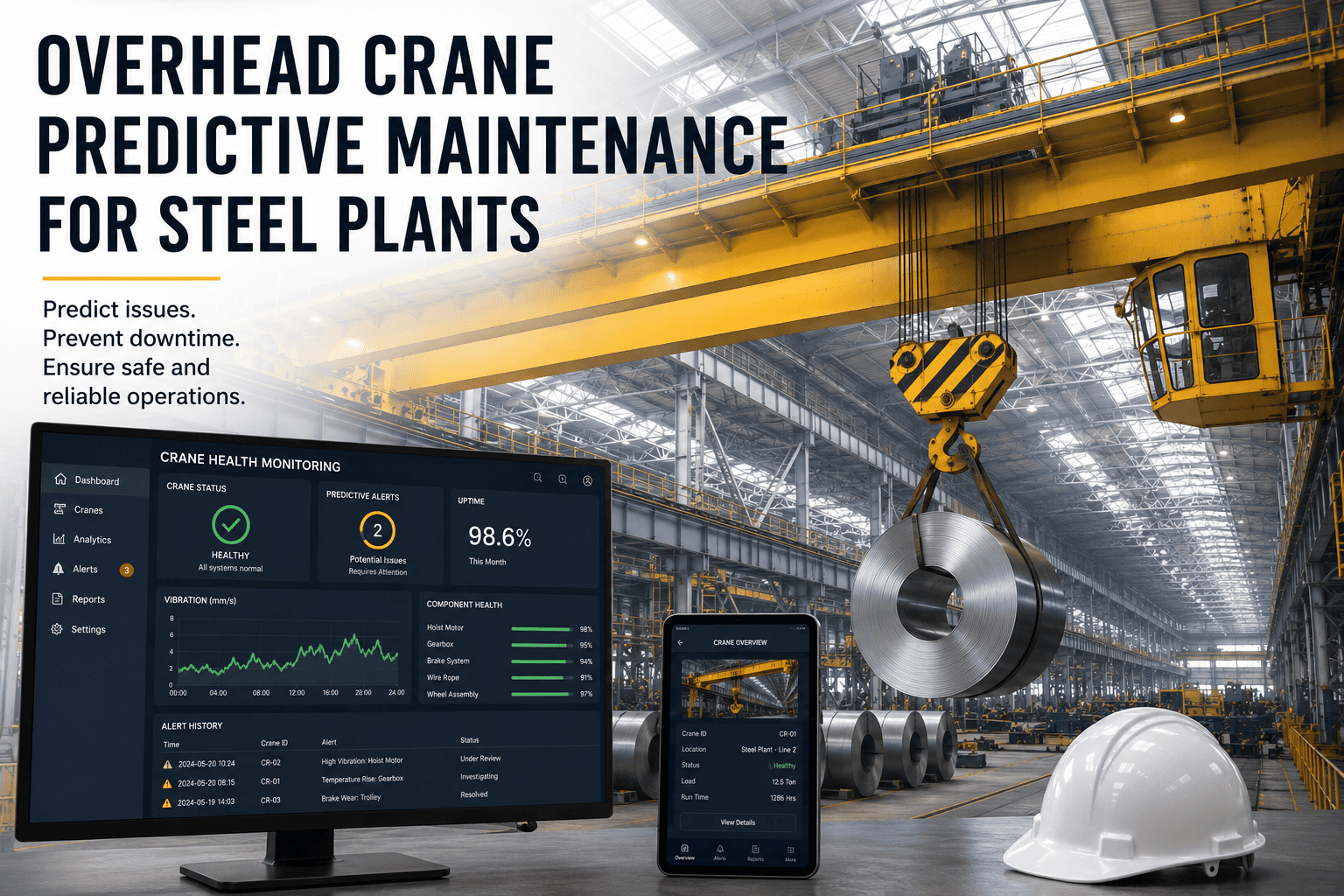
Yes. Motor temperature, vibration, brake wear trends and duty hours support condition-based tasks, and a demo shows how they trigger work.
What records should be ready for an audit?
Inspection reports, load test results, rope and hook records, repair history and proof of defect closure for each crane, available by asset.
Lift With Confidence Across Every Bay
Put every crane on a clear inspection schedule, record what inspectors find and keep repairs, parts and sign-offs together in one maintenance system.