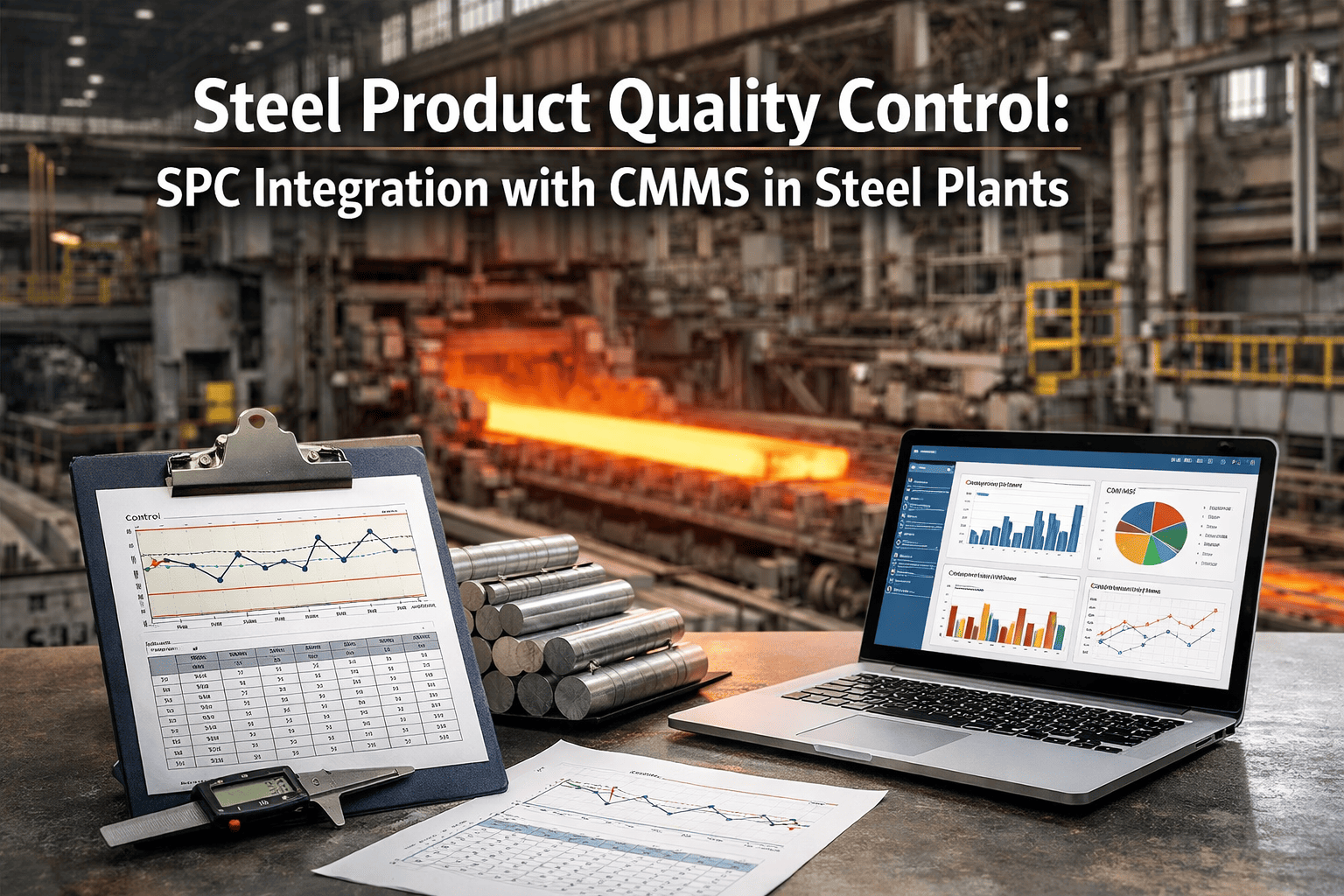
Your MES knows when production started. Your LIMS knows the test results. Your Level 2 systems know the process parameters. But do these systems talk to each other? In most steel plants, quality data lives in silos—disconnected islands that make it nearly impossible to see the complete quality picture. Unified quality platforms are changing this by integrating all quality data sources into a single, actionable view.
Quality data integration with MES creates a seamless flow of information from sensors to business systems, enabling real-time quality decisions, automated compliance, and continuous improvement based on complete data rather than fragments. When your quality system and MES speak the same language, quality becomes proactive rather than reactive.
Steel plants generate terabytes of quality data daily—but without integration, 80% never gets used for decision-making.
The Data Silo Problem
Steel plants accumulate quality data across dozens of systems, each designed for a specific purpose but rarely designed to share. This fragmentation creates blind spots that let quality issues slip through and makes root cause analysis a manual, time-consuming exercise. Talk to our integration experts about connecting your systems.
Without integration, each system holds a piece of the quality puzzle—but no one sees the complete picture.
The Integrated Quality Architecture
Quality data integration creates a unified data layer that connects all sources and makes quality information available wherever it's needed—from operator screens to executive dashboards. Oxmaint's platform serves as this integration hub, connecting your existing systems without replacing them.
Oxmaint Quality Integration Hub
Connect Your Quality Data
See how Oxmaint integrates with your existing MES, LIMS, and automation systems to create a unified quality view.
Key Integration Points
Successful quality-MES integration requires connecting the right data at the right points in the production process. Here are the critical integration touchpoints for steel operations.
Production Order Context
Link quality data to production orders, customer specifications, and material grades automatically. Every measurement knows which order it belongs to.
Process Parameter Capture
Collect temperatures, speeds, forces, and setpoints from Level 2 systems to correlate with quality outcomes and enable process optimization.
Test Results Integration
Automatically import chemical analysis, mechanical test results, and inspection data from LIMS and lab instruments without manual re-entry.
Inline Measurement Data
Stream real-time dimensional, surface, and property measurements from inline gauges and inspection systems for immediate SPC analysis.
Quality Decision Feedback
Send hold, release, and disposition decisions back to MES to control material flow and prevent out-of-spec product from shipping.
Certificate Generation
Automatically compile quality data into mill test reports and certificates of conformance for customer delivery with zero manual effort.
Integration Technologies
Modern integration uses multiple protocols and approaches depending on the source system. Our integration specialists assess your environment and recommend the optimal approach for each connection.
MES-Quality Use Cases
Integration enables powerful use cases that aren't possible with disconnected systems. Here's what becomes achievable when quality and MES data flow together.
Automatic Quality Holds
When test results fall outside limits, automatically place material on hold in MES and prevent shipping until disposition is complete.
Real-Time SPC with Context
View control charts that automatically segment by grade, customer, or equipment—revealing patterns invisible in aggregate data.
One-Click Root Cause
From any quality issue, instantly see all related process parameters, material inputs, equipment, and operators—no manual data gathering.
Auto-Generated MTRs
Mill test reports compile automatically from integrated data—chemical analysis, mechanical tests, dimensions—ready for customer delivery.
Predictive Quality
Use integrated process and quality data to predict final properties before testing, enabling proactive adjustments and reduced scrap.
Compliance Automation
Automatically verify all required tests are complete and within limits before material can be released, ensuring 100% compliance.
See Integration in Action
Watch how quality data flows seamlessly between your systems to enable real-time decisions and automated compliance.
Implementation Approach
Quality-MES integration is best done incrementally, starting with high-value connections and expanding systematically. Oxmaint's integration framework accelerates deployment with pre-built connectors for common systems.
Discovery & Assessment
Map existing systems, data flows, and integration requirements. Identify quick wins and prioritize connections by business value.
- System inventory and documentation
- Data mapping and gap analysis
- Integration architecture design
Core Connections
Establish foundational integrations—MES production orders, LIMS test results, and key process parameters that enable immediate value.
- MES order/material integration
- LIMS results import
- Basic traceability chain
Real-Time Streams
Connect inline measurement systems and Level 2 process data for real-time SPC and immediate quality visibility on the production floor.
- Gauge/sensor integration
- Level 2 process parameters
- Real-time dashboards
Automation & Analytics
Enable advanced use cases—automatic holds, predictive quality, auto-generated certificates—that deliver the full value of integrated data.
- Quality decision automation
- Certificate generation
- Predictive analytics
Business Impact
Quality-MES integration delivers measurable returns across multiple dimensions—from reduced manual effort to prevented quality escapes. Get a customized ROI analysis for your integration project.
Typical ROI: 200-400% in Year One
Steel plants report payback within 4-8 months through reduced quality costs, faster throughput, and eliminated manual effort.
Start Your Integration Journey
From assessment to full integration, Oxmaint provides the platform and expertise to connect your quality ecosystem.
Frequently Asked Questions
Do we need to replace our existing MES to integrate quality data?
No. Oxmaint is designed to integrate with your existing systems, not replace them. We connect to your current MES, LIMS, Level 2 systems, and other sources through standard interfaces, adding a quality intelligence layer on top without disrupting your established workflows.
How do you handle integration with legacy systems that don't have modern APIs?
We support multiple integration approaches including database connections, file-based exchange, OPC-DA (classic), and custom protocols. Our integration team has experience connecting to systems from all major automation vendors as well as custom-built solutions common in steel plants.
What happens to quality data if the network connection is interrupted?
The system includes store-and-forward capability that buffers data locally during network outages and synchronizes automatically when connectivity is restored. No quality data is lost due to temporary network issues, and local operations continue unaffected.
Can we start with one production line and expand later?
Absolutely. We recommend a phased approach starting with a pilot line or area. This lets you prove value, refine processes, and build internal expertise before expanding to additional lines. The platform scales seamlessly from one line to entire multi-plant operations.
How long does a typical integration project take?
A basic integration with MES and LIMS typically takes 8-12 weeks from kickoff to production. More comprehensive integrations including real-time Level 2 data and advanced analytics may take 16-20 weeks. We work around your production schedule to minimize disruption.
Unified Quality, Unified View
Break down data silos and see the complete quality picture with seamless MES integration. Let Oxmaint connect your quality ecosystem.