If you manage maintenance at a steel plant, you've seen it happen. A batch of low-grade iron ore enters the blast furnace. Within weeks, your refractory lining wears faster than expected, your slag chemistry goes haywire, and suddenly you're staring at an unplanned reline that costs millions and shuts down production for days. The frustrating part? Nobody connected the dots between that raw material delivery and the maintenance crisis that followed. Most steel plants treat raw material procurement and equipment maintenance as completely separate functions — and that disconnect is silently destroying asset life, inflating repair budgets, and creating failures that look "unexpected" but were entirely predictable.
The reality is straightforward: what goes into your furnace directly determines how often it breaks down. Poor-quality iron ore, inconsistent coke, contaminated scrap, or off-spec fluxes don't just affect steel quality — they accelerate equipment wear, corrode refractory linings, damage rollers and bearings, and trigger cascading failures across your entire production line. Connecting raw material data to maintenance planning isn't optional anymore. It's the difference between controlling your costs and being controlled by them.
How Raw Materials Directly Affect Equipment Health
In steel manufacturing, raw materials and equipment aren't independent variables — they're deeply interconnected. Every furnace, ladle, caster, and rolling mill reacts differently depending on what's being fed through it. When material quality drops, your maintenance burden rises. Here's the chain reaction:
When a technician reports accelerated refractory erosion, the root cause often isn't the lining material itself — it's the slag chemistry created by impurities in the raw feed. When rollers fail prematurely, it's frequently traced back to inclusions in the steel caused by contaminated scrap. Understanding this connection transforms maintenance from guesswork into science.
The Five Raw Material Factors That Destroy Equipment
Not all raw material problems look the same. Some cause gradual wear that shortens asset life by months. Others trigger sudden, catastrophic failures that halt production entirely. Here are the five biggest offenders that every maintenance team needs to watch:
The Real Cost of Ignoring Material Quality
Most steel plants track raw material costs as a procurement metric and maintenance costs as an operations metric. They rarely connect the two — and that's where the hidden losses pile up.
Accelerated Refractory Wear
Erosion and corrosion account for 70% of all refractory consumption in steel plants. Poor raw material quality is a primary driver — aggressive slag from impure feed can cut lining life in half, turning a planned 6-month campaign into a 3-month emergency.
Unplanned Relines: $2–15M Each
When refractory fails unexpectedly, you're not just paying for new lining material. You're paying for emergency labor, production losses during shutdown, rushed material procurement at premium prices, and cascading schedule disruptions.
Rolling Mill Damage & Rejections
Inclusions and surface defects caused by poor-quality inputs damage expensive rolls and increase product rejection rates. Every rejected batch means rework, wasted energy, and lost revenue — costs that rarely get traced back to material quality.
Stop Letting Poor Materials Destroy Your Equipment
Every batch of sub-standard raw material shortens asset life and inflates your maintenance budget. Oxmaint helps you connect material quality data to equipment health — so you can predict failures before they happen.
Where Material Quality Hits Maintenance Hardest
The impact of raw material quality isn't uniform across the plant. Some equipment zones are far more sensitive to input variations than others. Here's exactly where the damage concentrates and what maintenance teams should watch:
| Equipment Zone | Material Quality Impact | Maintenance Consequence |
|---|---|---|
| Blast Furnace | Low-grade ore and inconsistent coke destabilize thermal profile and increase slag volume | Accelerated hearth erosion, more frequent taphole repairs |
| BOF / EAF Lining | High FeO slag from impure feed chemically attacks magnesia-carbon bricks | Shorter campaign life, emergency gunning and patching |
| Ladle Refractories | Off-spec flux alters slag basicity, corroding alumina-magnesia-carbon linings | Premature relines, steel contamination risk |
| Continuous Caster | Inclusions from contaminated scrap cause nozzle clogging and breakouts | Unplanned stoppages, tundish and mold damage |
| Rolling Mills | Surface defects from poor steel quality increase roll wear and product rejection | Frequent roll changes, higher grinding costs |
Want to see how material quality tracking connects to your maintenance workflows? Schedule a free demo for a personalized walkthrough.
Measurable Gains from Material-Aware Maintenance
When steel plants start connecting raw material quality data to their maintenance planning, the improvements show up fast — in longer asset life, fewer emergencies, and lower cost per tonne of steel produced:
Based on industry benchmarks and plant-level case studies. Results vary by plant maturity and raw material sourcing strategy.
See the Impact on Your Steel Plant
These aren't theoretical projections. Book a personalized demo and we'll show you exactly how Oxmaint connects material quality to maintenance outcomes at plants like yours.
How Oxmaint Connects Material Quality to Maintenance
Most CMMS tools track work orders. Oxmaint goes further — it correlates raw material inputs with equipment wear patterns, giving your maintenance team the data they need to predict and prevent material-driven failures. Here's how:
Track Material Inputs
Log incoming raw material quality data — ore grade, coke properties, scrap composition, flux specs — directly in the system and link it to production batches and equipment zones.
Monitor Equipment Wear
Track refractory lining thickness, roll wear rates, bearing vibration, and furnace performance metrics in real time. Spot accelerated degradation the moment it starts.
Correlate & Predict
Oxmaint connects material quality trends to equipment health data — so when a bad batch of ore arrives, your team knows exactly which assets are at risk and when to intervene.
Optimize & Save
Use historical correlations to set material acceptance thresholds, plan preventive maintenance around material deliveries, and negotiate supplier quality standards backed by hard data.
Before vs. After Material-Aware Maintenance
Still treating material quality and maintenance as separate problems? Sign up now and start connecting the dots in under 30 minutes.
Frequently Asked Questions
How does raw material quality affect refractory life?
Impurities in iron ore, scrap, and fluxes create aggressive slag chemistry that chemically attacks refractory linings. High FeO content, excess silica, and variable basicity can accelerate erosion by 2–3x, turning a planned 6-month campaign into a 2–3 month emergency reline.
Can Oxmaint track incoming raw material quality?
Yes. Oxmaint lets you log material quality parameters — ore grade, moisture content, impurity levels, coke strength — and links them directly to production batches, equipment zones, and maintenance records for full traceability.
What equipment is most affected by poor material quality?
Refractory-lined vessels (blast furnaces, converters, ladles) are most sensitive, as slag chemistry directly determines lining wear. Rolling mills, continuous casters, and tundish systems are also heavily impacted by inclusions and surface defects from poor inputs.
How quickly can we see results?
Most plants begin seeing patterns within the first refractory campaign cycle after implementation — typically 3 to 6 months. Immediate benefits include better work order documentation, faster root cause analysis, and more accurate reline scheduling.
Does this work for EAF plants using scrap steel?
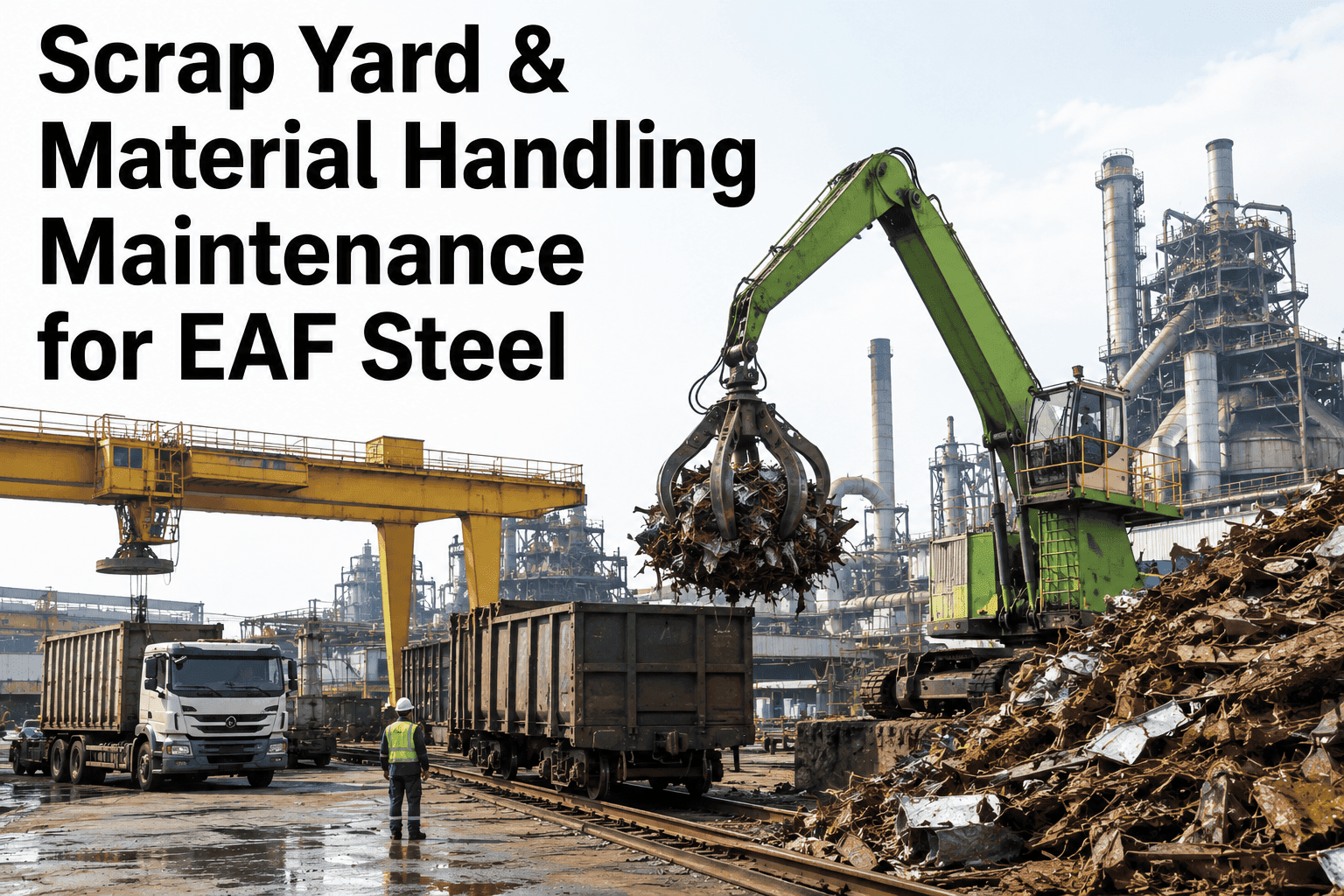
Absolutely. Scrap-fed EAF plants face unique material quality challenges — contaminated scrap with copper, zinc, or tin causes hot shortness and roll damage. Oxmaint tracks scrap quality metrics and correlates them with downstream equipment health.
Turn Raw Material Data Into Maintenance Intelligence
Join the steel plants that have stopped treating material quality and equipment health as separate problems. Deploy Oxmaint in weeks, connect the data that matters, and start preventing the failures you never saw coming.