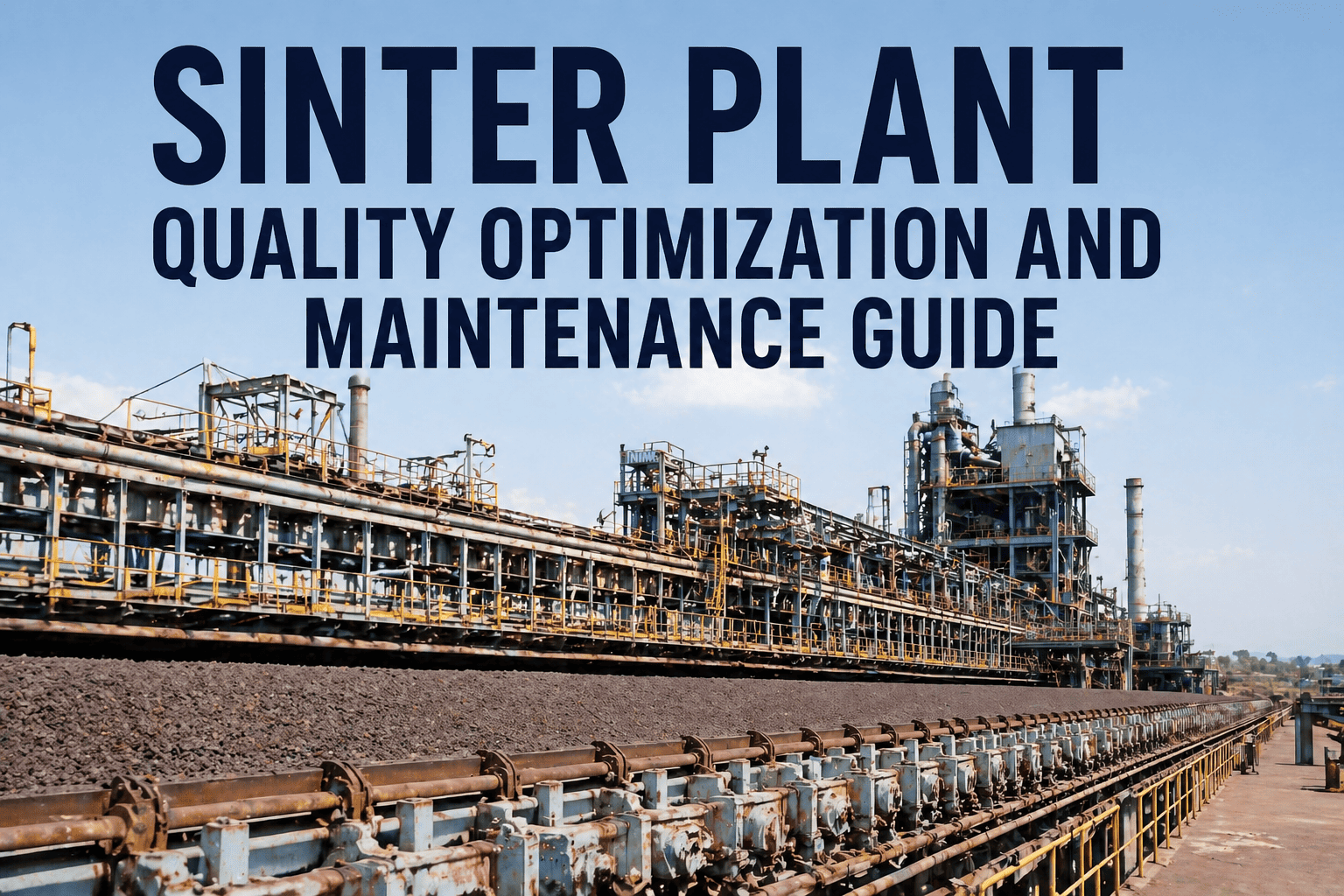
The sinter plant is the gatekeep of blast furnace performance. Every ton of hot metal produced in a blast furnace depends on the quality, consistency, and uninterrupted supply of sinter — the porous, agglomerated iron ore that forms the primary burden material. Approximately 70% of blast furnace feed worldwide comes from sinter plants, and sinter quality directly controls furnace permeability, fuel consumption, and hot metal chemistry. A sinter plant operates at 1,300-1,400°C, running continuously with production rates of 1,000-2,500 tons per day per strand. The equipment endures extreme thermal cycling, abrasive materials, corrosive gases, and heavy mechanical loads around the clock. Wear parts — grate bars, pallet car components, rollers, chain links, and refractory linings — have service lives of 3-10 years depending on operating conditions, and energy costs can account for up to 30% of total operating expenses. Benchmark operations achieve productivity above 2.0 t/m²/h with emissions below 50 mg/Nm³, but these numbers are only possible with disciplined, systematic maintenance. When maintenance fails, sinter quality drops, return fines increase, the blast furnace struggles, and the entire ironmaking operation suffers.
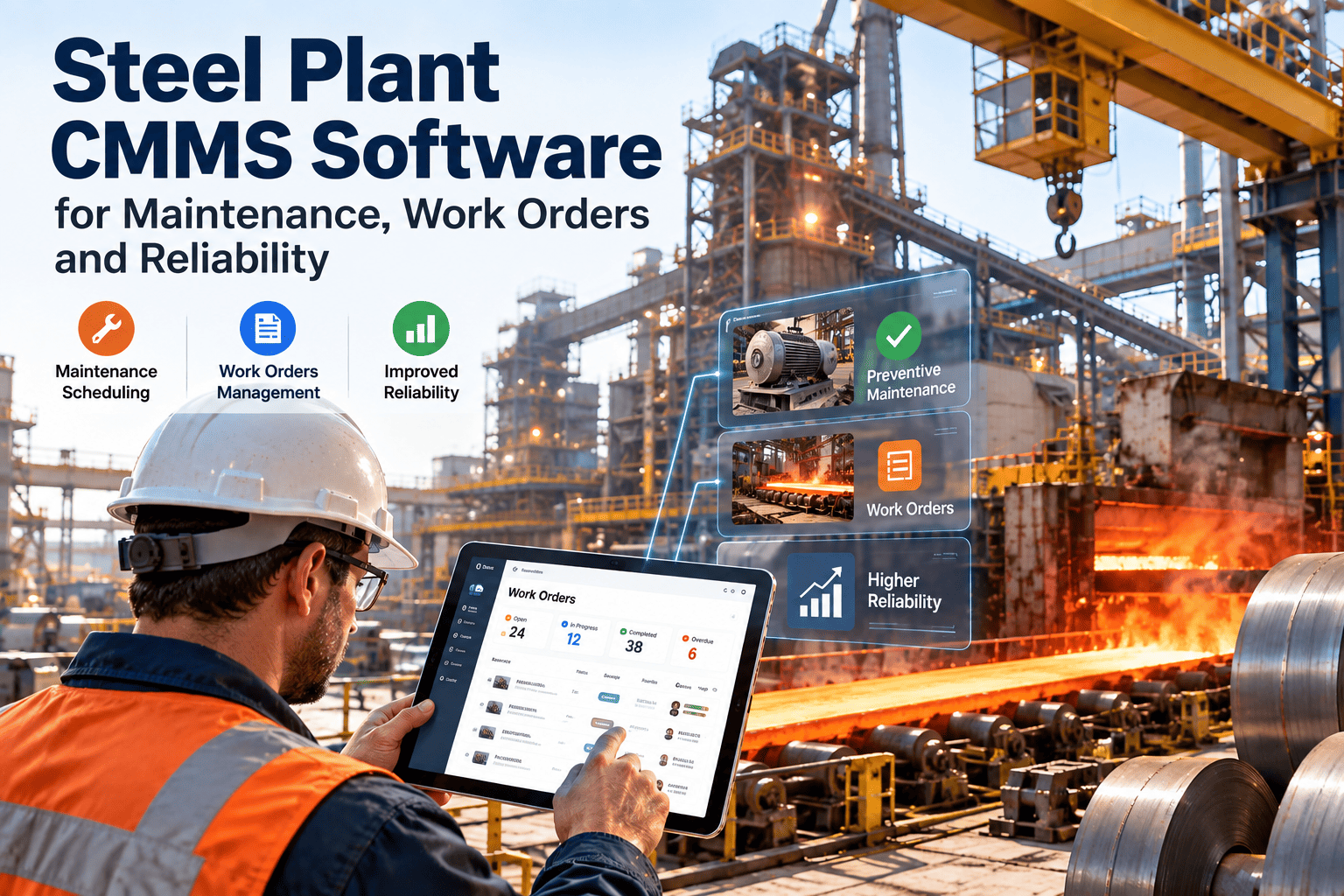
Managing sinter plant maintenance means coordinating scheduled shutdowns across interconnected systems — the raw material handling section, mixing and nodulizing drums, the sintering strand with its pallet cars and ignition system, windboxes and exhauster fans, the cooling system, and crushing/screening equipment — while minimizing production loss and ensuring environmental compliance. Oxmaint CMMS provides the infrastructure to plan, schedule, and track every maintenance task across the entire sinter plant — from daily inspections and lubrication routes to major refractory relines and pallet car overhauls. Schedule a demo.
Every Stage Depends on Maintenance
Handling
Granulation
Sintering
Discharge
Screening
Furnace Feed
Critical Equipment Zones: What Breaks and What to Maintain
A sinter plant is a chain of interconnected equipment zones. A failure in any zone stops the entire line. Each zone has unique maintenance demands based on the stresses it faces:
Sinter Strand & Pallet Cars
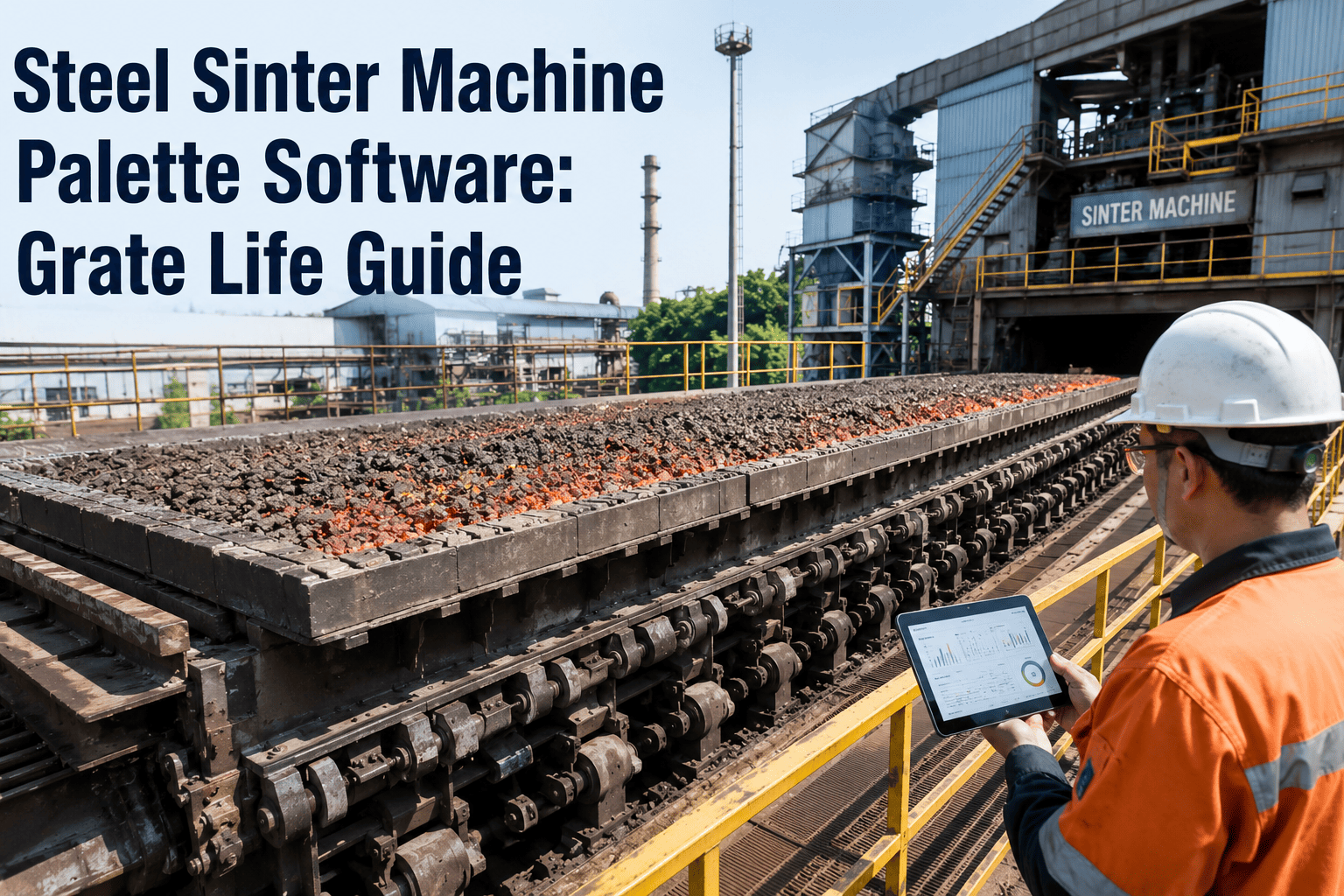
The heart of the plant. Pallet cars travel continuously on rails, carrying the sintering bed through ignition and burn-through zones at extreme temperatures. Grate bars support the material bed and must maintain airflow permeability. Special steel construction increases high-temperature strength while reducing weight by 30%.
Ignition Furnace & Burners
Gas or oil burners heat the sinter bed surface to ~1,200°C within 1.5-2.0 minutes to initiate combustion. The ignition zone typically has 11+ burners and a soaking/annealing zone with 12+ burners. Refractory linings must withstand continuous high-temperature exposure and thermal cycling.
Windboxes & Exhauster Fans
Windboxes beneath the strand create the vacuum that draws air through the sinter bed, driving combustion. Exhausters are massive fans handling high-volume, dust-laden, corrosive gas. They are the single largest electricity consumers in the plant and a single exhauster failure halts the entire strand.
Cooling System
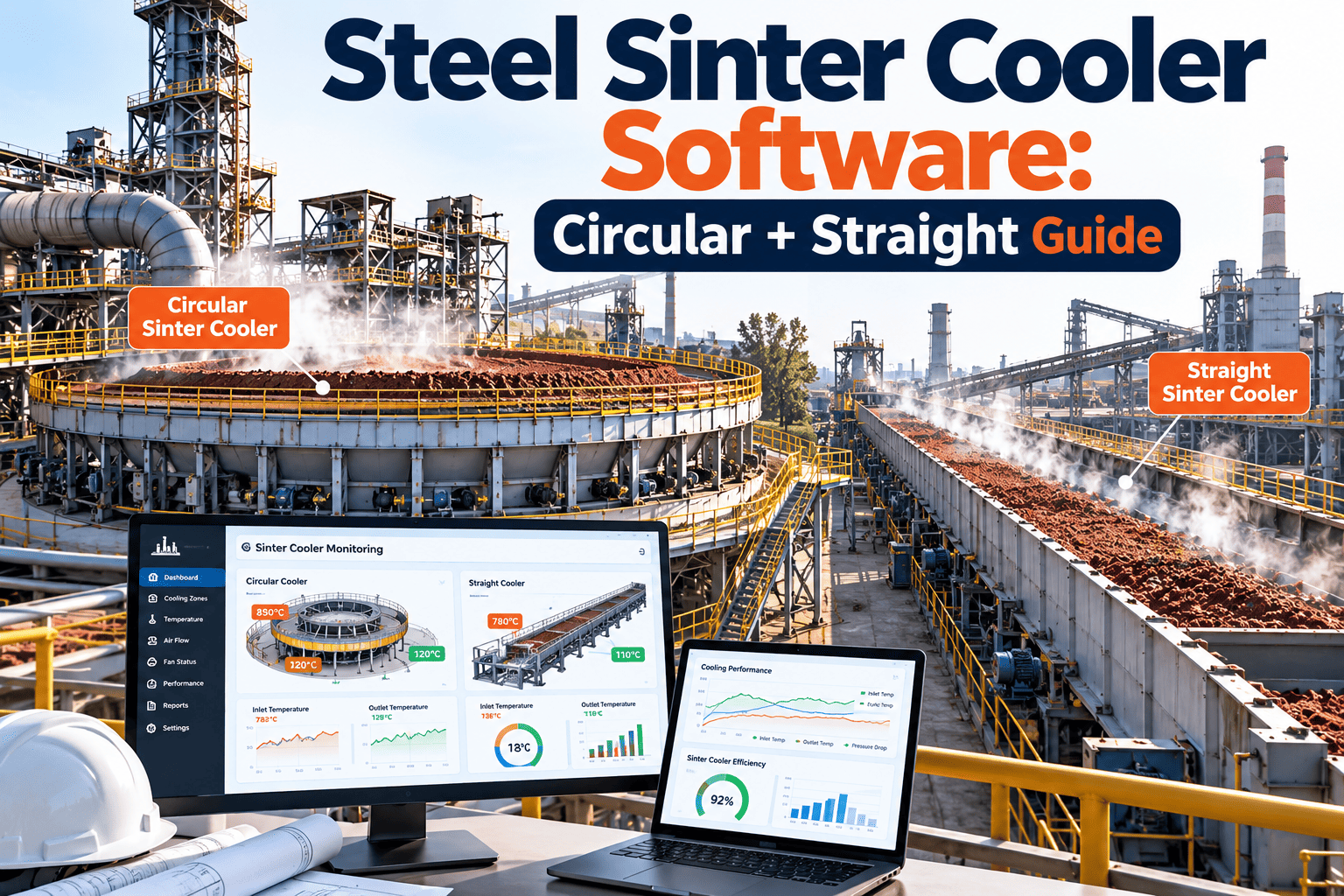
Circular or linear coolers reduce sinter temperature from sintering heat to approximately 100°C for safe handling. Coolers use forced draft air and incorporate dedusting hoods. Waste heat from cooling can be recovered for power generation or preheating combustion air (savings of ~0.55 GJ/tonne sinter).
Crushing & Screening
Hot and cold sinter breakers reduce the sinter cake, then screens separate product sinter (10-30mm for BF) from return fines (<5mm recycled back to mix). These machines handle abrasive, hot material and experience high wear rates on crusher teeth, screen decks, and chute liners.
Dust Collection & Gas Cleaning
Electrostatic precipitators (ESPs), bag filters, cyclones, and scrubbers control particulate, SOx, NOx, and dioxin emissions. Sinter plants are the largest dust emitters in an integrated steel works. Emissions must stay below 50 mg/Nm³ for modern standards. Bag filter failure is both an environmental and regulatory risk.
Every Zone. Every Asset. Every Maintenance Task. Tracked.
Oxmaint maps your entire sinter plant — from pallet cars and grate bars to exhausters and bag filters — with automated PM scheduling, shutdown planning, and condition-based maintenance triggers.
The Quality–Maintenance Connection
In a sinter plant, maintenance quality directly determines product quality. Every maintenance failure has a measurable downstream impact on sinter properties and blast furnace performance:
Maintenance Frequency Matrix
Sinter plant maintenance follows a tiered frequency model, with daily operator rounds at the base and major planned shutdowns at the top:
Plan Shutdowns. Prevent Surprises. Protect Production.
Oxmaint coordinates your entire sinter plant maintenance program — daily rounds to annual shutdowns — with automated scheduling, condition monitoring integration, and spare parts tracking across every equipment zone.
What the CMMS Must Track for Sinter Plant Maintenance
Frequently Asked Questions
What are the main equipment components of a sinter plant that require maintenance?
A sinter plant consists of six major equipment zones, each with distinct maintenance requirements: Raw material handling — conveyors, stockpile reclaimers, proportioning bins, and feeders that handle abrasive iron ore fines, coke breeze, and flux; Mixing and granulation — rotating drums that blend raw materials with 7-8% water to form 5-7mm granules, with replaceable liners subject to heavy abrasion; Sintering strand and pallet cars — the core production equipment with traveling grate bars, pallet car wheels/bearings, drive chains, and refractory linings operating at 1,300-1,400°C; Ignition system — multi-slit burners (typically 11+ ignition burners and 12+ soaking burners), refractory-lined ignition hood, gas supply, and flame detection systems; Cooling and discharge — circular or linear coolers with fans, sealing systems, and dedusting hoods; Crushing, screening, and dust collection — sinter breakers, hot and cold screens, ESPs, bag filters, cyclones, and scrubbers. Pallet car components have 3-10 year service lives depending on conditions, sealed bearings require lubrication every 4-6 months, and refractory linings need periodic repair or full replacement during annual shutdowns.
How does sinter plant maintenance affect blast furnace performance?
Sinter quality is the single largest controllable factor in blast furnace performance, and sinter quality is directly determined by maintenance quality. Approximately 70% of blast furnace burden worldwide is sinter. The key connections include: Grate bar condition controls bed permeability — worn or warped grate bars create uneven airflow, producing weak zones and over-sintered zones that increase return fines and reduce tumble strength; Ignition system maintenance controls sintering consistency — inconsistent ignition temperature causes under-sintered product with low strength, increasing fines in the BF burden and causing gas flow channeling; Exhauster maintenance prevents supply interruption — a single exhauster failure stops the entire strand, and BF stockpiles can deplete within hours without sinter supply; Mixing drum condition controls granulation quality — worn liners produce inconsistent moisture distribution, causing variable bed permeability and unstable burn-through point; Dust collection maintenance ensures regulatory compliance — bag filter failures can trigger emissions exceedances and regulatory shutdowns. Benchmark sinter plants achieve productivity above 2.0 t/m²/h with emissions below 50 mg/Nm³, but only with systematic preventive maintenance across all zones.
What is the recommended maintenance frequency for sinter plant equipment?
Sinter plant maintenance follows a tiered frequency model: Daily/every shift — operator walkdowns covering visual strand inspection, bearing noise checks, BTP temperature profile monitoring, dust collection system status, and ignition flame pattern verification; Weekly — detailed grate bar inspection (sample bars removed and checked), bearing lubrication, crusher teeth and screen deck inspection, chute liner wear checks, and burner nozzle cleaning; Monthly — exhauster fan vibration analysis and trending, pallet car bearing condition assessment, refractory inspection, emissions monitoring equipment calibration, motor insulation testing, and oil analysis on gearboxes; Quarterly — comprehensive pallet car inspection with rotation for overhaul, full grate bar inventory and replacement, drive chain measurement, bag filter comprehensive inspection, and complete sensor calibration; Annual shutdown — major refractory reline, exhauster impeller replacement, pallet car fleet overhaul, strand rail and guide beam replacement, crusher/screen major overhaul, complete electrical system inspection, and gas cleaning system major service. Predictive maintenance using vibration analysis, thermography, and sensor data should supplement scheduled maintenance to anticipate failures between planned intervals.
What are the biggest maintenance challenges in sinter plant operations?
Sinter plants present several unique maintenance challenges: Continuous operation requirement — sinter plants must run continuously to feed the blast furnace, making unplanned downtime extremely costly and limiting maintenance windows to planned shutdowns; Extreme operating environment — equipment operates at 1,300-1,400°C with abrasive materials, corrosive gases, and heavy dust loading, accelerating wear on all components; Interdependent systems — a failure in any single zone (strand, exhauster, ignition, cooling, gas cleaning) stops the entire plant, requiring comprehensive maintenance across all systems simultaneously; Capital cost of spare parts — pallet cars, grate bars, exhauster impellers, and refractory materials are expensive, with capital costs for a sinter plant ranging from $50-200+ million; Energy management — energy costs represent up to 30% of operating expenses, and poorly maintained equipment (air leaks, worn seals, inefficient combustion) directly increases energy consumption; Environmental compliance — sinter plants are the largest dust emitters in an integrated steelworks, and maintenance failures in gas cleaning systems can trigger regulatory violations and forced shutdowns; Coordinating shutdowns — annual maintenance shutdowns must be synchronized with blast furnace campaigns and other plant operations to minimize total production impact.
How does CMMS software improve sinter plant maintenance management?
CMMS software addresses the unique challenges of sinter plant maintenance through: Comprehensive asset registry — every pallet car, grate bar set, exhauster, burner, and screen tracked individually with specifications, condition data, and complete service history; Automated PM scheduling — daily rounds, weekly inspections, monthly assessments, quarterly overhauls, and annual shutdown tasks all scheduled automatically with alerts for overdue items; Condition monitoring integration — vibration data from exhausters, temperature trends from bearings, thermography results from refractory, and emissions data all captured and trended to predict failures before they occur; Shutdown planning tools — scope definition, task sequencing, critical path analysis, contractor coordination, spare parts pre-staging, and cost tracking for annual maintenance shutdowns; Spare parts management — grate bar inventory, refractory materials, bearing stock, filter bags, and crusher wear parts tracked with minimum stock levels and automatic reorder triggers; Safety and compliance — permit-to-work management, LOTO procedures, emissions compliance records, and regulatory reporting documentation; Performance analytics — equipment reliability trends, maintenance cost per ton of sinter, planned vs. unplanned downtime ratio, and maintenance effectiveness metrics that drive continuous improvement.
Keep Your Sinter Plant Running at Peak Performance
Join steel plants using Oxmaint to manage sinter plant maintenance — from daily operator rounds to annual shutdown planning — with the tools to protect production, quality, and environmental compliance.