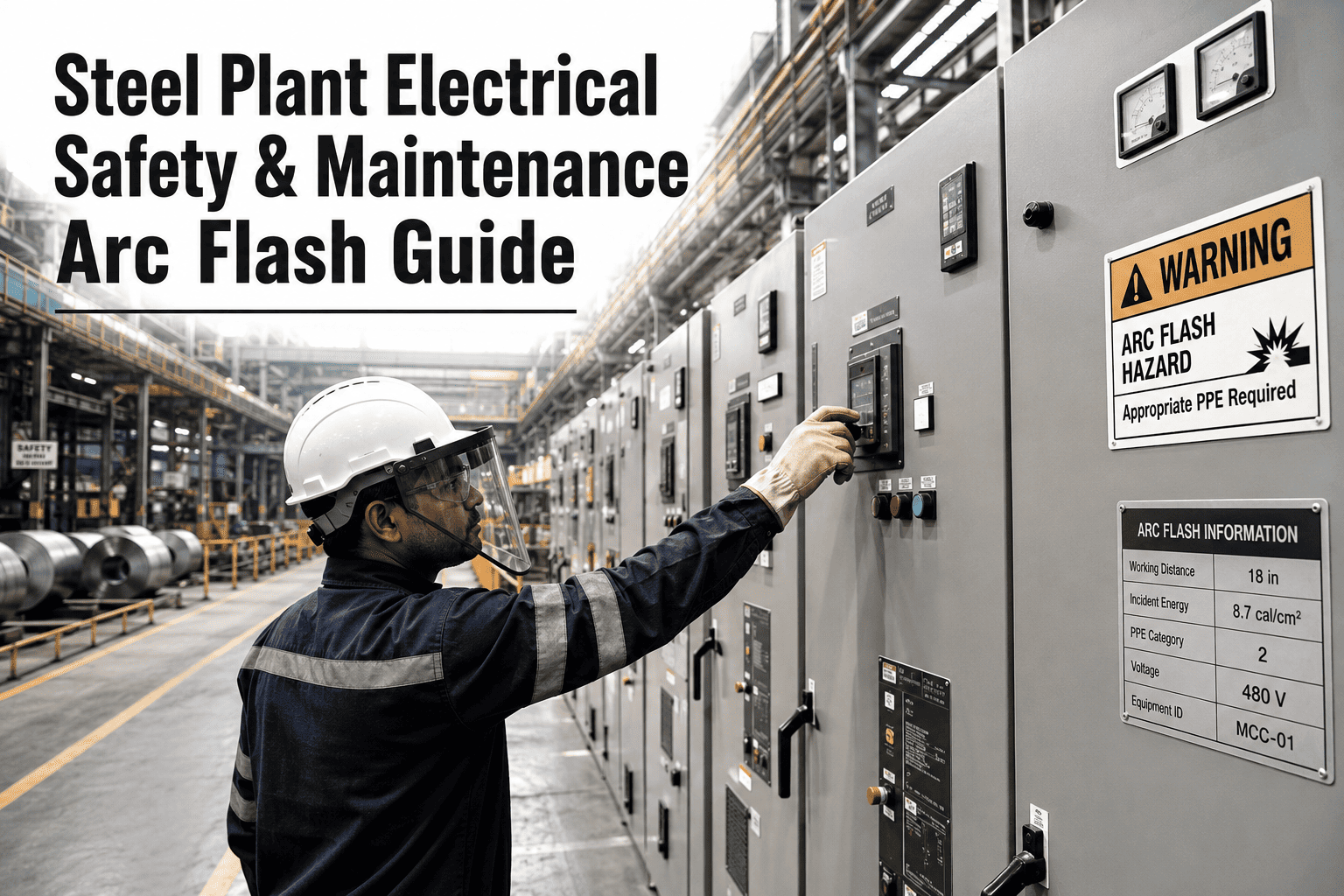
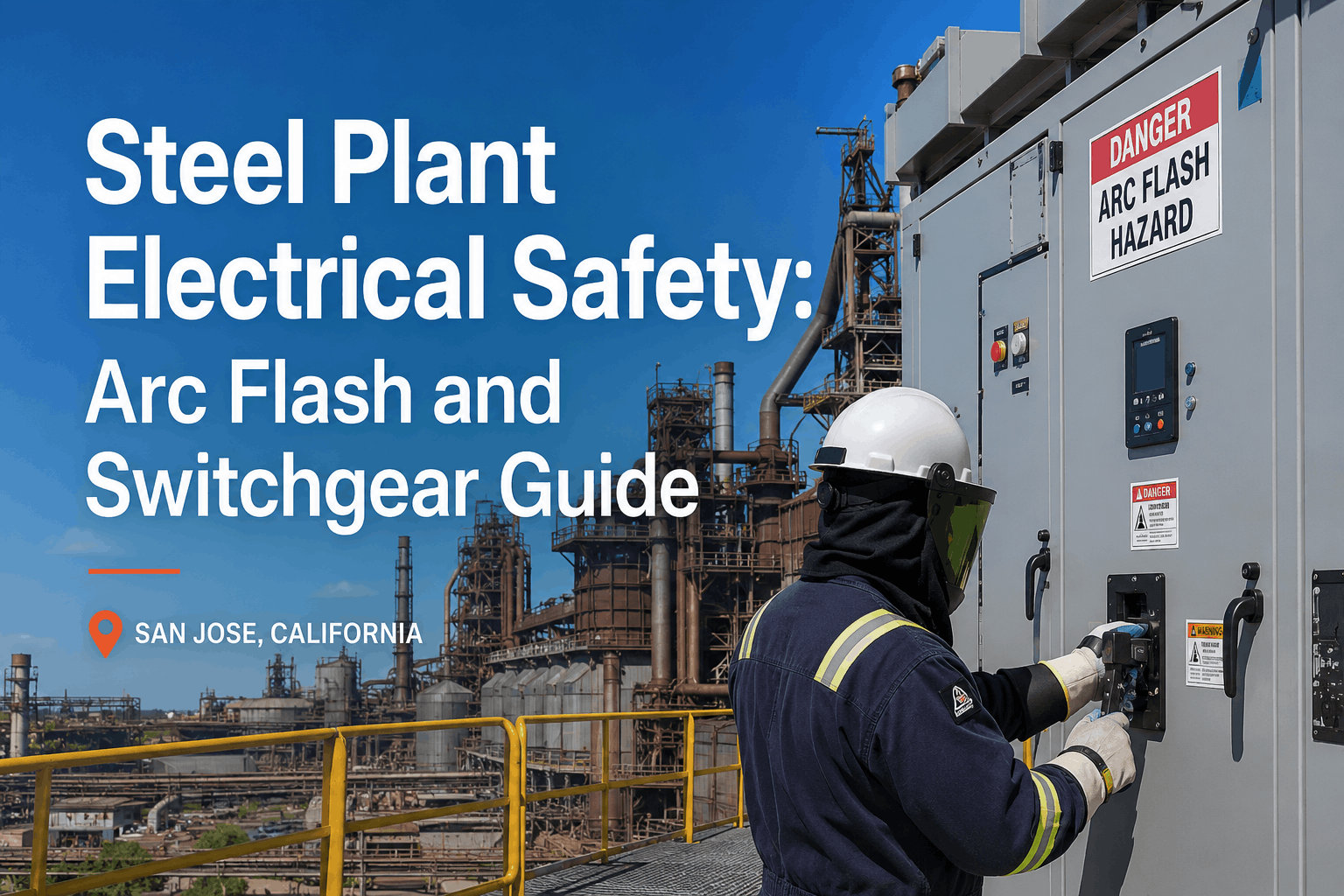
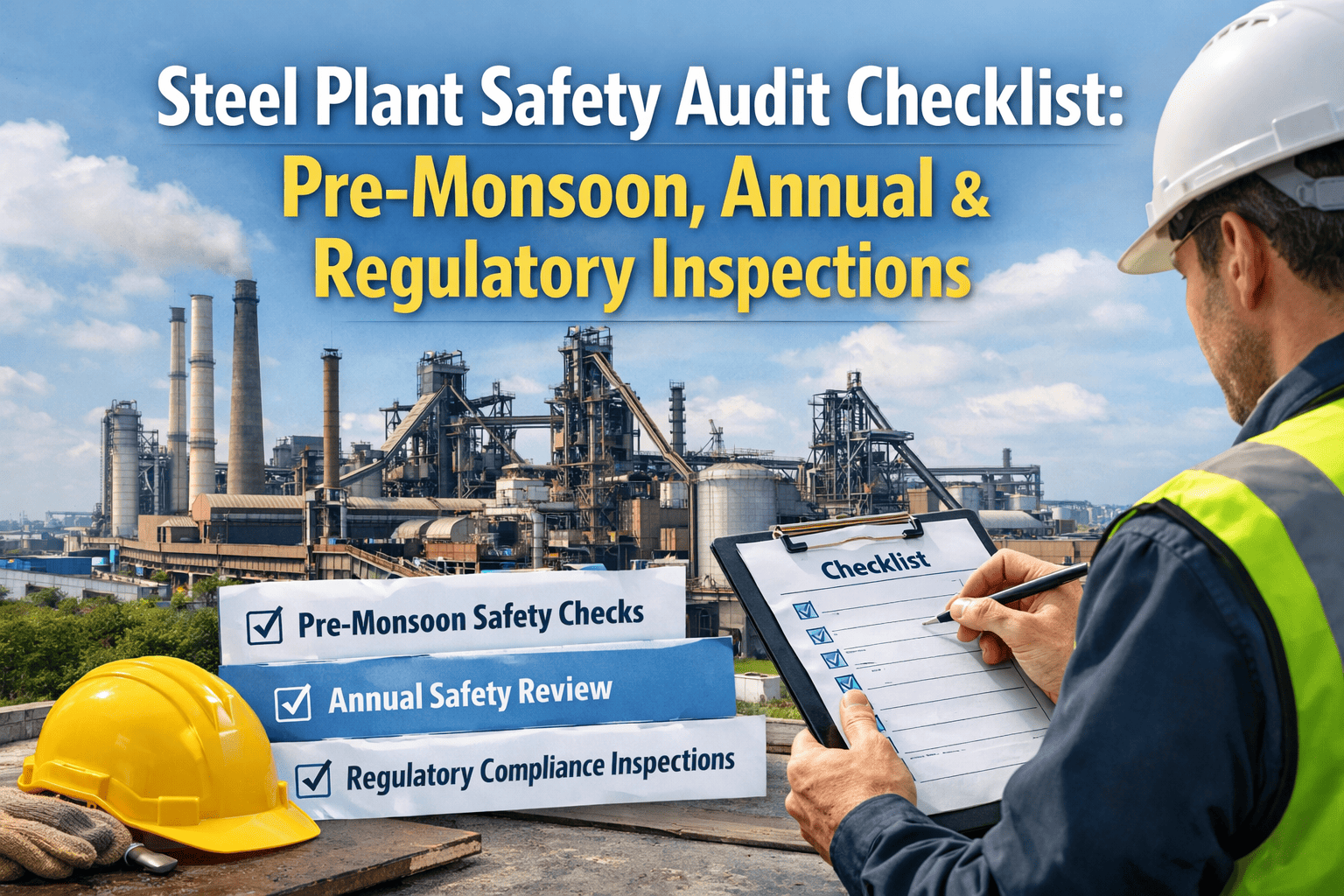
Steel plants run on high-voltage power — and that same power can kill in milliseconds. Arc flash temperatures exceed 35,000°F, switchgear failures trigger unplanned shutdowns, and a single missed maintenance check can result in OSHA citations exceeding $150,000. Yet most steel facilities still rely on paper logs and reactive maintenance to manage their most critical electrical assets. This guide covers every layer of steel plant electrical safety — from arc flash analysis to CMMS-based compliance tracking — so your team stays safe, audit-ready, and always operational.
NFPA 70E · OSHA 1910 · IEEE 1584
Steel Plant Electrical Safety
Arc Flash · Switchgear · High-Voltage Maintenance
A complete compliance and maintenance framework for electrical teams in steel manufacturing
Book a Demo
Start Free Trial
30,000
Arc Flash Incidents / Year (US)
35,000°F
Arc Flash Temperature
$278K+
Avg OSHA Penalty Per Incident
5 Years
NFPA 70E Re-Assessment Cycle
01 — ARC FLASH ANALYSIS
Why Arc Flash Is the #1 Electrical Killer in Steel Plants
Arc flash occurs when electrical current jumps between conductors, releasing explosive energy — heat, pressure, and molten metal — in milliseconds. Steel plants face elevated risk due to heavy motor loads, aging switchgear, and environments with dust and moisture.
HIGH RISK
MCC Panels
Frequent energized access during production shifts
HIGH RISK
Furnace Switchgear
High fault currents near arc furnace circuits
MEDIUM RISK
VFD Cabinets
Harmonics increase insulation stress
MEDIUM RISK
Cable Trays
Dust accumulation and abrasion damage
Arc Flash Assessment Process — IEEE 1584
→
2
Fault Current Calculation
→
3
Incident Energy Analysis
→
4
PPE Category Assignment
→
02 — PPE REQUIREMENTS
NFPA 70E PPE Categories — Know Before You Touch
Wearing the wrong PPE is as dangerous as wearing none. NFPA 70E defines four arc-rated categories based on incident energy levels measured in cal/cm².
CAT 1
1.2 – 4 cal/cm²
4 cal/cm²
120V control panels
CAT 2
4 – 8 cal/cm²
8 cal/cm²
480V MCC cabinets
CAT 3
8 – 25 cal/cm²
25 cal/cm²
Medium voltage switchgear
CAT 4
25 – 40 cal/cm²
40 cal/cm²
High-voltage distribution, EAF circuits
03 — MAINTENANCE CHECKLIST
Electrical Equipment Maintenance Checklist
Unplanned failures start with skipped maintenance. Below is the critical checklist your steel plant electrical team must follow — structured by equipment type and frequency.
SW
Switchgear
- Inspect bus bars for overheating (IR scan)
- Test protective relay operations
- Clean insulating surfaces — remove dust
- Verify breaker trip/close mechanisms
- Check earthing connections and continuity
Monthly + Annual
TR
Transformers
- Check oil level and dielectric strength
- Inspect bushings for cracks or tracking
- Monitor winding temperature indicators
- Verify tap changer operation
- Test surge arrestors
Quarterly + Annual
MCC
MCC Panels
- Torque check all terminal connections
- Test overload relays and starters
- Inspect drawout bucket mechanisms
- Verify arc flash labels are current
- Check door gaskets and enclosure seals
Monthly
VFD
VFD Systems
- Clean heatsinks and cooling fans
- Check DC bus capacitor condition
- Test input/output phase balance
- Review fault log history
- Verify harmonic filter performance
Quarterly
CB
Cable & Bus
- Inspect cable trays for debris and damage
- Test insulation resistance (Megger test)
- Check cable supports and bundling
- Inspect penetration seals
- Verify cable labelling is intact
Semi-Annual
ES
Earthing System
- Measure earth pit resistance (<5 ohm)
- Inspect earth strips and connections
- Test lightning arrestors
- Verify equipment bonding integrity
- Check lightning protection network
Annual + Monsoon
Stop Tracking This on Paper
OxMaint auto-schedules these checks, assigns them to the right technician, and logs every completion with digital proof — ready for any audit.
Start Free Trial
Book a Demo
04 — LOTO & SAFE WORK
Lockout/Tagout — The Foundation of Electrical Safety
OSHA 29 CFR 1910.147 mandates LOTO for any work on energized equipment. In steel plants, LOTO failures are among the leading causes of electrical fatalities. Every step must be documented.
01
Notify Affected Personnel
Inform all workers in the area before de-energizing
02
Identify All Energy Sources
Electrical, pneumatic, hydraulic — all must be isolated
03
De-energize and Isolate
Open breakers, disconnect switches, remove fuses
04
Apply Locks and Tags
Each authorized worker applies their personal lock
05
Verify Zero Energy State
Test with meter — "test before touch" rule applies
06
Document and Proceed
Log permit in CMMS — work can now begin safely
05 — CMMS COMPLIANCE
How OxMaint Keeps Steel Plants Electrically Compliant
A CMMS built for heavy industry eliminates the gaps between what was planned, what was done, and what can be proven during an audit.
01
Automated PM Scheduling
Auto-generate work orders for switchgear, transformer, and MCC inspections based on OEM intervals and NFPA 70B requirements.
02
Digital LOTO Permits
Create, assign, and close LOTO permits digitally. Every step is time-stamped and tied to the equipment record.
03
Arc Flash Label Tracking
Track assessment dates per asset. Get alerts when arc flash studies are due for renewal every 5 years per NFPA 70E.
04
PPE Compliance Records
Log which PPE category was used for each work order. Attach photos and checklists as evidence for audits.
05
Audit-Ready Reports
One-click compliance reports showing completed PMs, overdue tasks, LOTO history, and safety incident trends.
06
Mobile Technician App
Field teams complete checklists on mobile — offline capable. No paper, no lost records, no disputes during audits.
Regulatory Standards Covered by OxMaint
NFPA 70E
NFPA 70B
OSHA 1910 Subpart S
IEEE 1584
29 CFR 1910.147 LOTO
IEC 60204
IS 5216
FREQUENTLY ASKED
Common Questions on Steel Plant Electrical Safety
How often should arc flash assessments be updated in a steel plant?
NFPA 70E requires re-assessment every 5 years, or sooner when significant changes are made to the electrical system — such as adding equipment, changing transformer sizes, or modifying switchgear configurations. Steel plants with arc furnaces often update more frequently due to load variability.
What is the minimum PPE for working near 480V MCC panels?
Typically PPE Category 2 is required for 480V MCC work, which means arc-rated clothing with a minimum 8 cal/cm² rating, arc-rated face shield, insulated gloves, and leather footwear. The exact category must be confirmed through a site-specific arc flash study based on IEEE 1584 calculations.
Can CMMS software help with NFPA 70E compliance documentation?
Yes. A CMMS like OxMaint can store arc flash study dates per asset, track PPE requirements per equipment, generate LOTO permit records, schedule mandatory re-assessments, and produce audit-ready compliance reports — eliminating manual paperwork and reducing audit risk significantly.
What are the most common electrical hazards in steel plants specifically?
The highest-risk areas are electric arc furnace (EAF) power systems, medium-voltage switchgear, motor control centers handling rolling mill drives, VFD systems with high harmonic content, and cable trays in dusty, high-temperature environments near furnaces and casting areas.
How does OxMaint handle electrical PM scheduling differently from spreadsheets?
OxMaint auto-generates work orders based on asset-level frequencies, assigns them to qualified technicians, sends reminders before due dates, captures digital completion evidence, and flags overdue tasks — all in one system. Spreadsheets require manual updates and offer no accountability or audit trail.
Ready to Eliminate Electrical Safety Gaps?
OxMaint helps steel plant electrical teams automate compliance, prevent failures, and stay audit-ready — without extra paperwork.