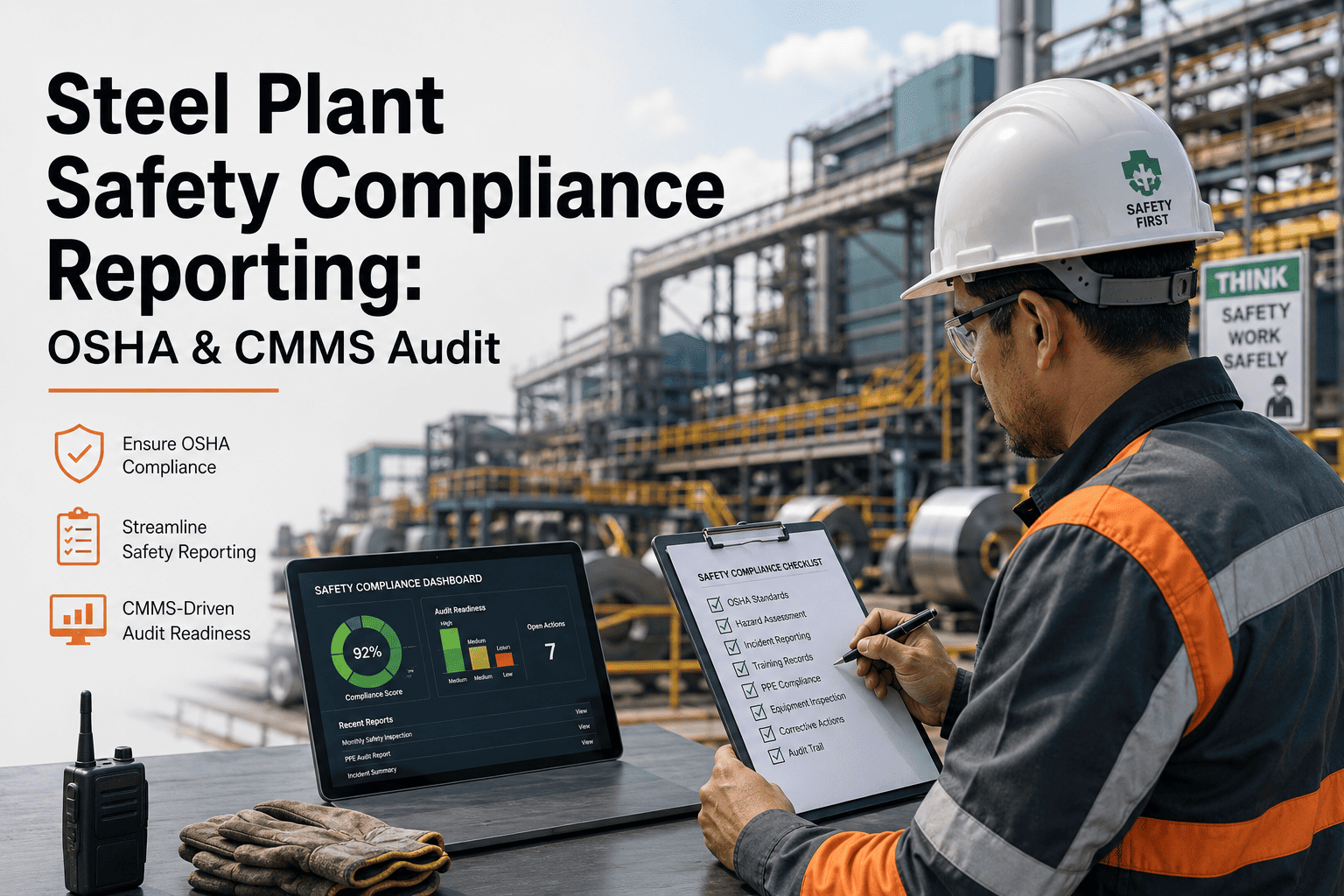
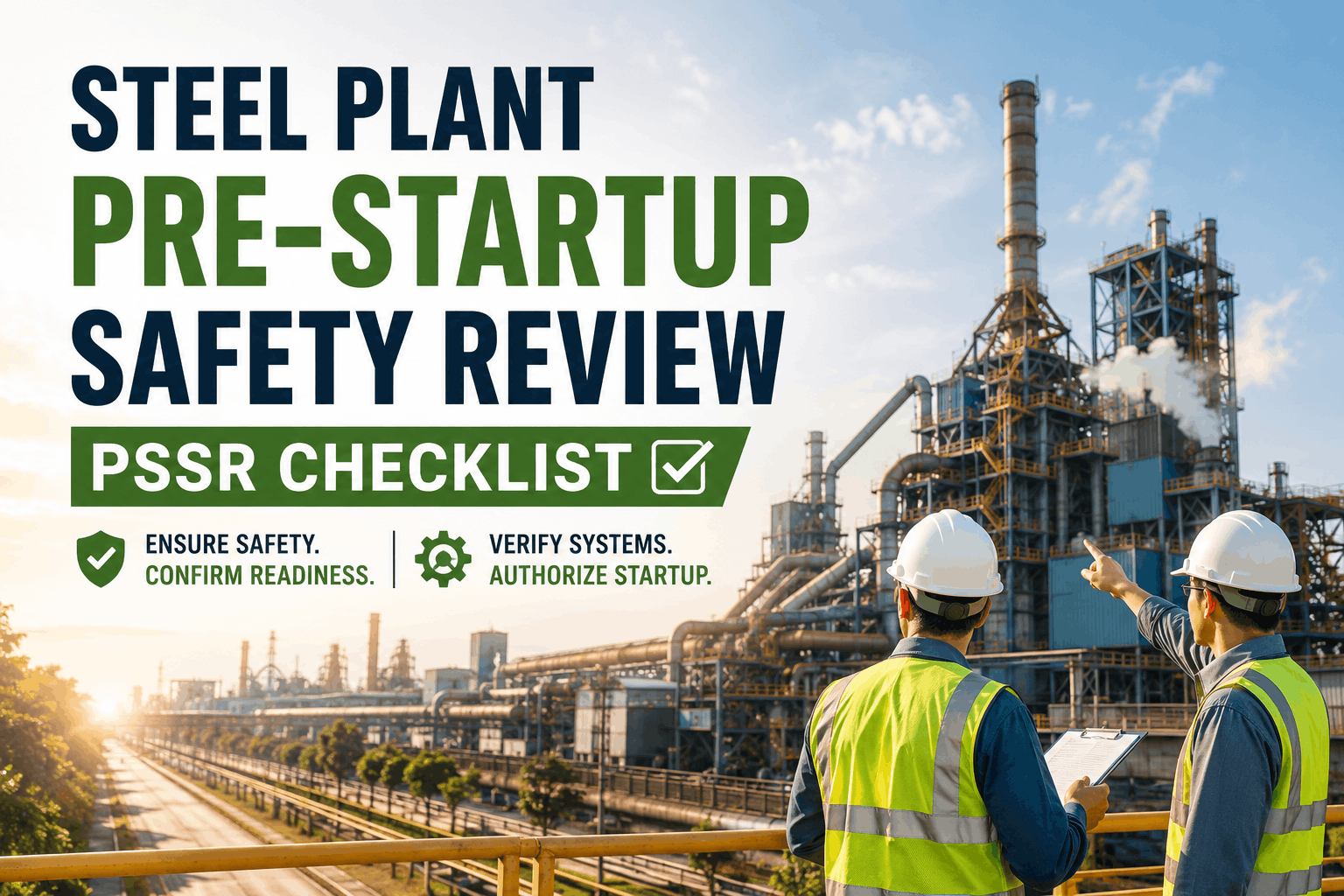
Steel plants operate under some of the most rigorous safety oversight in heavy industry — with OSHA citing steel operations over 3,200 times in 2024 alone, averaging $16,131 per serious violation and up to $170,735 for willful repeat offences. In India, the Factories Act 1948, State Pollution Control Board (SPCB) consents, and Factory Inspectorate visits add additional compliance layers that demand year-round documentation discipline. Pre-monsoon preparations, annual safety reviews, and regulatory inspections each require distinct checklist disciplines — and a single missed item can escalate an observation into a formal citation. OxMaint's digital safety audit and checklist platform turns these obligations from a paper scramble into a structured, audit-ready system your team can run every shift.
Safety & Compliance · Steel Plant · Audit Checklists
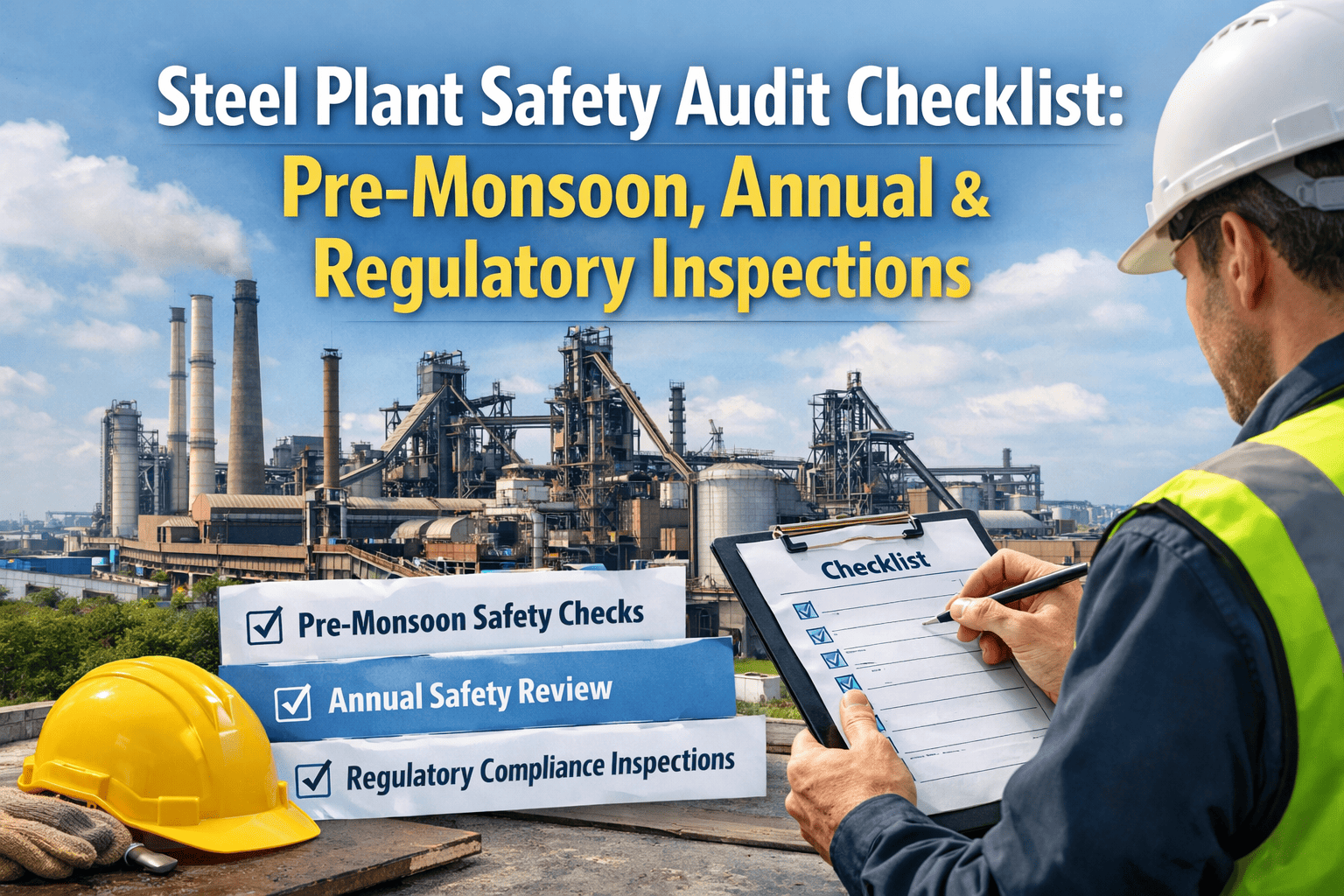
Steel Plant Safety Audit Checklist: Pre-Monsoon, Annual & Regulatory Inspections
Three complete audit frameworks covering pre-monsoon preparations, annual safety reviews, and Factory Inspectorate / SPCB / OSHA regulatory inspections — with specific checklist items, responsible roles, and documentation requirements.
3,200+
OSHA citations to steel operations in 2024
$170,735
Max penalty per willful/repeat violation
Form V
Annual SPCB return due 30 Sep each year
Quarterly
Minimum internal audit frequency recommended
How to Use This Page
Three Audit Types — One Structured Reference
This checklist covers three distinct audit cycles that every steel plant safety team must run: the pre-monsoon inspection conducted before June each year, the annual safety review required for regulatory licence renewals and ISO 45001 surveillance audits, and regulatory inspection readiness covering Factory Inspectorate, SPCB, and OSHA visits. Each section is structured with specific checklist items, the responsible role for each check, and the documentation that auditors and inspectors will ask to see.
01
Pre-Monsoon Safety Audit
Conducted April to May each year before the onset of monsoon season. Covers structural integrity, drainage, electrical safety, material storage, and emergency preparedness for adverse weather conditions.
Deadline: Before June 1 annually
02
Annual Safety Review
Comprehensive plant-wide review covering safety performance KPIs, incident investigation closure, statutory training records, PPE audit, and safety management system documentation for licence renewal and ISO surveillance.
Frequency: Once per year minimum
03
Regulatory Inspection Readiness
Covers Factory Inspectorate (Factories Act 1948), SPCB consent compliance, and OSHA inspection readiness. Focuses on documentation availability, record retention, and real-time inspection response preparedness.
Readiness: Maintained continuously
Checklist 01
Pre-Monsoon Safety Audit Checklist
The Inspectorate of Factories requires pre-monsoon safety measures to be in place before the rainy season. Water accumulation, electrical hazards, roof leakage, structural failure, and degraded emergency access are the five highest-risk failure modes during monsoon. Each item below must be physically verified, not assumed.
A. Structural and Civil Infrastructure
Inspect all roofing and cladding panels for corrosion, loose fasteners, and gaps that will allow water ingress under heavy rainfall
Responsible: Civil Engineering · Record: Roof inspection report with photo evidence
Verify structural integrity of all overhead crane gantries, storage racks, and elevated walkways — check for corrosion, loose connections, and deflection beyond design tolerance
Responsible: Structural Engineer · Record: Signed structural assessment
Check all expansion joints and waterproofing membranes on floors, pits, and sub-grade structures for deterioration and reseal before monsoon onset
Responsible: Civil Maintenance · Record: Repair completion certificate
Inspect boundary walls, retaining structures, and embankments for erosion, cracking, or undermining — prioritize areas adjacent to fuel and chemical storage
Responsible: EHS Officer · Record: Site walkthrough log
B. Drainage and Water Management
Clear all storm drains, gullies, and surface drainage channels of accumulated silt, debris, and vegetation before monsoon season begins
Responsible: Civil Maintenance · Record: Drain clearance completion record
Verify all sump pumps are operational with adequate capacity for peak monsoon rainfall — test auto-start function and confirm standby power availability
Responsible: Electrical Maintenance · Record: Pump test record with flow rate
Inspect effluent treatment plant (ETP) holding capacity and overflow bunds — confirm SPCB-compliant stormwater separation from process effluent is maintained
Responsible: Environment Officer · Record: ETP readiness declaration
Inspect diversion dykes and check dams around raw material stockyards — leachate runoff during heavy rain is a common SPCB consent violation trigger
Responsible: EHS Officer · Record: Inspection photo log
C. Electrical Safety
Inspect all outdoor electrical panels, junction boxes, and switchrooms for IP rating adequacy, sealing integrity, and absence of standing water risk at base
Responsible: Electrical Maintenance · Record: Panel inspection checklist
Verify all earth pits and earthing conductors — monsoon season degrades soil resistance; re-test earth resistance and confirm below 5 ohms at all critical points
Responsible: Electrical Engineer · Record: Earth resistance test report
Check all lightning protection systems, down conductors, and earth terminations — inspect for mechanical damage, corrosion, and loose connections before thunderstorm season
Responsible: Electrical Maintenance · Record: Lightning protection inspection certificate
Verify cable trays, conduits, and outdoor cable routes for water pooling points and confirm no exposed cables at ground level in areas subject to flooding
Responsible: Electrical Maintenance · Record: Cable route survey report
D. Emergency Preparedness
Verify all emergency evacuation routes are free from water accumulation risk and all emergency exit signage is illuminated with tested backup power
Responsible: EHS Officer · Record: Evacuation route walkthrough sign-off
Test all emergency communication systems — PA systems, siren networks, and handheld radio batteries — for monsoon-season readiness
Responsible: Safety Officer · Record: Communication system test log
Inspect first aid stations and emergency response kits — check for water damage risk to storage, confirm all contents within expiry, and restock shortfalls
Responsible: Safety Officer / Medical · Record: First aid inventory audit
Conduct pre-monsoon emergency mock drill covering flood response, electrical shutdown procedure, and evacuation — document participation and debrief findings
Responsible: EHS Head · Record: Mock drill report signed by plant head
Checklist 02
Annual Safety Review Checklist
The annual safety review is the most comprehensive audit in the steel plant safety calendar. It covers safety performance metrics, incident investigation status, statutory compliance documentation, LOTO programme integrity, confined space permits, and PPE adequacy — all areas that Factory Inspectors and OSHA inspectors will examine during unannounced visits. Everything checked here must be backed by a dated, signed document.
A. Safety Performance Review
Compile and analyse annual safety KPIs — Lost Time Injury Rate (LTIR), Total Recordable Incident Rate (TRIR), near-miss count, and unsafe act / unsafe condition observations — and present to senior leadership
Responsible: EHS Head · Record: Annual safety performance report
Verify all incident investigation reports from the past 12 months are complete, root causes identified, and corrective actions closed with evidence — no open investigations older than 30 days
Responsible: EHS Officer · Record: Incident register with closure status
Review near-miss reporting trends — declining near-miss reports often indicate a reporting culture problem rather than improved safety; investigate if count drops more than 20% year-on-year
Responsible: Safety Committee · Record: Near-miss trend analysis
B. Statutory Training and Certification
Audit training records for all workers engaged in hazardous processes — verify LOTO certification, confined space entry training, fire warden training, and first aid certification are all current and documented
Responsible: HR / Safety · Record: Training matrix with expiry dates
Verify all statutory certifications are current — boiler inspection certificates, crane load test certificates, pressure vessel certification, and lifting equipment certificates
Responsible: Engineering / Safety · Record: Statutory certificate register
Confirm medical surveillance records are maintained for all workers in hazardous processes as required under the Factories Act 1948 Chapter IVA — check for overdue medicals
Responsible: Occupational Health · Record: Medical surveillance register
C. LOTO, Confined Space and Hot Work Programmes
Conduct annual inspection of the energy control (LOTO) programme — verify written machine-specific procedures exist for all equipment requiring isolation, and perform audit of actual LOTO execution on three randomly selected maintenance tasks
Responsible: Safety Engineer · Record: LOTO annual inspection certification
Audit all confined space entry permits issued in the past 12 months — verify atmospheric testing records, rescue procedure documentation, and attendant presence for every entry
Responsible: Safety Officer · Record: Permit archive with atmospheric test logs
Review hot work permit system — verify permits were issued for all welding, cutting, and grinding activities in hazardous zones, and check for any near-misses or fires linked to hot work in the past year
Responsible: Safety Officer · Record: Hot work permit register
D. PPE Audit and Hazard Communication
Complete annual written PPE hazard assessment for every job classification — update for any equipment changes, new chemicals introduced, or process modifications made during the year
Responsible: Safety Engineer · Record: PPE hazard assessment document
Physically inspect PPE dispensing stations plant-wide — confirm correct PPE type for each hazard zone, no expired stock, and no damaged items in circulation
Responsible: Safety Officer · Record: PPE station audit form
Audit Safety Data Sheet (SDS / MSDS) library — confirm SDS is available for every hazardous chemical on site, current version, accessible during each shift without obstruction
Responsible: EHS Officer · Record: Chemical inventory cross-referenced to SDS register
Run all three audit checklists digitally. OxMaint captures timestamped evidence, assigns corrective actions, and generates inspection-ready reports automatically.
Checklist 03
Regulatory Inspection Readiness Checklist
Factory Inspectorate visits, SPCB consent audits, and OSHA inspections can arrive unannounced. The documents an inspector asks for in the first ten minutes will determine whether the visit is a formality or an enforcement action. This checklist covers the specific records and conditions that inspectors verify on arrival.
A. Factory Inspectorate and Factories Act 1948 (India)
Verify current factory licence is displayed prominently and all renewal filings are complete — including Annual Return (Form 21) submitted to the Chief Inspector of Factories
Responsible: Legal / Compliance · Record: Licence and Form 21 acknowledgement
Confirm worker register (Form 12/14) is current, all workers are recorded, and welfare facilities — washing, drinking water, first aid, canteen — meet the strength-based requirements under Sections 42 to 50
Responsible: HR / EHS · Record: Worker register and welfare compliance file
Verify Safety Committee is constituted per state rules with elected worker representatives and minutes of at least four meetings per year are recorded and available
Responsible: EHS Head · Record: Safety committee constitution and minutes file
Confirm all accident reports have been submitted in Form 21A to the Inspector of Factories within the prescribed time — verify no overdue submissions in the past 12 months
Responsible: EHS Officer · Record: Accident register with Form 21A dispatch records
B. SPCB Consent and Environmental Compliance
Verify Consent to Operate (CTO) is current and all unit-specific conditions stipulated in the consent are being met — check for any conditions with quarterly or annual compliance submission requirements
Responsible: Environment Officer · Record: CTO document and compliance tracker
Confirm Annual Environmental Statement (Form V) has been filed with SPCB by September 30 for the previous financial year — verify data in Form V matches monthly monitoring records and energy/water bills
Responsible: Environment Officer · Record: Form V submission acknowledgement
Verify stack emission monitoring records, CEMS calibration certificates, and ambient air quality monitoring reports are current, accurate, and stored in a labelled physical file available during inspection
Responsible: Environment Officer · Record: Monitoring register with lab reports
Confirm hazardous waste manifest records, authorized TSDF disposal receipts, and Hazardous Waste Annual Returns are maintained and current — SPCB inspectors ask for manifest traceability on the first visit
Responsible: Environment Officer · Record: HW manifest file and annual return
C. OSHA Inspection Readiness
Verify OSHA 300, 300A, and 301 injury and illness logs are complete, accurate, and current — OSHA 300A summary must be posted from February 1 to April 30 each year
Responsible: EHS Officer · Record: OSHA 300 log with posting confirmation
Confirm written safety programs exist for all applicable OSHA standards — LOTO (1910.147), Confined Space (1910.146), HazCom (1910.1200), Respiratory Protection (1910.134), and Machine Guarding (1910.212)
Responsible: Safety Manager · Record: Written program binder — indexed and dated
Designate an inspection response team — one primary and one backup contact — and confirm both know the location of all compliance documents, inspection protocols, and employee rights postings before an inspector arrives
Responsible: Plant Manager / EHS Head · Record: Inspection response plan document
Conduct internal mock OSHA inspection at minimum twice per year — use an EHS professional external to the area being audited to simulate inspector walkthrough and document findings
Responsible: EHS Head · Record: Mock inspection report with finding closure tracker
Safety KPI Tracker
Key Safety Metrics to Track Across All Audit Cycles
| Safety KPI |
How It Is Measured |
Target |
Review Frequency |
| Lost Time Injury Rate (LTIR) |
LTIs x 200,000 / Total hours worked |
< 0.5 |
Monthly, annual trend |
| Near-Miss Reporting Rate |
Near misses reported per month |
Rising trend — lagging = underreporting |
Monthly |
| Corrective Action Closure Rate |
Closed CAPAs / Total open CAPAs within 30 days |
> 90% on time |
Monthly |
| LOTO Compliance Rate |
Compliant LOTO observations / Total observed |
100% — zero tolerance |
Weekly spot checks |
| Statutory Certification Compliance |
Current certificates / Total required certificates |
100% — no expired certificates |
Monthly review |
| Safety Training Completion |
Workers with current training / Total required |
> 98% |
Quarterly audit |
How OxMaint Helps
From Paper Checklists to Audit-Ready Digital Records
1
Digital Checklists With Photo Evidence
Every checklist item above becomes a digital task assigned to a named technician or officer in OxMaint. Completion requires a timestamped photo and sign-off — not just a tick. When an inspector asks for proof, you have it instantly.
2
Automated Compliance Reminders
SPCB Form V deadlines, statutory certification expiry dates, and annual LOTO inspection windows are configured once in OxMaint and trigger automated reminders to responsible teams — before the deadline, not after a citation.
3
Corrective Action Tracking
Every audit finding generates a corrective action with an assigned owner, due date, and escalation path. Closure requires evidence upload. OxMaint tracks CAPA completion rate automatically against your target and alerts management when items age past 30 days.
4
Inspection-Ready Report Generation
One click generates a dated, signed audit report with all checklist completions, photo evidence, and finding status. The report is ready for Factory Inspector, SPCB auditor, or OSHA officer within minutes — not after a scramble through filing cabinets.
FAQs
Frequently Asked Questions
When should the pre-monsoon safety audit be completed in a steel plant?
Pre-monsoon audits should be completed and all identified corrective actions closed before June 1 each year, ahead of monsoon onset in most Indian industrial regions. The Inspectorate of Factories in states including Goa published guidelines in May 2024 making pre-monsoon safety preparedness an explicit requirement. Starting the audit in April gives teams six weeks to address structural, drainage, and electrical findings before the risk window opens.
Book a demo to see how OxMaint schedules and tracks pre-monsoon audits automatically each year.
What documents does a Factory Inspectorate inspector ask for first?
The first documents a Factory Inspector typically requests are the factory licence and its current validity, the Annual Return (Form 21), the accident register with Form 21A submissions, the worker register (Form 12/14), and the Safety Committee constitution and minutes. Having these in a single, labelled, physical inspection-ready file — not scattered across systems — is the difference between a smooth inspection and an immediate show-cause notice. OxMaint stores all statutory records in one searchable platform.
Book a demo to see how the document library works.
What is the SPCB Form V deadline and what happens if it is missed?
Form V — the Annual Environmental Statement — must be filed with the relevant State Pollution Control Board by September 30 each year for the previous financial year. Missing the deadline, submitting incorrect data, or submitting figures that contradict monthly monitoring records or utility bills can result in show-cause notices, consent suspension, or financial penalties. SPCB inspectors cross-check Form V data against lab reports and CEMS records during site visits.
Book a demo to see how OxMaint tracks SPCB compliance deadlines automatically.
How often should internal safety audits be conducted in a steel plant?
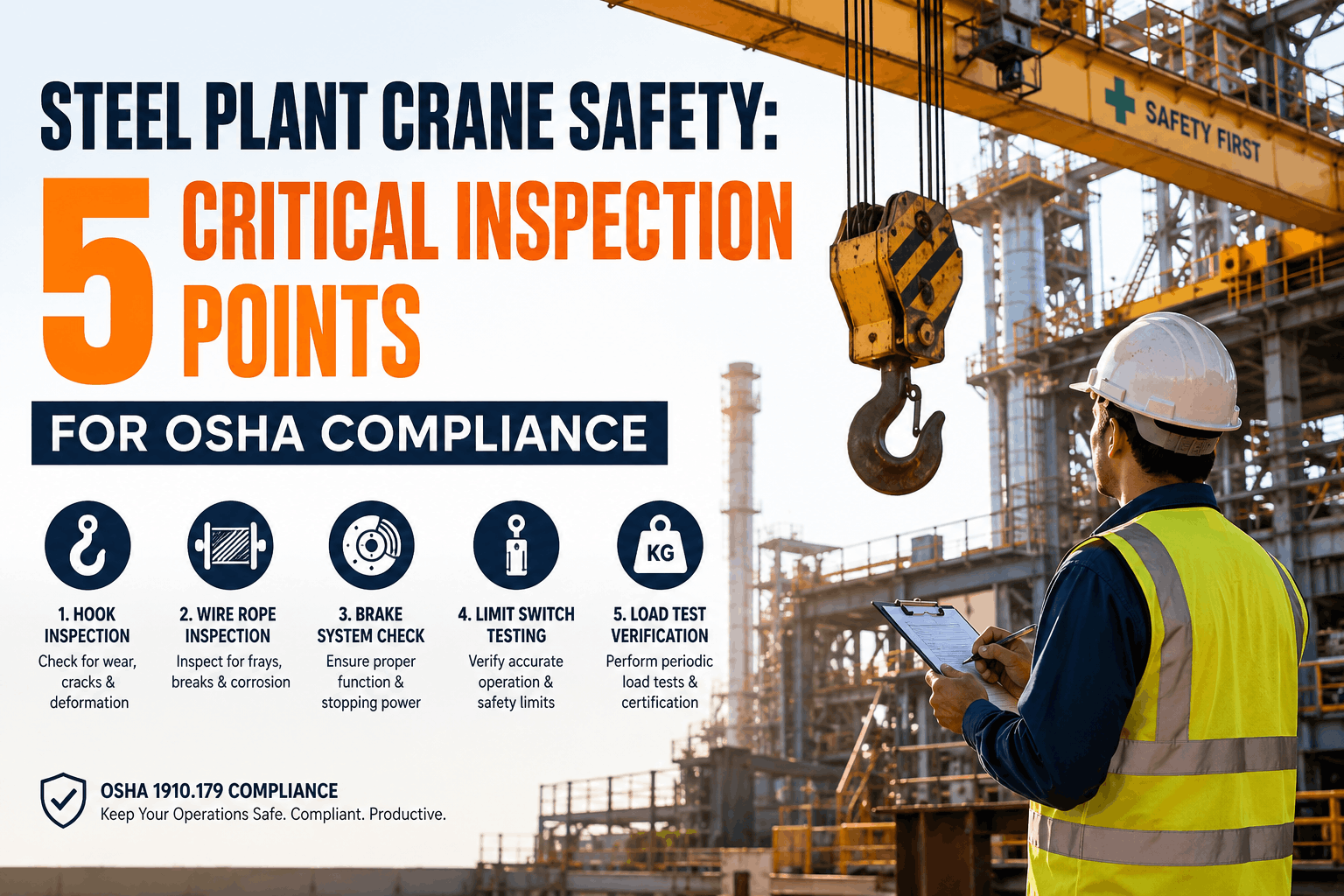
Steel plants should conduct internal safety audits at minimum quarterly, with a comprehensive annual review aligned to licence renewal and ISO 45001 surveillance cycles. High-risk areas — hot metal handling, confined spaces, BFG pipelines, and crane operations — warrant monthly targeted inspections. OSHA guidance recommends that manufacturing facilities conducting self-audits twice yearly see meaningfully lower citation rates during unannounced inspections.
Book a demo to configure your plant's full audit schedule inside OxMaint.
Can OxMaint generate audit reports ready for OSHA or Factory Inspector review?
Yes. OxMaint generates timestamped audit reports with photo evidence, corrective action status, and responsible officer sign-offs in a single PDF — formatted for regulatory inspection use. Every checklist completion is attributed to a named user with a precise timestamp, satisfying both OSHA recordkeeping requirements and Factories Act documentation obligations.
Book a demo to see a sample audit report generated from a live checklist walkthrough.
Never Scramble Before an Inspection Again
OxMaint replaces paper checklists, scattered records, and last-minute audit preparation with a digital safety audit system that keeps your steel plant inspection-ready every day of the year.