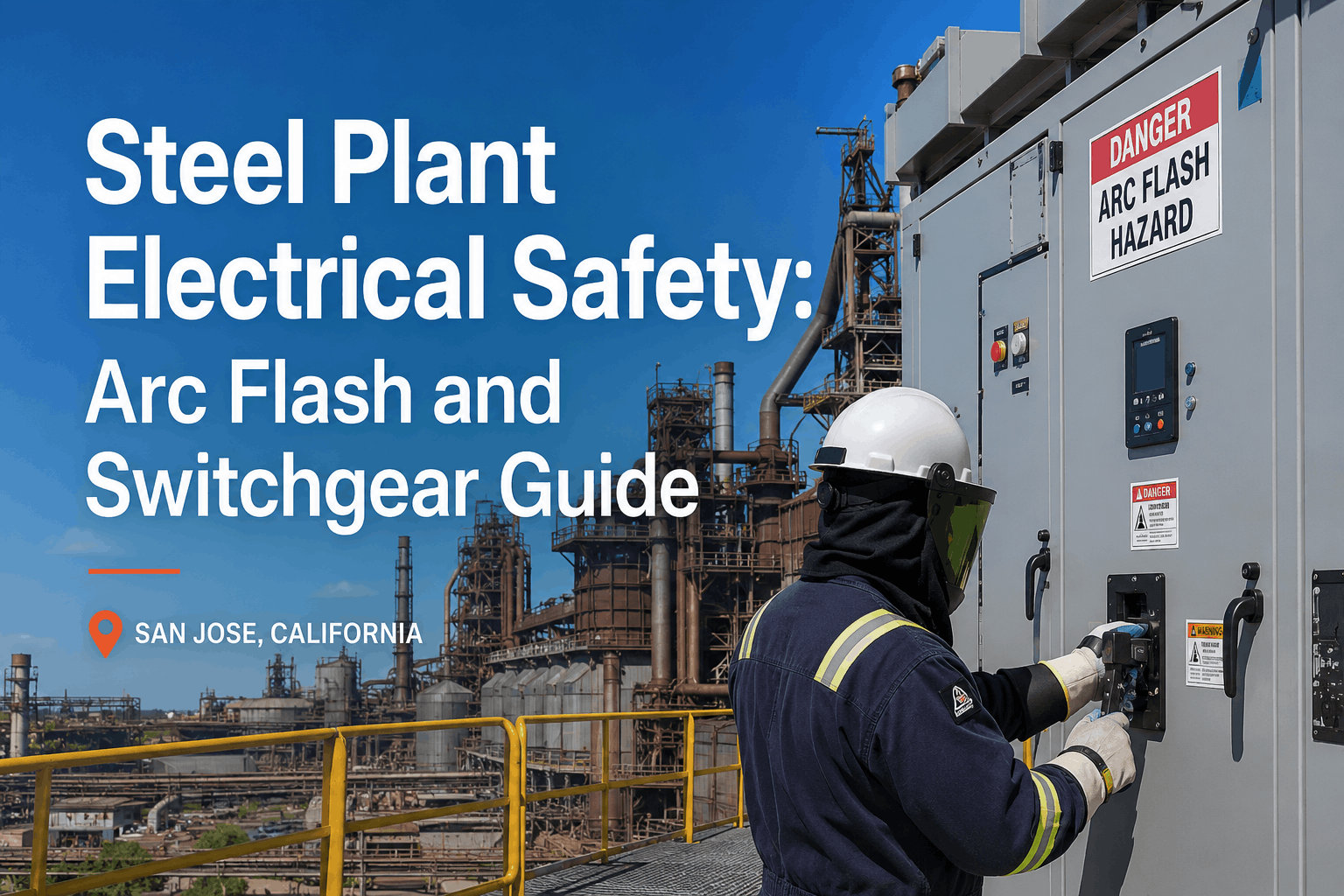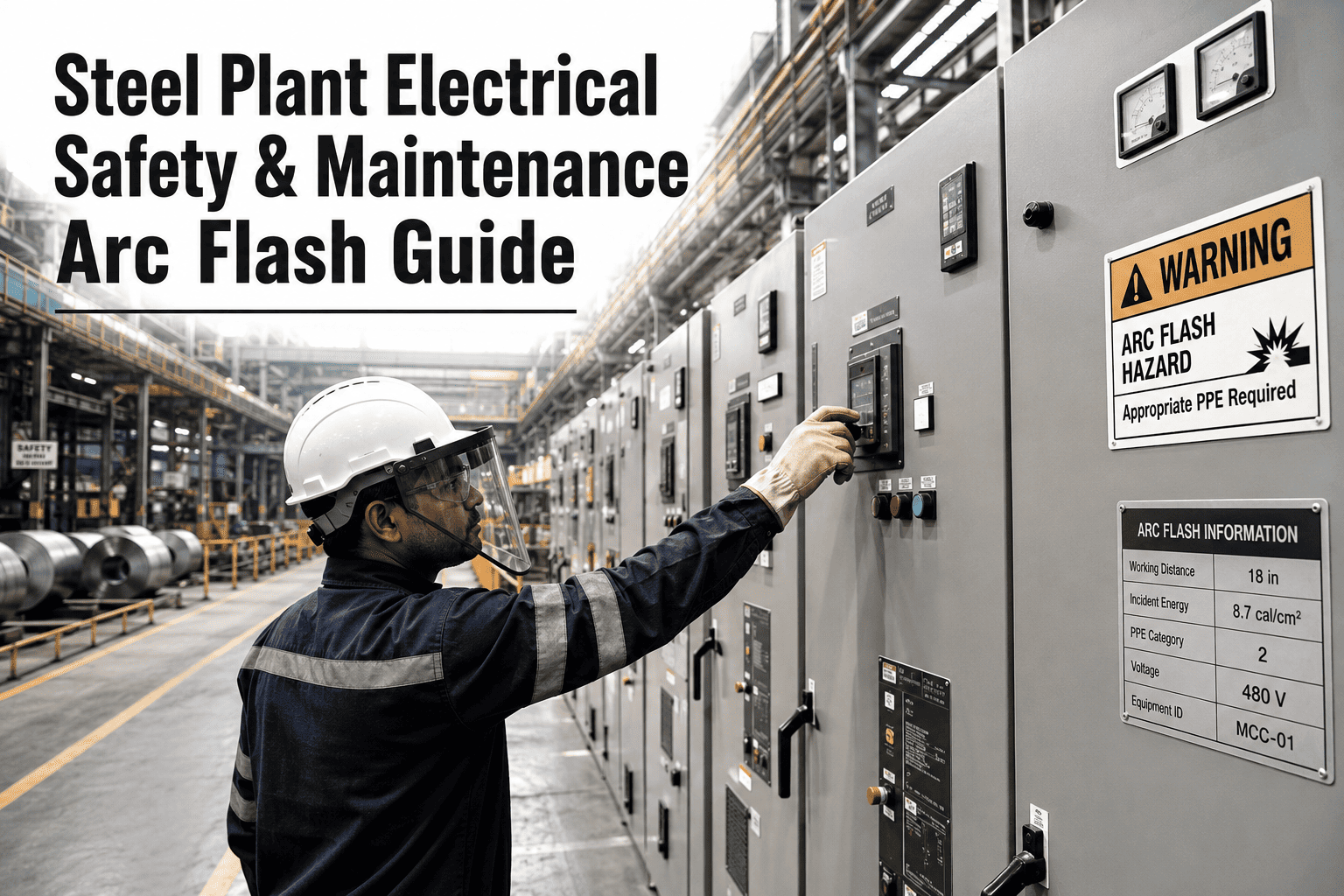
An arc flash event releases as much thermal energy in a fraction of a second as a small explosion, and steel plants sit among the highest-risk facilities for it because of large EAF transformers, high-current MV switchgear, and motor drives running at full load around the clock. A worker opening a panel without a current incident-energy study, or a technician skipping lockout on a "de-energized" line that was never verified, is the pattern behind most severe electrical injuries in heavy industry. This guide covers steel plant electrical safety and arc flash protection from the ground up — incident energy analysis, PPE category selection, switchgear inspection intervals, common program gaps, and how mills close the distance between a paper safety policy and what actually happens at the panel. Programs built around a coordinated CMMS platform turn these steps into enforced work order requirements rather than optional guidance.
Arc Flash Protection for Steel Plant Electrical Systems — EAF, Switchgear & Drives
Incident energy studies, PPE category enforcement, and switchgear inspection scheduling in one system. Stop relying on outdated arc flash labels, manual lockout logs, and inspection intervals nobody can trace back to actual load conditions.
Why Steel Plant Electrical Systems Carry Elevated Arc Flash Risk
EAF transformers, MV switchgear lineups, and large motor control centers combine short circuit currents and fault clearing times that push incident energy well above what most industrial facilities handle. Add heat, vibration, and dust into switchgear rooms, and insulation degrades faster than the label on the panel suggests. Many mills still work from arc flash studies that are five or more years old, done before a transformer upgrade or a new drive was added — which means the PPE category on the label may no longer match the real hazard.
NFPA 70E treats an outdated study the same as no study at all, because the label is only as reliable as the electrical configuration it was calculated against. A single unplanned change, like a temporary bus tie during an outage or a replaced breaker with different trip settings, can shift incident energy enough to move a job from Category 2 into Category 3 without anyone updating the paperwork. The plants that manage this well treat every configuration change as a trigger for review, not just a scheduled five-year audit.
| PPE Category | Incident Energy Range | Typical Work | Minimum Protection |
|---|---|---|---|
| Category 1 | Up to 4 cal/cm² | Panel meter reading, visual inspection | Arc-rated shirt and pants |
| Category 2 | 4.1 – 8 cal/cm² | Switchgear racking, breaker operation | Arc flash suit, face shield |
| Category 3 | 8.1 – 25 cal/cm² | MV switchgear work, cable termination | Arc flash suit, hood, gloves |
| Category 4 | 25.1 – 40 cal/cm² | Work near EAF transformer bus | Full arc flash suit, SCBA in some cases |
| Beyond Cat 4 | Above 40 cal/cm² | No safe PPE combination exists | De-energized work required, no exceptions |
Four Pillars of a Modern Electrical Safety Program
Arc flash prevention is not a single study — it is a set of interlocking practices that need to stay current as the plant's electrical load changes across every shift and outage.
Keep Arc Flash Labels Current, Not Just Compliant on Paper
Trigger incident energy re-studies automatically whenever electrical load configuration changes, and tie PPE category directly to the work order.
Deployment Path — From Outdated Labels to a Living Safety Program
Most mills follow the same sequence when modernizing electrical safety, starting with the highest-risk assets first and expanding coverage as each phase proves out.
Root Causes Behind Most Arc Flash Incidents
Investigations across heavy industry point to a small set of recurring root causes, most of which are procedural rather than equipment failures on their own.
We found arc flash labels on our EAF switchgear that hadn't been updated since before the transformer upgrade — the PPE category on the panel no longer matched the real hazard. Tying the study refresh to our change management workflow closed that gap for good, and now nobody works a panel without the current label pulling through automatically. Our thermal imaging rounds also caught a loose connection two months before it would have caused an outage.
Frequently Asked Questions
Modernize Electrical Safety Across Your Plant
Incident energy tracking, lockout verification, PPE enforcement, and thermal imaging scheduling in one platform. Free to start.