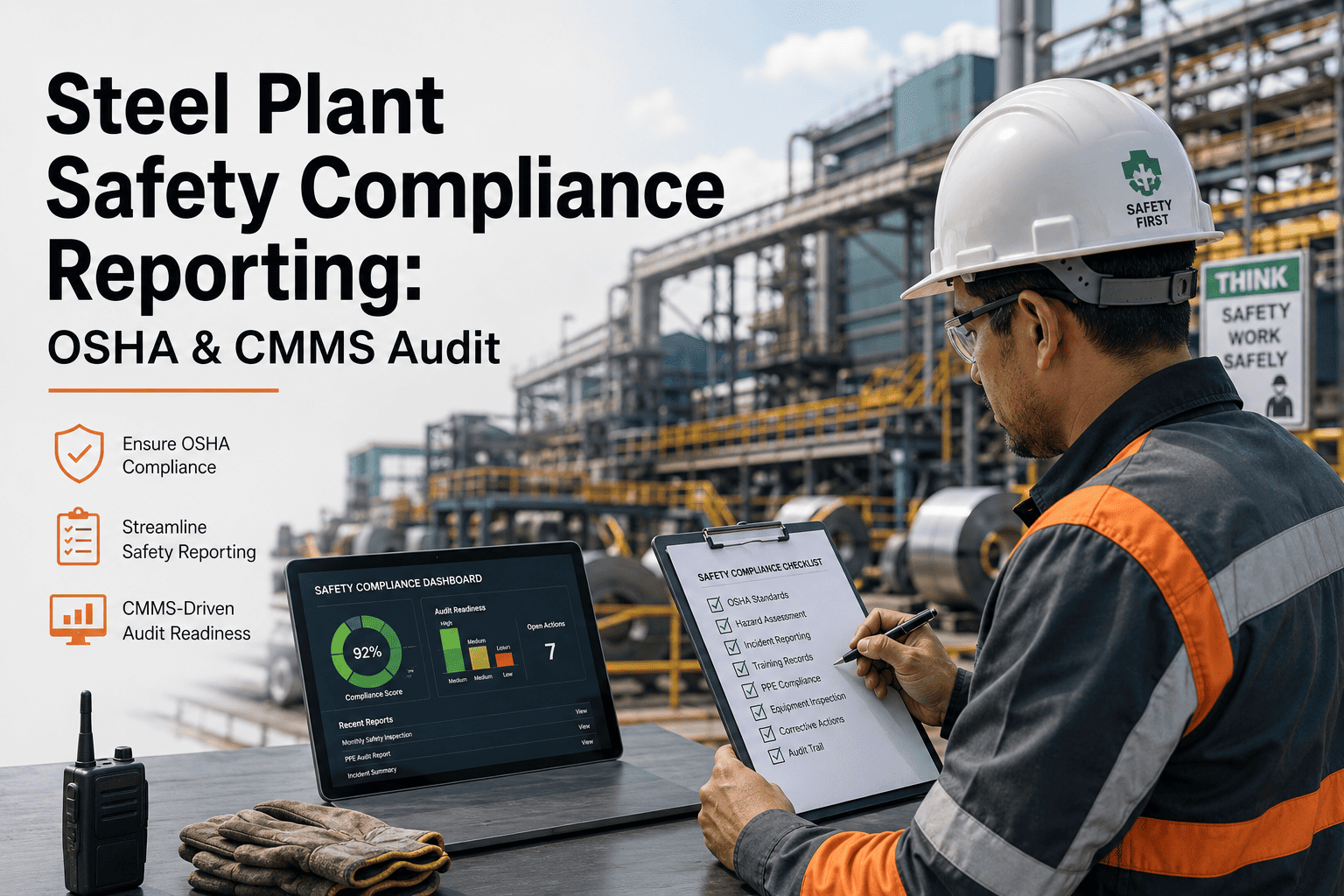
Steel plant safety compliance sits at the intersection of OSHA general industry rules, NFPA fire codes, and the daily reality of molten metal, energized equipment, and confined spaces. Most citations don't trace back to a missing policy — they trace back to a permit that was rushed, a lockout point that was skipped, or a fire watch that walked away ten minutes early. Lockout/tagout alone generated more than 2,500 OSHA citations industry-wide in a single recent year, and a single willful violation now carries penalties past $165,000. This 2026 guide walks through the permit-to-work disciplines, LOTO and confined space controls, hot work and arc flash requirements, and how mills are moving the entire system into a CMMS so audits pass on the first review. If your plant is still running permits on paper, start a free trial and see what a fully digital safety record looks like.
How many of your permits would survive an OSHA visit tomorrow?
Furnaces, cranes, confined vessels, and live electrical gear don't leave room for a permit book that's three weeks out of date. The mills that pass inspection on the first try are the ones that turned permit-to-work, LOTO, and hot work into a single auditable system instead of a filing cabinet.
The gap is never the policy. It's the execution.
Every steel plant has a LOTO procedure, a hot work form, and a confined space checklist sitting in a binder somewhere. What separates a clean OSHA visit from a six-figure penalty is whether those steps were actually followed, timestamped, and signed — on the day, on the floor, by the right person.
Every mill's safety program runs on these controls
These are the compliance disciplines OSHA inspectors, insurers, and ISO 45001 auditors check first in any steel or metals facility. Each needs its own permit type, its own evidence trail, and its own owner.
Lockout / Tagout
Every energy source isolated, verified, and tagged before a technician puts hands on rolling mills, conveyors, or presses. The most-cited standard in manufacturing, and the one most linked to fatalities when skipped.
Hot Work Permits
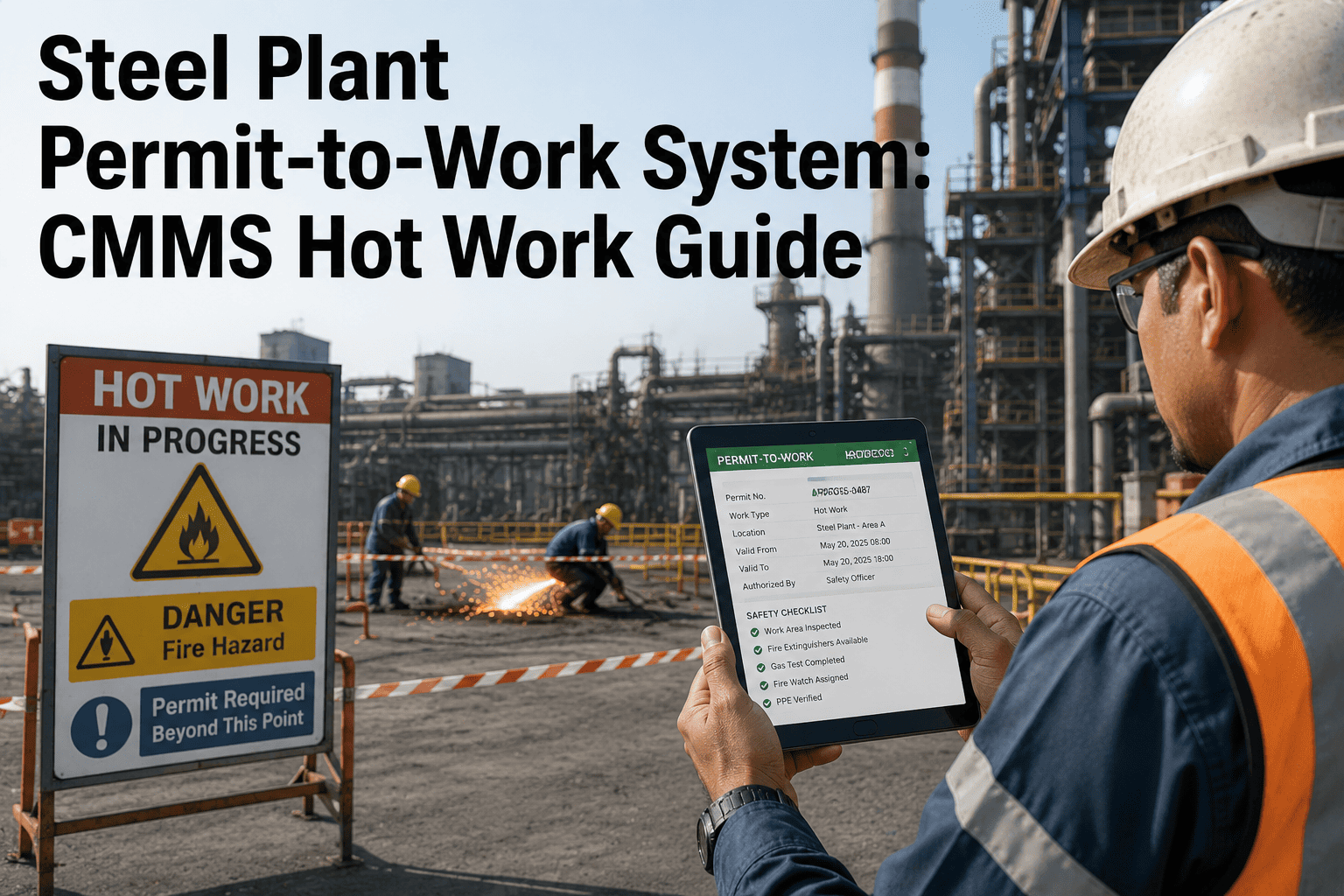
Welding, cutting, grinding, and brazing near combustible dust, oil, or gas piping require a signed permit, a documented area survey, and a fire watch that stays for the full post-work monitoring window under NFPA 51B.
Confined Space Entry
Ladle pits, ducts, and vessels demand atmospheric testing, a dedicated attendant, and a permit that stays open only as long as conditions stay safe — closed and archived the moment the crew exits.
Arc Flash & Electrical
Current arc flash labels, verified PPE category, and an energized work permit whenever a task can't be performed de-energized. Gaps here are a routine finding in electrical safety audits.
Molten Metal & Steam Control
Moisture-to-molten-metal contact has caused fatal steam explosions at U.S. mills in recent years. Containment design, PPE, and a documented emergency response plan are non-negotiable around tapping and pouring operations.
Contractor & Outage Control
Host employers can be cited for a contractor's violation if they knew or should have known. Pre-qualification, site orientation, and a live permit register matter most during planned outages.
What a permit looks like when it can't be faked
A paper permit can be pre-signed, backdated, or closed early. A digital permit-to-work workflow forces every step to happen in order, on-site, with a timestamp — which is exactly what auditors and accident investigators look for after the fact.
Technician requests a permit against a specific asset and task in the CMMS
Hazard and risk score calculated automatically from task type and location
On-site isolation checklist completed with mandatory photo evidence
Atmospheric or clearance test result logged and time-stamped
Authorizing person reviews evidence and signs with a personal PIN
Fire watch or attendant monitors on a mobile countdown timer
Permit closed, archived against the asset, and ready for audit
See your plant's live permit register in one dashboard
Oxmaint links LOTO, hot work, confined space, and arc flash permits to the maintenance work order behind them — so every safety record is audit-ready before the inspector arrives.
What each permit type is actually governed by
Auditors don't ask whether you have a safety program — they ask you to produce the specific record tied to a specific standard. This is the minimum evidence set for each permit type.
| Permit Type | Governing Standard | Core Evidence Required | Typical Penalty Exposure |
|---|---|---|---|
| Lockout / Tagout | OSHA 1910.147 | Isolation points verified, tags applied, zero-energy check | Up to $165,514 |
| Hot Work | OSHA 1910.252 / NFPA 51B | Area survey, fire watch log, 30–60 min post-monitoring | Up to $16,550 |
| Confined Space | OSHA 1910.146 | Atmospheric test, attendant log, entry/exit record | Up to $16,550 |
| Energized Electrical | OSHA 1910.333 / NFPA 70E | Arc flash label, PPE category, justified exception | Up to $16,550 |
| Molten Metal Handling | General Duty Clause | Containment plan, PPE, moisture-exclusion controls | $180K+ on record |
Penalty figures reflect published 2025–2026 OSHA maximums and a documented enforcement case; actual penalties vary by employer size, history, and severity.
Why the same four gaps show up in every citation
Post-incident investigations and OSHA findings at steel and metals facilities tend to trace back to the same handful of breakdowns — nearly all of them process gaps, not policy gaps.
Paper Trails Go Missing
A permit signed on paper at a remote unit rarely makes it back to the safety office intact, leaving a record gap inspectors flag immediately.
Fire Watch Leaves Early
Without a forced countdown timer, post-work monitoring is the easiest step to shortcut, and the one most tied to smoldering-fire incidents.
Contractor Blind Spots
Outage periods stack dozens of contractors doing high-hazard work at once, and host plants are cited for gaps they never actually saw.
No Link to the Work Order
When a permit isn't tied to the maintenance task it covers, auditors can't confirm the hot work or lockout matched planned, authorized work.
Our last inspection flagged incomplete fire watch records. Once every hot work permit forced a photo of the clearance zone and a timer that couldn't be closed early, the next inspection came back with zero findings on that standard. It changed how our supervisors think about the last thirty minutes of a job, not just the first thirty.
Steel plant safety compliance, answered
What's the single most-cited OSHA standard in steel and metals plants?
Lockout/tagout consistently tops the list, generating thousands of citations across manufacturing every year. Most findings involve incomplete isolation verification, not a missing procedure. You can start a free trial to see how digital LOTO closes that gap.
Do hot work permits expire, or can they stay open for a full shift?
Permits are time-bound and tied to the specific task and location. A shift change, a break in the work, or a new hazard in the area typically requires a new authorization and a fresh area survey.
Why do steam explosions still happen around molten metal operations?
Nearly every documented case traces back to moisture reaching molten material — from wet scrap, damp tools, or a containment failure. Written procedures exist at most plants; the gap is verifying moisture-exclusion controls before every tap or pour.
Can our plant be cited for a contractor's safety violation?
Yes. Under OSHA's multi-employer citation policy, a host plant can be cited if it knew or should have known about a contractor's hazard. A live, shared permit register is the most direct way to close that visibility gap.
What does an auditor actually want to see during a site visit?
A specific record tied to a specific permit and asset — not a general policy. Digital systems that timestamp every step and archive it against the work order tend to satisfy this fastest; book a demo to see the audit view.
Turn your permit book into an audit-ready system
LOTO, hot work, confined space, and arc flash permits — issued, monitored, and archived against every maintenance work order in one CMMS.
Free 14-day trial · No credit card