Hydraulics drive some of the most critical motions in a steel plant, from mill roll positioning and caster oscillation to furnace tilting and ladle slide gates. When a pump, valve or hose fails, the effect is felt in production within minutes. Many of these failures build slowly through contamination, heat and leakage, and leave clues in pressure and filter data. This article shows how steel maintenance teams can manage hydraulic assets in a structured way, and how a steel plant CMMS keeps inspections, filters and corrective work connected.
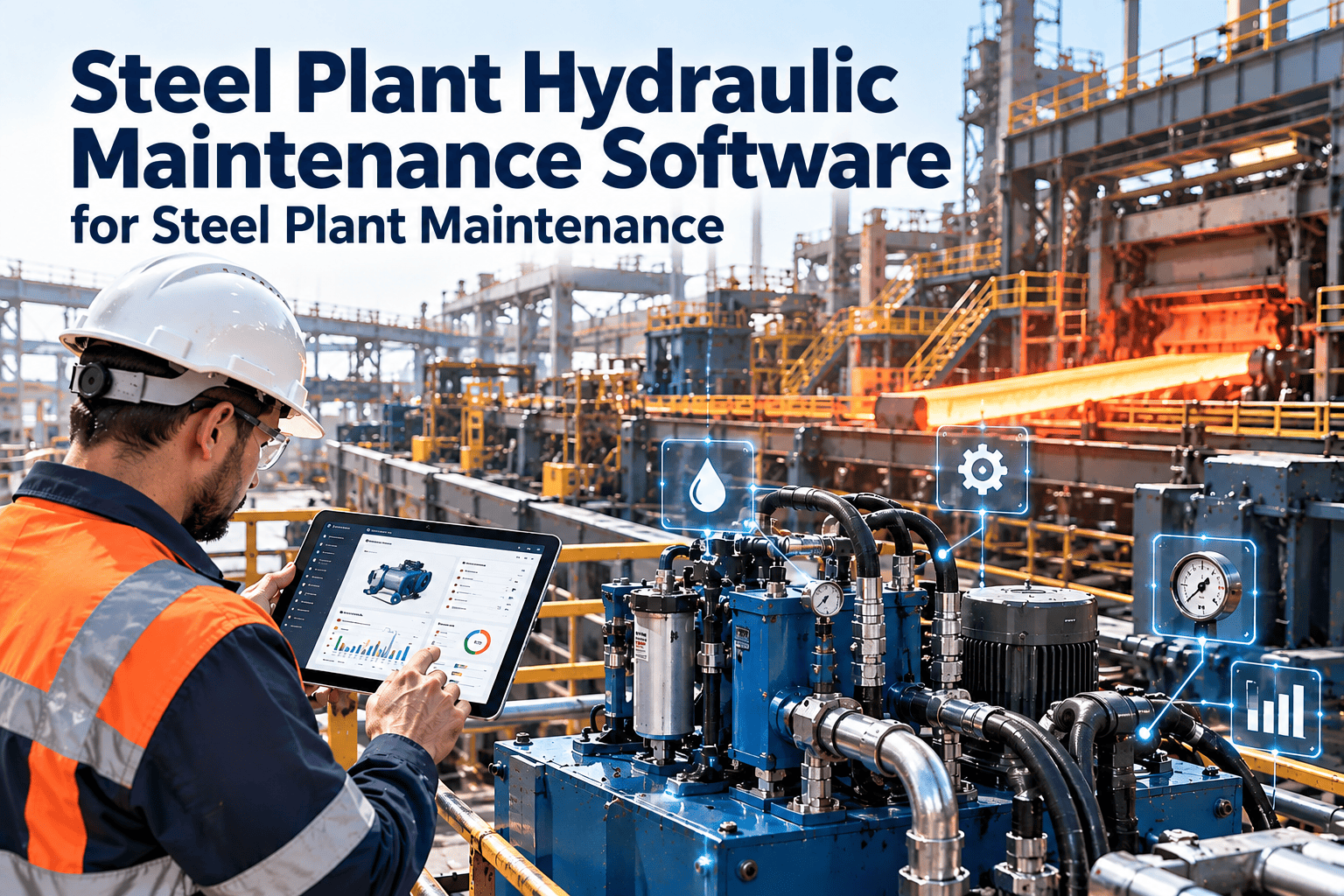
Steel Plant Hydraulic Maintenance Software for Steel Plant Maintenance
Manage hydraulic pumps, valves, cylinders, hoses, filters, pressure trends and corrective work across rolling, casting and furnace equipment.
Where Hydraulics Work Hardest in a Steel Plant
Steelmaking
Furnace tilting, electrode positioning, ladle turrets and slide gates operate near heat and splash.Continuous casting
Mold oscillation, strand guidance and segment control depend on precise, stable hydraulic response.Rolling mills
Screw-down, gauge control, looper and roll balance systems demand fast valves and clean oil.Finishing and handling
Shears, coilers, clamps and manipulators cycle constantly under high load.Each area has different duty cycles, temperatures and consequences, so maintenance plans should not be copied across them.
Why Hydraulic Systems Fail
Most hydraulic faults trace back to a short list of causes. Knowing them lets you design inspections that catch problems early.
A Component-Level Maintenance Plan
| Component | Routine tasks | Condition signals | Typical corrective action |
|---|---|---|---|
| Pumps | Check noise, case drain, mounting | Pressure drop, heat, vibration | Repair or replace pump |
| Valves | Inspect coils, connections, response | Slow or unstable motion | Clean, recalibrate or replace |
| Cylinders | Check rods, seals, mounts | Leaks, drift, uneven speed | Reseal or rebuild |
| Hoses and fittings | Visual check for abrasion and leaks | Cracking, bulging, weeping | Replace before failure |
| Filters | Inspect indicators, change on schedule | Differential pressure rise | Replace element, find ingress source |
| Accumulators | Verify pre-charge, safety checks | Pressure ripple, response lag | Recharge or service |
Frequencies and limits should follow manufacturer guidance and your own failure history.
The Hydraulic Corrective Workflow
Recording the cause, not only the fix, is what turns repeat failures into permanent improvements.
Bring Hydraulic Work Into One System
See how pumps, hoses, filters and corrective jobs can be tracked from a single maintenance platform.
Contamination Control and Oil Condition
Clean oil is the cheapest form of hydraulic reliability. Steel environments make it difficult, so it needs a deliberate routine.
Common habits
- Filters changed when they clog
- Topping up with unmarked containers
- Breathers ignored
- Oil tested only after a failure
Controlled routine
- Filters changed by condition and schedule
- Sealed, labeled top-up containers
- Breather and seal inspections on rounds
- Regular samples against a target cleanliness code
Cleanliness targets, often expressed using the ISO 4406 code, should be set per system according to component sensitivity.
Pressure Trends and Condition Monitoring
| Trend | What it can indicate | Follow-up |
|---|---|---|
| Working pressure slowly falling | Pump wear or internal leakage | Test pump, check relief valve |
| Rising filter differential pressure | Contamination load or element loading | Change filter, trace source |
| Rising oil temperature | Cooler issue, internal bypass, overload | Inspect cooler and circuit |
| Frequent pressure spikes | Valve instability or accumulator fault | Check accumulator and valve |
| Repeated hose replacements | Routing, abrasion or heat problem | Review hose route and guarding |
Even manual readings logged consistently on a mobile checklist can reveal trends that memory cannot.
How Oxmaint Supports Hydraulic Maintenance
Readings from condition-monitoring tools can be recorded and used to trigger predictive or condition-based tasks.
KPIs for Hydraulic Reliability
Hydraulic downtime
Hours lost per system and failure type.Leak work orders
Frequency and time to repair.PM compliance
Filters and inspections done on time.Repeat failures
Same component failing again within a set period.Oil condition
Samples within cleanliness target.Getting Started Checklist
- List every hydraulic power unit and its critical consumers
- Record oil type, filter part numbers and reservoir volumes
- Rank systems by production and safety impact
- Build inspection checklists for rounds and shutdowns
- Define cleanliness targets and sampling points
- Stock spare hoses, seals and filters for critical systems
Frequently Asked Questions
What should hydraulic maintenance software track?
Assets, filters, hoses, inspections, oil samples, corrective jobs and spare parts, all linked to each hydraulic system.How often should hydraulic filters be changed?
Follow manufacturer guidance and differential pressure indicators, then adjust using oil analysis and failure history.Can pressure trends support predictive maintenance?
Yes. Consistent readings show drift early. You can sign up to log and review them per asset.Why do hydraulic hoses fail repeatedly?
Routing, abrasion, heat and vibration are frequent causes. Recording each failure helps reveal the pattern.Can workflows match our mill or caster layout?
Asset structures can follow your areas. Schedule a demo to review your setup.Keep Steel Plant Hydraulics Running Predictably
Connect inspections, oil condition and corrective work so hydraulic problems are found earlier and fixed with full history.