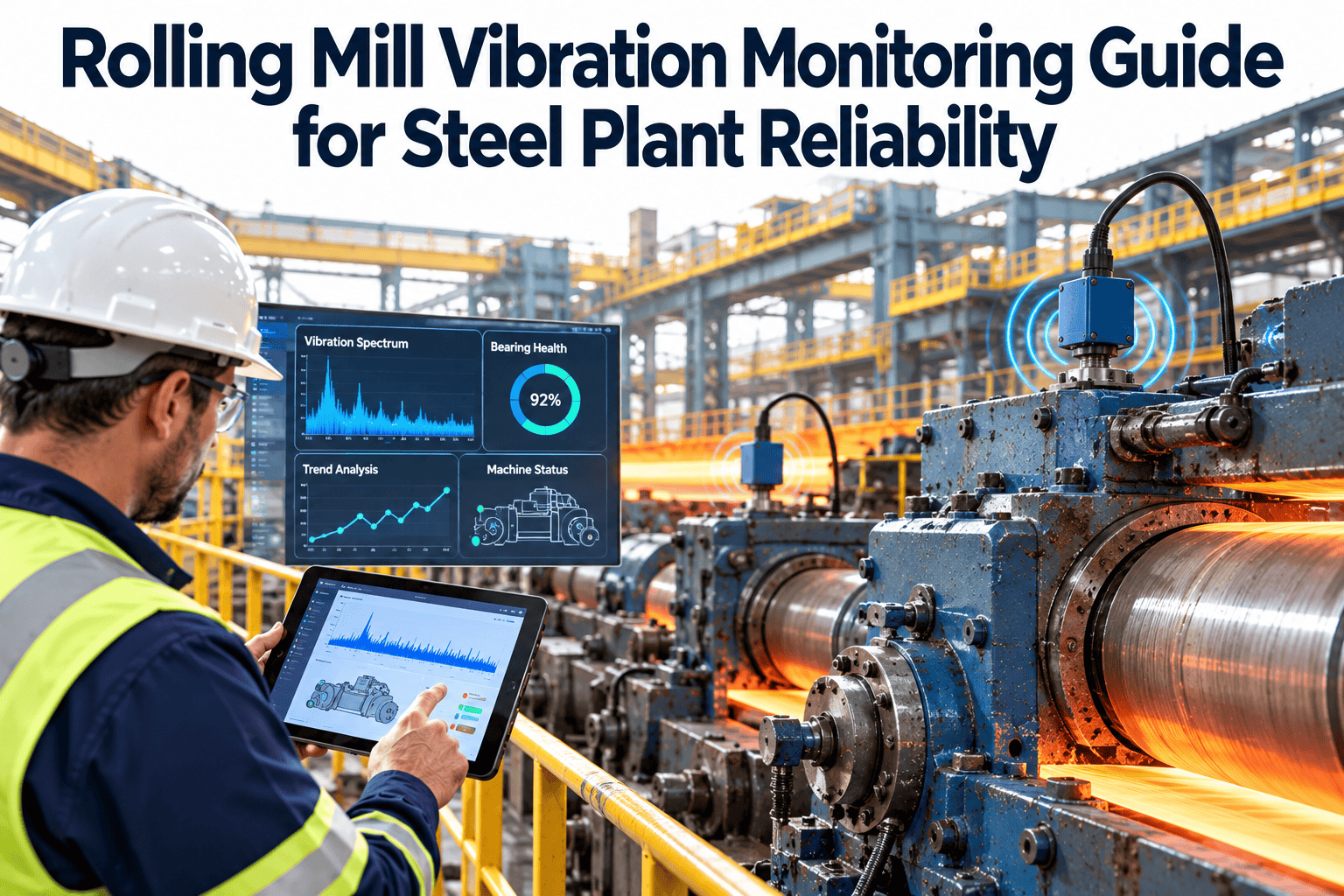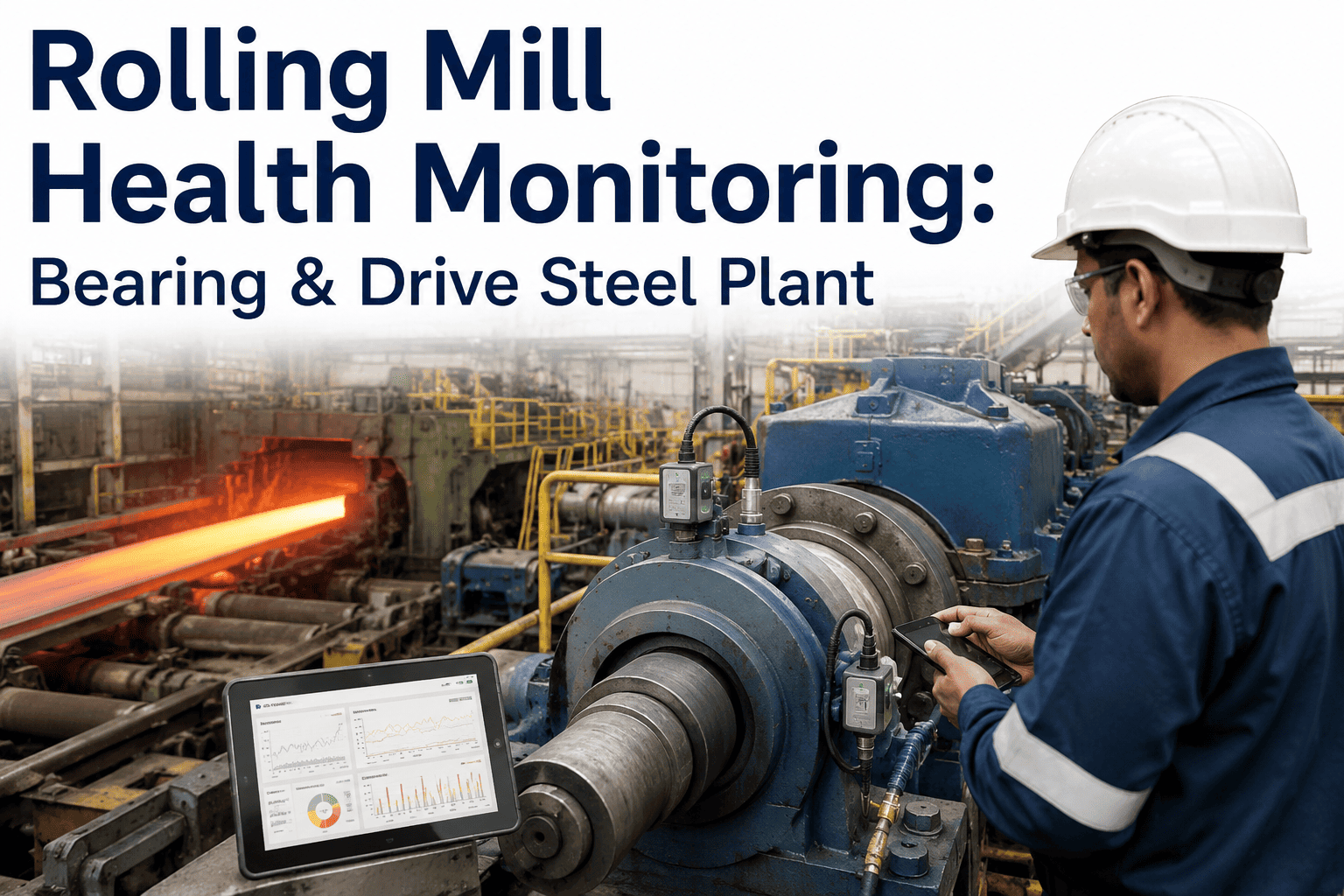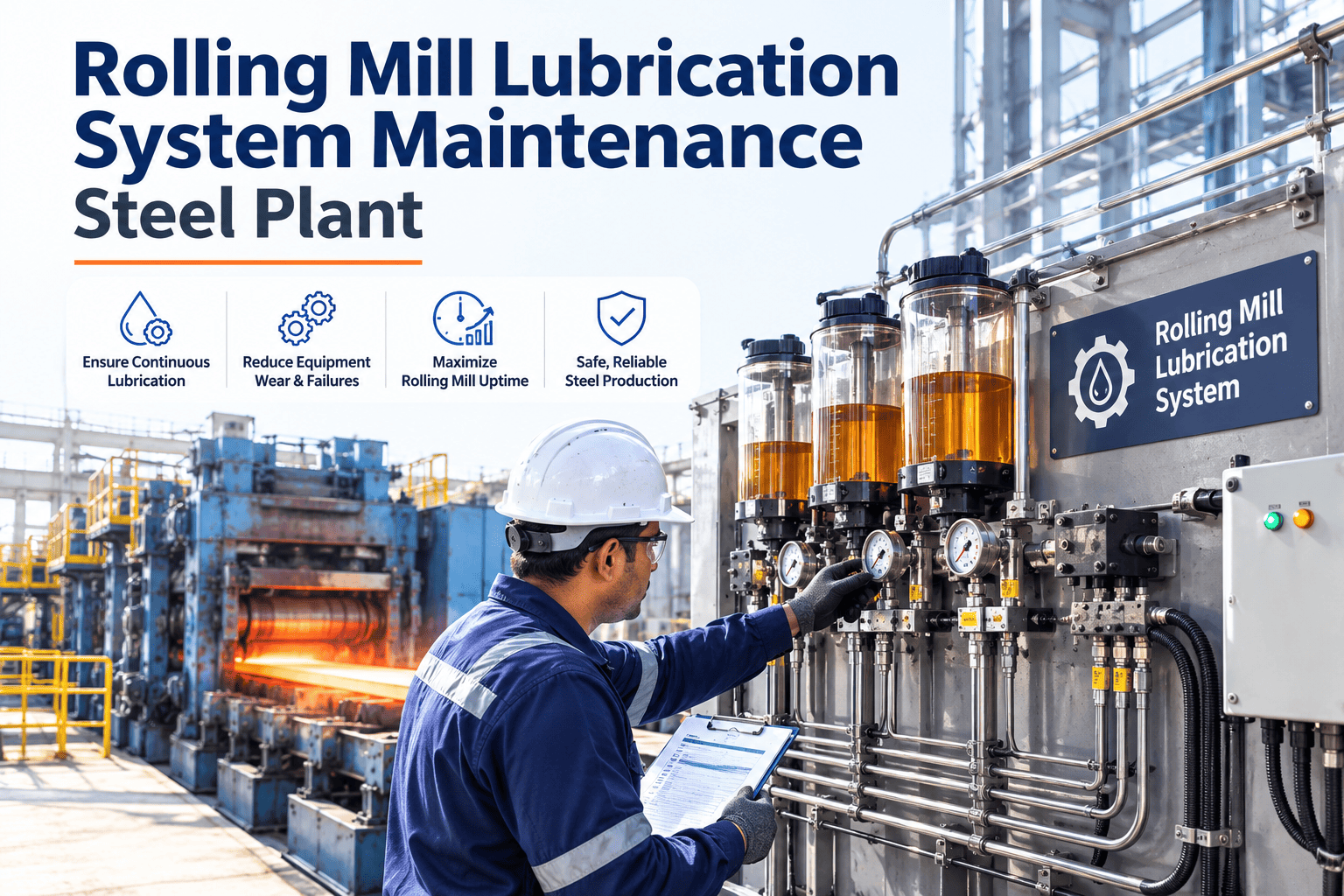
Hydraulic systems are the muscle of a steel plant. Rolling mill roll gap control, continuous caster segment drives, blast furnace bell drives, BOF converter tilting mechanisms, and ladle car movements all depend on hydraulic power to deliver the force, precision, and speed that steel production demands. In an integrated steel plant, hundreds of hydraulic circuits operate simultaneously — from the 300-bar servo systems controlling roll force in a cold mill to the low-pressure circuits operating furnace door actuators. When hydraulic systems fail in this environment, the consequences are not limited to the hydraulic equipment itself. Production lines stop. Refractory damage can result from uncontrolled movements. Fire risk escalates from high-pressure oil leaks near hot metal — mineral hydraulic oil ignites at 150–170°C, temperatures routinely present within 2 metres of EAF tapping and BOF blowing operations. Industry analysis consistently shows that 70–80% of hydraulic and lubricant-related failures are directly related to particle contamination. The expense of filtering and maintaining oil cleanliness is typically only 10% of the cost of the repairs that contamination would impose. A 4-hour hydraulic repair on a rolling mill AGC system can cost more in lost production than an entire year of preventive maintenance for that system. The critical insight is this: hydraulic maintenance in a steel plant is not about responding to failures — it is about maintaining the oil cleanliness, seal integrity, and valve performance standards that prevent them. Sign up for Oxmaint to implement systematic hydraulic maintenance tracking at your steel plant today.
Four Contamination Sources That Drive 70–80% of Steel Plant Hydraulic Failures
Hydraulic contamination in a steel plant enters from multiple sources simultaneously — and each source is specific to the steel plant operating environment. Standard industrial hydraulic contamination control programmes designed for clean manufacturing environments are inadequate for the scale, temperature, and abrasive dust conditions present in steel production. Sign up for Oxmaint to configure contamination-source-specific maintenance programmes.
Mill scale ingression through cylinder rod seals during rolling operations is the primary steel-plant-specific contamination source that clean-industry hydraulic programmes do not account for. Scale particles on cylinder rods are carried past rod seals on every stroke — a mechanism that does not exist in clean manufacturing environments. Wear debris generated by pumps, motors, and valves adds to the particle loading continuously. New oil arriving from suppliers is commonly ISO 21/19/16 or worse — far too dirty for sensitive servo valve systems — and must be filtered before introduction to the system, not added directly from the drum.
Water-cooled cylinder gland seal leakage is common in continuous caster hydraulic systems — caster segment hydraulic cylinders operate adjacent to cooling water circuits under high water pressure, and gland seal wear allows water to enter the hydraulic circuit from the outside rather than from the oil side. High-pressure water descaler spray creates water mist that enters hydraulic reservoirs and cylinder assemblies in rolling mill areas. Reservoir condensation in temperature-cycling environments — particularly in outdoor oil rooms that heat and cool with ambient temperature — introduces water through the reservoir breather. Water in hydraulic oil depletes additives, promotes microbial growth, causes corrosion of steel components, and creates cavitation in pumps. Book a demo to configure water contamination tracking.
Hydraulic circuits operating near reheating furnaces, EAF tapping spouts, BOF blowing positions, and ladle metallurgy stations experience elevated oil temperatures that accelerate oxidation and viscosity breakdown. Inadequate heat exchanger capacity during peak production, blocked cooler cores from mill scale and dust ingression, and circuits overloaded above rated pressure continuously are the three primary causes of thermal degradation in steel plant hydraulics. Oil operating above 60°C continuously degrades at accelerating rate — viscosity falls, oxidation inhibitors deplete, and thermal damage becomes permanent rather than recoverable through oil change.
Steel plant ambient environments contain fine iron oxide dust, coke dust, and abrasive scale particles at concentrations that are 10–100 times higher than clean manufacturing environments. Reservoir breather elements that are correctly sized for clean environments become loaded with steel plant dust in days to weeks rather than months. A clogged or bypassed breather allows reservoir vacuum during oil drawdown — drawing unfiltered dusty air directly into the reservoir. Breather element condition is one of the most consistently overlooked hydraulic PM tasks in steel plants, and one of the most consequential for system cleanliness. Sign up to configure breather PM schedules.
Hydraulic Maintenance Requirements by Steel Plant Zone — Five Applications, Five Distinct Approaches
Each hydraulic application in a steel plant has a distinct combination of operating pressure, precision requirement, contamination exposure, and failure consequence that determines its maintenance programme. A single uniform hydraulic PM programme applied across all zones misses the most critical requirements of the highest-precision systems. Book a demo to see zone-specific hydraulic PM configured in Oxmaint.
The AGC (Automatic Gauge Control) system controls mill stand roll gap to the micron — hydraulic cylinders responding at millisecond speed to strip thickness deviations detected by X-ray or gamma gauges. AGC system performance directly determines finished gauge tolerance. The four most common causes of AGC gauge deviation are LVDT position transducer zero drift, hydraulic oil contamination causing servo valve stiction or response degradation, hydraulic cylinder internal seal wear causing position drift under load, and mechanical backlash in the roll gap adjustment mechanism. All four are preventable through structured AGC PM inspection before they produce strip quality deviation outside customer tolerance.
Collect hydraulic oil sample from AGC system return line at configured intervals. Submit for particle count against ISO 15/13/10 minimum, water content (maximum 200 ppm), and viscosity. Oxmaint records the ISO code result for each sample — trending identifies systems drifting toward the cleanliness limit before the limit is breached. Any sample failing the cleanliness target triggers a flush work order through high-pressure filtration before the next rolling campaign. Contaminated hydraulic oil is the primary cause of servo valve failure — the most expensive AGC component and the one with the longest replacement lead time. Sign up for Oxmaint to configure oil cleanliness sampling PM.
Test servo valve response time at 10%, 50%, and 100% command signals using calibrated test equipment. Response time deviation more than 5% from baseline triggers valve replacement — do not attempt field cleaning, as servo valve spool clearance is sub-micron and any field-level intervention risks further contamination and spool damage. The only correct field response to a suspect servo valve is immediate exchange with a pretested spare from the valve pool. Condemned valves are returned to a specialist repair facility. Oxmaint tracks the response time baseline per valve serial number and flags deviations. Book a demo to see servo valve tracking configured.
Measure cylinder position repeatability — command to zero position three times and record actual position; maximum allowable deviation is 0.02mm. Any external seal leakage identified at inspection: plan seal replacement at next mill outage. Oxmaint records the repeatability measurement per cylinder as a mandatory measured data field in the AGC PM work order — trending deviations approaching the limit provides advance warning of seal wear before gauge deviations appear on strip.
Caster hydraulic systems are exposed to the most severe water contamination conditions in a steel plant. Caster segment hydraulic cylinders operate adjacent to secondary cooling water circuits — water-cooled gland seal leakage is a common and persistent contamination source. Tundish car and stopper rod control systems require precise positioning hydraulics that are sensitive to contamination. An uncontrolled withdrawal straightener hydraulic failure during casting is a safety event, not just a production event.
Caster hydraulic oil samples require water content measurement at higher frequency than rolling mill systems — the cooling water ingression mechanism is continuous rather than intermittent. Oxmaint schedules caster hydraulic oil water content testing at configured intervals, recording the measured ppm against the 200 ppm limit. Results trending upward identify which segment circuit is losing cooling water seal integrity — enabling targeted seal replacement before the water concentration reaches the additive depletion threshold. Sign up to configure caster oil testing PM.
Caster segment hydraulic cylinders should be visually inspected for gland seal leakage at configured intervals — the seal condition determines both oil contamination rate and the cylinder's ability to maintain segment gap position under ferrostatic pressure. Oxmaint records gland seal condition observations per cylinder as a required field in the segment PM work order. Any leakage observation triggers a seal replacement work order for the next caster maintenance window. Book a demo to see caster hydraulic PM configured.
BOF converter tilting mechanisms, EAF electrode arm hydraulics, and ladle metallurgy furnace positioning systems operate within or adjacent to hot metal processing zones where a hydraulic oil leak is a fire initiation event. The combination of high-pressure hydraulic oil (150–200 bar in most furnace tilting applications) and ambient temperatures near hot metal that are above the oil's auto-ignition point means that seal integrity is a safety discipline, not just a reliability discipline. Fire-resistant hydraulic fluid (HFDU or HWCF type) is specified for many furnace tilting circuits — and fluid-type verification at each oil change is a maintenance requirement with safety consequences.
All hydraulic hoses and fittings within 3 metres of hot metal processing positions (EAF tapping, BOF blowing, ladle handling) require visual inspection for leakage at every shift in high-temperature exposure periods and at minimum weekly frequency otherwise. Any wet fitting, weeping hose, or evidence of oil mist near hot metal equipment generates an immediate corrective work order. Oxmaint records the shift-frequency check as a short mobile work order — the technician confirms clear/leaking for each inspection point position and the GPS-tagged timestamp confirms the survey was performed. Sign up to configure fire-safety hydraulic survey work orders.
Converter tilting and furnace electrode arm circuits specified for HFDU or HWCF fire-resistant hydraulic fluid must have the fluid type verified at each oil change and top-up. Mineral oil introduction to a fire-resistant fluid system is a safety incident risk. Oxmaint's converter tilting oil change work order includes fluid type as a mandatory confirmation field — the work order cannot be closed without confirmation that the correct fluid type was used. The fluid verification record provides the audit trail for safety compliance inspection. Book a demo to see fire-critical hydraulic PM.
Hydraulic accumulators in steel plant systems serve two functions: energy storage for fast-response actuation (rolling mill AGC, caster emergency withdrawal) and pressure surge absorption (pump protection, circuit damping). Accumulator nitrogen pre-charge pressure must be maintained within specification — a bladder or diaphragm failure that allows nitrogen to enter the hydraulic circuit, or oil to enter the nitrogen side, eliminates the accumulator's function entirely. In emergency withdrawal applications on continuous casters, an accumulator that has lost its pre-charge is not discovered until the emergency occurs. Accumulator inspection requires trained technicians following certified procedures — this is a pressure vessel maintenance discipline with regulatory requirements.
Accumulator nitrogen pre-charge must be checked at configured intervals (typically quarterly) and immediately after any emergency actuation event that uses the accumulator's stored energy. Oxmaint schedules the quarterly pre-charge verification PM work order and automatically generates an additional verification work order after any emergency actuation event is recorded. The measured pre-charge pressure is recorded against the specification — any reading below the minimum triggers an immediate recharge work order before the accumulator returns to service. Sign up to configure accumulator PM.
Accumulator bladder and diaphragm condition is assessed during the mandatory periodic inspection required by pressure vessel regulations applicable in your jurisdiction. Oxmaint tracks each accumulator's inspection due date from the previous certification date, generates a work order in advance of the regulatory deadline, and stores the inspection certificate as a work order attachment — providing the audit-ready documentation that confirms compliance with the applicable pressure vessel regulation. Book a demo to see accumulator regulatory tracking.
The filtration system is the only mechanism that removes contamination after it enters the hydraulic circuit — making filtration maintenance the single highest-leverage contamination control action available. A filter element running past its change interval does not become less effective gradually — it either bypasses (contamination flows around the blocked element at full system pressure) or it collapses (element structural failure sends filter media into the system). Both failure modes are worse than running with no filter at all. Differential pressure indicators on all filter housings must be functioning correctly and read at configured intervals — a bypassed filter with a failed differential pressure indicator is invisible until oil analysis reveals the damage.
All filter differential pressure indicators are read and recorded in Oxmaint PM work orders at configured intervals — typically daily for high-contamination zones (caster, rolling mill scale environments) and weekly for lower-contamination zones. The ΔP reading history per filter position identifies positions approaching change interval based on loading rate rather than calendar date — enabling hours-based element change scheduling for the most heavily loaded positions and extending intervals for lightly loaded positions. Oxmaint records each element change as a work order, tracking the hours since last change and the final ΔP reading at change-out. Sign up to configure filtration PM.
Reservoir breather elements in steel plant environments should be inspected at weekly intervals — far more frequently than clean manufacturing environments. The colour-indicating desiccant breathers common in clean plants load with steel plant dust and saturate in days to weeks. Oxmaint schedules breather inspection as a weekly PM work order — condition observation recorded as acceptable/change required. Any saturated or loaded breather generates a replacement work order before the next inspection cycle. The breather change interval history identifies reservoirs in high-dust-exposure locations requiring more frequent change intervals. Book a demo to see filtration PM scheduling configured.
How Oxmaint Manages Servo Valve Pool Tracking — The Most Precision-Critical Component in Steel Plant Hydraulics
Servo and proportional valves are the most precision-critical and most contamination-vulnerable components in steel plant hydraulic systems. A single failed servo valve on a rolling mill AGC system stops strip production immediately. The correct management approach for steel plant servo valves is pool-based exchange rather than in-field repair — and this requires a CMMS that tracks each valve by serial number through its entire lifecycle. Sign up for Oxmaint to configure servo valve pool management.
The Servo Valve Pool Lifecycle — From Installation to Condemned
Steel plants that manage servo valves correctly maintain a pool of tested spare valves — each pretested and certified to response time specification before being held on the shelf. When an installed valve shows response time deviation above the 5% threshold from baseline, it is immediately exchanged with a pretested pool spare. The suspect valve goes to the specialist repair facility for cleaning, testing, and recertification. It returns to the pool after passing the response time specification test.
This pool-based approach requires tracking each valve by serial number through every lifecycle stage — installed location, installation date, baseline response time, any response time deviation events recorded in service, and post-repair certification test results. Oxmaint manages this tracking as an asset register where each servo valve is a child asset linked to the hydraulic system where it is installed. The pool status (installed / pool ready / at repair facility / condemned) is always current, and the spare count alert triggers when pool inventory falls below the configured minimum. Book a demo to see servo valve pool tracking configured.
- Serial number tracking from receipt through repair facility and back to pool
- Response time baseline established at commissioning; all subsequent tests compared to baseline
- Pool inventory alert when pretested spare count falls below minimum for each valve type
- Valve exchange work order auto-links suspect valve to repair facility tracking work order
Steel Plant Hydraulic System Failure Modes — Causes and Oxmaint Tracking Method
| System / Component | Failure Mode | Production Consequence | Oxmaint PM Method |
|---|---|---|---|
| AGC Servo valve | Spool stiction from oil contamination above ISO 15/13/10 | Strip gauge deviation; immediate mill stop | Oil cleanliness sampling PM; valve response time trending; pool exchange protocol |
| AGC Cylinder | Internal seal wear — position drift under load > 0.02mm | Gauge deviation before alarm activates | Position repeatability test PM; drift trending against 0.02mm limit |
| LVDT Transducer | Zero drift > 0.05mm from vibration or thermal cycle | Unexplained gauge deviation on customer strip | Calibration verification PM at campaign end; certificate stored in work order |
| Caster segment cylinder | Gland seal leakage — water ingress to hydraulic circuit | Water contamination; segment position error | Gland seal visual inspection PM; water content oil testing |
| Converter tilting hydraulic | Hose leak near hot metal — fire risk | Fire initiation event | Shift-frequency hose survey; immediate corrective WO for any leak |
| Accumulator | Nitrogen pre-charge loss — bladder failure | Emergency actuation fails; caster withdrawal failure | Quarterly pre-charge verification PM; regulatory inspection tracking |
| Return line filter | Element bypass from differential pressure overload | Unfiltered contamination circulates; servo valve damage | Daily/weekly ΔP reading PM; element change tracking by hours and ΔP |
| Reservoir breather | Loaded element — dusty air drawn into reservoir | Rapid particle loading of entire system | Weekly inspection PM; loading rate establishes zone-specific change interval |
| Hydraulic pump | Vane or piston wear from contaminated oil | Reduced system pressure; slow actuator response | Oil cleanliness maintenance; vibration monitoring; case drain flow measurement |
| Heat exchanger | Blocked core from mill scale — oil temperature above 60°C | Viscosity loss; accelerated oxidation; seal damage | Quarterly cooler core inspection PM; oil temperature trending against 60°C limit |
Swipe to view full table
Oil Cleanliness, Servo Valve Pools, Accumulator Pre-Charge, and Filter ΔP — All Tracked in One CMMS
Oxmaint manages the complete hydraulic maintenance programme across all five steel plant zones — with measured data capture at every PM work order, trending that identifies developing conditions before they cause failures, and the servo valve serial number tracking that makes pool-based exchange management operationally practical.
Steel Plant Hydraulic System Maintenance — Common Questions
ISO 15/13/10 is the minimum cleanliness standard for servo valve systems in rolling mill AGC applications — this is the code most frequently specified by servo valve and hydraulic cylinder manufacturers for precision steel plant applications. For reference, ISO 4406 uses a three-number code where each number represents a particle count range at 4, 6, and 14 microns per millilitre — and each step up in the code number represents a doubling of the particle concentration. A system measured at ISO 17/15/12 has four times the particle contamination of the ISO 15/13/10 target. New oil arriving from suppliers is commonly ISO 21/19/16 or worse — it must be filtered through the hydraulic system's filtration before introduction, not added directly. Oxmaint records each oil cleanliness sample result as a measured data field in the PM work order, enabling trend tracking against the target code over multiple sampling events. Sign up for Oxmaint to configure oil cleanliness sampling PM with ISO code trending.
Servo valve spool-to-bore clearance is sub-micron — tolerances measured in thousandths of a millimetre that are smaller than the diameter of human hair. Field cleaning with compressed air introduces uncontrolled high-velocity particles into the spool bore. Solvent flushing introduces chemical contamination that attacks the spool's surface treatment. Even a seemingly careful disassembly on the mill floor in a steel plant environment exposes the precision components to the same airborne contamination — iron oxide dust, coke particles, and scale — that caused the spool stiction in the first place. The correct protocol is immediate exchange with a pretested spare from the valve pool, followed by transport of the suspect valve to a specialist repair facility with cleanroom conditions. Oxmaint supports this protocol by managing the valve pool inventory and automatically generating the repair facility work order when a valve is exchanged. Book a demo to see servo valve pool management configured.
Oxmaint structures hydraulic oil cleanliness sampling as a recurring PM work order per circuit — each circuit has its own sampling schedule (frequency configured by zone criticality and contamination risk), its own cleanliness target (ISO code), and its own sampling result history. The maintenance technician collects the oil sample and enters the ISO code result in the mobile work order at the sampling point. Oxmaint automatically compares the result against the circuit's configured target and generates a follow-up flush or investigation work order if the target is exceeded. The ISO code trend per circuit — visible across the last 6–12 sampling events — identifies circuits with slowly degrading cleanliness before the target is breached, enabling proactive filtration action rather than reactive response to contamination-caused failures. Circuits in the servo valve zone (AGC systems) have more frequent sampling schedules than lower-precision circuits, all managed in the same CMMS. Sign up for Oxmaint to begin hydraulic cleanliness programme management.
The Servo Valve That Stops the Mill, the Accumulator That Fails During a Caster Emergency, the Hose Near the EAF Tapping Spout — All Preventable with Systematic Hydraulic Maintenance. Oxmaint Provides the System.
Oil cleanliness sampling with ISO 4406 trending, servo valve response time tracking with pool management, accumulator pre-charge verification, filter differential pressure monitoring, and fire-safety hose surveys — all in a single CMMS with mobile work orders at the equipment, measured data capture that builds the trending database, and alert thresholds that surface developing conditions before they become production stops.