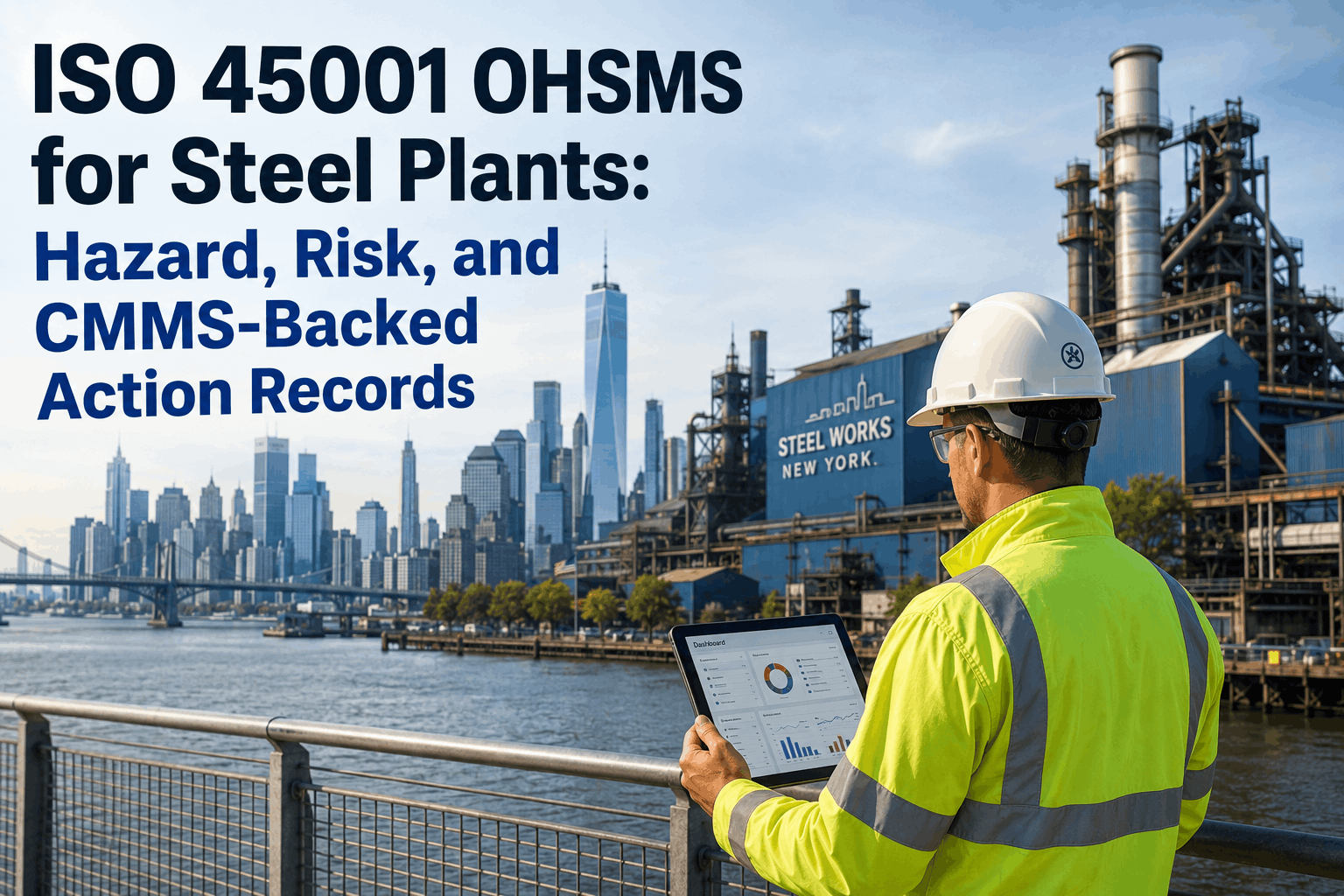
ISO 45001 occupational health and safety management system transforms steel plant safety culture from compliance checkbox to operational excellence standard. U.S. steel mills averaging 8–12 lost-time injuries per 200K hours worked can reduce frequency rates 40–60% through systematic hazard identification, predictive incident prevention, and worker engagement in safety decisions. ISO 45001 implementation requires establishing leadership commitment to safety as strategic priority, identifying and assessing occupational hazards unique to steelmaking operations, developing comprehensive controls ranked by hierarchy (elimination, substitution, engineering, administrative, PPE), and embedding safety accountability into operational KPIs. Mills achieving ISO 45001 certification reduce workers' compensation costs 25–35%, lower OSHA citation frequency by 50–70%, and improve employee retention 15–25% through safer work environment. The system creates early warning capability for near-misses and hazard conditions that precede serious injuries—companies tracking near-miss data 10:1 ratio with recordable incidents reduce severity rates 30–50%. Start a free trial or schedule an assessment to evaluate your safety maturity.
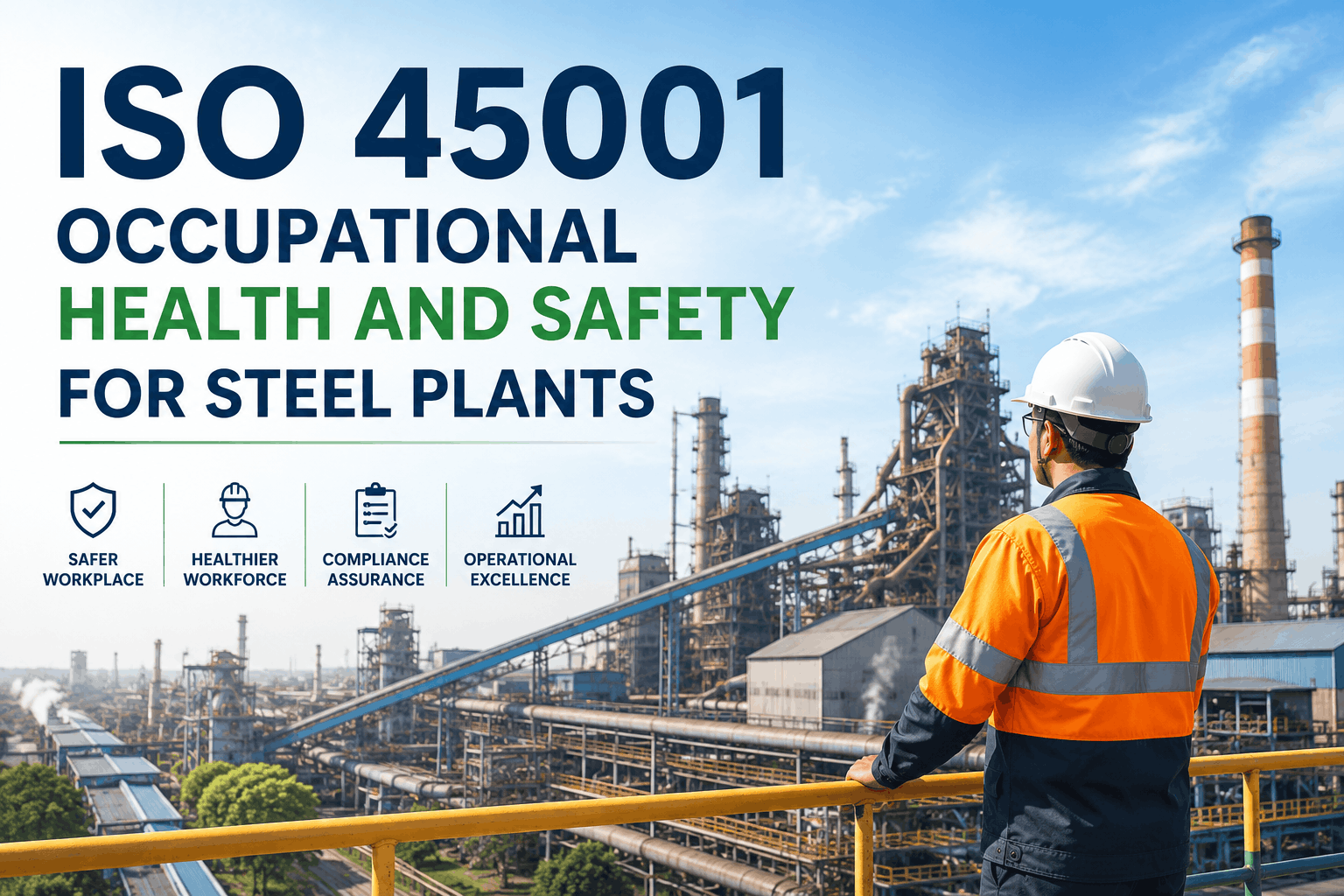
ISO 45001 OHSMS Implementation Guide for Steel Plants
Build comprehensive occupational health and safety system, reduce injury frequency 40–60%, achieve ISO 45001 certification, and create safety culture where workers actively identify and prevent hazards.
ISO 45001 Framework: Hazard Identification, Risk Assessment, and Hierarchical Control
ISO 45001 requires systematic identification of occupational hazards unique to steel plant operations and development of control measures ranked by effectiveness hierarchy. Steel plants must identify hazards across five operational contexts: process hazards (exposure to molten metal, high temperatures, radiation, toxic gases in furnace operations), equipment hazards (rotating machinery, hydraulic systems, electrical hazards, lockout/tagout requirements), environmental hazards (noise levels 85–95 dB in hot zones, heat stress in summer operations, slip/fall hazards from scale and moisture), organizational hazards (fatigue from 12-hour shift rotations, mental stress from production pressure), and external hazards (contractor safety during maintenance shutdowns, supplier compliance with safety requirements). Hazard identification employs multiple methods: job safety analysis on top 20 high-risk tasks, incident investigation root cause analysis on all recordable injuries, near-miss reporting systems capturing close calls, environmental monitoring (noise surveys, heat stress assessments, air quality sampling), and worker participation in hazard identification meetings. Risk assessment ranks identified hazards by severity (potential for serious injury or fatality) and likelihood (frequency of exposure), creating prioritized control development plan. Controls follow strict hierarchy: elimination (redesign furnace oxygen lance to reduce pinch point hazard), substitution (replace toxic flux chemical with less toxic alternative), engineering controls (install guarding on rotating equipment, upgrade ventilation for fume capture), administrative controls (job rotation to reduce fatigue, permit systems for confined space entry), and PPE (required as last control layer). World-class steel mills implement 40–80% of controls through engineering and administrative solutions; mills relying primarily on PPE typically show poor compliance and higher injury rates.
Steel Plant Hazard Categories and Hierarchy of Controls
Effective ISO 45001 implementation requires steel-plant-specific hazard recognition and control development tailored to operational realities. Molten metal hazards (exposure to 2,800–3,200°F molten steel in furnaces and casting operations)—ranked as highest severity due to potential for severe burns and fatalities—are controlled through physical guarding to prevent contact, process interlocks to prevent splash ejection, and automated feeding systems replacing manual pouring where feasible. Thermal stress hazards (ambient temperatures 100–150°F+ in hot zones during summer, radiant heat from furnaces)—controlled through engineering (water-cooled clothing, enhanced ventilation systems), administrative (mandatory rest periods and hydration, heat illness protocols), and work scheduling (avoiding hottest times of day when possible). Mechanical hazards (rotating shafts, press equipment, conveyor systems)—controlled through guarding, lockout/tagout procedure enforcement, and energy isolation during maintenance. Electrical hazards (high-voltage equipment, contact risks during wet conditions)—controlled through insulation upgrades, grounding systems, and arc flash protection. Confined space hazards (tundish cleanout, vessel entry requiring atmospheric monitoring)—controlled through permit systems, atmospheric testing before entry, rescue planning. Chemical hazards (fluxes, cutting fluids, cleaning compounds)—controlled through hazard communication, substitution to less hazardous materials, and respiratory protection where engineering controls insufficient. Noise hazards (85–95 dB in process areas, 105+ dB near oxygen lances)—controlled through engineering (acoustic enclosures, equipment silencers), administrative controls (hearing conservation program, job rotation), and PPE (double hearing protection in highest-exposure areas). Ergonomic hazards (repetitive motion in grinding/finishing, manual lifting)—controlled through equipment automation, workstation design improvement, and administrative controls. Mills implementing comprehensive controls across all hazard categories typically achieve 50–60% injury rate reduction within 18–24 months; those focusing narrowly on PPE alone typically see only 10–15% improvement.
Incident Investigation and Near-Miss Reporting: Preventing Repeat Injuries
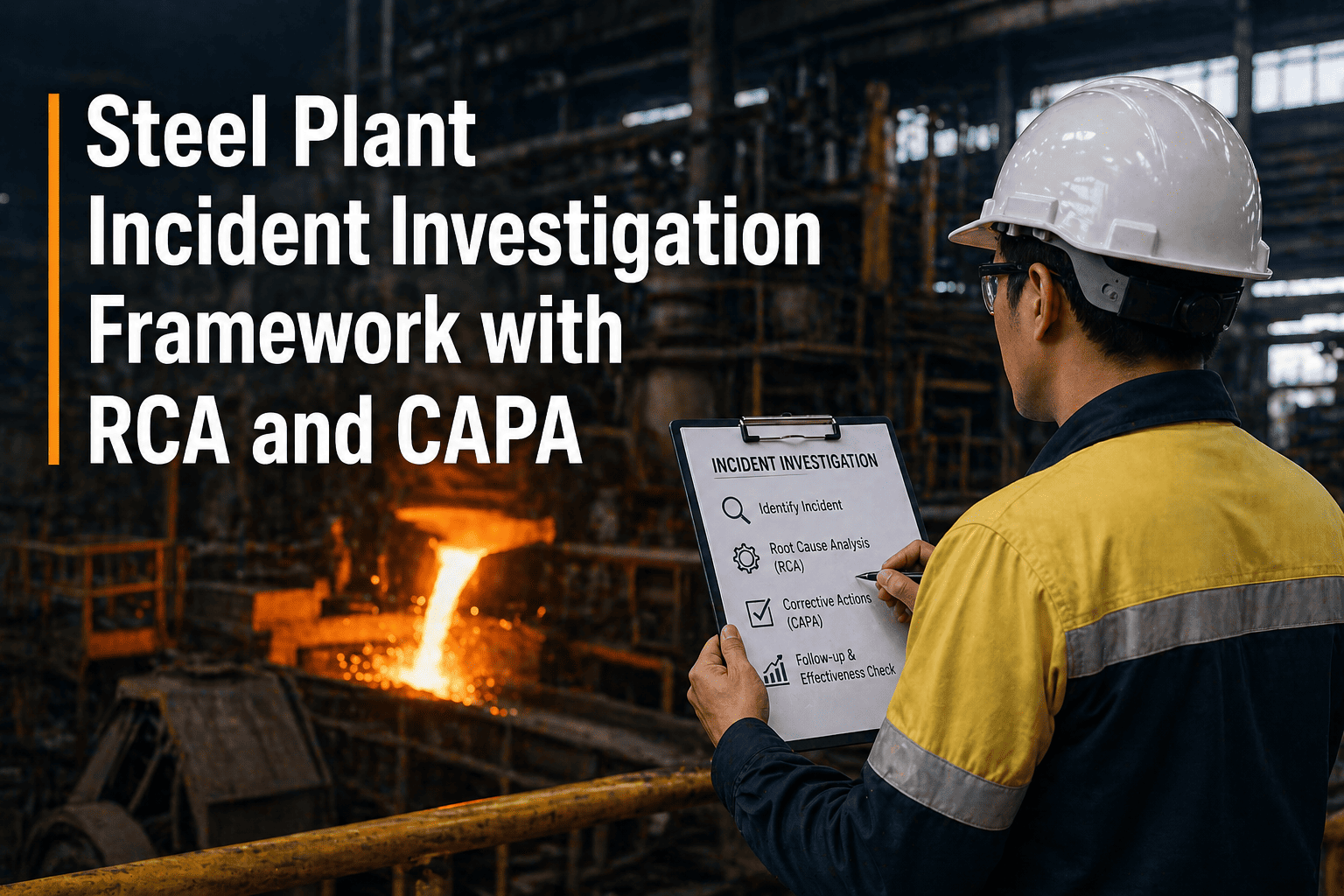
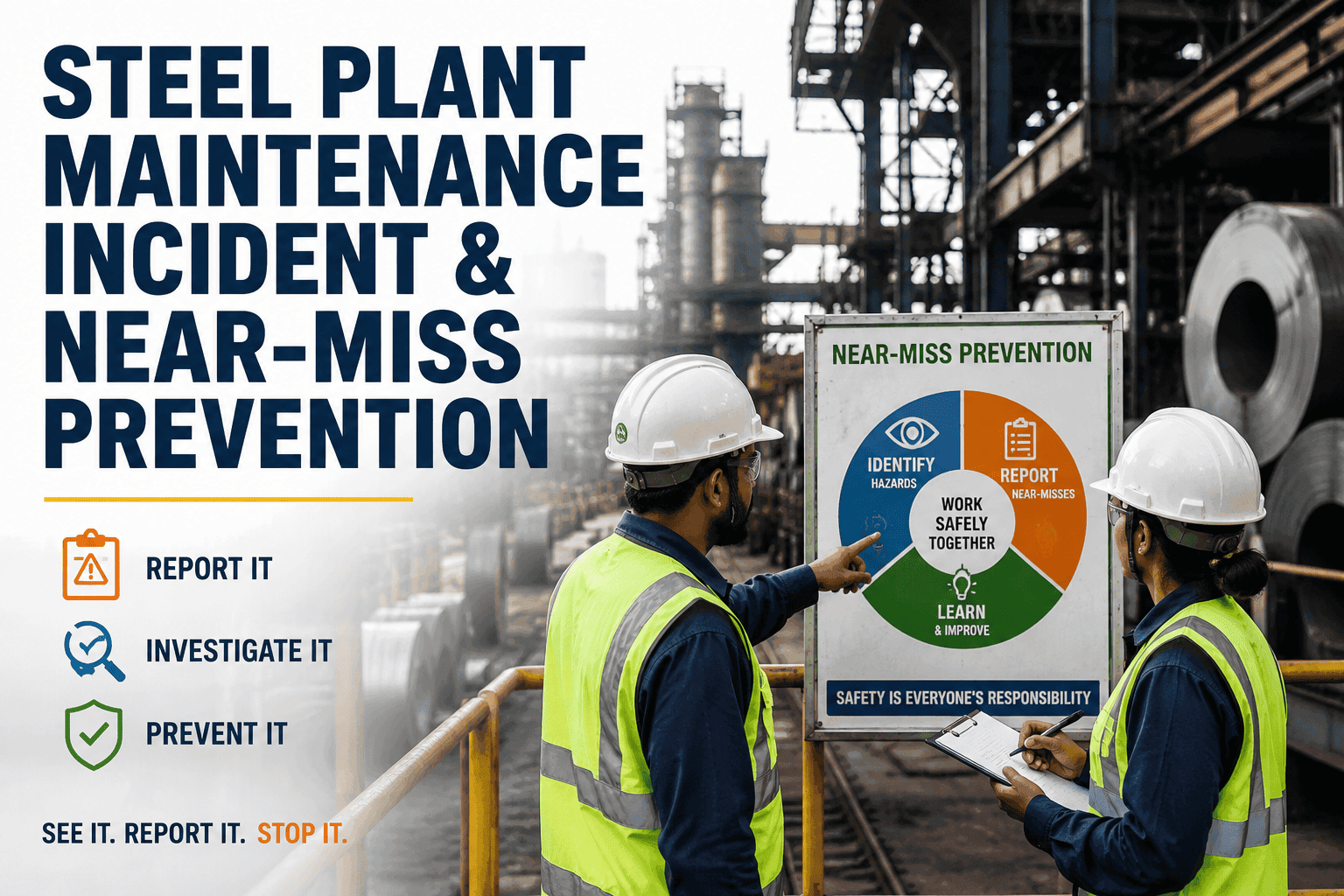
ISO 45001 requires systematic incident investigation methodology that identifies root causes and implements corrective actions preventing recurrence. All recordable injuries (requiring medical treatment beyond first aid, lost work time, or job restrictions) must be investigated within 48 hours using structured root cause analysis that examines immediate causes (unsafe act, unsafe condition), underlying factors (training gaps, maintenance deficiency, design flaw), and systemic contributors (management oversight, resource constraints, competing priorities). World-class mills also investigate near-misses (close calls that could have resulted in injury)—establishing reporting culture where workers identify hazardous conditions without fear of punishment—and track 10:1 ratio of near-misses per recordable incident. Near-miss investigation identifies early warning signals of systemic hazards before workers are injured; a near-miss of finger pinch in a piece of equipment signals guarding inadequacy or behavior risk that, left unaddressed, will eventually result in serious injury. Corrective action assignment requires responsible party, timeline, and verification step confirming implementation and effectiveness. Common investigation failures include stopping at immediate cause ("operator was careless") rather than identifying systemic factors (equipment design inadequacy, operator training deficiency, fatigue from scheduling), and implementation failures (corrective action not actually completed, or completed but not effective). Steel mills establishing monthly incident review meetings where operations, maintenance, and HR examine investigations together, challenge preliminary findings, and assign cross-functional corrective actions typically see 30–40% improvement in effectiveness of corrective actions compared to single-department investigation.
Worker Participation, Training, and Safety Culture Transformation
ISO 45001 explicitly requires worker participation in hazard identification, risk assessment, and control development decisions—shifting safety from top-down compliance burden to collaborative risk management. Steel mills embedding worker participation see 20–30% higher hazard identification rates in safety committee meetings because frontline workers recognize hazards invisible to management and engineering teams. Participation mechanisms include formal safety committees meeting monthly (with worker representatives, supervisors, and management), informal hazard reporting systems enabling workers to flag unsafe conditions without creating incident record, and structured worker feedback on safety program effectiveness. Safety culture transformation requires visible leadership commitment starting with plant manager and executive team demonstrating personal safety accountability, allocating resources to safety initiatives without waiting for cost justification (signal that safety is not discretionary), and holding all personnel accountable for safety performance through individual and team KPIs tied to compensation. World-class mills create safety leadership programs developing high-performing frontline supervisors and worker safety champions who model safe behaviors and influence peer groups toward safety norm. Training requirements include initial hazard awareness training for all new hires (2–4 hours), job-specific safety training for high-risk tasks (8–16 hours annually), supervisor safety leadership training (2–3 days), and incident investigation training for management. Training effectiveness requires measuring behavioral change (observation of safe work practices) rather than just attendance tracking; mills that conduct random safety audits observing actual work practices identify 20–30% of incidents originating from training gaps where knowledge existed but behavior did not align.
Before ISO 45001 implementation, we had 11 recordable injuries per 200K hours—losing 2–3 workers monthly to injuries that felt inevitable in steelmaking. Safety was viewed as compliance burden by operations team and liability concern by management. ISO 45001 forced us to systematically examine hazards and implement real controls rather than just enforcing PPE. Molten metal splash guarding, confined space permit system, and rotating workers out of high-heat zones—these engineering and administrative changes prevented the injuries we were having. Two years post-certification, we're at 2.8 recordable rate with near-miss reporting showing 85+ close calls we caught before they became injuries. Workers now volunteer safety ideas in meetings rather than treating safety as something management imposed. Safety culture shift saved us $450K annually in workers' compensation and prevented 15–20 serious injuries that would have hospitalized workers.
Launch Your ISO 45001 Safety Transformation
Oxmaint's OHSMS implementation framework guides hazard assessment, control hierarchy development, incident investigation discipline, and worker participation—supporting ISO 45001 certification and 40–60% injury rate reduction.
Frequently Asked Questions About ISO 45001 Implementation
Achieve ISO 45001 Certification and Transform Safety Culture
Oxmaint helps steel plants implement comprehensive OHSMS, conduct systematic hazard identification and risk assessment, develop hierarchical controls, and achieve ISO 45001 certification while reducing injury rates 40–60%.
.png)