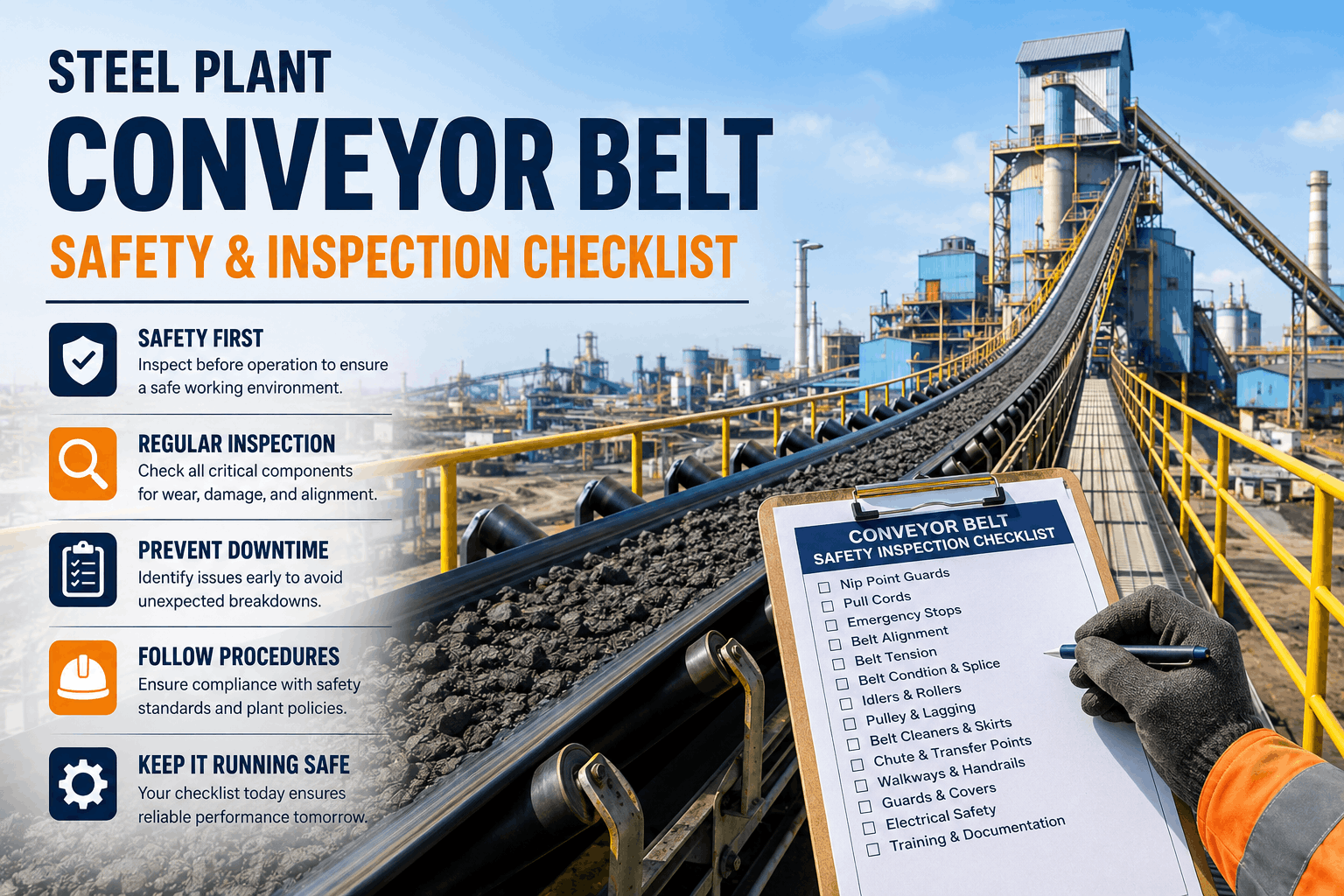
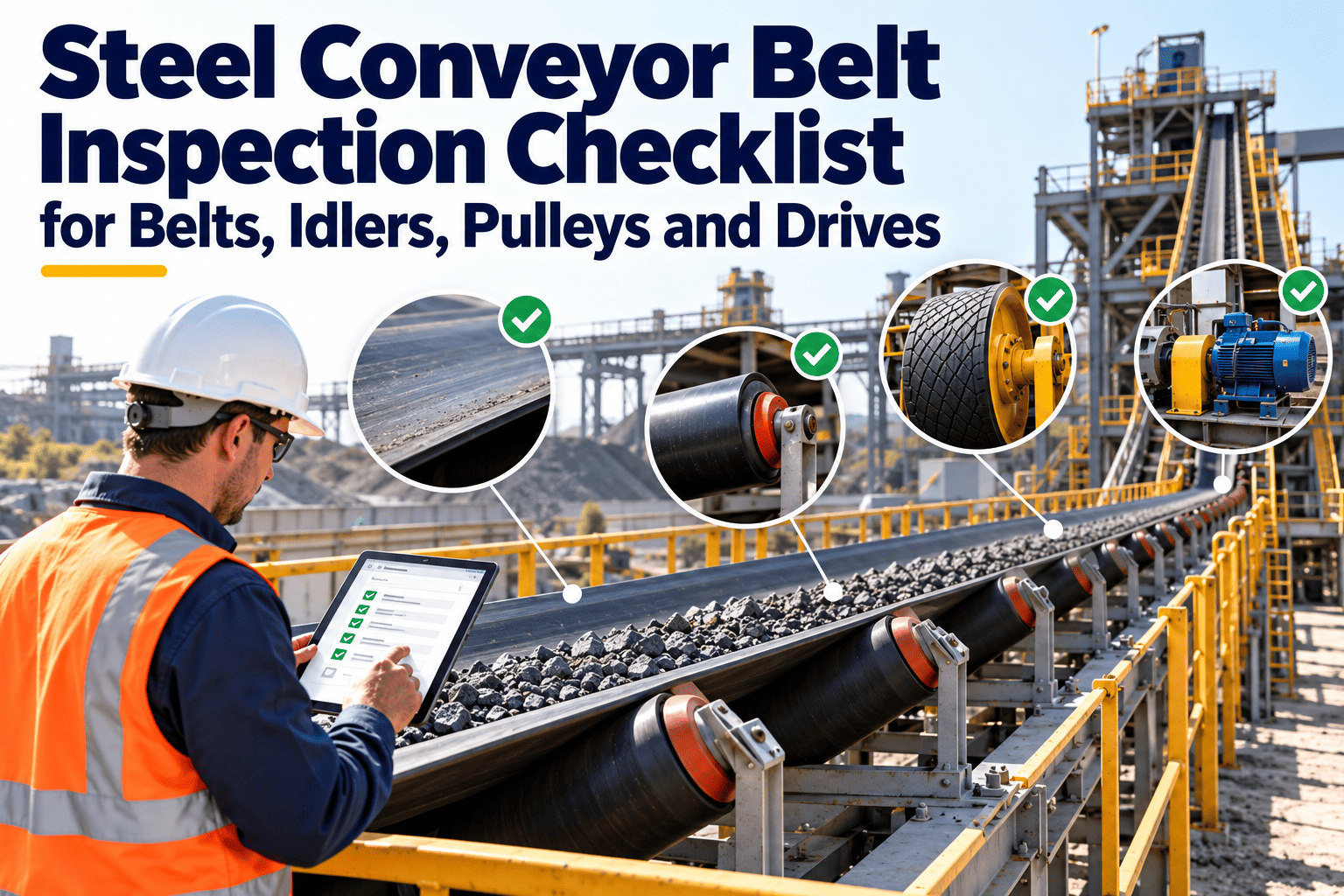
Conveyor belts are the arteries of a steel plant — moving raw materials, sinter, pellets, coke, and finished product throughout the facility. But they are also among the most hazardous equipment in the plant. Nip points, moving belts, and trapped material create serious injury risks. A structured daily safety inspection — checking nip point guards, pull cords, emergency stops, belt alignment, and idler rolls — prevents both injuries and unplanned downtime. Sign up free to digitize your conveyor safety inspections and track findings to resolution in Oxmaint.
Manage Your Conveyor Safety Inspections with Oxmaint Schedule daily safety walks, track guard completeness, log pull cord tests, and generate corrective work orders — all in one platform.
1. Guarding & Nip Point Protection
Nip points are the most common source of conveyor-related injuries. Guards must be in place before operation begins.
2. Emergency Stop Systems — Pull Cords & Push Buttons
Emergency stops are the operator's last line of defense. Daily functional testing is required by OSHA and industry standards.
3. Belt Condition & Tracking
Misaligned belts cause spillage, edge damage, and premature wear. Daily visual checks catch tracking issues before they cause belt destruction.
4. Idler Rolls & Pulleys
Seized idlers cause belt wear, generate heat, and can start fires in steel plant applications (coal, coke dust).
5. Belt Cleaners & Skirting
Poor belt cleaning causes carryback, spillage, and premature belt wear. Daily scraper adjustment is essential in steel plants.
6. Access & Housekeeping
Safe access is required for inspection and maintenance. Poor housekeeping creates slip, trip, and fire hazards.
7. Drive & Power Transmission
Drive train failures cause unexpected downtime. Daily checks catch developing problems early.
Digitize Your Conveyor Safety Inspections Mobile inspection checklists, pull cord test logging, guard completeness tracking, and automatic work order generation — purpose-built for steel plant material handling.
Frequently Asked Questions — Conveyor Belt Safety Inspection
1. What is the most common conveyor safety violation cited by OSHA?
Incomplete or missing nip point guarding — particularly on tail pulleys, snub pulleys, and belt-to-idler interfaces. Second most common: pull cords not tested regularly or not functional.
Sign up free to track guard completeness and pull cord test schedules in Oxmaint.
2. How often should pull cords be functionally tested?
Daily at start of shift. Test each pull cord along the entire conveyor length — not just one location. Document each test result. Failed pull cords must be repaired before conveyor operation resumes.
3. How do you identify a seized idler on a running conveyor?
Seized idlers leave a bright polished wear mark on the belt (return side) and may generate heat. Stop the conveyor and spin each idler by hand — seized idlers will not rotate freely. Replace immediately to prevent belt damage.
4. How does a CMMS improve conveyor belt safety?
A CMMS like Oxmaint digitizes daily safety checklists, tracks pull cord test results, schedules guard inspections, and generates corrective work orders for any deficiency — eliminating paper logs where findings are lost and ensuring every safety issue is tracked to resolution.
Run Safer Conveyors with Documented Daily Inspections Oxmaint gives your team the tools to complete, track, and prove every conveyor safety inspection — from nip point guards to pull cord function tests.