A single failed weld on a bridge support. A batch of sub-spec steel used in aircraft landing gear. A skyscraper column with hidden internal voids. These aren't hypothetical scenarios—they're multimillion-dollar disasters that trace back to one root cause: inadequate quality control in steel manufacturing and fabrication. When you're working with material that will support buildings, vehicles, and critical infrastructure for decades, "pretty good" quality isn't remotely acceptable. Steel quality best practices aren't bureaucratic checkboxes—they're the difference between structural integrity and catastrophic failure, between profitability and bankruptcy, between safety and tragedy.
Steel quality management encompasses the systematic processes, testing protocols, and traceability systems that ensure every piece of steel meets exact specifications from raw material receipt through final fabrication. Unlike consumer products where minor defects might annoy customers, steel quality failures can collapse structures, cause explosions, or trigger recalls costing hundreds of millions. This guide reveals the proven practices that world-class steel manufacturers and fabricators use to deliver consistent, specification-compliant materials every single time—because in steel production, there are no second chances once a defective component enters service.
Consequences:
Consequences:
The Five Pillars of Steel Quality Excellence
World-class steel quality doesn't happen by accident—it's built on five interconnected disciplines that work together to prevent defects, ensure traceability, and deliver consistent results across every production run.
1. Material Traceability & Documentation
Every piece of steel must be traceable back to its original heat through mill test reports (MTRs) containing chemical composition, mechanical properties, and heat treatment records. Heat numbers stamped on materials link physical product to certification documents enabling lifetime tracking.
2. Incoming Material Verification
Never assume delivered steel matches specifications. Upon receipt, verify MTRs against purchase orders, inspect for transit damage, and perform independent testing on critical heats. Sub-specification material entering your facility contaminates entire production batches.
3. In-Process Quality Control
Waiting until final inspection to check quality is catastrophic—you've already invested labor and materials in potentially defective parts. Institute inspection points at critical stages: post-cutting, post-welding, post-heat treatment, pre-assembly.
4. Non-Destructive Testing (NDT)
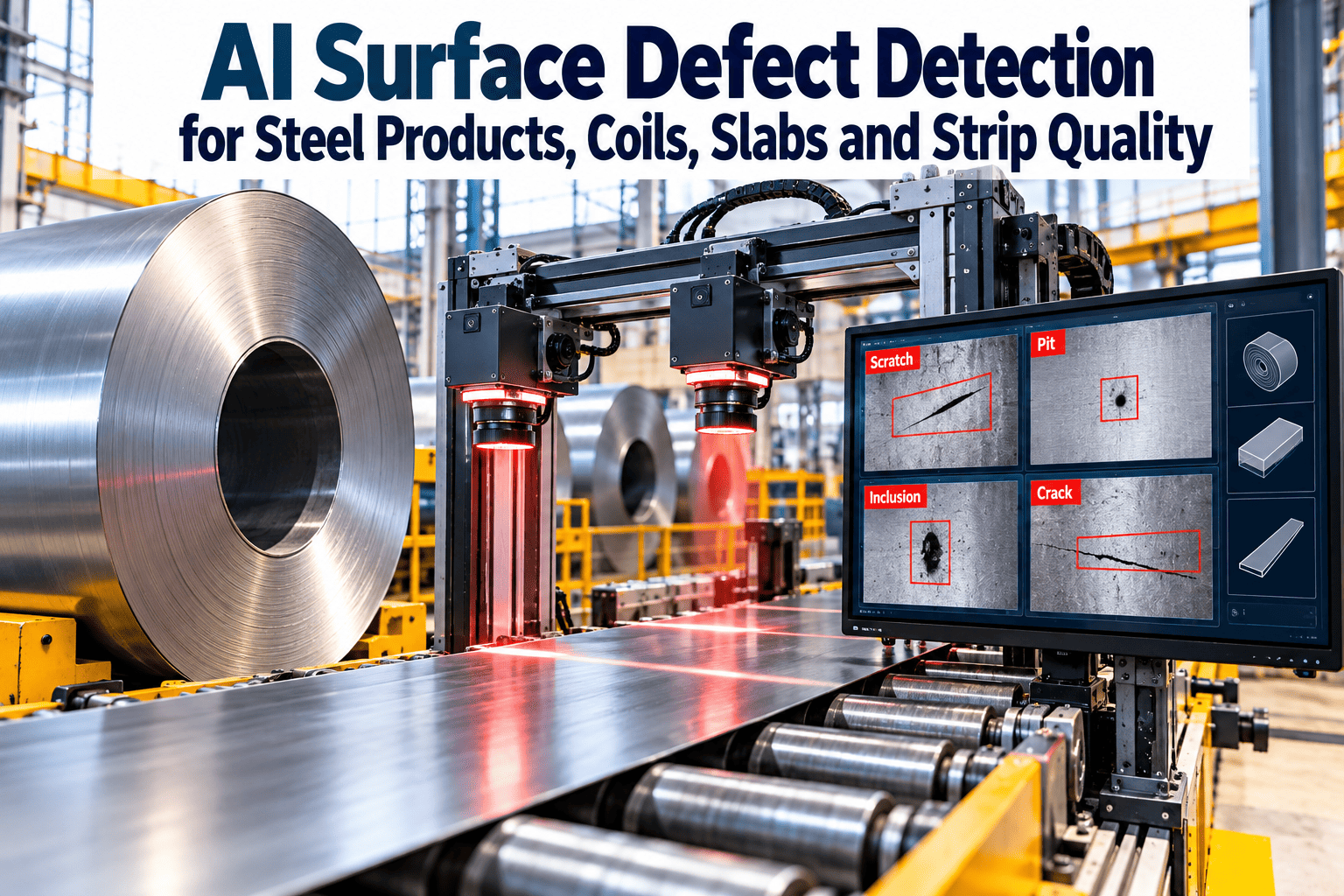
Critical welds, castings, and forgings require inspection methods that detect internal flaws without damaging the part. Visual inspection catches surface defects; NDT reveals hidden voids, cracks, inclusions, and porosity that will cause premature failure.
5. Statistical Process Control (SPC)
Tracking average results masks process variation that predicts future failures. SPC monitors key parameters (hardness, dimensions, chemistry) over time, detecting drift before defects occur. Control charts reveal when processes exceed acceptable variation limits.
Critical Testing Methods for Steel Quality Validation
Comprehensive quality assurance requires multiple testing approaches—no single method catches every defect type. Strategic combination of destructive and non-destructive techniques ensures both bulk properties and local defects are detected.
Chemical Analysis (Spectrometry)
Tensile Testing (Mechanical Properties)
Hardness Testing (Rockwell/Brinell)
Ultrasonic Testing (UT)
Radiographic Testing (RT)
Magnetic Particle Testing (MT)
Implement Quality Systems That Actually Work
Stop relying on final inspection to catch defects. Oxmaint's intelligent quality management system embeds inspection checkpoints throughout production, automatically captures test data, and provides instant traceability from heat number to finished part.
Understanding Mill Test Reports: Your Quality Lifeline
The Mill Test Report (MTR)—also called Mill Certificate or Material Test Certificate—is the single most important document in steel traceability. It's the birth certificate for steel, containing the verified chemical composition, mechanical properties, and heat treatment records that prove material meets specifications.
Anatomy of a Mill Test Report
MTR Validation Checklist
Common Steel Quality Failures and Prevention
Learning from industry failures prevents repeating expensive mistakes. These are the most frequent quality breakdowns in steel manufacturing and fabrication—and the specific controls that eliminate them.
Material Mix-Up (Wrong Grade Used)
The Scenario: ASTM A36 structural steel (36 ksi yield) used instead of specified ASTM A572 Grade 50 (50 ksi yield). Structure designed for 50 ksi steel is now dangerously under-strength.
Root Causes: No incoming material verification, inadequate material segregation in storage, heat numbers not tracked to specific jobs, operators grab "whatever's available."
Incomplete Weld Penetration
The Scenario: Full-penetration groove weld has root fusion only 60% through thickness. Weld looks acceptable from surface but carries only fraction of design load—fails under service stress.
Root Causes: Improper weld parameters (voltage/amperage/travel speed), inadequate joint preparation, lack of backing, welder skill deficiency, no procedure qualification.
Hydrogen-Induced Cracking (Cold Cracking)
The Scenario: Hairline cracks appear in heat-affected zone 24-72 hours after welding high-strength steel. Cracks invisible during initial inspection but propagate under load leading to sudden fracture.
Root Causes: Hydrogen absorption during welding, rapid cooling creating brittle martensite, high-strength steel susceptibility, contaminated base metal or filler, inadequate preheat.
Inadequate Heat Treatment
The Scenario: Quenched and tempered steel receives insufficient tempering time/temperature. Hardness exceeds specification making material brittle—catastrophic fracture occurs without warning under impact loading.
Root Causes: Furnace temperature inaccuracy, inadequate soak time, furnace overloading preventing uniform heating, lack of temperature monitoring, no post-heat-treatment hardness verification.
Industry Standards Driving Steel Quality
Compliance with recognized standards isn't optional—it's contractually required, legally mandated, and insurance-contingent for most applications. These are the governing documents that define acceptable quality for steel products.
| Standard Body | Key Standards | Coverage Area | Compliance Requirement |
|---|---|---|---|
| ASTM International | A36, A572, A992, A514 | Material specifications defining chemical composition, mechanical properties, manufacturing methods for structural, pressure vessel, and specialty steels | Mandatory for construction, manufacturing. MTRs must certify ASTM compliance. |
| AWS (American Welding Society) | D1.1, D1.5, D1.6 | Welding codes for structural steel, bridges, and stainless steel. Defines joint preparation, weld procedures, inspector qualification, and acceptance criteria. | Required by building codes and project specs. WPS and welder certification mandatory. |
| ASME (Boiler & Pressure Vessel) | Section IX, Section VIII | Pressure vessel fabrication, welding procedure qualification, material requirements for high-pressure applications. Most stringent quality requirements. | Legally mandated for pressure equipment. Third-party inspection and stamp required. |
| AISC (American Institute of Steel Construction) | 360, 341, Code of Standard Practice | Structural steel design, seismic provisions, fabrication and erection standards for buildings and structures. | Referenced by building codes. Certification programs validate fabricator quality systems. |
| ISO 9001 | Quality Management Systems | Framework for documented quality procedures, internal audits, corrective action, continual improvement. Industry-agnostic but steel-applicable. | Often contractually required. Third-party certification demonstrates quality commitment. |
| API (American Petroleum Institute) | 5L, 650, 620 | Line pipe specifications, storage tank design, fabrication standards for oil and gas industry applications with severe service conditions. | Mandatory for petroleum industry. Traceability and PMI testing required. |
Frequently Asked Questions
What's the difference between MTR 3.1 and 3.2 certificates?
Both are certification levels per EN 10204 European standard. MTR 3.1 is manufacturer's inspection certificate—mill tests material and certifies compliance with their own quality system. MTR 3.2 adds independent verification—accredited third-party inspector witnesses testing and validates results. Most projects accept 3.1; critical applications (nuclear, aerospace) require 3.2. US equivalent: CMTR (Certified Mill Test Report) generally corresponds to 3.1 level.
How long must we retain mill test reports and quality records?
Minimum retention depends on application and jurisdiction. ASME requires 3 years post-fabrication for pressure vessels. Construction projects typically 5-7 years. Aerospace/defense often mandates lifetime traceability (30+ years). Best practice: digitize all MTRs immediately, maintain searchable database indefinitely. Storage costs trivial compared to inability to provide documentation during failure investigation or lawsuit decades later.
Can we use steel without mill test reports in non-critical applications?
Technically yes for purely commercial work with no code requirements—but strongly inadvisable. Without MTR you have zero proof of grade, chemistry, or mechanical properties. If part fails causing injury or property damage, you've eliminated your defense that material met specifications. Additionally, many insurance policies require traceability. The cost savings of using undocumented steel is dwarfed by potential liability exposure.
What NDT method should I use for weld inspection?
Selection depends on criticality, access, and code requirements. Visual + MT/PT sufficient for non-critical welds in low-stress applications. Radiographic testing (RT) preferred for permanent documentation and code compliance but slow and expensive. Ultrasonic testing (UT) faster and more sensitive for volumetric inspection but requires skilled technicians. Critical pressure vessel welds often require both RT and UT for redundant verification. Project specifications dictate minimum acceptable methods.
How do we prevent material mix-ups with multiple steel grades in the shop?
Implement physical segregation—dedicate storage areas by grade with clear signage. Color-code materials (paint stripes, tags) corresponding to grade. Barcode/QR code tracking from receiving through cutting, linking heat numbers to specific jobs. Require handheld XRF verification before processing any material. Digital material management system that alerts operators attempting to use wrong grade for job. Most important: create culture where stopping production to verify material is expected and rewarded, not punished.
Build Quality Into Every Step—Not Just Final Inspection
Oxmaint transforms steel quality management from paperwork nightmare into seamless digital workflow. Automatic MTR validation, real-time inspection data capture, instant heat number traceability, and AI-powered defect prediction keep your quality system ahead of problems instead of reacting to failures. Stop firefighting quality issues—prevent them.