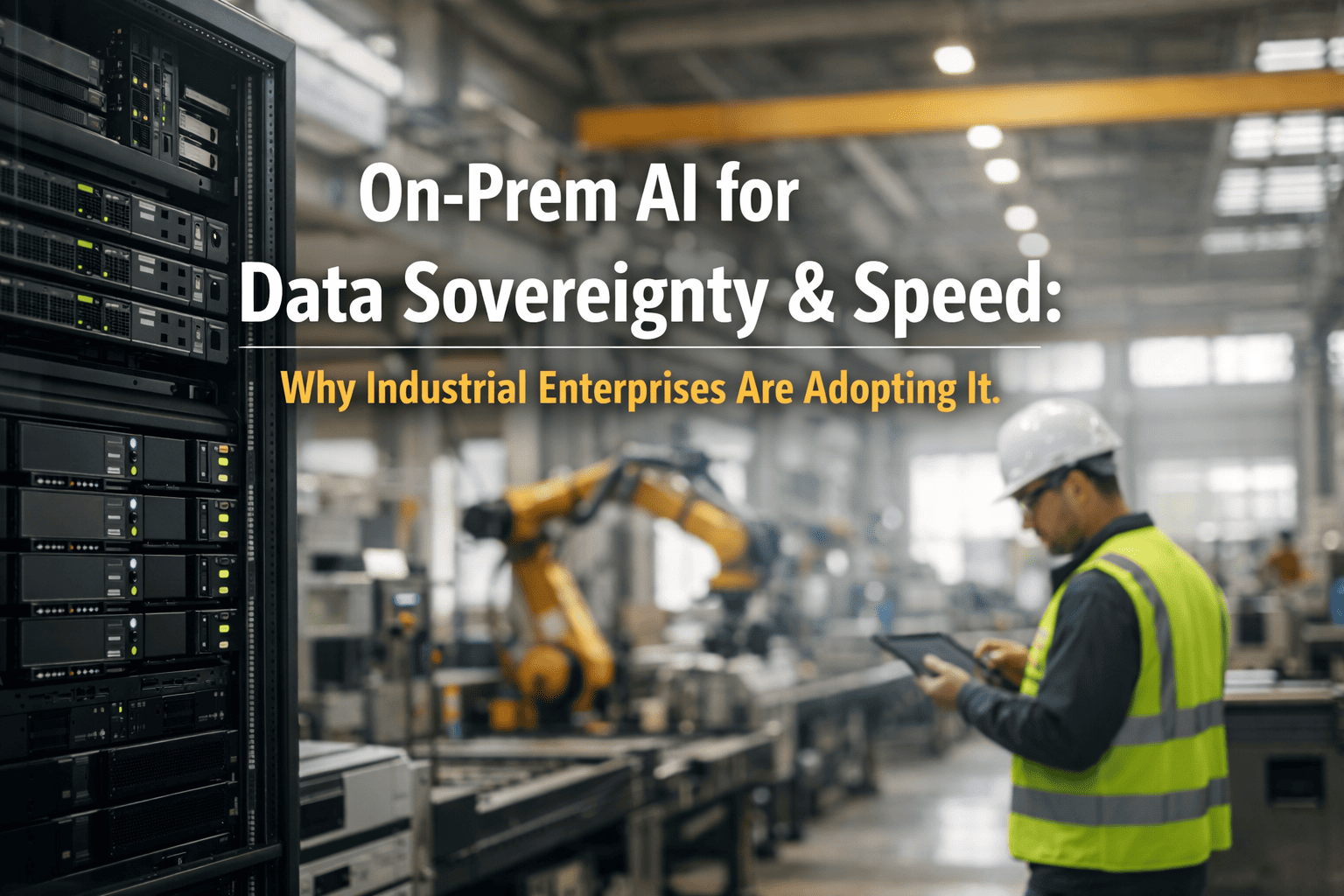
For the last decade, the playbook was simple: send your factory data to the cloud, let AI models crunch it, and wait for insights to come back. In 2026, that playbook is breaking. Production lines cannot afford 200-millisecond round trips when a defect needs to be caught in 10 milliseconds. Sensitive operational data should not cross public networks when it can be processed on the factory floor. And cloud inference costs become staggering when you are running AI across thousands of sensors continuously. The industrial world is not abandoning cloud — it is redistributing intelligence to where decisions actually happen: the edge. Oxmaint is built for this reality. Our maintenance AI runs condition monitoring, anomaly detection, and work order intelligence on-site and on-device — while syncing enterprise data to SAP and cloud systems only when needed. Start your free trial and deploy maintenance AI that works where your equipment lives. Or schedule a demo to see how Oxmaint delivers edge-ready maintenance intelligence.
Industrial AI Trends
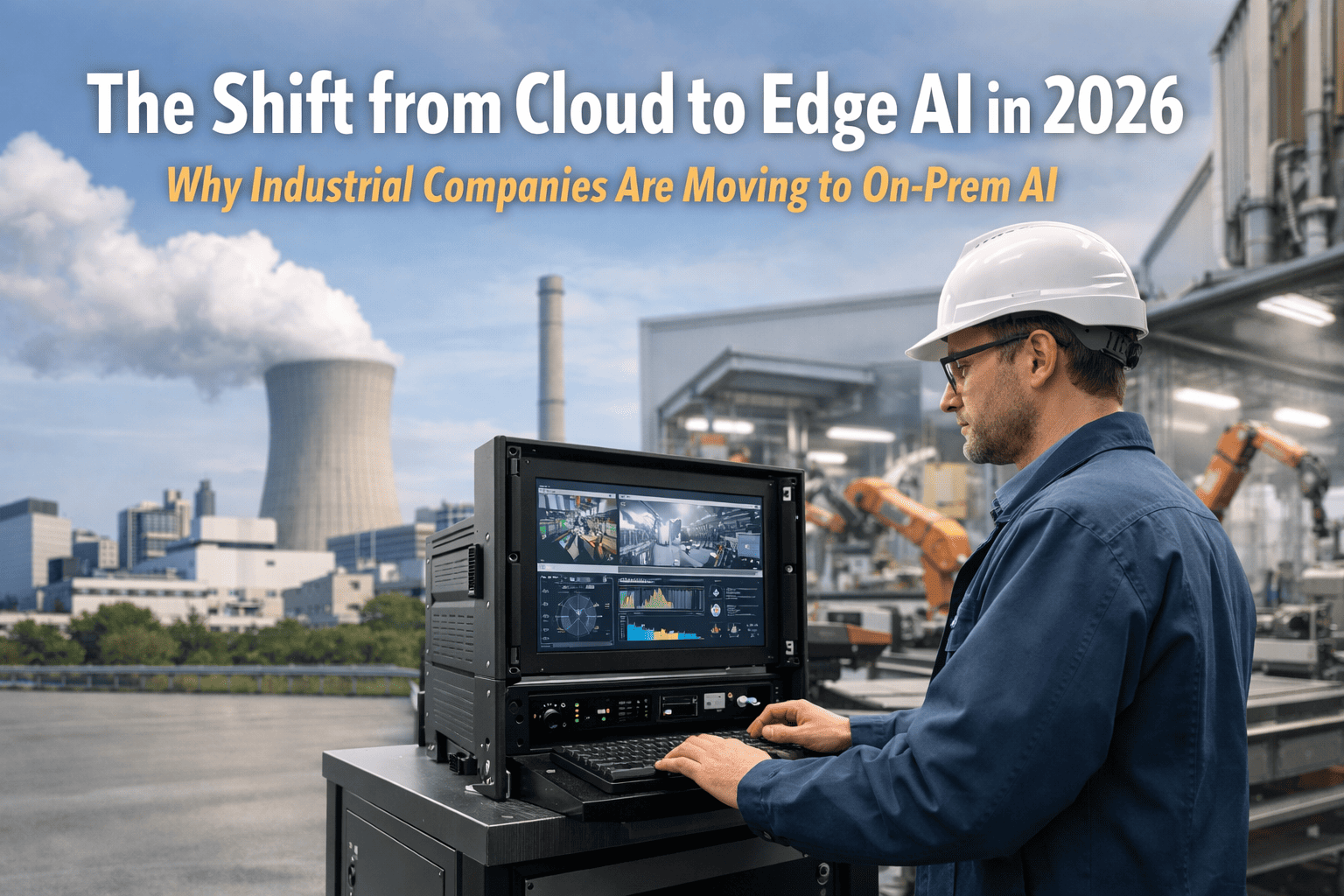
The Shift from Cloud to Edge AI in 2026: Why Industrial Companies Are Moving to On-Prem AI
Industry Report · 8 min read
$119B
Projected edge AI market by 2033 — growing at 21.7% CAGR as industrial adoption accelerates
<5ms
Edge AI latency vs 100–300ms cloud round-trip — the gap that decides defect or delivery
47%
Global smart manufacturing adoption in 2026 — up 12 percentage points from the prior year
72%
New automation projects now specify edge-native components — cloud-only is no longer default
Oxmaint: Maintenance AI That Works Where Your Equipment Lives
Oxmaint delivers condition monitoring, anomaly detection, and work order intelligence on-device and offline — with enterprise sync to SAP when connected. Edge-ready maintenance AI, not cloud-dependent dashboards.
Why 2026 Is the Tipping Point
The cloud-to-edge shift is not a technology trend — it is an operational necessity driven by three converging forces that make cloud-only AI untenable for industrial environments. Factories generate massive data volumes from thousands of sensors simultaneously. Production decisions require millisecond response times. And sensitive operational data increasingly must stay on-premises for regulatory and competitive reasons. The result: AI is migrating from distant data centres to the factory floor, the pump station, and the maintenance technician's mobile device.
Latency Kills
<5ms edge vs 100–300ms cloud
A vision system catching a weld defect cannot wait 200ms for a cloud response. By the time the answer comes back, three more defective parts have passed. Edge inference delivers decisions in under 5 milliseconds — at the point of production, not after the fact.
Data Stays On-Site
Regulatory & competitive necessity
Process parameters, production recipes, and equipment performance data are competitive secrets. Edge AI processes this data locally — nothing crosses a public network. Healthcare, defence, and industrial organisations cannot tolerate cloud exposure for sensitive operational intelligence.
Cloud Costs Explode
30–50% cost reduction with edge
Running continuous AI inference across thousands of sensors via cloud APIs is financially unsustainable at scale. Edge deployment eliminates per-query cloud costs. Companies adopting hybrid architectures report 30–50% cloud cost reduction while achieving faster response times.
The Latency Spectrum: Where Milliseconds Define Outcomes
Not every AI workload needs edge processing. But for the ones that do, the difference between 5 milliseconds and 200 milliseconds is the difference between catching a defect and shipping it, between preventing a failure and reacting to one. Here is where different industrial AI tasks fall on the latency spectrum.
Vision defect detection
<10ms
Robot obstacle avoidance
<10ms
Vibration anomaly alert
<50ms
Maintenance work order AI
<1s
Parts demand forecasting
Seconds
RUL model retraining
Minutes
CapEx portfolio analysis
Hours OK
Cloud AI vs Edge AI: Direct Comparison
| Dimension |
Cloud AI |
Edge AI |
| Latency | 100–300ms round trip to data centre | Under 5ms — inference at the device |
| Data privacy | Data leaves premises; exposure risk | Data stays on-site; never crosses public network |
| Connectivity dependency | 100% — no internet, no AI | Works fully offline; syncs when connected |
| Cost at scale | Per-query API costs compound across sensors | Fixed hardware cost; inference is free after deployment |
| Best for | Model training, portfolio analytics, retraining | Real-time detection, anomaly alerts, field execution |
| Power consumption | Massive data centre energy footprint | NPUs use 10–20x less power than cloud GPUs |
The Winning Architecture: Train in Cloud, Execute at Edge
The smartest industrial organisations in 2026 are not choosing cloud or edge — they are using both strategically. Heavy model training and portfolio-level analytics run in the cloud where massive compute is available. Lightweight, optimised inference models are then deployed to the edge where decisions happen in real time. This hybrid architecture delivers the best of both worlds: cloud-scale intelligence with edge-speed execution.
CLOUD
Train & Analyse
Model training on historical data
Portfolio-level asset analytics
CapEx forecasting & planning
AI model retraining & updates
Optimised models pushed down ↓ ↑ Aggregated insights pushed up
EDGE
Execute & Detect
Real-time anomaly detection
Vibration & temperature alerts
Work order AI on mobile device
Offline condition monitoring
Edge AI Use Cases Transforming Industrial Operations
Machine Vision Quality Control
Cameras on the production line run AI defect detection models locally. Every part inspected in under 10ms. Defect rates drop to 0.7% — a 74% improvement over traditional statistical process control. No cloud latency, no missed defects.
Vibration Anomaly Detection
Edge-deployed models learn each asset's normal operating signature and flag deviations in real time. Alerts fire 2–8 weeks before failure — directly on the sensor or gateway, even without internet connectivity. No cloud dependency for critical equipment protection.
Cobot Safety & Adaptation
Collaborative robots use pruned AI models for real-time obstacle avoidance with 10ms response times — critical for human safety. The model runs entirely on the robot's embedded processor. Cloud latency would make this physically dangerous.
Field Maintenance Intelligence
Technicians access AI-powered troubleshooting, equipment manuals, and repair guidance on their mobile device — in areas with no connectivity. Edge AI processes queries locally using small language models embedded on-device. Oxmaint delivers this for maintenance teams.
Maintenance AI That Works Offline, On-Device, On the Factory Floor
Oxmaint delivers condition monitoring, anomaly detection, and mobile work order intelligence that runs at the edge — syncing to SAP and enterprise systems only when needed. Your maintenance AI should not depend on a cloud connection to protect your equipment.
How Oxmaint Delivers Edge-Ready Maintenance AI
Oxmaint is designed for the operational reality of industrial maintenance — where connectivity is unreliable, decisions must happen in the field, and equipment protection cannot wait for a cloud round-trip. Here is what runs at the edge, and what syncs to the enterprise when connected.
Full work order execution — create, update, close
Parts scanning and consumption recording
Photo capture, inspection readings, notes
Condition scoring and anomaly alerts
Equipment history lookup and troubleshooting
Digital signatures and time-stamped audit trail
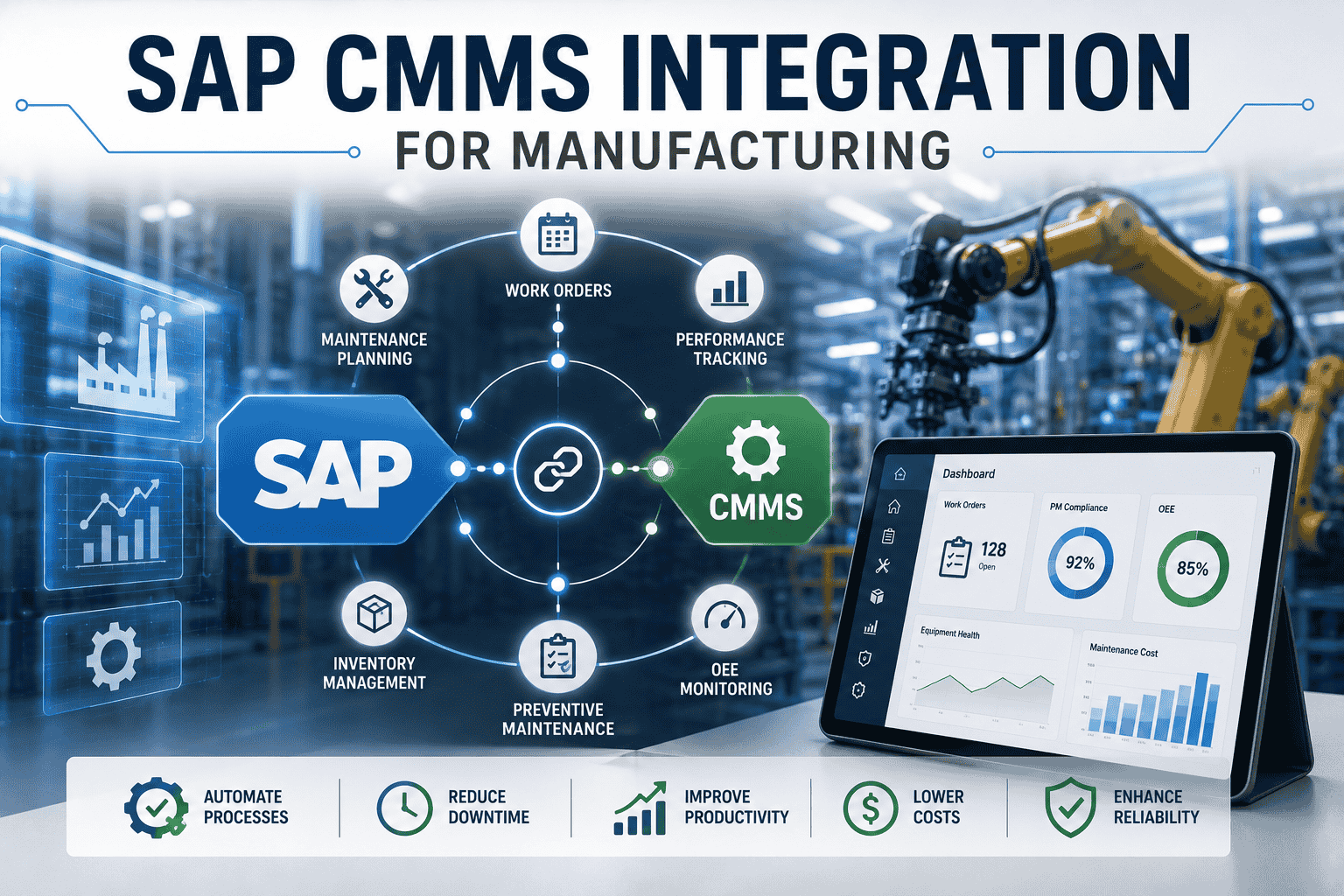
Goods issue posting to SAP MM
Work order confirmation to SAP PM
Cost settlement to SAP FI/CO
AI model updates and retraining data
Portfolio-level dashboards and analytics
CapEx forecasting and RUL aggregation
Edge AI Performance Benchmarks (2026)
Average efficiency gain from AI-driven production control at the edge
Reduction in unplanned downtime with edge-deployed predictive maintenance
Cloud cost reduction when shifting real-time inference workloads to edge
Energy savings with NPU-based edge inference vs cloud GPU processing
Typical ROI timeline for edge computing deployment in manufacturing
Frequently Asked Questions
What is edge AI and how does it differ from cloud AI?
Edge AI runs artificial intelligence models directly on local devices, gateways, or on-premises servers — at the point where data is generated. Cloud AI sends data to remote data centres for processing and returns results over the internet. Edge AI delivers under-5ms latency, works offline, and keeps data on-site. Cloud AI offers massive compute for model training but introduces latency, connectivity dependency, and data exposure.
Why are industrial companies moving from cloud to edge AI in 2026?
Three converging forces drive the shift: production lines cannot tolerate cloud latency for real-time decisions, sensitive operational data must stay on-premises for regulatory and competitive reasons, and continuous cloud inference across thousands of sensors is financially unsustainable at scale. The result is a hybrid model where training stays in the cloud and execution moves to the edge.
How does Oxmaint use edge AI for maintenance?
Does edge AI replace cloud AI entirely?
What ROI can manufacturers expect from edge AI?
Industry data shows 31% average efficiency gains, 43% reduction in unplanned downtime, 30–50% cloud cost reduction, and typical ROI within 12 months of edge deployment. For maintenance-specific operations, Oxmaint delivers 85% reduction in manual data re-entry and 90%+ technician adoption within weeks.
Schedule a demo to model the ROI case for your specific operations.
AI That Runs Where Your Equipment Runs
Oxmaint delivers maintenance intelligence at the edge — condition monitoring, work order execution, parts tracking, and anomaly detection that works offline and syncs to SAP when connected. No cloud dependency for equipment protection. Deploy in weeks.