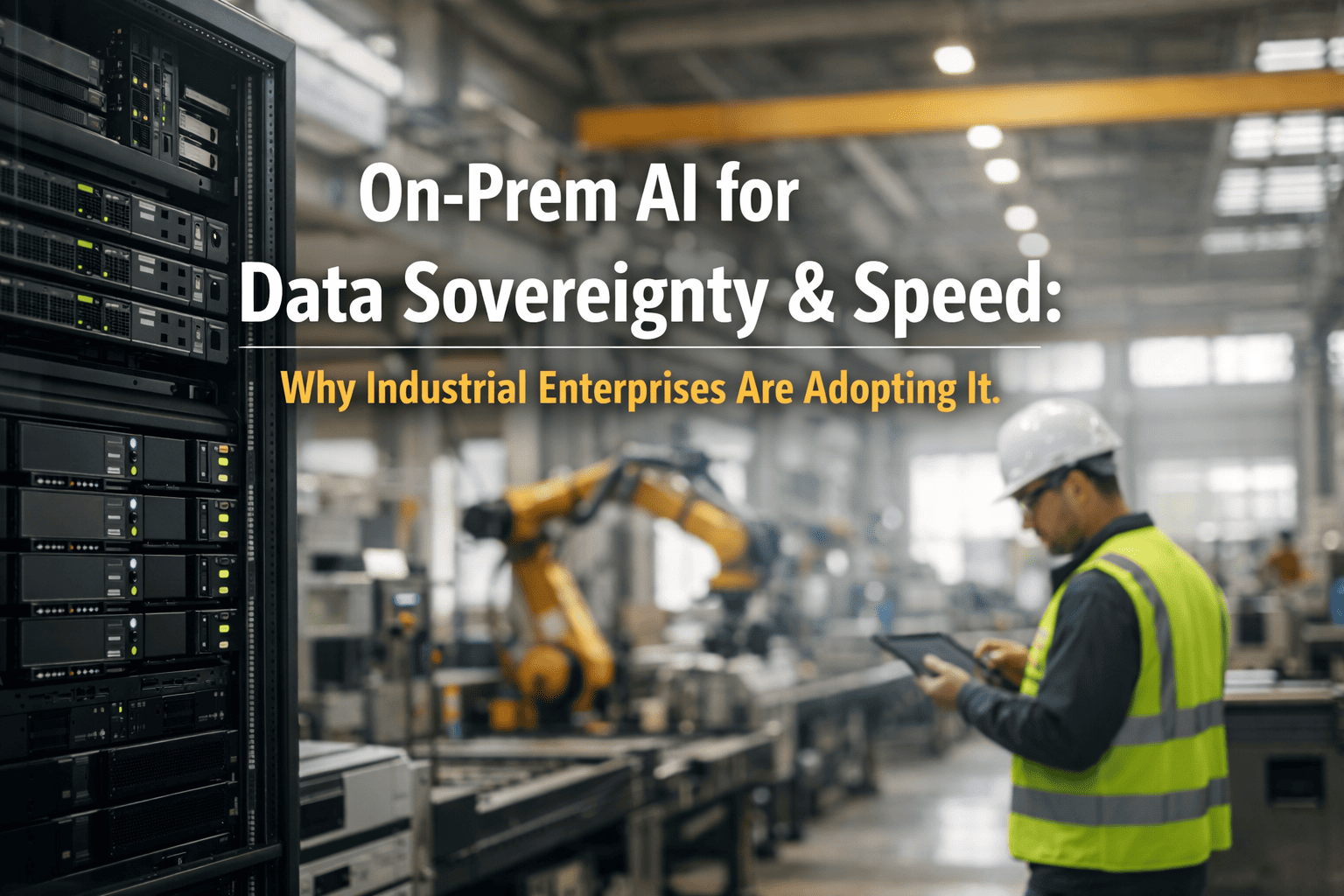
The $3.4 trillion global digital transformation budget for 2026 is being rewritten. For the first time, the majority of enterprise AI investment is flowing away from multi-tenant SaaS platforms toward sovereign AI infrastructure — on-premise servers, private clouds, edge compute, and nationally controlled data centres where organizations own their data, their models, and their inference pipeline end to end. This is not a niche trend. Gartner predicts 65% of governments will introduce technological sovereignty requirements by 2028. The sovereign AI infrastructure market is growing at 28% CAGR, reaching $78 billion by end of 2026. And Deloitte reports that nearly $100 billion will be invested in sovereign AI compute this year alone. For maintenance-driven enterprises, this shift means one thing: your AI platform must run where your data lives — not where a SaaS vendor's servers sit. Oxmaint was built for exactly this transition. Start your free Oxmaint trial — deploy on-premise, cloud, or hybrid from day one. Or book a demo to see how Oxmaint delivers sovereign AI for industrial maintenance.
2026 Spending Outlook
Digital Transformation Spending 2026: The Shift from SaaS to Sovereign AI
How the $3.4 trillion global DX budget is being redirected from rented cloud AI toward owned, sovereign infrastructure — and why maintenance-driven enterprises are leading the charge.
$3.4T
Global DX spending forecast 2026
$78B
Sovereign AI infrastructure market 2026
28%
Sovereign AI CAGR through 2035
71%
Of enterprises increasing AI spend in 2026
The Spending Shift Nobody Predicted
For a decade, the digital transformation playbook was simple: move everything to the cloud, subscribe to SaaS, and let vendors handle the infrastructure. That playbook produced real value — but it also produced three consequences that are now driving the reversal. First, data sovereignty regulations multiplied. Second, cloud egress costs at AI scale became unsustainable. Third, enterprises realised that their AI models — trained on proprietary operational data — were their most valuable intellectual property, and they were storing that IP on someone else's servers. The result is a structural reallocation of DX spending from rented cloud capacity toward owned sovereign infrastructure.
Where Budgets Were Going (2020-2024)
Multi-tenant SaaS subscriptions
Public cloud AI/ML services
Vendor-managed infrastructure
Cloud-first, figure-it-out-later approach
Where Budgets Are Going (2025-2028)
On-premise AI inference infrastructure
Sovereign / private cloud deployments
Edge AI at the facility level
Hybrid architectures with data control
Five Forces Driving the Sovereign AI Shift
The move from SaaS to sovereign AI is not driven by a single cause. Five macro forces are converging simultaneously, each reinforcing the others and creating a structural change in how enterprises invest in digital technology.
01
Regulatory Acceleration
GDPR enforcement intensifying, China's PIPL fully operational, India's DPDPA taking effect, US sector rules tightening. By 2028, 65% of governments will mandate technological sovereignty requirements. Compliance is no longer optional — and cloud workarounds are no longer sufficient.
02
Cloud Cost Inversion
At AI scale, cloud economics flip. A 500-asset sensor deployment streaming to cloud AI services costs $15K-$40K per month in egress alone. On-premise inference eliminates this line item entirely. The 3-year TCO for on-premise AI is now 40-60% lower than cloud-only at production scale.
03
IP Protection Awareness
AI models trained on proprietary operational data are among the most valuable IP an enterprise owns. Storing trained models on third-party cloud infrastructure exposes them to vendor access, subpoena risk, and competitive intelligence leakage. Sovereign infrastructure keeps models under your legal control.
04
Geopolitical Fragmentation
Supply chain decoupling, export controls on AI chips, and government-backed sovereign AI programmes are creating regional technology boundaries. Enterprises operating across jurisdictions need infrastructure that adapts to each region's sovereignty requirements independently.
05
Edge AI Maturity
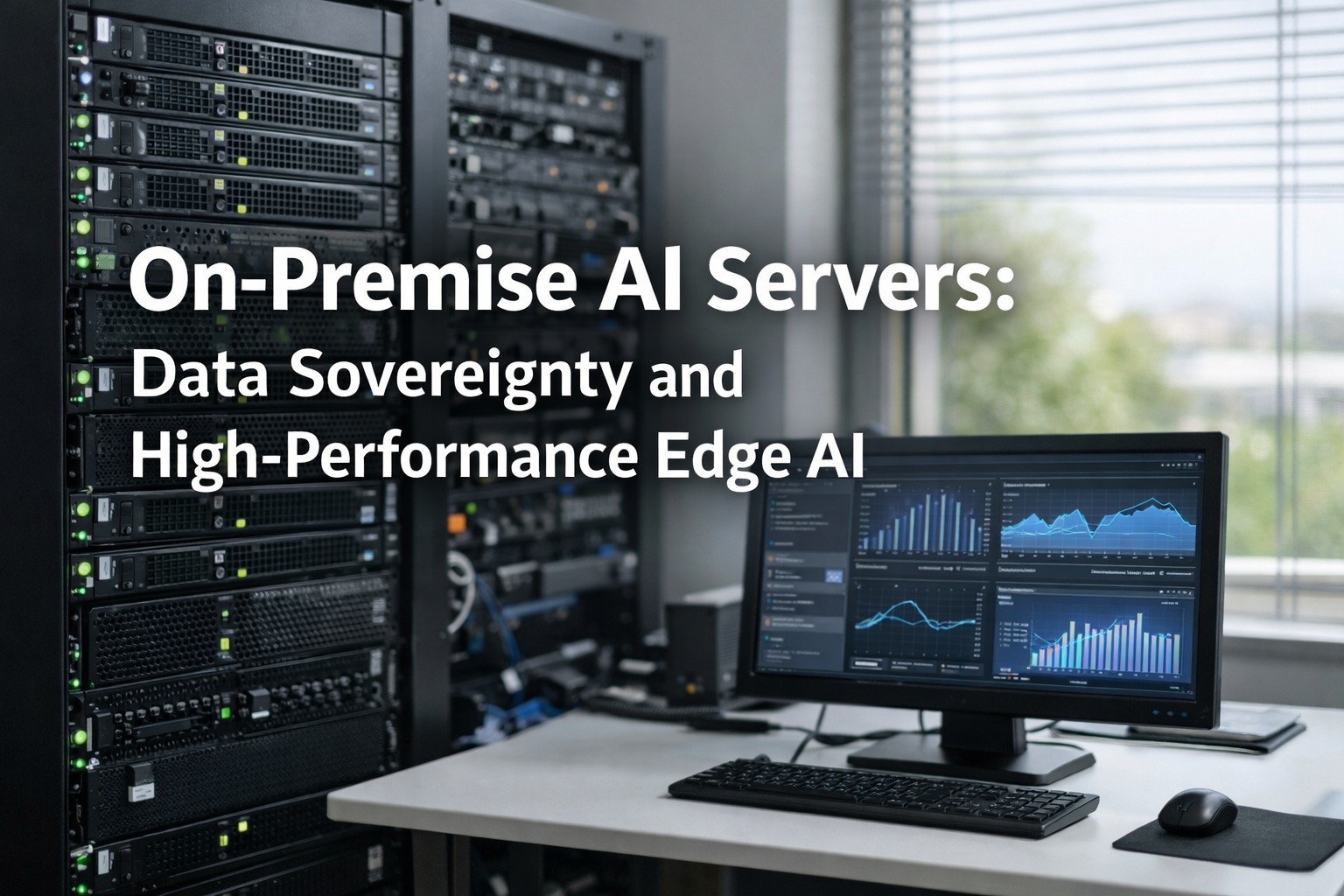
Modern inference-optimized GPUs deliver cloud-grade AI performance in a 1U rack server drawing 350W. The hardware that used to require a data centre now fits in a plant server room. The technology barrier to sovereign AI deployment has effectively disappeared.
2026 DX Budget Allocation: Where the Money Goes
The composition of digital transformation spending in 2026 reveals the structural shift in real time. AI-related investment now represents the fastest-growing segment, and within AI, the dominant allocation pattern has changed from cloud AI services to infrastructure ownership.
AI and Machine Learning
Fastest growing — 71% of enterprises increasing spend
Cloud Infrastructure
Shifting toward sovereign / private cloud
Cybersecurity
Identity governance and AI security rising
IoT and Edge Computing
Edge AI replacing cloud-dependent models
Automation and Robotics
58% of enterprises expanding automation
Data Analytics and BI
Merging into AI-driven insight platforms
SaaS vs Sovereign AI: The Architecture Comparison
| Dimension | Traditional SaaS AI | Sovereign AI (Oxmaint) |
|---|
| Data location | Vendor's cloud region (shared infra) | Your servers, your jurisdiction |
| Model ownership | Trained on vendor's platform — portability limited | Your models on standard runtimes — fully portable |
| Latency | 80-200ms cloud round-trip | Under 5ms on-premise inference |
| Cost at scale | Grows linearly with usage and egress | Fixed hardware + declining per-unit cost |
| Compliance | Depends on vendor's certifications | Inherent — data never leaves your perimeter |
| Vendor lock-in | High after 12-18 months | Zero — switch infrastructure without retraining |
| Internet dependency | 100% — offline = no AI | 0% — full offline capability |
Sovereign by Design
Oxmaint deploys on-premise, cloud, or hybrid — same platform, your infrastructure choice
While SaaS-only platforms force your data into their cloud, Oxmaint gives you full deployment flexibility. Predictive maintenance AI, SAP integration, and mobile work orders — all running where your compliance requirements say they must.
What Sovereign AI Means for Maintenance Operations
The sovereign AI shift is not abstract for maintenance teams — it changes how predictive models run, where sensor data is processed, and who controls the maintenance intelligence your operations depend on. Here is what the transition looks like in practice for industrial maintenance.
1
Sensor Data Stays On-Site
Vibration, temperature, pressure, and power readings from plant-floor sensors process locally on your own GPU hardware. No data egress. No third-party access. No cloud dependency for real-time predictions.
2
AI Models You Own
Predictive maintenance models trained on your operational data run on standard ONNX/TensorRT runtimes inside your firewall. Change GPU vendor, change cloud provider, or go fully air-gapped — your models move with you.
3
SAP Integration Without Cloud Middleware
Oxmaint connects directly to SAP PM, MM, and FI/CO through your internal network. Work orders, parts data, and cost postings flow between systems without traversing any external infrastructure.
4
Offline-First Mobile Execution
Technicians use Oxmaint's mobile app in connectivity dead zones — basements, turbine halls, offshore platforms. Data syncs to your on-premise server, not a cloud endpoint, when connection returns.
Industry Leaders vs Laggards: The Investment Gap
Research across 3,200 business and IT leaders reveals a widening gap between digital transformation leaders and laggards. Leaders are not just spending more — they are spending differently, prioritising infrastructure ownership and AI sovereignty over SaaS convenience.
Increasing DX spending in 2026
78%Leaders
55%Laggards
Increasing AI spending in 2026
76%Leaders
61%Laggards
Confident in digital ROI
2xLeaders
1xLaggards
DX embedded as core strategy
2.5xLeaders
1xLaggards
Planning sovereign AI deployment
74%Leaders
38%Laggards
The Sovereign AI Readiness Checklist
Most enterprises have sovereign AI on their 2026 roadmap but few have operational readiness. McKinsey research confirms that sovereign AI migrations typically take three to four years — not because the technology is immature, but because organisations struggle to decide where sovereignty matters most. This checklist accelerates that decision.
Inventory Data Sovereignty Requirements
Map every data category (sensor telemetry, employee PII, financial records, AI model weights) to its regulatory jurisdiction. Identify which must stay on-premise, which can use sovereign cloud, and which can remain in public cloud.
Calculate True Cloud TCO at Scale
Model your actual 3-year cloud AI cost including egress, compute scaling, vendor markup, and lock-in migration cost. Compare against on-premise GPU infrastructure with amortised hardware refresh.
Assess AI Model Portability
Confirm your AI models can export to standard formats (ONNX, TensorRT) and run on any GPU hardware. If they cannot, you are locked to your current vendor and should plan model re-architecture.
Choose a Deployment-Agnostic Platform
Select maintenance and AI platforms (like Oxmaint) that run identically on-premise, cloud, and hybrid. This gives you the flexibility to start cloud and migrate to sovereign without re-architecture.
Plan Infrastructure, Not Just Software
Sovereign AI requires server room space, GPU hardware, network isolation, and IT ops capability. Budget for the infrastructure layer alongside the software decision — they are inseparable.
Start the Transition
See Oxmaint running as sovereign maintenance AI in a live 30-minute demo
Bring your data sovereignty requirements, your asset count, and your biggest cloud cost concern. We map the optimal deployment architecture and show Oxmaint running in that configuration live — on-premise, cloud, or hybrid.
Frequently Asked Questions
What is sovereign AI and how does it differ from regular cloud AI?
Sovereign AI refers to AI infrastructure where the organisation or nation controls the data, models, compute, and governance end to end. Unlike cloud AI where data and models reside on a vendor's shared infrastructure, sovereign AI runs on owned or nationally controlled hardware — ensuring data never leaves your jurisdiction and models remain your intellectual property.
Does Oxmaint support sovereign AI deployment for industrial maintenance?
Yes. Oxmaint deploys fully on-premise with AI inference running on your own GPU hardware, SAP connectivity through your internal network, and mobile apps syncing to your local servers. No data leaves your facility. The same platform also runs in cloud or hybrid mode for organisations with different requirements.
Book a demo to discuss your specific deployment needs.Is sovereign AI more expensive than SaaS cloud AI?
At pilot scale, cloud is cheaper because there is no hardware purchase. At production scale with hundreds of assets and continuous sensor streams, sovereign AI is 40-60% cheaper over 3 years because you eliminate cloud egress fees, usage-based compute charges, and vendor markup on AI services.
How does the shift to sovereign AI affect existing SaaS contracts?
Most enterprises transition gradually — keeping non-sensitive workloads in SaaS while moving AI inference, sensor data processing, and regulated workloads to sovereign infrastructure. Oxmaint's hybrid deployment mode supports this staged transition natively.
Start a free trial to begin the evaluation.What industries are leading the sovereign AI adoption?
Defence, energy, pharmaceuticals, financial services, and critical infrastructure operators are furthest along. Manufacturing and utilities are accelerating fast. Industries with stringent data sovereignty regulations or safety-critical AI workloads see the strongest business case for sovereign deployment.
How long does transitioning from SaaS to sovereign AI take?
McKinsey research indicates sovereign AI migrations typically take 3-4 years for full transformation. However, initial deployment of sovereign AI for specific high-value workloads (like maintenance AI with Oxmaint) can be completed in 4-8 weeks using deployment-agnostic platforms that eliminate the re-architecture burden.
The 2026 Question Is Not Whether to Invest in AI — It Is Whether You Own It
The shift from SaaS to sovereign AI is the defining infrastructure trend of this decade. Oxmaint puts you on the right side of this transition — same powerful maintenance AI platform, deployed where your data sovereignty, cost structure, and compliance requirements say it must live.