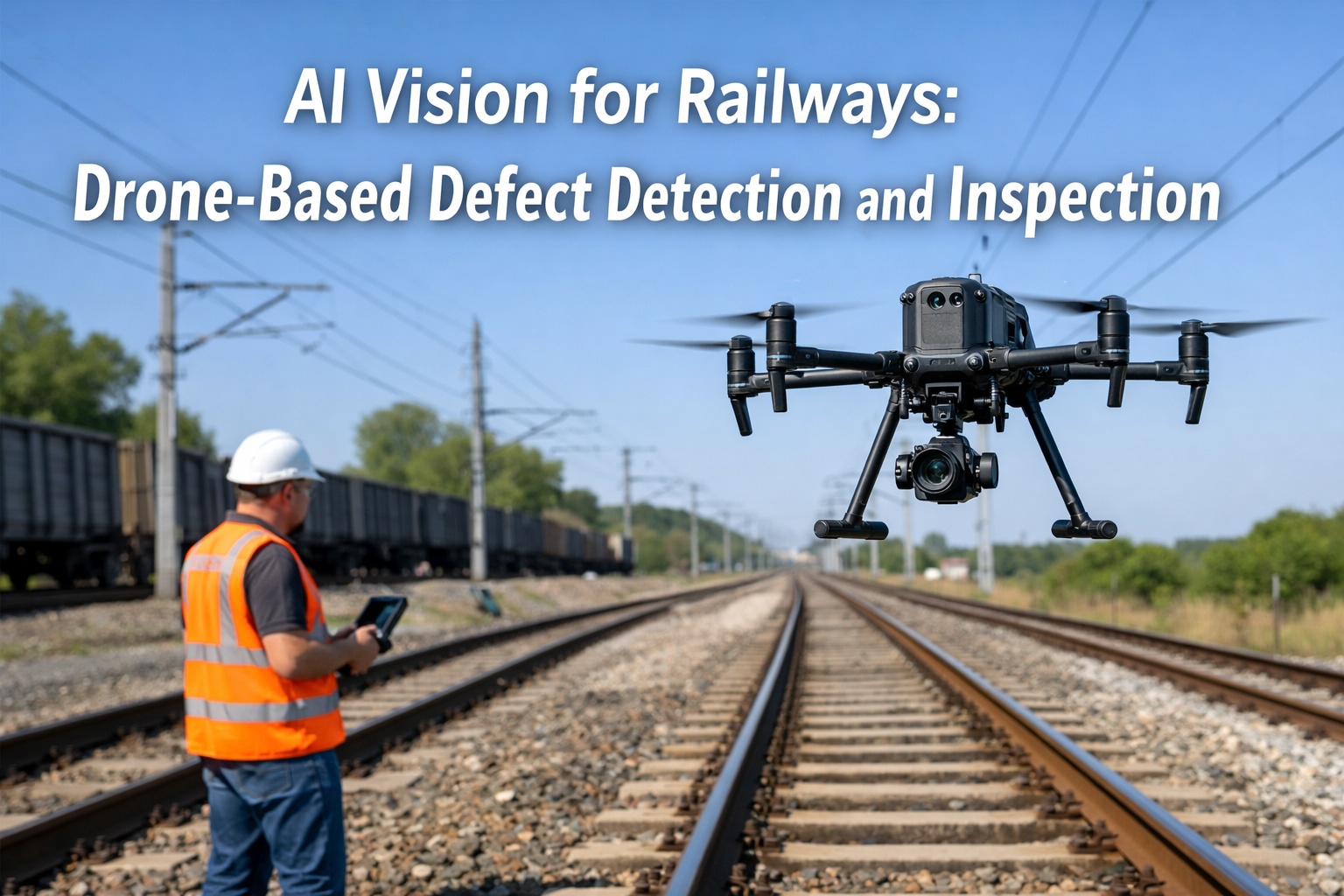
A single rail network inspector walking a track can cover roughly 2 kilometres per hour, examining ties, rail heads, fasteners, and ballast by eye while logging defects on a clipboard. That same kilometre of track, photographed by a drone at 40 km/h and processed by an AI vision system, yields 14,000 high-resolution frames analysed in under four minutes — detecting cracks invisible to the human eye, measuring rail wear to sub-millimetre accuracy, and classifying every defect into severity tiers automatically. AI-powered drone inspection is not replacing human inspectors; it is giving them superhuman vision, superhuman speed, and a complete digital record of every metre of rail infrastructure. When paired with a maintenance platform like Oxmaint, every detected defect flows directly into a prioritised work order — from pixel to repair crew without a single manual data entry step. Start your free Oxmaint trial and connect AI vision inspection data to your maintenance workflow. Or book a demo to see how Oxmaint processes drone inspection outputs into automated work orders.
Railway AI Vision
AI Vision for Railways: Drone-Based Defect Detection & Inspection
How computer vision and autonomous drones are transforming railway infrastructure inspection from a slow, manual, error-prone process into a fast, precise, digital operation.
40x
Faster inspection vs walking
0.3mm
Crack detection accuracy
97.8%
Defect classification accuracy
The Manual Inspection Problem
Railway inspection has not fundamentally changed in a century. Human inspectors walk tracks with ultrasonic equipment, visual observation, and handheld measurement tools. They are skilled, experienced, and essential — but they are slow, inconsistent, and limited by the physics of human attention. A fatigued inspector at hour six of a shift misses defects that a fresh inspector at hour one would catch. Lighting changes, weather conditions, and track geometry all degrade human detection rates. The consequence is not just missed cracks — it is the statistical certainty that some proportion of the network is always in a state that nobody has recently seen.
01
Coverage Speed
Manual inspection covers 2 km/hr. A typical rail network has thousands of track-kilometres. Full coverage cycles take months — meaning defects develop unobserved between inspections.
2 km/hr manual vs 40+ km/hr drone
02
Detection Consistency
Human defect detection rates vary between 60–85% depending on inspector fatigue, weather, visibility, and experience level. Critical defects in the 60% range go undetected on every cycle.
60–85% human detection vs 97.8% AI vision
03
Safety Exposure
Inspectors work on or adjacent to live tracks. Railway inspector injury and fatality rates are among the highest in industrial safety. Every hour a human spends on-track is an hour of elevated risk.
Drone inspection eliminates 90%+ of on-track human exposure
04
Data Capture Depth
Manual inspectors record observations in text or simple codes. No dimensional measurements, no photographic evidence per metre, no time-series trending. The inspection record is shallow and non-repeatable.
14,000+ frames per km vs text notes per defect
How AI Vision + Drones Actually Work
The system is not one technology — it is a pipeline of six sequential stages, each with specialized hardware and software. Understanding the full pipeline helps railway operators evaluate vendor claims, size infrastructure investments, and set realistic performance expectations.
Flight Planning
Autonomous flight path generated from track geometry data. Altitude, speed, overlap, and camera angles optimised for the specific defect types being targeted. Weather and airspace constraints validated.
GPS waypoints, terrain models, airspace clearance
Image Acquisition
Drone carries high-resolution RGB cameras (50+ megapixels), thermal imaging sensors, and LiDAR scanners simultaneously. Captures 14,000+ frames per kilometre at ground sampling distance below 2mm/pixel.
Multi-sensor drone platform, RTK positioning, overlap 70%+
Edge Pre-Processing
Onboard or ground-station GPU runs initial quality filtering, geo-tagging, and frame stitching. Blurred, overexposed, or obstructed frames are flagged. Usable frames are organised into track-kilometre segments.
NVIDIA Jetson edge compute, RTK geo-tagging
AI Defect Detection
Deep learning models (typically CNNs and transformer architectures) scan every frame for 30+ defect types simultaneously. Each detected defect is localised with bounding box, classified by type, and scored by severity.
GPU inference cluster, trained models, defect taxonomy
Measurement & Trending
Detected defects are dimensionally measured from calibrated imagery. Crack length, rail wear depth, ballast degradation area, and gauge deviation are computed to sub-millimetre precision. Repeat flights enable time-series trending.
Photogrammetry, calibration targets, historical comparison
Work Order Generation
Classified defects flow into Oxmaint as geo-located, severity-scored work orders with photos, measurements, and AI-recommended repair actions attached. Technicians receive pre-diagnosed, location-tagged tasks on their mobile app.
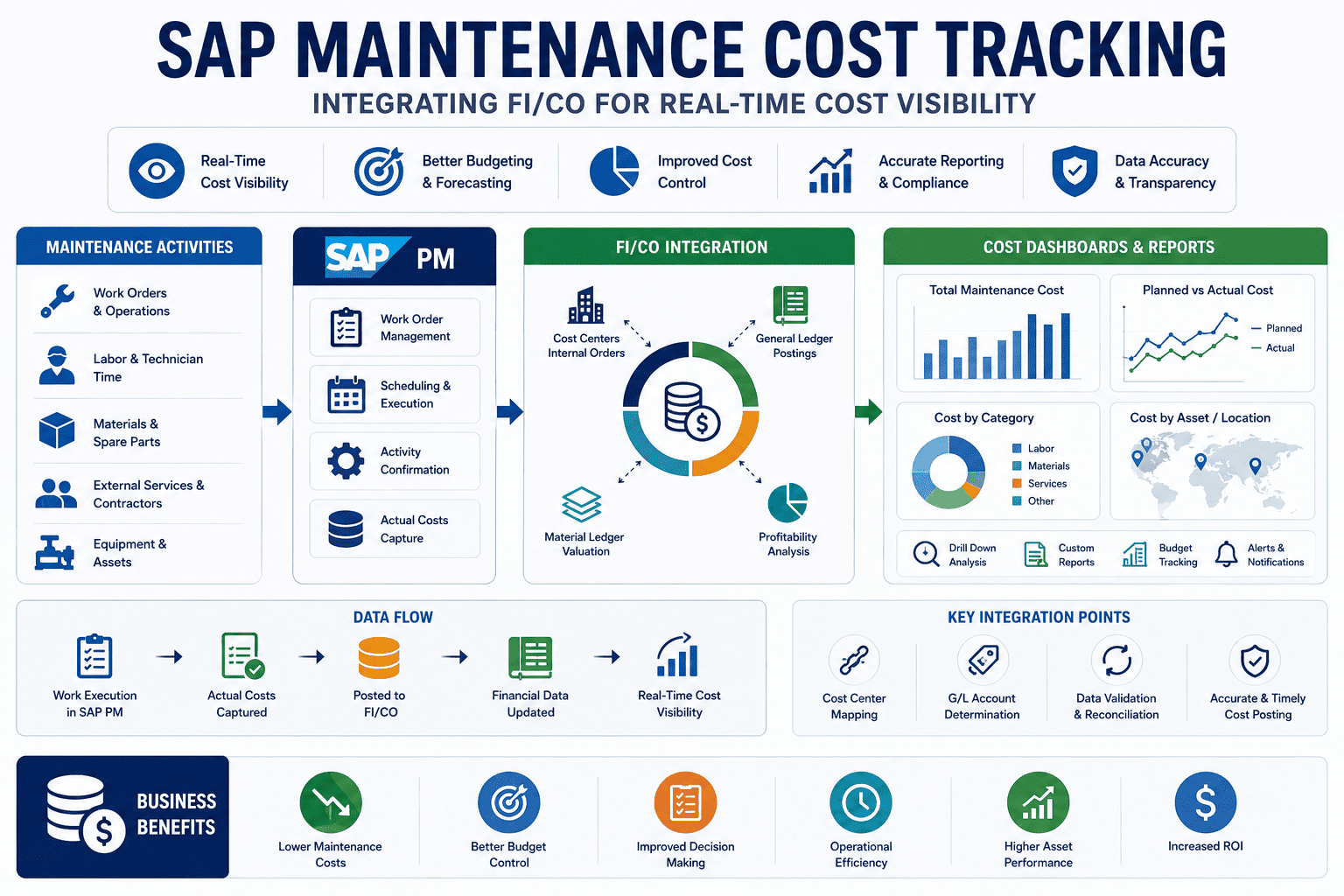
Oxmaint integration, SAP PM sync, mobile dispatch
What AI Vision Can Actually Detect
Modern AI vision models trained on railway imagery can identify and classify over 30 distinct defect types across four major infrastructure categories. Here are the defects that matter most — ranked by safety criticality and detection difficulty — along with the AI vision accuracy benchmarks for each.
Rail Head & Surface
Transverse cracks (detail fractures)
98.2%
Head checking / gauge corner cracking
97.1%
Squats and wheel burns
96.8%
Rail wear profiling (head / gauge)
99.1%
Corrugation pattern detection
95.4%
Track Geometry & Structure
Missing or broken fasteners
98.7%
Tie / sleeper degradation
96.3%
Ballast fouling / vegetation intrusion
94.8%
Gauge deviation measurement
97.9%
Switches & Crossings
Switch point wear / chipping
96.1%
Guard rail clearance
97.3%
Environment & Surroundings
Clearance encroachment (vegetation / debris)
93.6%
Drainage obstruction / standing water
91.8%
Embankment erosion / slope failure signs
89.4%
From Pixel to Work Order
Oxmaint turns every AI-detected railway defect into an actionable, geo-located maintenance task
Drone flies. AI detects. Oxmaint creates the work order with location, severity, photos, and recommended repair action — dispatched to the nearest qualified crew. No clipboard. No re-keying. No delay.
Manual vs AI-Drone Inspection: The Full Comparison
| Dimension |
Manual Inspection |
AI + Drone Inspection |
| Speed |
2 km/hr on foot |
40+ km/hr autonomous flight |
| Detection rate |
60–85% depending on conditions |
97.8% average across defect types |
| Measurement precision |
Manual gauge, visual estimate |
Sub-millimetre photogrammetric |
| Evidence record |
Text notes per defect |
14,000+ geo-tagged frames per km |
| Inspector safety risk |
On-track exposure every shift |
Remote operation, zero track exposure |
| Trending capability |
None — each inspection is standalone |
Time-series comparison between flights |
| Work order creation |
Manual entry hours or days later |
Automatic via Oxmaint within minutes |
| Night / low-visibility ops |
Not possible |
Thermal + LiDAR operate regardless |
The ROI Case for Rail Operators
For a mid-sized rail operator managing 5,000 track-kilometres, the financial case for AI-drone inspection typically reaches payback within the first 18 months. The savings come from five distinct value streams — each independently justifiable, together transformative.
Inspection Labour Reduction
40x speed increase means 95% fewer inspector-hours per coverage cycle
Safety Incident Avoidance
90%+ reduction in on-track inspector exposure; avoided injury and liability costs
Defect Catch Rate Improvement
Defects caught earlier cost 3–8x less to repair than defects caught at failure
Track Possession Time Recovered
Drone inspection requires no track closure; trains run on schedule during survey
Audit & Compliance Documentation
Photographic evidence per metre replaces manual audit preparation entirely
Total Annual Value
$11.0M
On a 5,000 track-km network with quarterly inspection cycles
Where Oxmaint Sits in the Inspection Workflow
Oxmaint is the execution bridge between AI detection and physical repair. While the drone and vision system find the problems, Oxmaint ensures every problem becomes a tracked, prioritised, assigned, and completed maintenance action — with full audit trail flowing into SAP for cost tracking and compliance reporting.
1
Defect Ingestion
AI vision outputs — defect type, severity, GPS coordinates, photos, measurements — import into Oxmaint automatically via API. Each defect becomes a work order candidate.
2
Severity Prioritisation
Oxmaint's AI engine scores each defect against safety criticality, traffic density, speed zone, and degradation trend — producing a ranked repair queue aligned to risk, not just discovery order.
3
Crew Dispatch
Work orders route to the nearest qualified maintenance gang via Oxmaint mobile. Technicians receive the exact GPS location, defect photos, AI-recommended repair method, and required materials list.
4
Completion & SAP Sync
Crews document repair completion with before-and-after photos in Oxmaint. Labour, parts, and costs post to SAP PM and FI/CO automatically. The defect record is closed with full traceability.
Implementation Considerations
Deploying AI vision drones on a railway network is not a software-only project. It requires regulatory approval, airspace coordination, model training, and integration with existing maintenance systems. Here are the five critical factors that determine whether a deployment succeeds or stalls.
Factor 1
Regulatory Airspace Approval
Railway corridors often intersect controlled airspace near stations and urban areas. BVLOS (Beyond Visual Line of Sight) waivers are required in most jurisdictions — approval timelines vary from 4 weeks to 6 months depending on the regulator.
Factor 2
Model Training on Local Defect Types
Pre-trained models cover common defect types, but regional rail standards, climate-specific degradation patterns, and unique track materials require fine-tuning with 2,000–5,000 labelled local images for optimal accuracy.
Factor 3
Data Pipeline Infrastructure
A single flight-day can generate 2–4 terabytes of imagery. Storage, processing, and archival infrastructure must scale with inspection frequency. Edge compute reduces transfer volume by 80%+.
Factor 4
Integration with Maintenance Systems
Defect data without work order integration is just more data. Oxmaint's API accepts standardised defect outputs from any AI vision platform, creating the critical link between detection and repair action.
Factor 5
Change Management with Field Teams
Experienced inspectors bring irreplaceable context. The most successful deployments position drones as tools that augment inspectors' reach, not replace their judgment — inspectors validate AI findings and train the models.
Ready to Modernise
See how Oxmaint processes drone inspection data into a prioritised railway maintenance workflow
Whether you are piloting your first drone inspection programme or scaling across a national network, Oxmaint provides the maintenance execution layer that turns AI-detected defects into tracked, completed, auditable repairs.
Frequently Asked Questions
How accurate is AI vision for railway defect detection compared to human inspectors?
AI vision systems achieve 97.8% average detection accuracy across major defect types, compared to 60–85% for human visual inspection depending on conditions. For specific defects like rail wear profiling and fastener detection, AI accuracy exceeds 98%. The combination of AI detection with human validation produces the highest overall reliability.
Does Oxmaint integrate with drone inspection and AI vision systems?
Yes. Oxmaint accepts defect data from any AI vision platform via standardised API — including defect type, severity score, GPS coordinates, photos, and dimensional measurements. Each defect auto-generates a work order with location, priority, and recommended repair action.
Book a demo to see the integration in action.
Can drones inspect railway tracks without stopping train operations?
Yes. Drone-based inspection requires no track possession or train stoppage. The drone operates above or beside the track corridor while normal traffic continues. This eliminates one of the most expensive aspects of traditional inspection — the cost of track closures and schedule disruption.
What happens when AI detects a critical safety defect during a drone flight?
Critical defects flagged by the AI model trigger an immediate priority-one work order in Oxmaint. The maintenance control centre receives an alert with GPS coordinates, defect photos, and severity classification. Emergency response protocols activate automatically based on the defect type and track speed classification.
How much does deploying an AI drone inspection programme cost?
Initial deployment for a mid-sized rail operator typically costs $800K–$1.5M including hardware, model training, and integration. Annual operating costs run $200K–$400K. At $11M+ in annual value for a 5,000-km network, payback occurs well within the first 18 months.
Start a free Oxmaint trial to model the ROI for your network.
Do we need regulatory approval to fly drones along railway corridors?
Yes. Most jurisdictions require Beyond Visual Line of Sight (BVLOS) operational approval. Timelines vary from 4 weeks to 6 months. Many rail operators begin with Visual Line of Sight (VLOS) pilot programmes while BVLOS approval is processed, demonstrating safety and capability to regulators incrementally.
From Drone Flight to Completed Repair — One Platform
AI sees the defect. Oxmaint creates the work order. SAP tracks the cost. The technician gets a pre-diagnosed, location-tagged task on their phone. The audit trail is complete. The rail stays safe. That is what modern railway maintenance looks like.