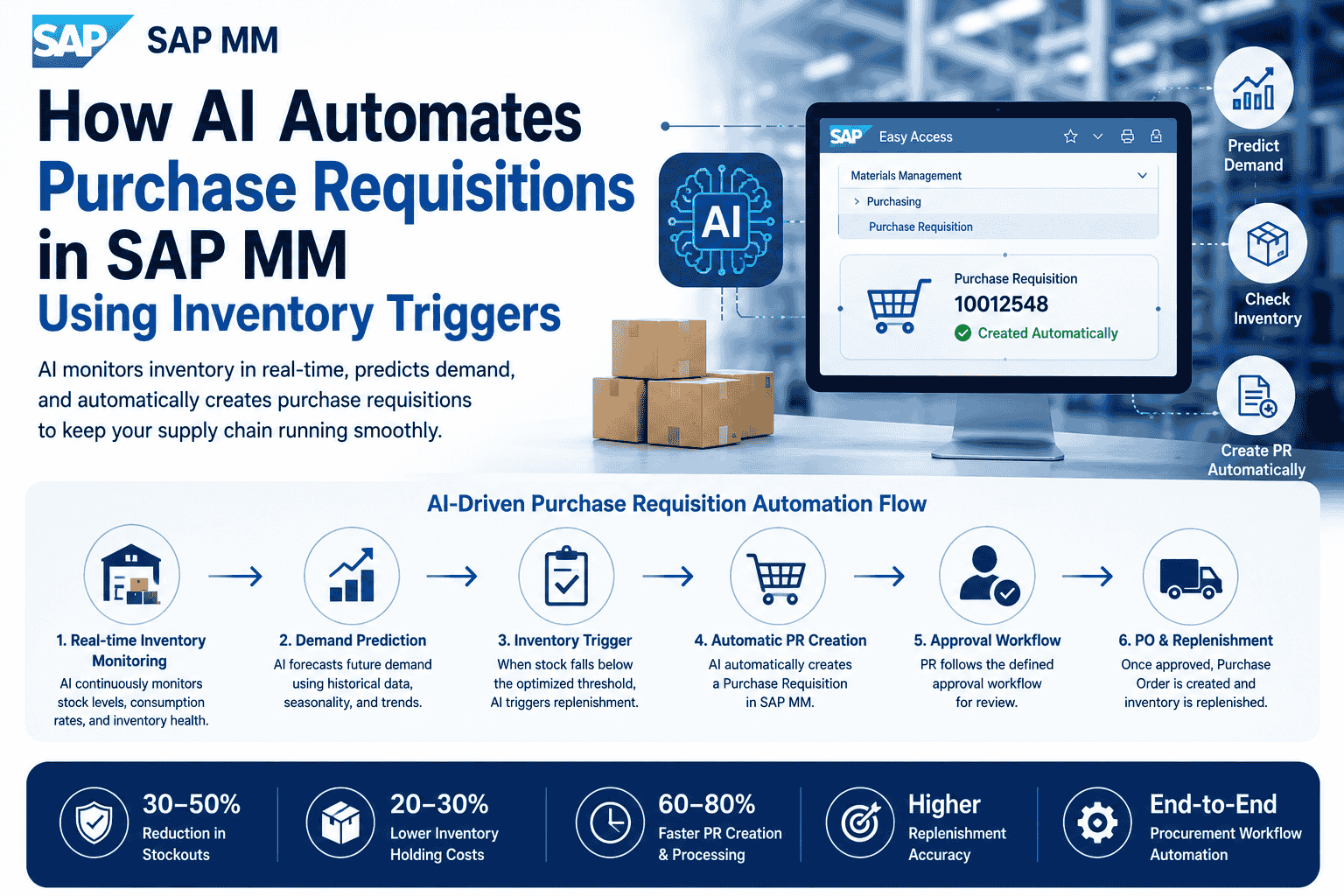
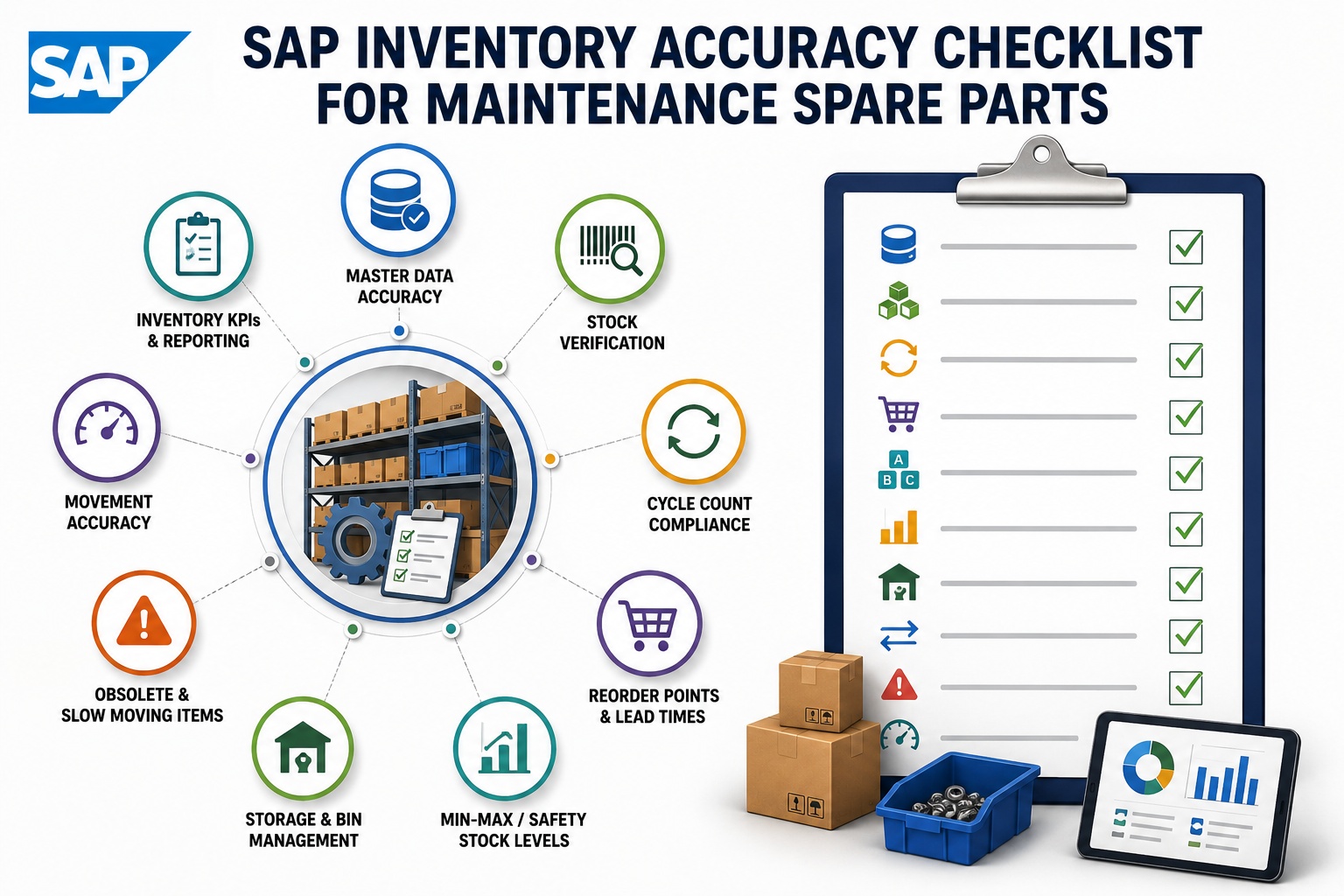
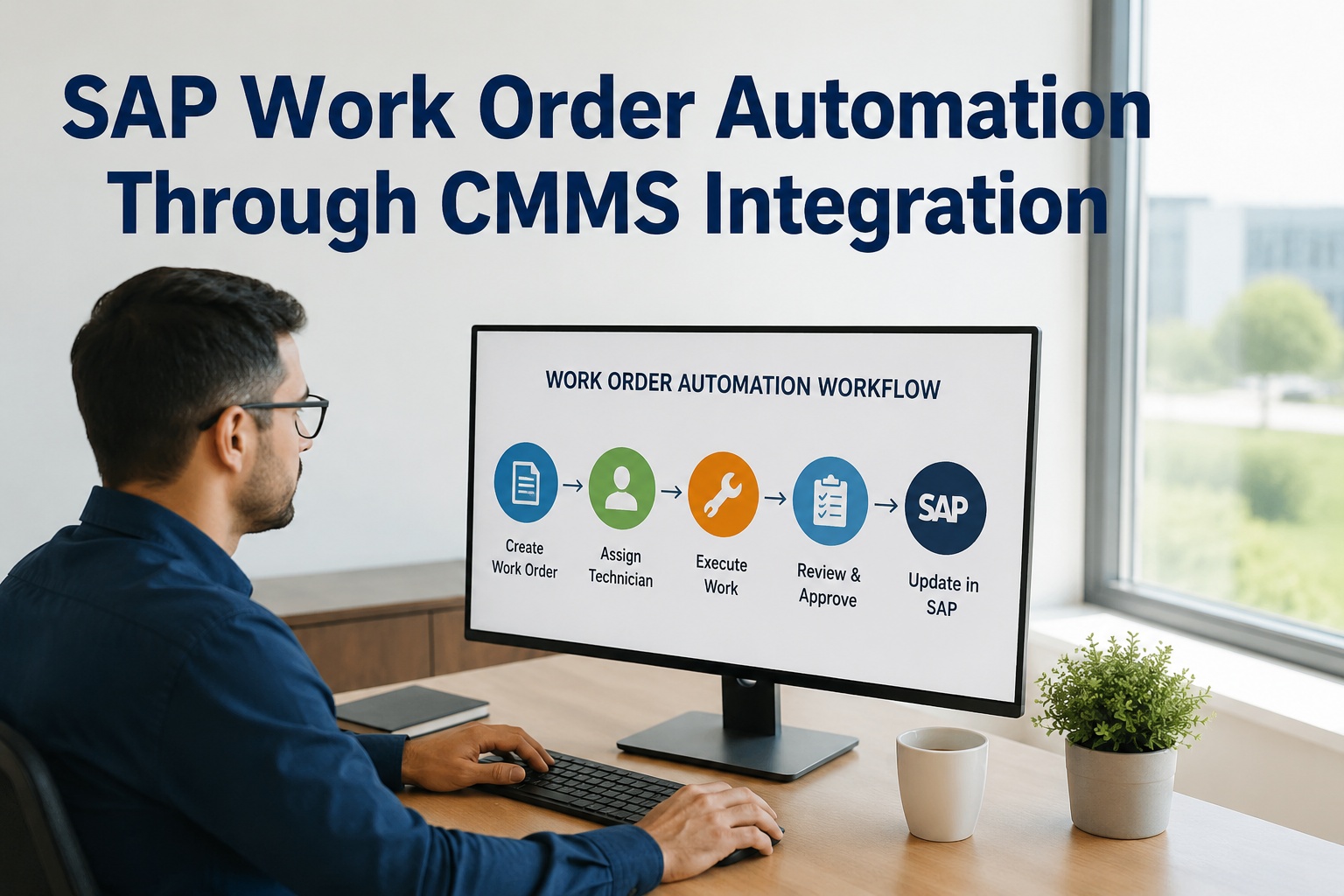
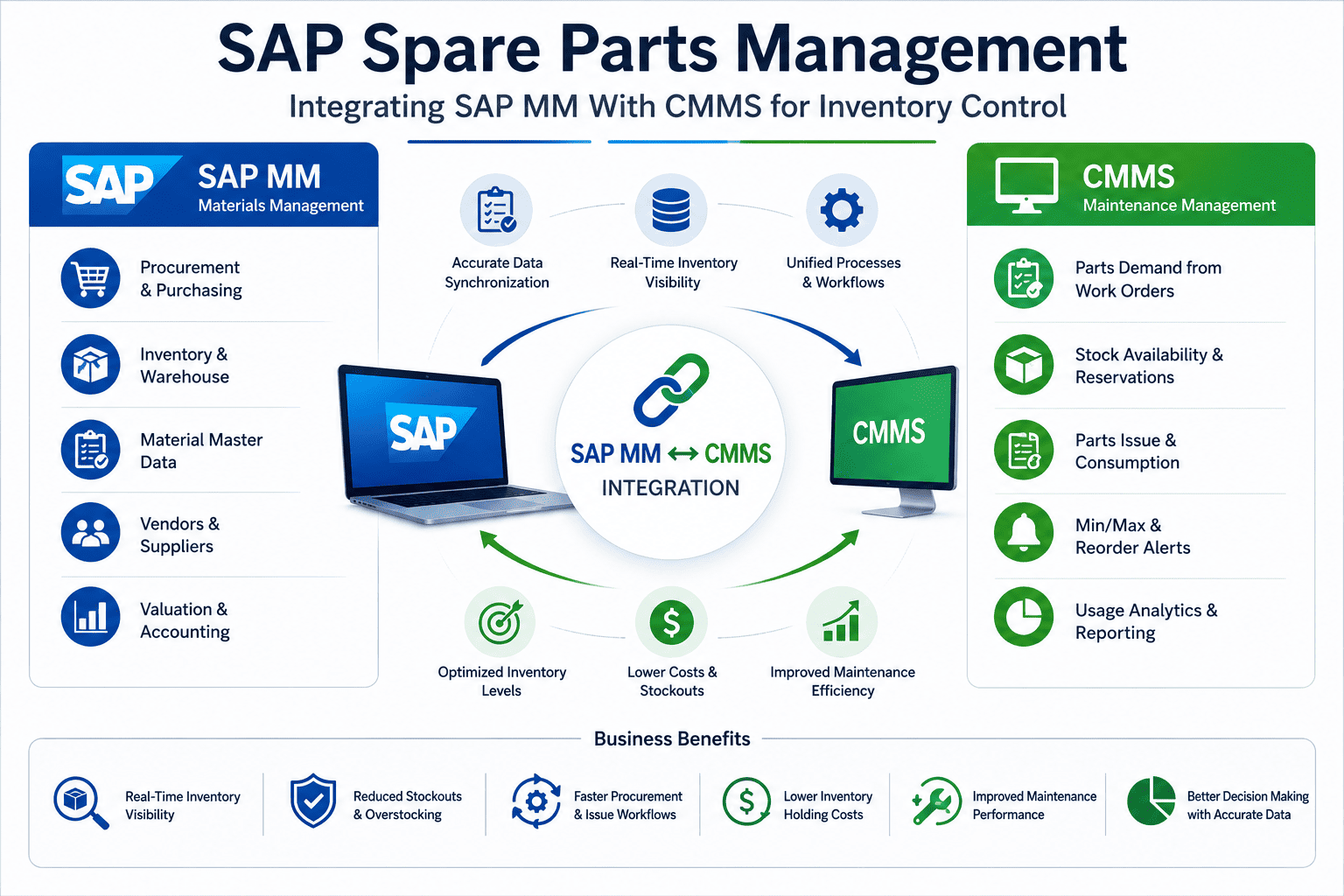
How AI Automates Purchase Requisitions in SAP MM Using Inventory Triggers
SAP MM's standard MRP run calculates reorder points from historical averages, processes them in nightly or weekly batch cycles, and generates purchase requisitions based on static safety-stock parameters that someone set once and forgot. The system does not know that your consumption of bearing SKU-4822 tripled last month because three pumps are approaching end-of-life. It does not know that your primary supplier's actual lead time has drifted from 5 days to 9 days over the past quarter. It does not know that next week's production schedule requires 40% more packaging material than the historical average suggests. It knows what the reorder point was when someone last updated the material master — and that is all. AI-triggered purchase requisitions replace this static math with five real-time intelligence signals that evaluate consumption velocity, production schedule, lead time variability, predictive maintenance demand, and seasonal patterns before creating each PR. Plants using this approach report 20-40% fewer emergency purchases and 15-25% lower inventory carrying costs. Sign up free to audit your SAP MM reorder accuracy.
SAP MM · MRP · DYNAMIC REORDER · PREDICTIVE INVENTORY
Static MRP Reorder Points Miss 30% of What Your Inventory Actually Needs. Five AI Signals Fix It.
SAP MM's MRP run uses static reorder points and batch processing. AI-triggered purchase requisitions use five real-time signals — consumption velocity, production schedule, lead time variability, predictive maintenance demand, and seasonal patterns — to create PRs at exactly the right moment with exactly the right quantity. The result: fewer stockouts, less overstock, zero emergency procurement, and purchase requisitions that arrive before the maintenance team even knows they need the part.
SAP MM's standard MRP evaluates one signal: current stock vs static reorder point. AI evaluates five signals simultaneously and creates the purchase requisition at the optimal moment — not too early (tying up cash), not too late (causing a stockout). Sign up free to see how these five signals apply to your top 50 SKUs.
01CONSUMPTION VELOCITY
SAP MRPReorder point calculated from historical average consumption — typically a 12-month rolling mean. If consumption tripled last month due to equipment degradation, the reorder point does not change until someone manually updates the material master.
AI TRIGGERReal-time consumption tracking with trend detection. When bearing SKU-4822 usage jumps from 2/month to 6/month, the AI recalculates the reorder point immediately, adjusts the PR quantity, and creates the requisition before stock runs out — without waiting for the next MRP run.
02PRODUCTION SCHEDULE DEMAND
SAP MRPMRP reads planned orders from PP but relies on BOM accuracy and static lead times. If the production schedule changes mid-week (rush order, schedule swap), the batch MRP run does not fire until its next scheduled execution — potentially 24-72 hours later.
AI TRIGGERMonitors the production schedule continuously. When a rush order adds 40% more packaging demand for next Tuesday, the AI creates the PR immediately — factoring in the supplier's actual lead time, not the planned delivery time — so the material arrives before the production run, not after.
03LEAD TIME VARIABILITY
SAP MRPUses the Planned Delivery Time field in the material master — a single static number (e.g., 5 days). If the actual supplier delivery time has drifted to 9 days over the past quarter, MRP still calculates using 5 days. The PR is created 4 days too late.
AI TRIGGERTracks actual delivery performance per supplier per SKU. When Supplier A's bearing deliveries drift from 5 to 9 days, the AI adjusts the trigger point by 4 days — automatically. No manual material-master update required. The PR fires earlier to compensate for the real lead time, not the planned one.
04PREDICTIVE MAINTENANCE DEMAND
SAP MRPSAP MM has no visibility into equipment condition. It does not know that Pump-7's bearing will need replacement in 31 days. The PR for the replacement bearing is created only when someone manually creates a maintenance work order and reserves the part — often days before the failure, triggering emergency procurement.
AI TRIGGEROxMaint's vibration AI predicts the bearing failure 6-8 weeks ahead. The PR for the replacement bearing is auto-created in SAP MM immediately — giving procurement the full lead-time window to source at standard cost. The part arrives weeks before the maintenance team schedules the repair. Zero emergency procurement.
05SEASONAL AND PATTERN RECOGNITION
SAP MRPStandard MRP uses rolling averages that smooth out seasonal spikes. A 3× demand surge every July for cooling-system parts is averaged into a flat annual number — resulting in stockouts every July and overstock every January.
AI TRIGGERPattern recognition detects seasonal demand, production-cycle correlations, and event-driven consumption spikes. The AI pre-stages inventory ahead of the July cooling surge, ramps down in September, and adjusts dynamically as the actual pattern evolves year over year. No manual seasonal adjustment required.
5
Real-time signals vs 1 static reorder point
60%
Stockout reduction with AI triggers
15-25%
Lower inventory carrying costs
BAPI
SAP MM integration via standard APIs
The five signals compound. Each one alone improves PR accuracy. Together, they transform inventory management from a batch-processed guess into a continuous, self-adjusting system that creates the right PR at the right time for the right quantity — every time. Book a free demo to see the five-signal trigger running against your SAP MM data.
"Our MRP reorder point for bearing SKU-4822 was set at 12 units with a 5-day lead time. Actual consumption had tripled and the supplier's real lead time was 9 days. We stocked out 4 times in 6 months. Each stockout caused $18K in emergency procurement premiums."
THE PROBLEM
Manufacturing plant. Bearing SKU-4822 used across 14 rotating assets. SAP MM material master: reorder point 12 units, safety stock 4, planned delivery time 5 days. Reality: consumption tripled to 6/month because three pumps were in late-stage bearing degradation (consuming replacements faster). Supplier's actual lead time had drifted to 9 days. MRP ran nightly but always calculated based on the static parameters. Result: 4 stockouts in 6 months. Each stockout triggered emergency air-freight at $4,500 premium per event ($18K total) plus 8-12 hours of production delay while waiting for the part.
HOW AI TRIGGERS SOLVE IT
Signals 1 + 3 · Consumption + Lead Time
AI detects the consumption velocity shift (2/mo → 6/mo) within 2 weeks of the trend starting. Simultaneously tracks actual supplier delivery times and identifies the 5→9 day drift. Dynamic reorder point recalculated: 12→28 units, safety stock adjusted from 4→10.
Signal 4 · Predictive Maintenance
Vibration AI identifies that 3 pumps are in late-stage bearing degradation — they will each need a replacement bearing within the next 8 weeks. AI adds 3 units to the PR quantity ahead of the predicted maintenance events. Parts arrive before the maintenance planner even creates the work orders.
SAP MM · Auto PR
PR auto-created in SAP MM via BAPI with the AI-calculated quantity, the correct supplier based on actual lead-time performance, and the delivery date that accounts for the real 9-day lead time. No manual material-master update. No MRP batch delay.
THE RESULT
Stockouts: 4 in 6 months → 0 in 12 months. Emergency procurement: $18K → $0. Parts pre-staged for predicted maintenance events. PRs fire 12 days earlier than MRP would have triggered them.
SCENARIO 02
"Every July our cooling-system filter inventory runs out because MRP averages the seasonal spike into a flat annual number. Every January we're sitting on $85K of excess filter inventory because MRP ordered for a July that already passed."
THE PROBLEM
Chemical plant with 8 cooling towers. Filter consumption: 40 units/month in winter, 120 units/month in summer (July peak). SAP MRP uses a 12-month rolling average: 73 units/month. Result: reorder point too low for summer (stockout every July, emergency orders at 30% premium) and too high for winter (excess inventory carrying cost of $85K sitting idle for 4 months). The material planner manually adjusted every year — but forgot in 2025 during a team transition, causing a 3-week July stockout.
HOW AI TRIGGERS SOLVE IT
Signal 5 · Pattern Recognition
AI identifies the July cooling surge from 3 years of historical data — including the year-over-year growth rate (consumption up 8% annually as cooling load increases). Pre-stages 140 units by June 15 (120 base + 20 growth buffer). Ramps down reorder point in September to avoid winter overstock.
Signal 2 · Production Schedule
Cooling-tower maintenance shutdown scheduled for late June means 2 towers offline during peak demand. AI adjusts: remaining 6 towers will run harder, increasing filter consumption per tower. PR quantity adjusted upward for June-July, downward during the shutdown window.
Dynamic SAP MM Update
AI creates month-specific PRs in SAP MM with quantities that track the actual seasonal curve — not the flat annual average. No manual adjustment. No forgotten transitions. The inventory curve matches the demand curve automatically, every year, even as the pattern shifts.
THE RESULT
July stockout: eliminated. Winter excess inventory: $85K → $12K. Emergency premium: $0. Seasonal adjustment now automatic. Material planner's manual workaround retired permanently.
It augments MRP, not replaces it. SAP MRP continues to run for materials that do not have AI monitoring — indirect materials, office supplies, low-criticality items. For critical materials (MRO spare parts, production consumables, high-value components), the AI trigger takes priority: it evaluates five signals in real time and creates PRs via BAPI before the next MRP batch run would fire. MRP still runs as a safety net — but for AI-monitored materials, the PR is already created and the PO is already in process by the time MRP executes.
How does the AI know what quantity to order?
The AI calculates order quantity from five inputs: current consumption velocity (not historical average), days of supply needed (factoring actual lead time, not planned), upcoming known demand (production schedule + predicted maintenance), seasonal adjustment factor, and the economic order quantity that minimizes total cost (order cost + holding cost). The result is a dynamically optimized quantity that changes with conditions — not a static lot size someone entered into the material master three years ago.
How does predictive maintenance connect to inventory triggers?
OxMaint's vibration, thermal, and motor-current AI predicts which equipment will need maintenance in the coming 6-8 weeks. Each predicted maintenance event includes a parts list from the equipment BOM. The inventory agent checks stock levels for each part, compares to the maintenance timeline, and creates PRs for any part that will not be in stock when the maintenance is scheduled. The result: the part arrives before the maintenance planner even creates the work order. Zero emergency procurement. Zero "we have to delay the repair because the bearing isn't in stock."
What SAP transactions does the AI create?
The AI creates purchase requisitions via BAPI_REQUISITION_CREATE. When configured, it can also create purchase orders via BAPI_PO_CREATE1 for below-threshold materials with pre-approved suppliers. Goods receipts are posted via BAPI_GOODSMVT_CREATE when linked to OxMaint work-order completion. All transactions are standard SAP — no custom development, no ABAP modifications. The AI uses the same BAPIs that SAP's own MRP uses, just triggered by intelligent signals instead of batch schedules.
How fast can we deploy AI-triggered PRs?
Six to eight weeks for the top 50 materials. Weeks 1-2 — material analysis: identify highest-stockout, highest-emergency-cost materials, confirm SAP MM configuration (MRP type, lot sizing, source lists). Weeks 3-4 — AI agent deployed, connected to SAP MM via RFC/OData, historical consumption data loaded, baseline signals established. Weeks 5-6 — AI triggers running in shadow mode: generating PRs that are reviewed but not auto-submitted, comparing AI timing vs MRP timing. Weeks 7-8 — production mode: AI-triggered PRs auto-submitted for validated materials. Expansion: 2 weeks per additional 50 materials.
SAP MM Edition · 5-Signal Triggers · 6-Week Pilot
Your MRP Runs Once a Night. Your Inventory Changes Every Hour. Five AI Signals Close the Gap.
Book a 30-minute call with our SAP MM integration engineers. Walk through your top stockout materials, your emergency procurement costs, and your MRP configuration. See the five-signal trigger creating purchase requisitions in SAP MM — 12 days before your MRP would have fired. Perpetual license, source code included, $0/mo.