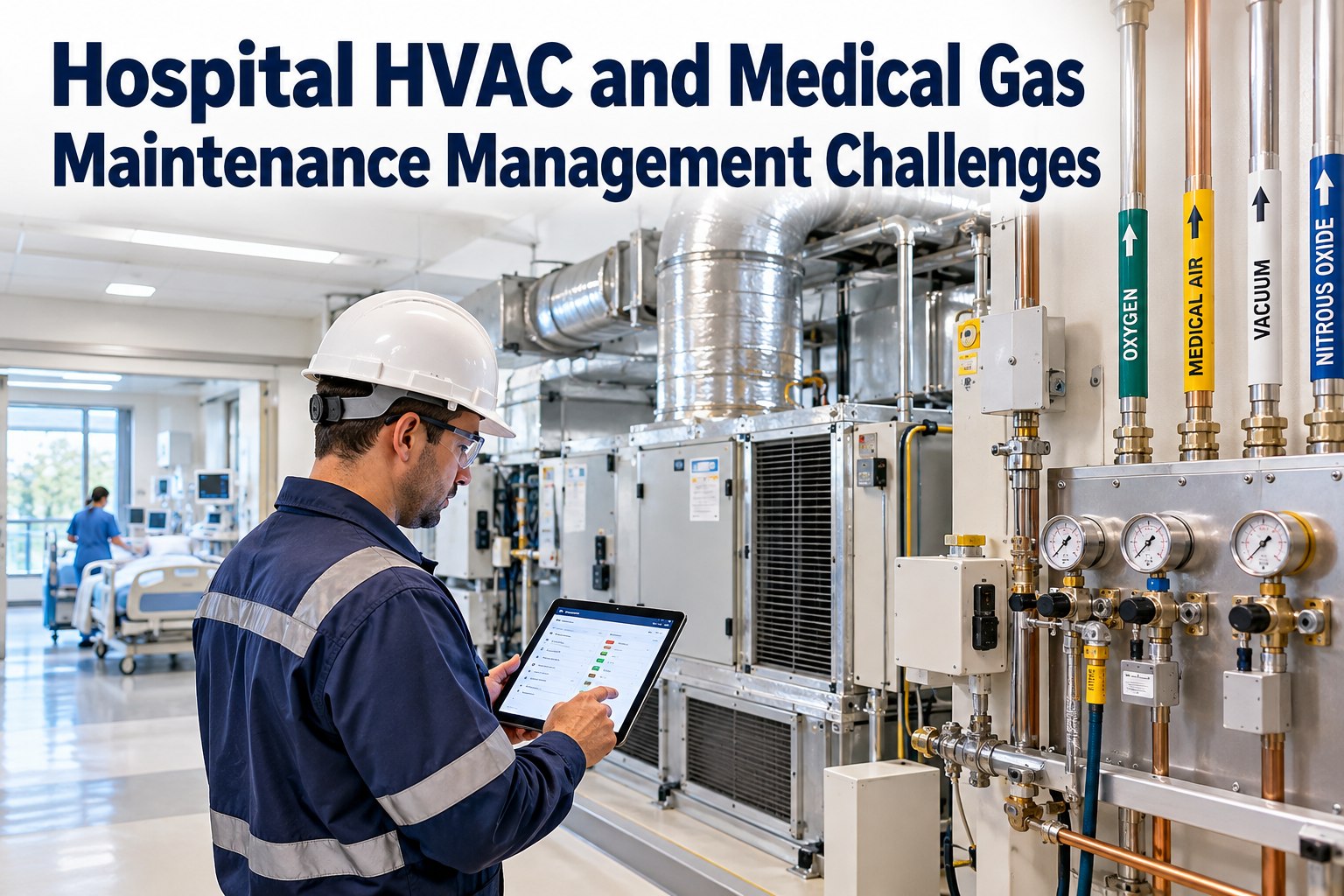
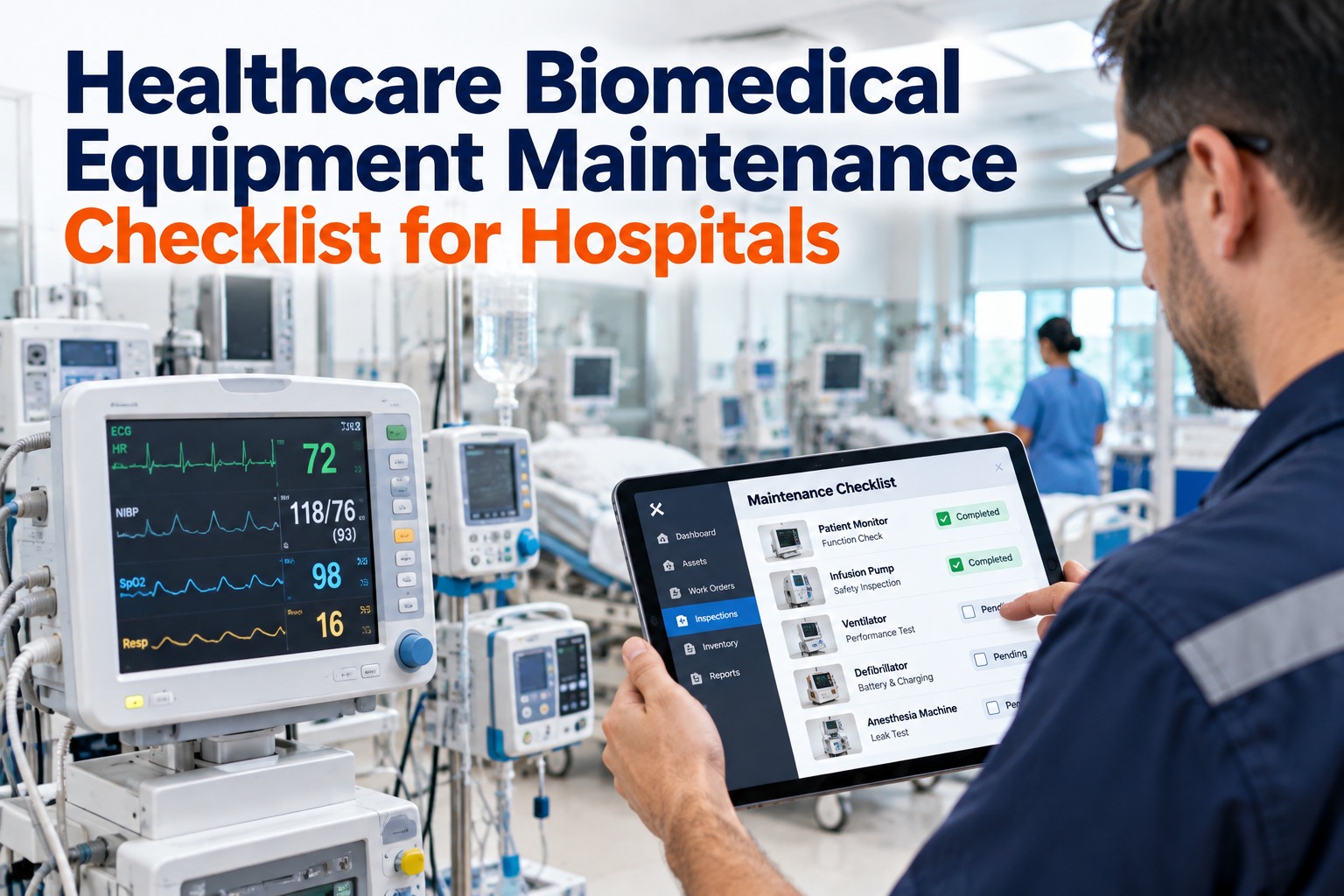
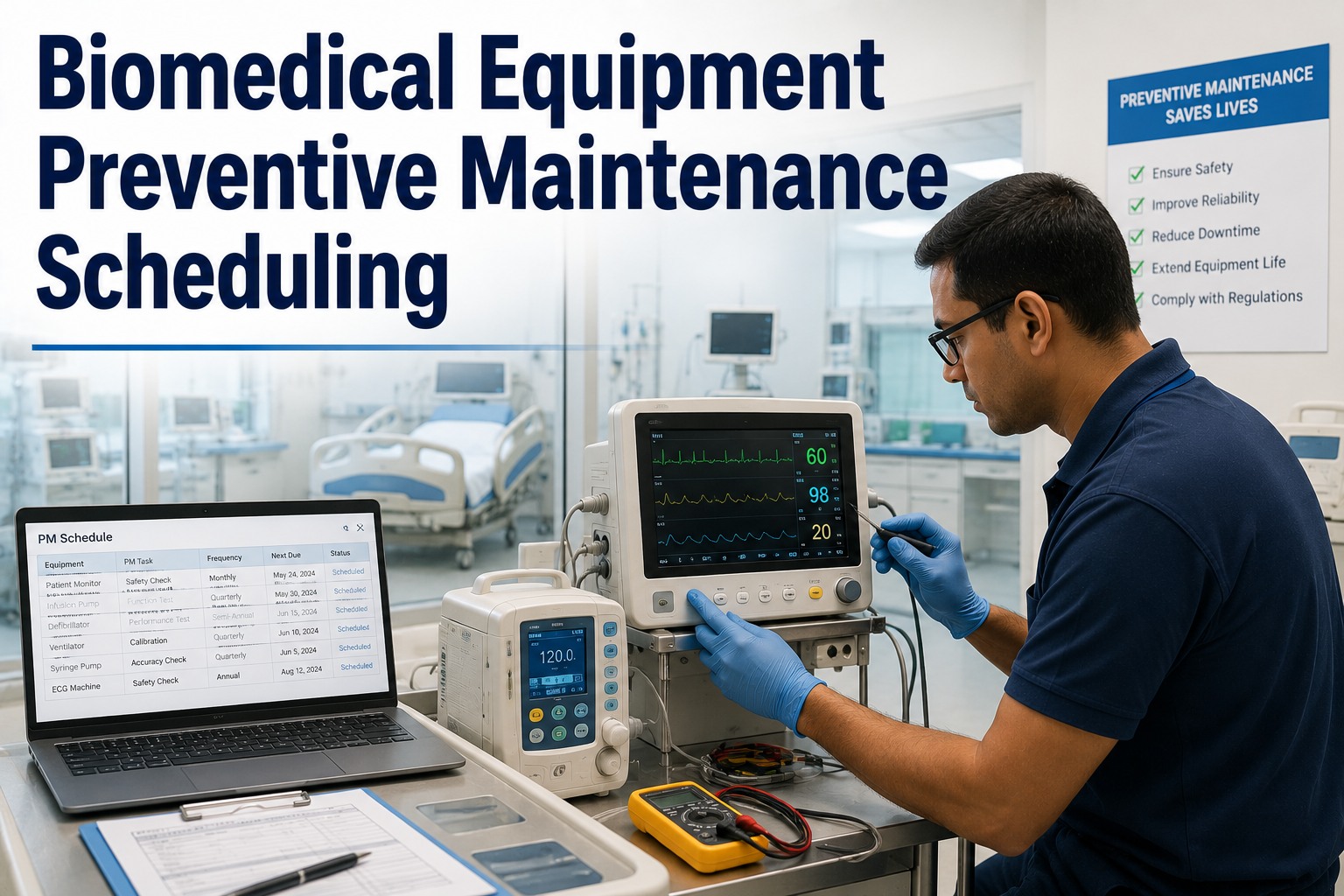
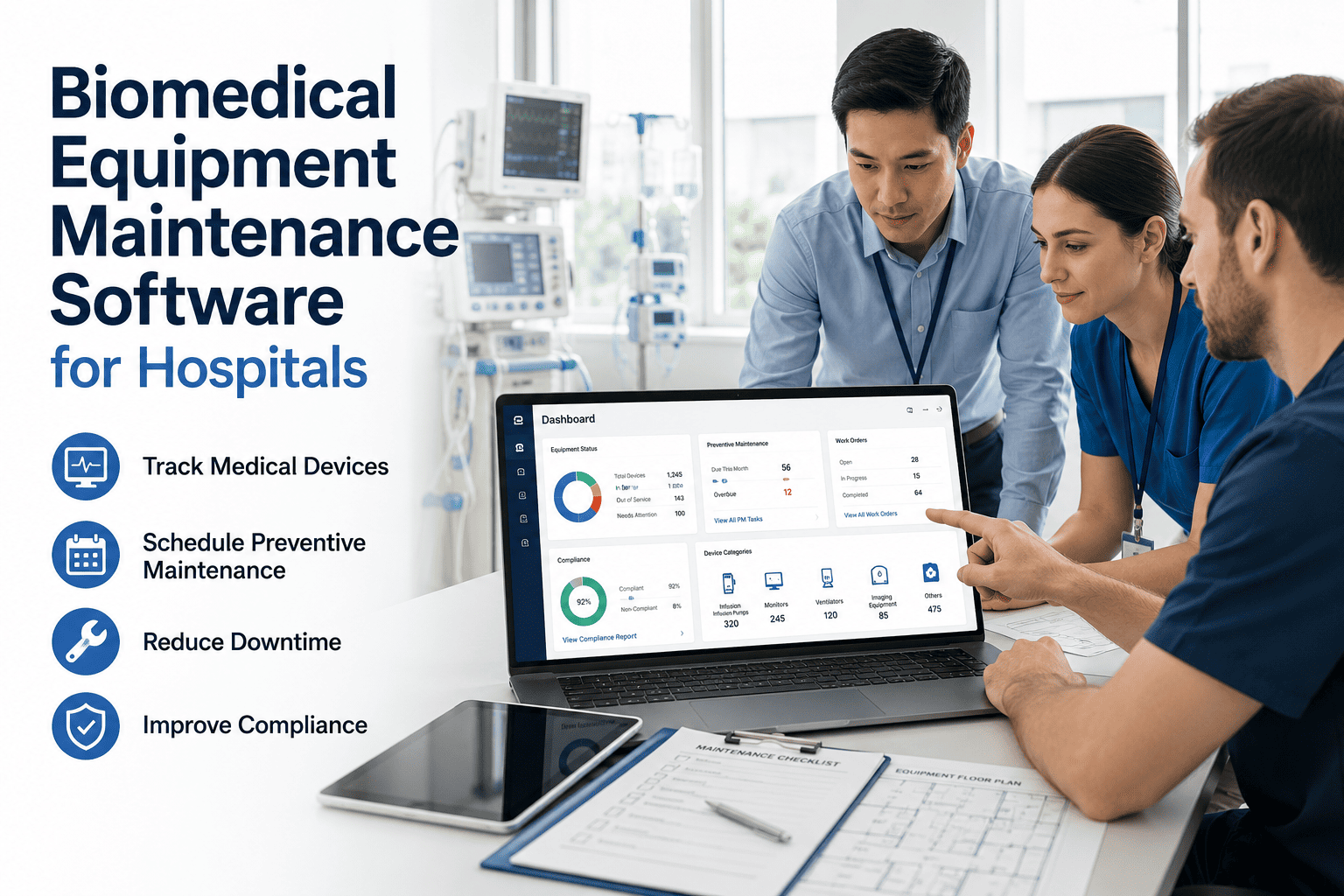
Hospital maintenance is not facilities management with higher stakes — it is a fundamentally different operational discipline where equipment failures directly endanger patient lives, Joint Commission surveys can shut down departments overnight, and the regulatory documentation burden makes most general-purpose CMMS platforms collapse under their own inadequacy. A hospital managing 15,000+ assets across biomedical equipment, building infrastructure, life safety systems, and clinical environment controls needs a CMMS that understands the difference between a work order on an air handling unit and a work order on a ventilator — because the documentation requirements, response time standards, and compliance implications are entirely different for each. Healthcare facilities using dedicated CMMS platforms report 94% Joint Commission survey readiness at any given time, 41% reduction in biomedical equipment downtime, and the elimination of the audit preparation scramble that consumes 200-400 staff hours before every survey cycle. The platforms ranked in this guide are evaluated specifically on healthcare compliance capability, biomedical equipment management depth, CMS Conditions of Participation documentation, and the practical reality of whether hospital maintenance teams — who are already stretched thin — can actually adopt and use the system without a dedicated IT administrator. Want to see how OxMaint handles healthcare facility maintenance with audit-ready compliance documentation, start a free trial or book a demo.
Best CMMS for Healthcare and Hospitals 2026
The top hospital maintenance platforms ranked on Joint Commission compliance, biomedical equipment management, CMS audit documentation, life safety system tracking, and real-world adoption by healthcare maintenance teams who cannot afford system downtime or documentation gaps.
Healthcare CMMS Evaluation Criteria
A hospital CMMS must meet requirements that no other industry vertical demands in combination. The six criteria below reflect the reality of managing healthcare facilities where regulatory compliance is not optional, equipment failure is potentially fatal, and the maintenance team is expected to maintain clinical-grade documentation standards while simultaneously keeping the physical plant operational 24/7/365.
Does the platform generate audit-ready documentation for JCAHO Environment of Care standards, CMS Conditions of Participation, and state health department requirements — automatically from daily work order data?
Can it track clinical and biomedical equipment with manufacturer recall integration, risk-based PM scheduling (per AAMI and ECRI guidelines), and clinical-grade calibration records?
Does it manage fire safety, medical gas, emergency power, and HVAC infection control documentation — with automated ILSM (Interim Life Safety Measures) tracking when systems are impaired?
Can technicians complete inspections, log work orders, and capture photos from a mobile device while moving between floors and departments without returning to a desktop workstation?
Does the platform support health system portfolios — hospitals, clinics, ambulatory surgery centers, long-term care — with centralized compliance dashboards and facility-level drill-down?
Can healthcare facilities deploy the platform without 12-month IT projects, and does the pricing model accommodate the large user counts that hospital maintenance operations require?
Top Healthcare CMMS Platforms — 2026 Rankings
These rankings reflect platform capability as of 2026 specifically for healthcare facility maintenance operations — hospitals, health systems, and clinical environments where regulatory compliance documentation is a non-negotiable requirement.
OxMaint earns the top healthcare ranking for 2026 by combining audit-ready compliance documentation with a deployment model that healthcare facilities can actually implement without a 12-month IT project. The platform generates Joint Commission Environment of Care documentation automatically from daily work order completion data — meaning compliance records are a byproduct of normal maintenance operations, not a separate documentation effort that consumes hundreds of staff hours before each survey. Life safety system tracking, medical gas PM schedules, emergency power testing logs, and infection control HVAC documentation are all structured within the platform's healthcare-specific configuration. The multi-site architecture supports health system portfolios from a single dashboard — hospitals, clinics, and ambulatory centers with centralized compliance visibility and facility-level operational drill-down. Unlimited user pricing means every technician, biomed tech, supervisor, and compliance officer has full access without per-seat cost pressure, which is critical for hospital maintenance departments that typically employ 40-80+ staff across multiple shifts.
Nuvolo, built on the ServiceNow platform, delivers comprehensive healthcare facility and clinical asset management for large health systems already invested in ServiceNow enterprise infrastructure. The biomedical equipment management module is among the strongest in the market — supporting AAMI risk-based PM scheduling, manufacturer recall tracking, and clinical engineering workflows. Joint Commission compliance documentation is well-structured. The limitation is that Nuvolo requires the ServiceNow platform as its foundation — making it impractical for standalone hospitals or health systems without existing ServiceNow licenses. Implementation timelines of 6-12 months and enterprise-tier pricing position it for organizations managing 500+ bed facilities or multi-hospital systems.
TMS Global by Accruent is purpose-built for Healthcare Technology Management — the clinical engineering side of hospital maintenance that covers biomedical equipment, medical device PM schedules, and FDA-regulated asset compliance. The HTM workflow is deeply healthcare-specific, supporting manufacturer recall management, alternate equipment maintenance (AEM) documentation, and clinical risk classification that general CMMS platforms cannot replicate without extensive customization. The limitation is that TMS focuses on clinical equipment — facilities management capabilities for building infrastructure, HVAC, and life safety are less developed, often requiring a secondary CMMS for the physical plant side of hospital operations.
Brightly has established a strong position in community hospitals and critical access facilities where maintenance team sizes are smaller and implementation simplicity is paramount. The platform covers core healthcare maintenance requirements — PM scheduling, work order management, and basic Joint Commission compliance documentation — without the implementation complexity of enterprise platforms. Joint Commission-specific reporting templates are available out of the box. Biomedical equipment management and advanced HTM workflows are less developed than Nuvolo or TMS, making Brightly best suited to facilities where facilities maintenance and biomed are managed as a combined function rather than separate departments.
MedMaint is built exclusively for healthcare facility maintenance — no adapting a generic platform to hospital needs. The platform covers Joint Commission, CMS, and state survey requirements with healthcare-specific PM templates, life safety documentation, and Environment of Care management tools. The focused healthcare scope means every feature is relevant to hospital maintenance teams. The trade-off is a smaller development team and ecosystem compared to broader platforms — advanced integrations with building automation, IoT, and enterprise systems are less developed than larger competitors.
Platforms 6-8: Additional Healthcare Options
Maximo's healthcare vertical configuration delivers comprehensive asset management for large academic medical centers with complex multi-building campuses. Implementation investment of $1M+ and 18+ month timelines limit adoption to the largest health systems with dedicated IT project teams and multi-year deployment budgets.
Limble offers solid PM and work order management that some smaller healthcare facilities — clinics, ambulatory surgery centers, and physician office buildings — use successfully. However, Joint Commission-specific compliance tools, biomedical equipment management, and life safety documentation require manual configuration that healthcare-specific platforms handle natively.
FSI's CMS Compliance Manager and environment management tools are well-regarded in long-term care and skilled nursing facilities. The platform handles CMS survey preparation effectively for post-acute care settings. Acute care hospital capabilities — OR environmental monitoring, biomedical equipment management — are less developed than platforms targeting hospital markets specifically.
UpKeep's mobile interface drives strong technician adoption in healthcare settings, and the platform handles basic PM and work order workflows well. Healthcare-specific compliance documentation — Joint Commission EOC standards, medical gas PM documentation, ILSM tracking — requires manual configuration and workarounds that purpose-built healthcare CMMS platforms handle natively.
Feature Comparison: Top 5 Healthcare CMMS Platforms
This matrix compares the healthcare-specific capabilities that determine whether a CMMS can survive a Joint Commission survey and support the daily operational reality of hospital maintenance departments.
| Healthcare Capability | OxMaint | Nuvolo | TMS Global | Brightly | MedMaint |
|---|---|---|---|---|---|
| Joint Commission EOC Documentation | Auto-generated | Comprehensive | HTM-focused | Templates | Built-in |
| Biomedical Equipment Management | Standard asset tracking | Industry-leading | Purpose-built | Basic | Moderate |
| Life Safety System Tracking | Built-in with ILSM | Comprehensive | Limited | Good | Built-in |
| Multi-Facility Health System | Portfolio dashboard | Enterprise-grade | Multi-site capable | Limited | Basic |
| Mobile App for Hospital Teams | Offline-capable | ServiceNow mobile | Functional | Good | Basic |
| Implementation Timeline | Weeks | 6-12 months | 3-6 months | 4-6 weeks | 3-5 weeks |
| User Pricing Model | Unlimited | Per user | Per user | Per user | Tiered |
Healthcare Compliance: What Your CMMS Must Document
Joint Commission surveyors do not ask whether you have a CMMS. They ask for evidence that your Environment of Care management programs are functioning. The difference between hospitals that pass surveys confidently and those that scramble is whether their CMMS generates this evidence automatically or whether staff must assemble it manually.
Documented PM completion records for all utility systems — emergency power, medical gas, HVAC, plumbing, and electrical — with inspection dates, findings, and corrective actions linked to specific assets. OxMaint generates this documentation automatically from work order completion data.
Fire alarm testing records, sprinkler inspection logs, fire door inspection documentation, and ILSM tracking when life safety systems are impaired during construction or maintenance. Digital timestamps and photo documentation eliminate the compliance risk of paper-based fire safety logs.
Risk-based PM schedules for clinical equipment, maintenance history linked to specific devices, and documented evidence that equipment included in the maintenance program is maintained according to manufacturer specifications or an alternative equipment maintenance (AEM) plan with documented justification.
Documented annual risk assessments for safety, security, hazardous materials, fire safety, medical equipment, and utility systems. OxMaint maintains risk assessment records linked to the specific assets and systems they evaluate, creating a continuous compliance record rather than an annual snapshot assembled before survey.
Matching CMMS to Your Healthcare Facility Type
The right healthcare CMMS depends on your facility type, survey requirements, and whether your primary challenge is facilities management, clinical engineering, or both. This framework maps facility types to platform strengths. Get a tailored recommendation for your specific healthcare environment — book a demo or start a free trial.
Combined facilities and biomed departments need a single platform that handles building infrastructure, clinical equipment, and Joint Commission compliance without enterprise-tier implementation cost. OxMaint's unlimited users and rapid deployment are particularly valuable for teams managing both domains with limited staff.
Health systems managing multiple hospitals, clinics, and ambulatory centers need centralized compliance dashboards with facility-level drill-down. OxMaint provides this without ServiceNow dependency. Nuvolo is the better choice for organizations already committed to the ServiceNow enterprise ecosystem.
Large academic medical centers with 10,000+ biomedical assets, research equipment, and complex multi-building campuses may justify the implementation investment of enterprise platforms. The biomedical equipment management depth of Nuvolo and the EAM breadth of Maximo serve the complexity of academic medical environments.
Smaller healthcare facilities with CMS survey requirements but smaller asset inventories need platforms that deliver compliance documentation without the overhead of enterprise systems. Rapid deployment and intuitive mobile interfaces are particularly important for clinical settings where dedicated maintenance staff may number 2-5 people.
Frequently Asked Questions
Can a general-purpose CMMS be configured for healthcare compliance, or do we need a healthcare-specific platform?
How does a CMMS handle Interim Life Safety Measures (ILSM) documentation?
What is risk-based PM scheduling for biomedical equipment and why does it matter?
How does OxMaint support Joint Commission survey preparation?
Your Next Joint Commission Survey Should Not Be a Crisis
Hospital maintenance teams deserve a CMMS that generates survey-ready compliance documentation from daily operations — not a platform that creates a second job of manual documentation assembly before every survey cycle. OxMaint gives healthcare facilities the automated compliance tracking, life safety documentation, and multi-facility visibility that transforms Joint Commission readiness from a periodic panic into a permanent operational state. Most hospitals are generating compliance-grade work order documentation within the first two weeks of deployment.