ai-anomaly-detection-for-pumps-motors-and-compressors

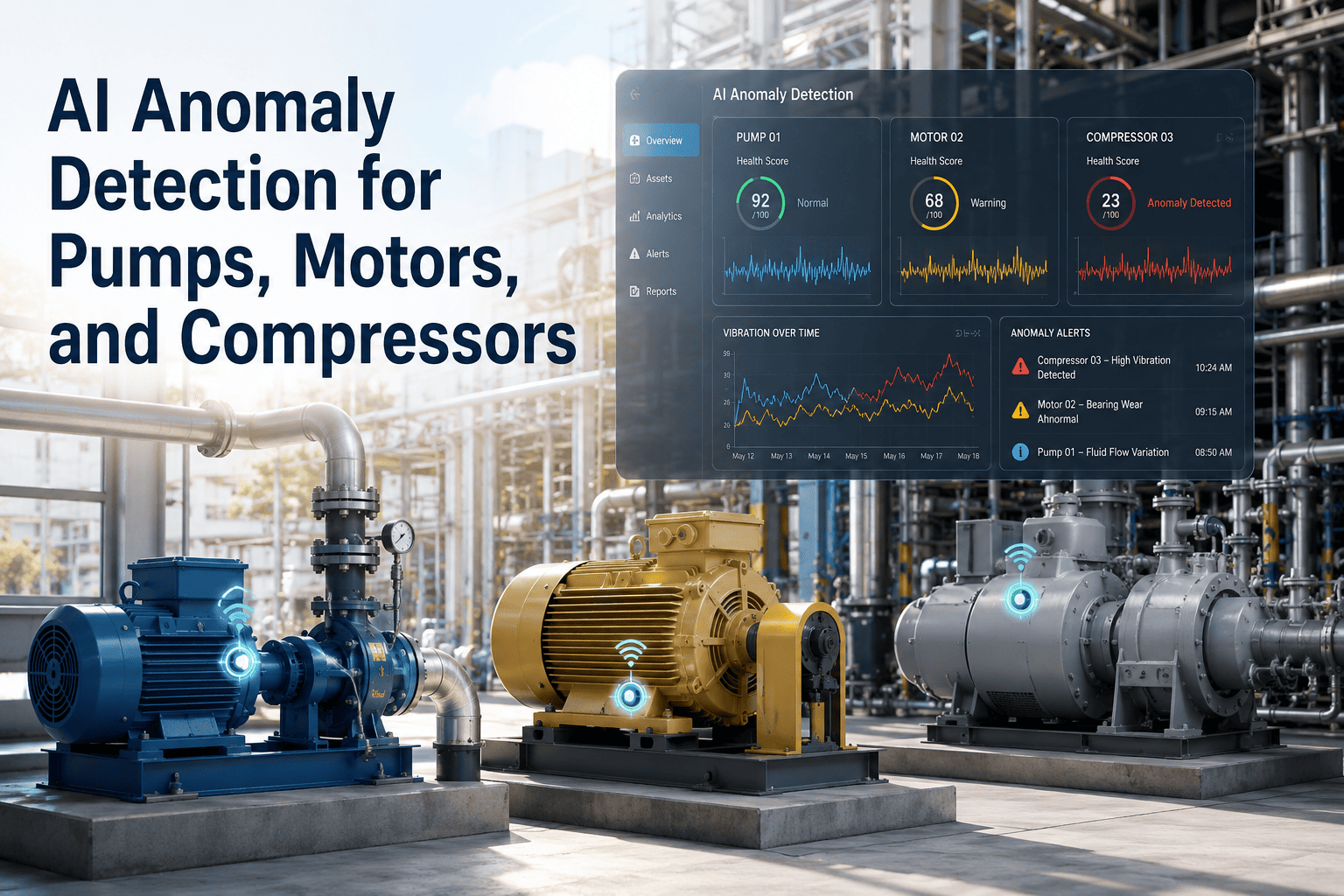
AI Anomaly Detection for Pumps, Motors, and Compressors


Pumps, motors, and compressors rarely fail without warning — but those warnings are easy to miss when your team only checks equipment on a scheduled interval or when something breaks. OxMaint's condition monitoring captures the behavioral signals that precede failures and alerts your team before a minor anomaly becomes a shutdown event. Book a 30-minute demo and see how OxMaint detects equipment anomalies before they become failures.

Condition Monitoring · Predictive Maintenance · Rotating Equipment

AI Anomaly Detection for Pumps, Motors, and Compressors

Most unplanned failures give you days of warning — if you know what to watch. OxMaint monitors vibration, temperature, pressure, and runtime deviations across rotating equipment and flags anomalies before they escalate to failure.

Live Anomaly Feed

Pump P-204 — Bearing Temp
+14°C above baseline · 3h trend
Watch

Motor M-11 — Vibration RMS
2.1× normal · rising since 06:00
Alert

Compressor C-7 — Discharge Pressure
Within normal range · 98% uptime
Normal

Pump P-107 — Current Draw
8% above baseline · check impeller
Watch
The Business Case for Early Detection

What Undetected Anomalies Actually Cost — Real Industry Data

40%
Of rotating equipment failures could be predicted 2–5 days in advance with basic vibration and temperature monitoring
Source: EPRI Condition Monitoring Report
10×
Cost multiplier between planned repair and emergency replacement for a failed industrial motor bearing
Source: Reliability Engineering Best Practices
72h
Average advance warning window available before pump failure when vibration anomalies are tracked from baseline
Source: ISO 10816 Field Studies
What to Monitor

Anomaly Signals by Equipment Type — The Indicators That Predict Failure First

Equipment Primary Anomaly Signal Secondary Signal Typical Failure Mode OxMaint Alert Threshold
Centrifugal Pump Bearing temperature rise (+10°C over baseline) Increased current draw Bearing failure / impeller wear Configurable per asset
Induction Motor Vibration RMS — 1.5× baseline or above Winding temperature deviation Rotor imbalance / bearing wear ISO 10816 Zone C/D
Reciprocating Compressor Discharge temperature +15°C above set point Suction pressure deviation Valve failure / ring wear Configurable per asset
Screw Compressor Oil temperature +20°C above normal operating Differential pressure across oil filter Oil system degradation / rotor wear Configurable per asset
Cooling Tower Fan Motor current draw trend over 7-day window Blade vibration signature change Belt wear / bearing deterioration Trend-based alert
OxMaint · Condition Monitoring · Rotating Equipment

Stop Waiting for Equipment to Fail. Start Watching for It to Warn.

OxMaint's anomaly detection monitors your pumps, motors, and compressors against configured baselines and alerts your team the moment behavior changes — days before a failure becomes a shutdown.

How OxMaint Detects Anomalies

From Sensor Reading to Maintenance Work Order — The Detection Workflow

Baseline Established
01
OxMaint builds a normal operating baseline for each asset from historical readings — temperature, vibration, pressure, and runtime. The baseline adapts as operating conditions change seasonally or after maintenance.

Deviation Detected
02
When a sensor reading crosses a configured deviation threshold or a trend analysis detects a directional change over a defined window, the system flags the anomaly and begins tracking it.

Alert Routed to Team
03
The relevant technician and supervisor receive an alert with the asset ID, the anomaly type, the deviation magnitude, and the duration of the trend. No hunting through dashboards — the signal comes to the person who can act on it.

Work Order Generated
04
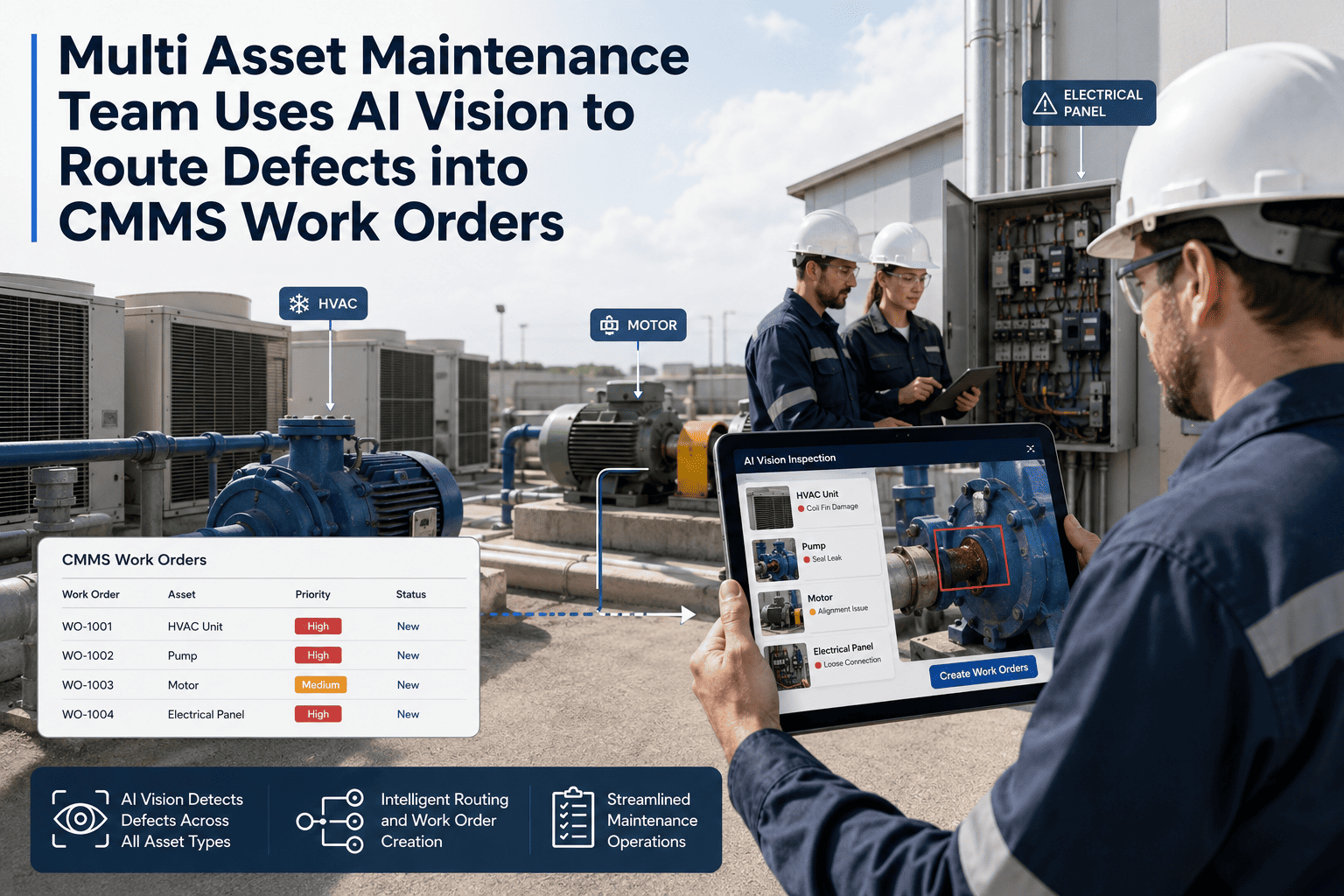
A work order is created in OxMaint from the anomaly alert, pre-populated with the asset, the condition flag, and the recommended inspection task. The technician inspects, documents findings, and closes the loop — all within the same system.
Expert Perspective

What Condition Monitoring Research Shows About Rotating Equipment Failures


The vast majority of rotating equipment failures exhibit measurable symptoms 48 to 96 hours before failure — vibration signatures change, bearing temperatures rise, and current draw increases. Organizations that establish baselines and monitor deviations systematically catch 60 to 70 percent of failures before any production impact occurs.

Reliability Centered Maintenance — Industry Research Consensus, 2022–2024

The maintenance cost ratio between predictive and corrective repair for industrial pumps and motors is consistently 1:4 to 1:8. For every dollar spent on detection-based maintenance, organizations avoid four to eight dollars in corrective repair cost. The ROI case for condition monitoring is not theoretical — it is well-documented across petrochemical, food, and municipal water sectors.

SMRP Benchmarking Data — Society for Maintenance and Reliability Professionals
Frequently Asked Questions

AI Anomaly Detection for Industrial Equipment — Common Questions

What types of anomalies does OxMaint detect on pumps and motors?
OxMaint monitors for bearing temperature deviations, vibration amplitude increases, abnormal current draw trends, and pressure signature changes. Thresholds are configured per asset based on manufacturer specifications and actual operating baseline — so alerts reflect a true deviation from that specific machine's normal behavior, not a generic industry average. Start a free trial to configure your first asset baseline.
How long does it take to establish a condition monitoring baseline in OxMaint?
For assets with existing maintenance history in OxMaint, a baseline can be established from historical data during onboarding. For new assets, OxMaint builds the baseline over the first operating period as readings are logged. Most facilities have meaningful anomaly detection active within 30 to 90 days of implementation depending on equipment runtime patterns. Discuss your equipment portfolio in a demo call.
Does OxMaint automatically create a work order when an anomaly is detected?
Yes. When an anomaly crosses a configured threshold, OxMaint can automatically generate a work order pre-populated with the asset details, anomaly description, and a suggested inspection task. The work order is routed to the assigned technician for that equipment — eliminating the gap between detection and action that often causes detected warnings to go uninvestigated.
Can OxMaint monitor compressors with multiple stages or variable-speed drives?
Yes. OxMaint supports multi-point monitoring for complex equipment including multi-stage compressors and VFD-controlled assets. Operating parameters adjust to account for variable speed profiles so that alerts reflect true anomalies rather than false positives caused by speed-related parameter changes. Configuration is done at the asset record level during setup. Set up your compressor fleet in a free trial.
OxMaint · AI Anomaly Detection · Rotating Equipment · Free to Start

Your Equipment Is Sending Signals. OxMaint Makes Sure Someone Is Listening.

Set baselines, configure alert thresholds, and connect anomaly detection to automatic work order creation. Go live on your critical rotating equipment in days — no sensor hardware required to start.
Share This Story, Choose Your Platform!