Top Work Order Management Software Compared (2026)
The maintenance manager at a food processing plant in Minneapolis found out his work order management system was failing in the most direct way possible — by counting. He had a team of 14 technicians. In a given week, OxMaint showed 340 work orders were generated across all his facilities. His previous paper-and-email system showed 112 closed work orders for the same week. The gap — 228 work orders either never created, never tracked, or closed without documentation — represented the invisible maintenance backlog that his plant director had no visibility into and that his technicians were managing from memory. When that memory failed — a technician left, a shift changed, an inspection window passed — the asset didn't get maintained. The gap between work orders generated and work orders properly managed is where most maintenance programmes fail. Sign in to OxMaint to see how many work orders your operation is losing between generation and closure, or book a demo to see OxMaint's work order management compared to your current system.
Work Order Software · 2026 Comparison · OxMaint Platform
Top Work Order Management Software Compared (2026) — What to Look for Beyond Ticket Creation
Work order management software is only as good as the gap it closes between a maintenance need being identified and work being completed, documented, and linked to an asset history. This guide compares the leading platforms on the criteria that actually determine whether your maintenance programme works.
of maintenance organisations still manage work orders primarily through email, spreadsheet, or paper — 2024 industry survey
228
undocumented work orders per week identified at a Minneapolis food plant when moving from paper to OxMaint — 228 invisible maintenance gaps per week
38%
average reduction in work order backlog within 90 days of deploying structured CMMS work order management — OxMaint benchmark
3.5x
faster average work order close time with mobile-first digital work order management vs paper-based or email-based systems
Most work order management software evaluations focus on the wrong thing — how easy it is to create a ticket. The feature that actually determines programme effectiveness is what happens after creation: escalation for overdue items, asset history linkage, parts tracking, compliance documentation, and the closed-loop verification that the work was completed to standard. This comparison evaluates platforms on all five dimensions, not just ticket creation UX.
Top Work Order Management Platforms — 2026 Feature Comparison
Platform
Mobile-First WO
PM Auto-Generation
Asset History Link
Escalation Workflow
Compliance Docs
Best Fit
OxMaint
iOS + Android native
Full automation
Complete lifecycle
Configurable tiers
Built-in templates
All industries · SME to enterprise
Limble CMMS
Native mobile
Full
Good
Basic
Limited
SME · simple PM programmes
Fiix (Rockwell)
Good mobile
Full
Good
Moderate
Moderate
Manufacturing mid-market
Maintenance Connection
Moderate
Full
Full
Moderate
Good
Healthcare + facilities
IBM Maximo
Maximo Mobile add-on
Full
Full (complex)
Enterprise-grade
Full (configurable)
Large enterprise · $1M+ IT
ServiceNow
Good
Limited
Limited
Full (ITSM-focused)
Limited
IT asset management
Hippo CMMS
Basic
Moderate
Basic
Limited
Limited
Small facilities
OxMaint · Work Order Management · All Industries
Close the Gap Between Work Orders Created and Work Orders Completed — From Day One.
OxMaint's work order module handles creation, assignment, escalation, asset history linkage, compliance documentation, and closed-loop verification — in one mobile-first platform.
Five Work Order Management Dimensions That Actually Determine Programme Effectiveness
01
Work Order Generation — All Trigger Sources
OxMaint generates work orders from five trigger sources simultaneously — PM schedule due dates, IoT/SCADA condition alerts, technician inspection findings, manager manual creation, and resident/occupant requests via mobile portal. All five feed the same work order queue with consistent priority logic and asset record linkage.
02
Assignment and Dispatch Intelligence
OxMaint assigns work orders based on technician skills, zone, current workload, and parts availability — not just a simple round-robin or manual supervisor assignment. High-priority work orders escalate automatically when the assigned technician hasn't acknowledged within a configurable window, preventing the silent overdue work order that builds invisible backlog.
03
Escalation Workflow — Overdue Work Orders Don't Disappear
OxMaint's escalation model is configurable per work order priority — a critical work order unacknowledged for 2 hours alerts the supervisor; unresolved for 24 hours alerts the director. The escalation chain is documented in the work order audit trail, creating accountability evidence that survives staff turnover and compliance review.
04
Asset History Linkage — Every Work Order Builds the Asset Record
Every work order closed in OxMaint contributes to the asset's maintenance history — repair description, parts used, technician, labour hours, and findings recorded against the asset record permanently. The history powers failure pattern detection, warranty tracking, capital replacement planning, and compliance audit trails that require documented maintenance evidence.
05
Closed-Loop Completion Verification
OxMaint requires technicians to complete configurable completion criteria before a work order can be closed — measurement readings, photo evidence, checklist sign-off, and in some configurations a supervisor approval for high-criticality assets. Work orders cannot be paper-closed without evidence — the gap between "marked done" and "actually done" is eliminated.
06
Analytics — Backlog, MTTR, and WO Velocity
OxMaint's work order analytics track mean time to repair by asset class, work order backlog trend by department and zone, planned vs reactive ratio, and technician productivity metrics. These analytics make the invisible maintenance programme visible — enabling managers to make resource decisions with data rather than intuition.
Work Order Software by Industry — Which Platform Fits Best
Industry · Manufacturing
Manufacturing & Production
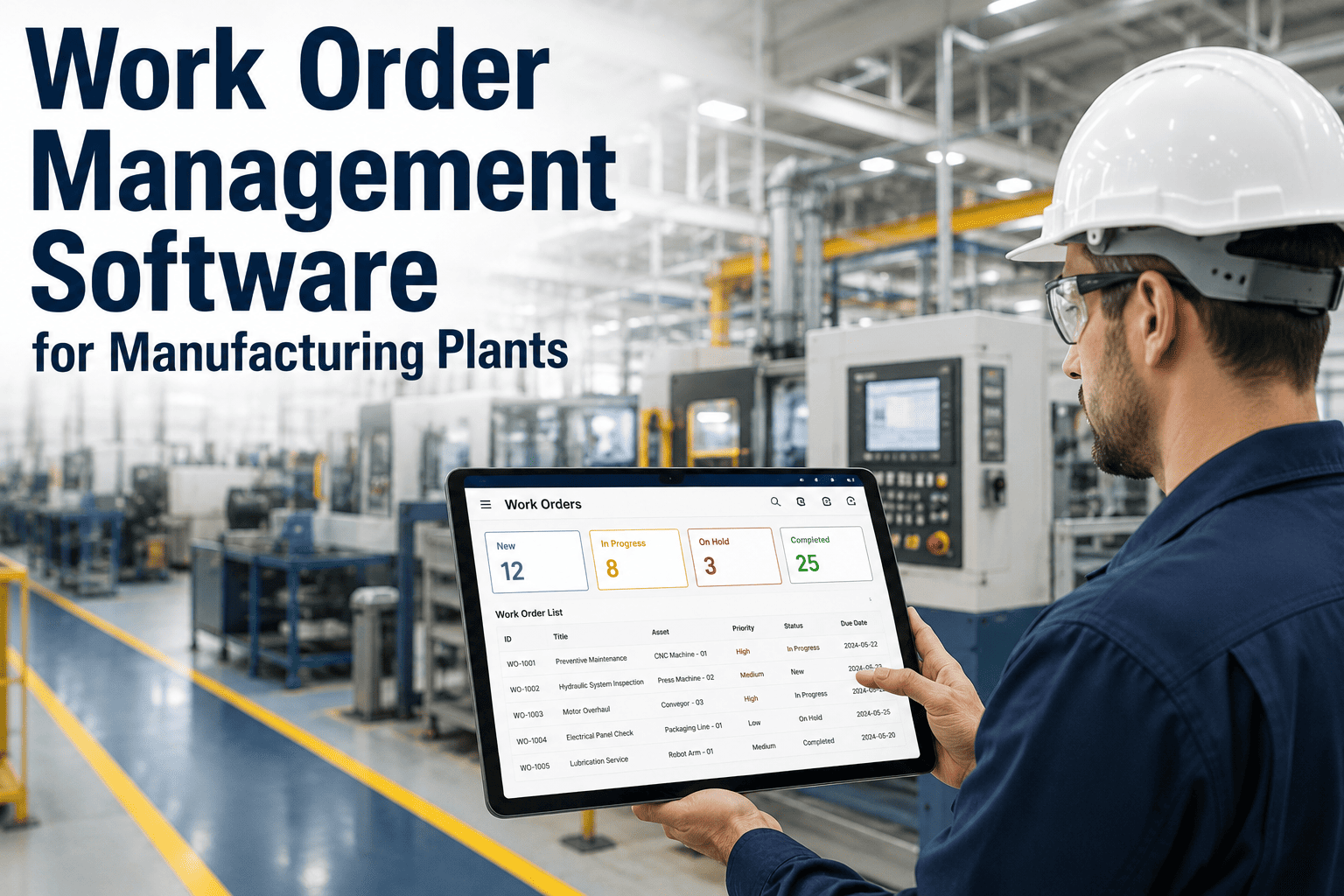
High work order volume with OEM PM schedule complexity, shift-based technician assignment, and production line downtime cost tracking. OxMaint integrates PM auto-generation with machine sensor alerts — work orders emerge from both scheduled and condition-based triggers on the same platform.
500+
WOs/month typical
Shift
handover support
Industry · Healthcare / Education
Healthcare & Campus Facilities
Compliance-driven work orders where documentation quality is as important as completion speed. OxMaint generates TJC and NFPA-aligned work orders with mandatory evidence capture, inspector certification fields, and compliance calendar integration — documentation is built into the work order workflow, not added after.
TJC
compliant records
Auto
escalation alerts
Industry · Property / FM
Property & Facilities Management
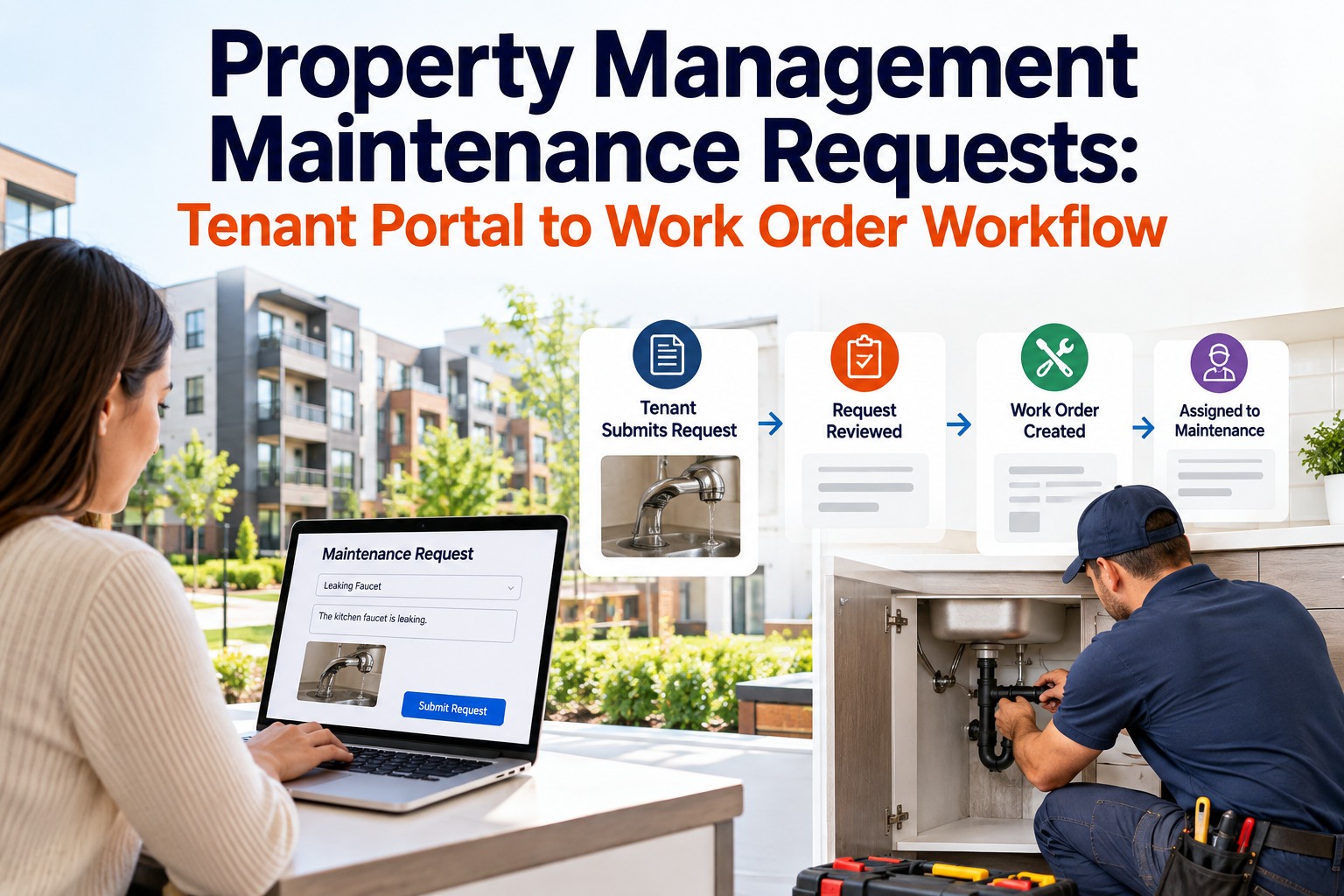
Multi-tenant facilities with occupant-submitted requests, vendor-executed work orders, and SLA-driven response requirements. OxMaint's resident portal, vendor work order management, and SLA tracking close the work order lifecycle from occupant submission through vendor completion and invoice verification.
SLA
tracking built-in
Vendor
portal included
228
undocumented work orders per week recovered at Minneapolis food plant — the invisible maintenance backlog that paper systems cannot surface
38%
average backlog reduction within 90 days of deploying OxMaint structured work order management across the benchmark facility population
3.5x
faster work order close time with OxMaint mobile-first work order management vs paper-based and email systems at comparable facilities
"We thought we had a staffing problem. We had a visibility problem. When we deployed OxMaint, we found out we were losing 228 work orders per week between generation and documentation. Our 14 technicians weren't underperforming — they were managing a shadow maintenance programme that our old system couldn't see. Within 90 days of using OxMaint, our backlog was down 41%, our MTTR dropped from 18 hours to 7 hours, and we hadn't added a single headcount."
— Maintenance Manager, food processing facility, Minneapolis MN, 14 technicians, OxMaint user since 2023
Frequently Asked Questions
How does OxMaint differ from simpler work order ticketing tools like Hippo CMMS or Limble?
Simpler tools handle work order creation and basic scheduling well — they are appropriate for small facilities with uncomplicated maintenance programmes. OxMaint adds the layers that matter at larger scale: configurable escalation workflows, asset history linkage for every work order, compliance documentation templates, IoT/SCADA trigger integration, and multi-site analytics. The right choice depends on the number of assets, compliance requirements, and whether your operation needs visibility into failure patterns across its asset population.
Can OxMaint automatically create work orders from equipment sensor alerts?
Yes — OxMaint integrates with IoT sensors, PLC systems, and SCADA platforms via MQTT, OPC-UA, and REST API. When a sensor reading exceeds a defined threshold — temperature, vibration, pressure — OxMaint automatically creates a prioritised work order assigned to the appropriate technician, with the sensor reading and threshold breach data attached to the work order for context.
How does OxMaint handle work orders that require multiple technicians or trades?
OxMaint supports multi-technician work orders with individual labour time tracking per technician, skills-based assignment for each task within the work order, and sequential or parallel task scheduling. Complex maintenance events — annual turbine overhauls, scheduled shutdowns, or multi-trade building repairs — can be managed as a single work order with multiple assigned resources and task-level status tracking.
What does OxMaint's work order escalation look like in practice?
Escalation rules are configured per work order priority tier. A critical work order unacknowledged by the assigned technician for 2 hours triggers a push alert to the supervisor. Unresolved at 24 hours, the director receives an alert. At 5 days, the VP or department head is notified. Every alert is logged in the work order audit trail — creating a timestamped escalation record that remains available for compliance review and performance management.
Can external vendors and contractors complete work orders in OxMaint?
Yes — OxMaint's vendor portal allows external contractors to receive work order assignments, log completion with photo evidence and time records, and submit invoices directly in OxMaint — without requiring a full user licence. Vendor work orders are tracked against the same SLA metrics and asset history as internal technician work orders, maintaining a unified maintenance record regardless of who performed the work.
Close the Gap Between Work Orders Created and Work Orders Completed. Every Time.
OxMaint makes your entire maintenance programme visible — the 228 work orders a week that your current system can't see included.