The maintenance department that still runs on reactive strategy in 2026 is not making a cost-neutral choice. It is paying 3–5x more per repair than a planned maintenance programme costs, absorbing 800+ hours of unplanned downtime annually that a predictive system would have prevented, and operating with zero visibility into which assets are approaching failure until they fail. The US Department of Energy has documented 10x returns on predictive maintenance investment. Deloitte's Manufacturing Institute data shows 25% maintenance cost reduction from AI-driven programmes. McKinsey research puts the lower maintenance spend advantage of predictive over reactive at 40%. These are not projections — they are documented outcomes from facilities that have made the shift. The question in 2026 is not whether AI-driven preventive maintenance delivers measurable value. The question is why your facility has not yet captured it. Sign up for Oxmaint to start your AI maintenance programme today.
Where Your Facility Sits on the AI Maintenance Maturity Spectrum — and What It Costs You
Industrial facilities operate across a wide spectrum of maintenance maturity. Most self-assess as more advanced than they are, because the costs of reactive maintenance are invisible — embedded in emergency procurement premiums, unplanned overtime, and downtime that looks like "bad luck" rather than a preventable management failure. Sign up for Oxmaint to start moving your operation up the maturity curve today.
Where the 35% Cost Reduction Actually Comes From — Five Compounding Levers
The 35% operating cost reduction achievable with AI-driven maintenance does not come from a single intervention. It comes from pulling five proven levers simultaneously — each one compounding on the others. When you reduce breakdowns, you also reduce emergency parts orders. When you optimise energy, you extend equipment life. When you digitise work orders, technicians fix more in less time. Book a demo to see how each lever applies to your facility.
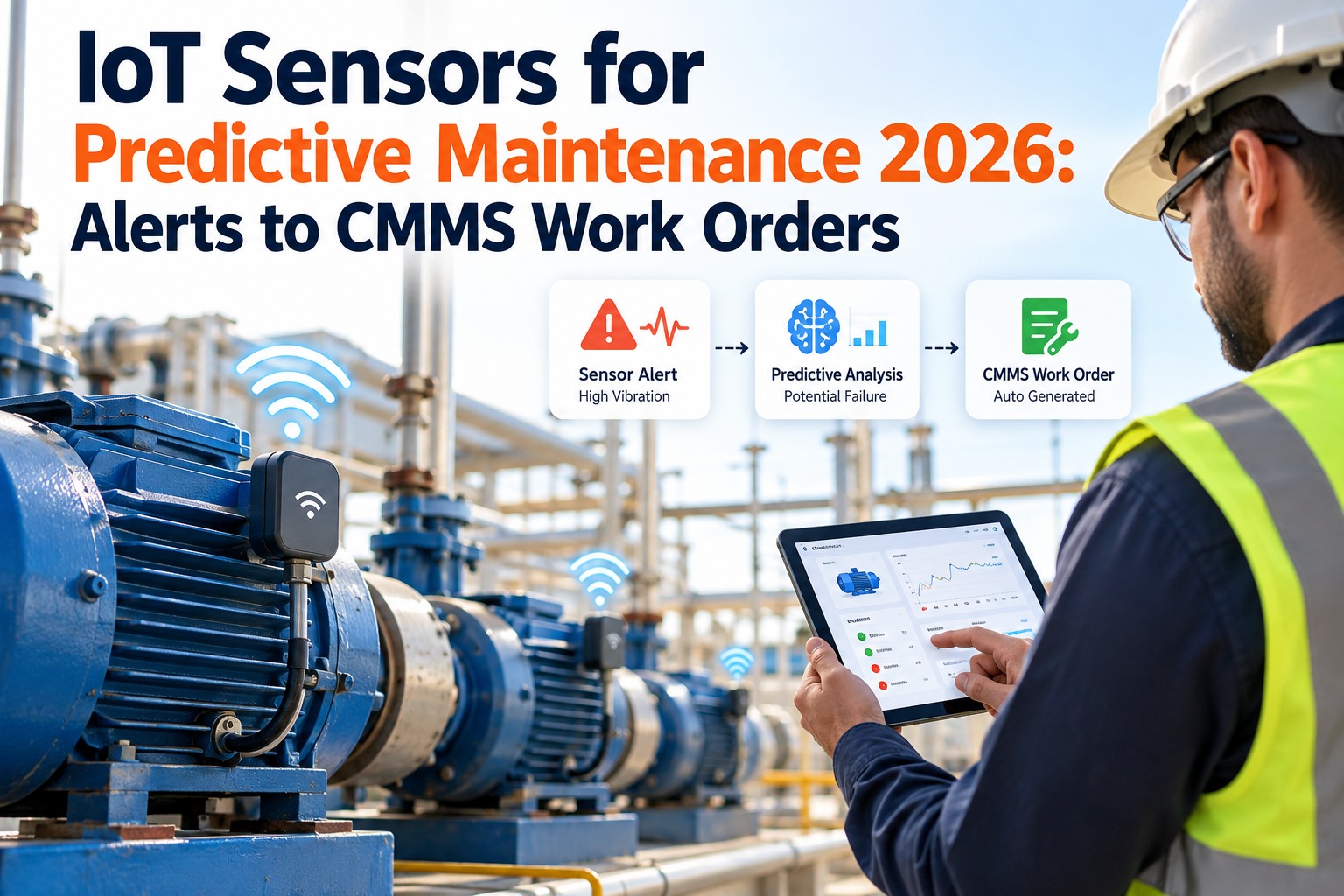
Emergency repairs cost 3–5 times more than planned work. Predictive maintenance uses sensor data and CMMS analytics to catch equipment degradation weeks before failure — reducing unplanned downtime by up to 50% and maintenance spending by 25%. A steel manufacturer saved $1.5M in year one by deploying vibration sensors on critical assets and linking alerts to automated work orders in Oxmaint. Every hour of planned repair time costs a fraction of the same repair performed under emergency conditions with production stopped. Sign up for Oxmaint to activate predictive alerts for your critical assets.
Overstocked spare parts rooms tie up capital. Stockouts trigger $2,000+ emergency procurement runs at 1.5–2x standard pricing. A CMMS links every part to the assets that use it, tracks actual consumption rates, and auto-generates purchase orders at optimised reorder points — cutting inventory carrying costs by 20–30% while eliminating the panic buying that reactive maintenance programmes generate. When AI analyses historical work order consumption to forecast future parts demand, the accuracy of stock planning improves dramatically.
Poorly maintained equipment uses 10–30% more energy than design specification. Scheduling energy-intensive operations during off-peak hours, monitoring efficiency degradation in real time, and flagging loads that are running outside their maintenance interval — compressors left running overnight, AHU fans with clogged filters drawing 15% excess power — can reduce the energy bill by 15–20%. The Oxmaint CMMS links energy consumption data to maintenance work orders, showing which PM task produced which energy improvement. Book a demo to see energy monitoring integrated with PM scheduling.
Industry research consistently shows only 24.5% of a typical maintenance technician's shift is spent on actual repair work. The rest — walking to find parts, waiting for approvals, filling out paper forms, and finding out what to do next — is administrative waste that digital work orders and mobile CMMS access eliminate. Digital work order dispatch, real-time parts availability on mobile, and standardised procedure guidance can push productive wrench time above 55%, effectively doubling team output without adding headcount. Sign up for Oxmaint to eliminate administrative waste from your maintenance team's time.
Equipment that drifts out of calibration does not just break — it makes bad product first. Condition-based maintenance keeps machines in spec, which reduces scrap rates by 15–25% and improves first-pass yield. The quality improvements alone often pay for the entire CMMS deployment before any of the other four levers are counted. AI-driven CMMS links quality events to maintenance records, showing which equipment condition change preceded which quality deviation — enabling root cause action rather than repeated inspection rework.
The biggest myth in manufacturing is that you need massive capital investment to cut costs significantly. The truth is, most of your waste is invisible — hidden in reactive maintenance, excess inventory, and manual processes. A good CMMS makes it visible, and once you can see it, you can eliminate it.
Documented Outcomes from Real AI Maintenance Deployments
These are not projections. Organisations across manufacturing, energy, and heavy industry have published or verified these results after deploying CMMS-driven and AI-enhanced maintenance programmes. Sign up for Oxmaint to begin building your own results record.
Reduction in maintenance costs with AI-driven predictive strategy
Decrease in unplanned downtime incidents across AI maintenance deployments
Return on investment from predictive maintenance programme implementation
Lower maintenance spend vs. reactive-only approaches at equivalent facilities
Annual verified savings at a CPG plant through AI sensor-based maintenance analytics
Of organisations achieve full CMMS payback within the first 12 months of deployment
AI Maintenance Cost Reduction Potential by Manufacturing Sector
The 35% target is achievable across manufacturing sectors, but the composition of savings shifts depending on your industry. The table below shows where AI maintenance delivers the highest return by sector and which lever produces the most impact. Book a demo to get a projection built for your specific industry and facility profile.
| Industry | Primary Cost Driver | Top AI Lever | Achievable Reduction |
|---|---|---|---|
| Automotive | Line downtime ($22K/min) | Predictive maintenance + OEE tracking | 25–35% |
| Food & Beverage | Compliance + energy costs | Automated audit trails + energy scheduling | 20–30% |
| Steel & Metals | Furnace energy consumption | Combustion optimisation + PM scheduling | 25–40% |
| Pharmaceuticals | Regulatory overhead | Digital audit trails + automated documentation | 15–25% |
| Plastics & Packaging | Material scrap and waste | Quality-linked maintenance + controls | 20–35% |
| Electronics | Precision equipment cost | Condition monitoring + calibration tracking | 18–28% |
| Oil & Gas / Petrochemical | Unplanned shutdown cost | Vibration analytics + corrosion monitoring | 22–38% |
Swipe to view full table
Your 90-Day Roadmap to Measurable AI Maintenance Results
The most common barrier to AI maintenance adoption is the belief that it requires a two-year transformation programme. It does not. The most successful facilities follow a phased rollout that delivers measurable savings in the first 30 days while building toward the full compounded reduction. Sign up for Oxmaint to begin today.
Deploy Oxmaint across your critical assets. Digitise work orders, set up preventive maintenance schedules for your top 10 failure-prone machines, and establish baseline cost tracking. Most facilities identify $50k–100k in immediate savings opportunities during this phase — emergency procurement patterns, overdue PM tasks, and assets with no documented maintenance history become visible for the first time.
First predictive insights visible within 30 daysActivate spare parts tracking with auto-reorder triggers. Launch energy monitoring dashboards linked to maintenance work orders. Begin condition-based alerting on high-value assets using IoT sensor data or manual inspection readings. Start tracking technician productivity — which crews are closing work orders fastest, which asset types are consuming the most corrective hours. Book a demo to see Days 31–60 capabilities configured.
Automated anomaly detection activeExpand CMMS coverage to all facility assets. Roll out team performance dashboards. Begin predictive analytics on assets with sufficient data history accumulated in the first two phases. Measure and report first-quarter results to leadership — typically showing 15–20% maintenance cost reduction and a measurable drop in unplanned downtime events versus the pre-deployment baseline.
Measurable results ready for leadership reportingActivate advanced predictive models as they mature on accumulated sensor and work order data. Roll out to additional sites. Benchmark facility-to-facility performance. Target the remaining gap between current performance and the full 35% reduction through AI-driven optimisation, advanced energy management, and failure pattern analysis on the now-complete asset history. The full 35% is typically achieved within 18–24 months as all five levers compound.
Full 25–35% reduction achieved within 18–24 monthsReady to Start Your 90-Day AI Maintenance Transformation?
Oxmaint gives you real-time asset tracking, automated work orders, predictive insights, inventory optimisation, and cost analytics — all in one platform built for facilities that need results, not complexity.
AI-Driven Preventive Maintenance — Common Questions
Yes, though the timeline and composition vary by starting point. Facilities with minimal digital infrastructure typically see 15–20% savings in the first year from eliminating reactive maintenance alone — emergency procurement cost reduction and PM completion rate improvement account for most of this initial gain. The full 35% is usually achieved within 18–24 months as predictive analytics mature on accumulated sensor data, inventory optimisation compounds, and energy management layers in. Book a demo to see a realistic savings projection built for your specific facility profile.
No. IoT sensors unlock the full power of AI-driven predictive maintenance — anomaly detection and condition-triggered work orders — but significant savings are achievable with a CMMS alone from day one, through digitised work orders, PM scheduling with high adherence rates, parts inventory optimisation, and cost analytics that identify where reactive maintenance spend is concentrated. Most facilities start with CMMS software and add IoT sensors incrementally to the highest-value assets based on the work order data that shows which equipment is consuming the most corrective maintenance hours. Sign up for Oxmaint to start with software and expand to sensors at your own pace.
Most Oxmaint customers report full payback within 3–6 months. The US Department of Energy has documented 10x returns on predictive maintenance investments across industrial deployments. When you add inventory carrying cost reduction, labour productivity gains from eliminating administrative waste, and downtime cost reduction from higher PM completion rates, the payback accelerates rapidly. The first emergency procurement order that Oxmaint prevents — because the correct part was already in stock at the reorder point the system set — often represents more value than the first month's subscription cost.
The sweet spot is facilities with 50 or more assets and annual maintenance budgets above $500k. At this scale, the compounding effects of the five levers create dramatic visible reductions — the emergency procurement savings alone typically cover the CMMS subscription cost within 60–90 days. Smaller facilities benefit proportionally but see less dramatic absolute dollar savings. Very large facilities — above 5,000 assets — benefit significantly from the AI anomaly detection capability that would be impossible to replicate with manual inspection at the required frequency and consistency.
Preventive maintenance replaces or services equipment on a calendar schedule — every 3 months, every 1,000 operating hours — regardless of the equipment's actual condition. This eliminates most reactive failures but wastes resources servicing equipment that does not yet need it, while occasionally missing a failure that develops rapidly between scheduled service intervals. AI-driven predictive maintenance uses sensor data (vibration, temperature, current draw, acoustic signatures) and AI anomaly detection to identify the specific assets approaching failure based on their actual condition trend — servicing equipment when it needs it rather than when the calendar says to. The result is fewer unnecessary PMs, fewer between-interval failures, and a maintenance programme that becomes more accurate over time as the AI model learns the failure signatures of your specific equipment. Book a demo to see Oxmaint's predictive analytics configured for your asset types.
Your Plant's 35% Cost Reduction Is Not a Future Target. It Is Waiting to Be Captured.
Every week without AI-driven maintenance is another week of preventable downtime, emergency procurement premiums, energy waste from equipment running outside design specification, and technician hours lost to administrative work. Oxmaint gives you every tool needed to capture the documented savings that facilities across manufacturing, energy, and heavy industry have already proven are real — starting in the first 30 days.

.png)