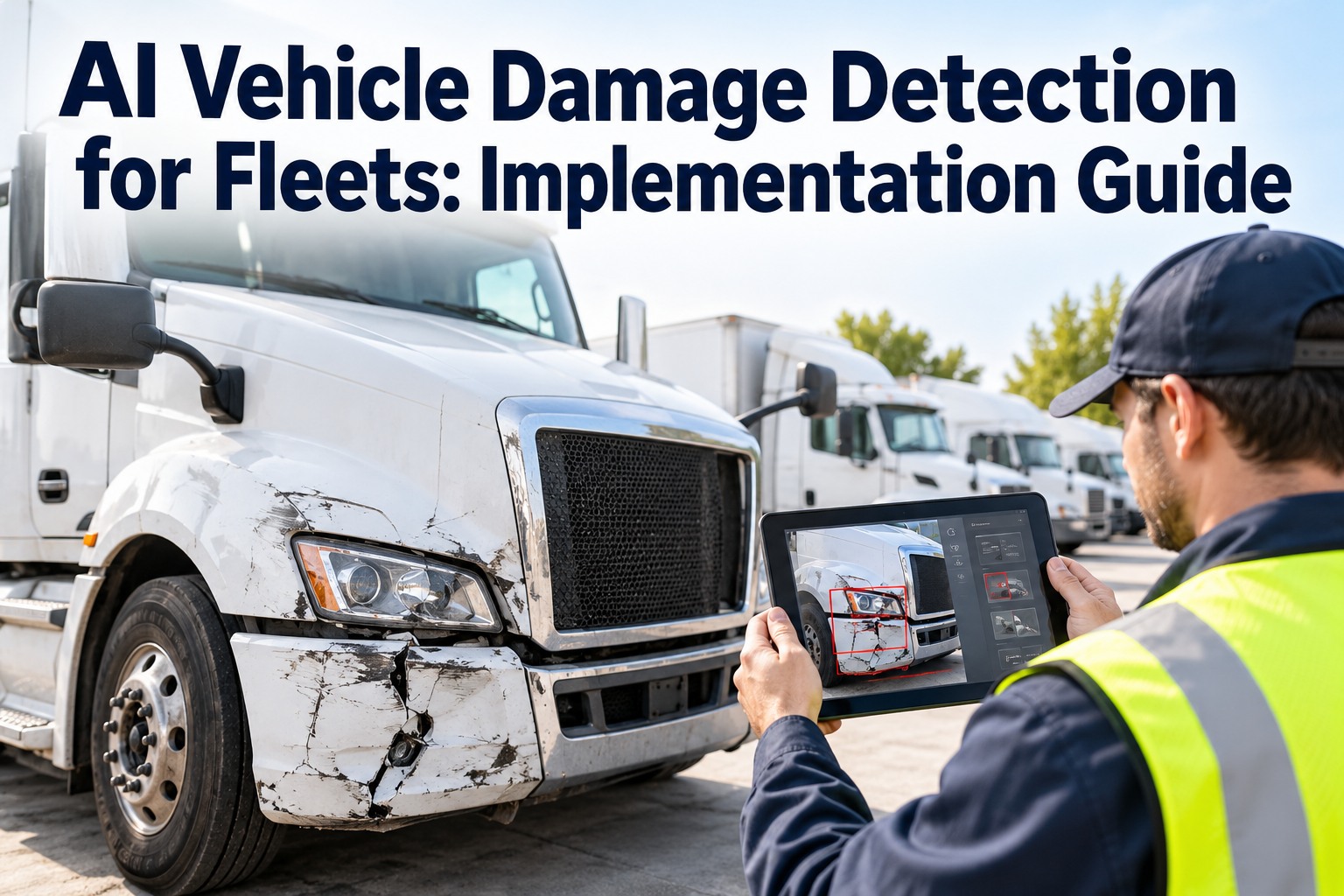
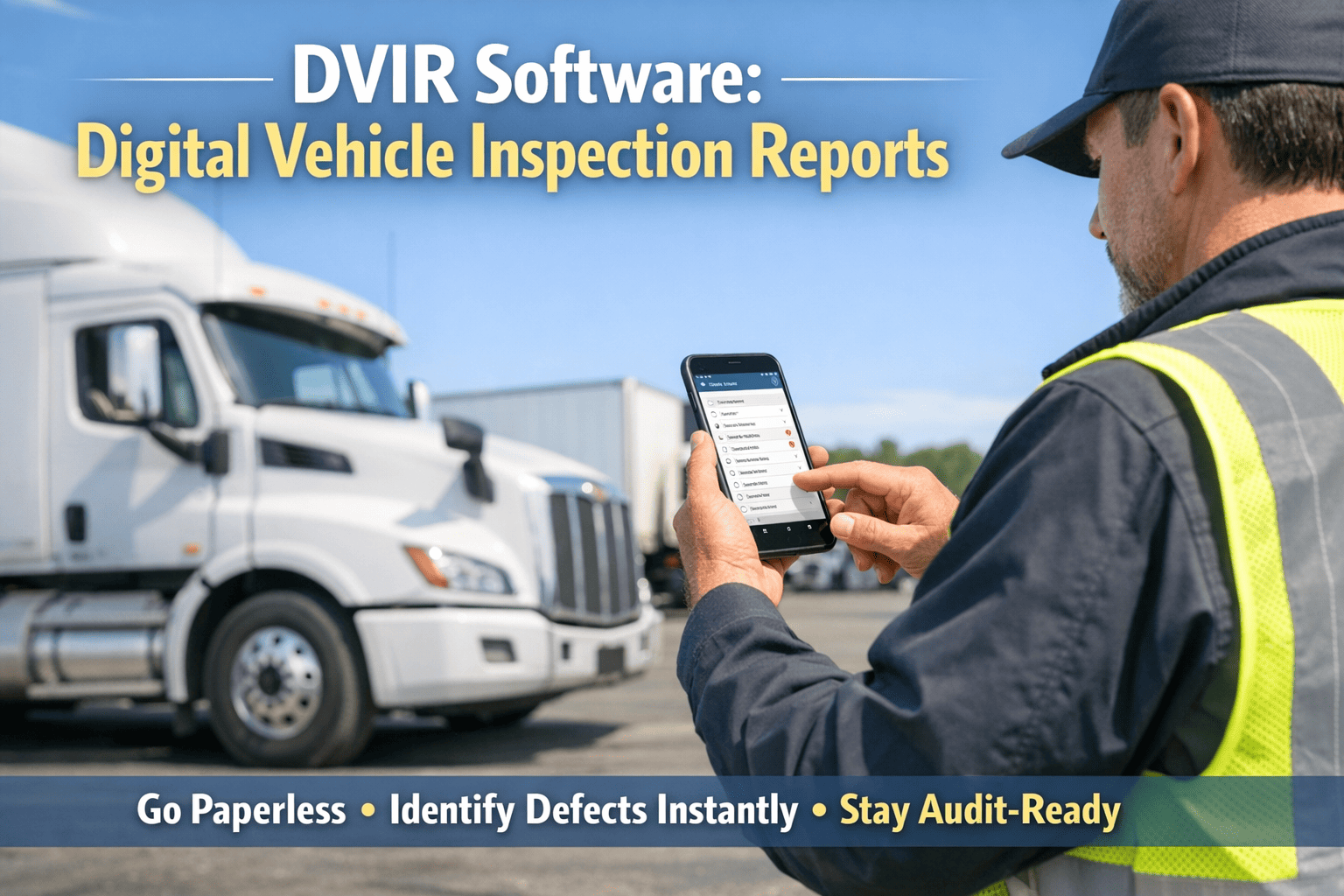
A vehicle leaves the yard clean and comes back with a fresh dent that nobody logged, and weeks later the fleet eats the repair with no record of when it happened or who had the keys. OxMaint AI-powered CMMS closes that gap: a driver walks the vehicle with a phone, AI vision flags new dents, scratches, and cracks against the last clean record, and the moment real damage is found it becomes a ranked work order routed to the right shop — inspection to issue to repair in one platform. This guide covers what the technology detects, how to roll it out in phases, and how a flagged dent turns into a closed repair. You can also book a demo to see the capture-to-work-order loop.
Turn Every Vehicle Handoff Into a Tracked, Evidence-Backed Inspection
Manual walkarounds miss damage and leave disputes with no proof. OxMaint runs AI vehicle damage detection as one connected loop — guided phone capture, vision detection against a baseline, a dated condition report, and an automatic work order the instant genuine damage appears.
01
Guided Capture
Driver is walked through fixed angles; each photo is quality-checked before it is accepted.
→
02
AI Detection
Vision models read each panel and compare against the last clean record to isolate new damage.
→
03
Condition Report
Annotated photos, a panel map, a severity flag, and a timestamp form a tamper-evident record.
→
04
Work Order
Damage above threshold opens a ranked repair task with the evidence already attached.
Put guided AI capture on every check-in and check-out, and let genuine damage open its own repair. Start free on your own vehicles, or see the full loop in a live walkthrough.
Manual walkarounds fail quietly. A tired driver at shift end ticks "no damage" because the clipboard is faster than a careful look, and the dent that was really there migrates onto the next person's watch. Guided AI capture removes the shortcut: the inspection is not complete until the required angles are captured and pass a quality check, so the record reflects the vehicle rather than the driver's patience — and every finding lands on the vehicle's own history in OxMaint.
The Five Damage Classes a Vision Model Learns to Flag
Body
Dents & Deformation
Impact dents, door dings, and panel deformation on fenders, doors, and bumpers — the damage most often missed under poor lighting on a rushed walkaround.
Surface
Scratches & Scuffs
Paint scratches, scuffs, and transfer marks along panels and rockers — graded by length and depth so a hairline mark is not treated like a gouge to the primer.
Structural
Cracks & Breaks
Cracked bumpers, split trim, and broken lamp housings — damage that tends to spread and that a quick glance registers as a shadow rather than a fault.
Glass
Glass & Lights
Chips and cracks in the windscreen, mirrors, and light lenses — items that cross straight into roadworthiness and a failed roadside check if left unlogged.
Wear
Tires & Missing Parts
Visible tire wear and sidewall damage, plus missing or displaced parts — trim, caps, and covers that a photo catches and a memory does not.
Photo QC
What It Flags for Recapture
Beyond damage, the model rejects photos that are too dark, blurred, or cropped, catches a wrong or reused image, and asks the driver to shoot again — so the evidence holds up later.
Not every mark is a repair. The value of classifying damage by type and severity is that your policy, not the driver, decides what matters: a warning-level scuff is logged for the record, while a critical crack in a lamp opens a task before the vehicle moves. You set those thresholds once in OxMaint and they apply to every field user, at every depot.
A Four-Phase Rollout That Does Not Disrupt Operations
1
Set the Baseline on Every Vehicle
Before AI can report "new" damage, each vehicle needs one clean, dated capture. Run a baseline pass across the fleet so the first real inspection has something to compare against — existing damage is recorded, not mistaken for fresh.
2
Write the Damage Policy
Decide which angles are required, what severity counts as critical versus a warning, and what opens a work order automatically. This is the rulebook OxMaint enforces identically for every driver, at every site.
3
Pilot at One Site or Vehicle Class
Turn it on for a single depot or one class of vehicle, keep the old process as a fallback, and compare the AI's calls against your inspectors for a couple of weeks. Tune thresholds on real traffic before you scale.
4
Roll Out Fleet-Wide With Exception Routing
Expand to the full fleet with a clear rule: clean inspections pass automatically, while damage and failed recaptures route to a reviewer with timestamped photos. People spend time only on the vehicles that need a decision.
The phase most teams skip is the baseline — and it is the one that makes everything after it trustworthy. Without a dated clean record, the system cannot tell a scratch that arrived yesterday from one that has been there a year, and the first week fills with disputes. Capture the baseline properly and the loop pays off from the first handoff.
How Guided Capture Turns Any Driver Into a Reliable Inspector
Guided Walkaround
Front — captured ✓
Driver side — captured ✓
Rear — line up the frame
Passenger side — pending
Corners & roof — pending
Recapture: rear view too dark — 2 attempts left
Fixed angles, every time
The app walks the driver through the same required shots, so a nervous new hire and a 20-year veteran produce the same complete record.
Quality checked on the spot
A blurred, dark, or cropped photo is rejected the moment it is taken, with a plain prompt to shoot again — not discovered useless a week later.
Works where the signal does not
Inspections queue on the device when the depot has no bars and sync automatically once the phone is back online, so a dead zone never blocks a handoff.
No training barrier
The guided flow carries a one-off driver or a contractor through a correct inspection without a manual or a classroom session.
The reason guided capture matters is not the camera — it is the consistency. Fleet damage disputes almost always come down to a missing or useless photo, and a guided flow that refuses to finish until the evidence is good removes that failure at the source. That is the difference between a record you can stand behind and a folder of dark thumbnails.
Inside the Condition Report: What the AI Hands Your Team
Condition Report — Unit 4471
1 critical · 2 warnings
Annotated photos
Each flagged area is boxed on the original image, so a reviewer sees exactly what the AI saw and where — no hunting across a panel.
Panel map
A diagram of the vehicle marks which panels were photographed and which carry damage, confirming coverage at a glance.
Severity & confidence
Every finding carries a severity flag and a confidence score, so borderline calls go for a human look while clear ones move on.
Timestamp & driver
The record is stamped with when and by whom, turning "it was already like that" into a dated fact rather than an argument.
New-vs-existing split
Findings are judged against the baseline, so the report separates damage that arrived this trip from marks already on file.
Exportable evidence
The whole report exports as a shareable file for a claim, a driver conversation, or an audit — the evidence travels with the event.
See a real condition report generated from a guided capture, and watch a flagged dent open a ranked work order on the vehicle's own history. Try it free, or walk through it with our team.
Baseline Comparison: Catching Damage at the Exact Handoff
Check-Out — 07:12
Front panel — clean
Driver side — clean
Rear — clean
Glass & lights — clear
compared against
Check-In — 18:40
Front panel — clean
Driver door — new dent flagged
Rear — clean
Left mirror — new scuff (warning)
This is where the technology earns its place. Comparing the return against the same vehicle's check-out record pins new damage to a specific trip and a specific driver, inside a window of hours rather than a vague "sometime this month." That precision is what makes accountability fair — the driver who caused it is identified, and the driver who did not is cleared by the same record.
Where OxMaint Turns Detected Damage Into a Closed Repair
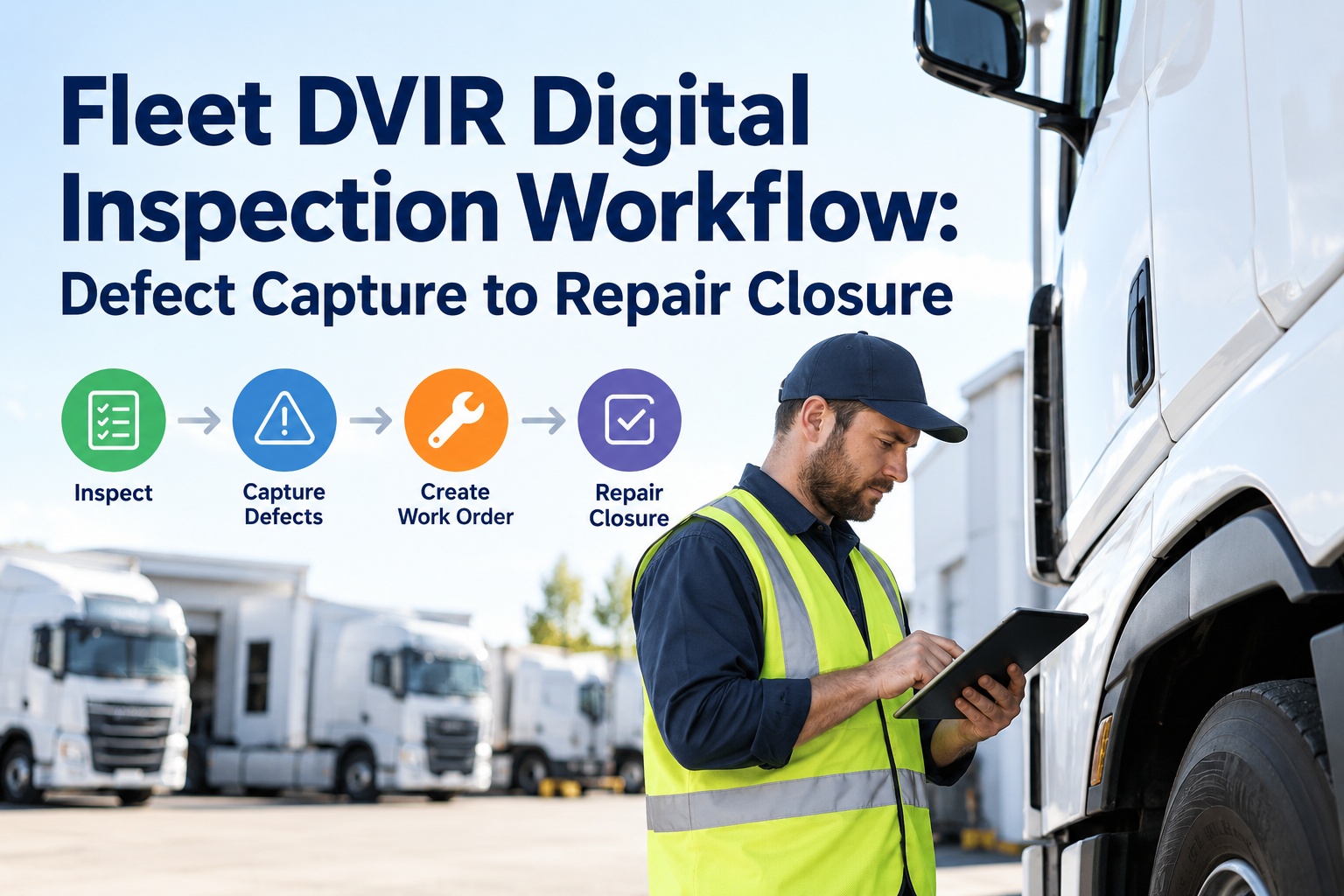
Detection is only half the job. OxMaint AI-powered CMMS carries each finding the rest of the way — from the flagged photo to a ranked work order, a repaired vehicle, and a clean audit trail — so damage does not stall in someone's inbox.
Guided inspections on any phone
Drivers run the fixed-angle walkaround from the OxMaint app, with on-the-spot photo checks that refuse an unusable shot.
Damage opens a ranked work order
A finding above your threshold creates a repair task automatically, with the annotated photos and panel map attached — no re-keying.
One record per vehicle
Every inspection, repair, and photo lands on the vehicle's own asset history, so the full damage-and-fix story sits in one place.
Exception routing, not busywork
Clean handoffs clear themselves; only damage and failed captures reach a reviewer, with timestamped evidence ready to act on.
Preventive maintenance alongside
Damage repairs and scheduled PM share one planner and one parts view, so a vehicle pulled for a dent gets its due service in the same visit.
Accountability by record
Every finding is stamped with time, place, and driver, turning damage disputes into a dated record rather than a standoff.
Expert Review
The damage classes, rollout phases, report fields, and workflow on this page describe how AI vehicle damage detection works as a general approach. They are a planning framework, not a specification for your fleet.
Set thresholds to your own policy
What counts as critical versus a warning, which angles are required, and what auto-opens a work order should reflect your vehicles, your contracts, and your risk tolerance — not a default. Validate the AI's calls against your inspectors during the pilot before you trust them fleet-wide.
AI vision is a first pass, not a verdict
Vision models flag likely damage with a confidence score; lighting, dirt, and angle affect what they catch and miss. Keep a human reviewer on damage findings and disputes, and treat the report as evidence to judge rather than a final ruling.
Safety and roadworthiness stay with qualified staff
A detected crack or tire issue signals a check; whether a vehicle is roadworthy is a call for a qualified technician against the relevant standards. OxMaint records and routes the finding — it does not replace that judgment.
OxMaint is the system of record
OxMaint captures inspections, holds the vehicle history, and raises and tracks work orders. It is not a substitute for your fleet's maintenance program, your inspection obligations, or a professional appraisal where one is required.
Frequently Asked Questions
Does AI vehicle damage detection replace human inspectors?
No — it changes what they spend time on. The AI handles the routine capture and the first-pass call on every vehicle, while clean inspections clear automatically and only damage or failed photos route to a person. Your experienced reviewers stop walking around clean vehicles and focus on the handful that need a judgment, backed by timestamped evidence.
Book a demo and see how OxMaint splits clean handoffs from the ones that need a human.What do we need before we can start detecting damage?
One clean, dated baseline capture per vehicle and a simple damage policy that says which angles are required and what severity opens a repair. Capture runs on an ordinary phone, so there is no hardware to buy, and existing damage recorded in the baseline is never mistaken for new.
Sign up free and run your first baseline capture on a vehicle today.How does a flagged dent actually become a repair?
When a finding is above your severity threshold, it opens a ranked work order automatically, with the annotated photos and panel map already attached and the vehicle identified. The task routes to the right shop, and the repair is logged back onto the same vehicle record when it closes, so nobody re-types a ticket.
Book a demo and watch a flag turn into a tracked work order in OxMaint.How does it tell new damage from old?
Each inspection is compared against the vehicle's baseline and its last clean record, so the report separates damage that arrived this trip from marks already on file. That comparison is what pins a new dent to a specific handoff and a specific driver, and clears everyone who did not cause it — turning a he-said argument into a dated record.
Start free and build a dated condition history for every vehicle.Will it work for drivers who are not tech-savvy?
Yes. The capture is a guided walkaround that tells the driver exactly which shot to take next and rejects a bad photo on the spot, so the result does not depend on skill or patience. A one-off driver or a contractor can complete a correct inspection with nothing to learn beforehand.
Book a demo and see the guided capture flow on your own vehicles.
Stop Eating Damage You Cannot Trace
Put guided AI capture on every handoff, pin new damage to the trip that caused it, and let genuine findings open ranked work orders on their own. OxMaint runs the whole loop from a phone in the driver's hand to a closed repair.