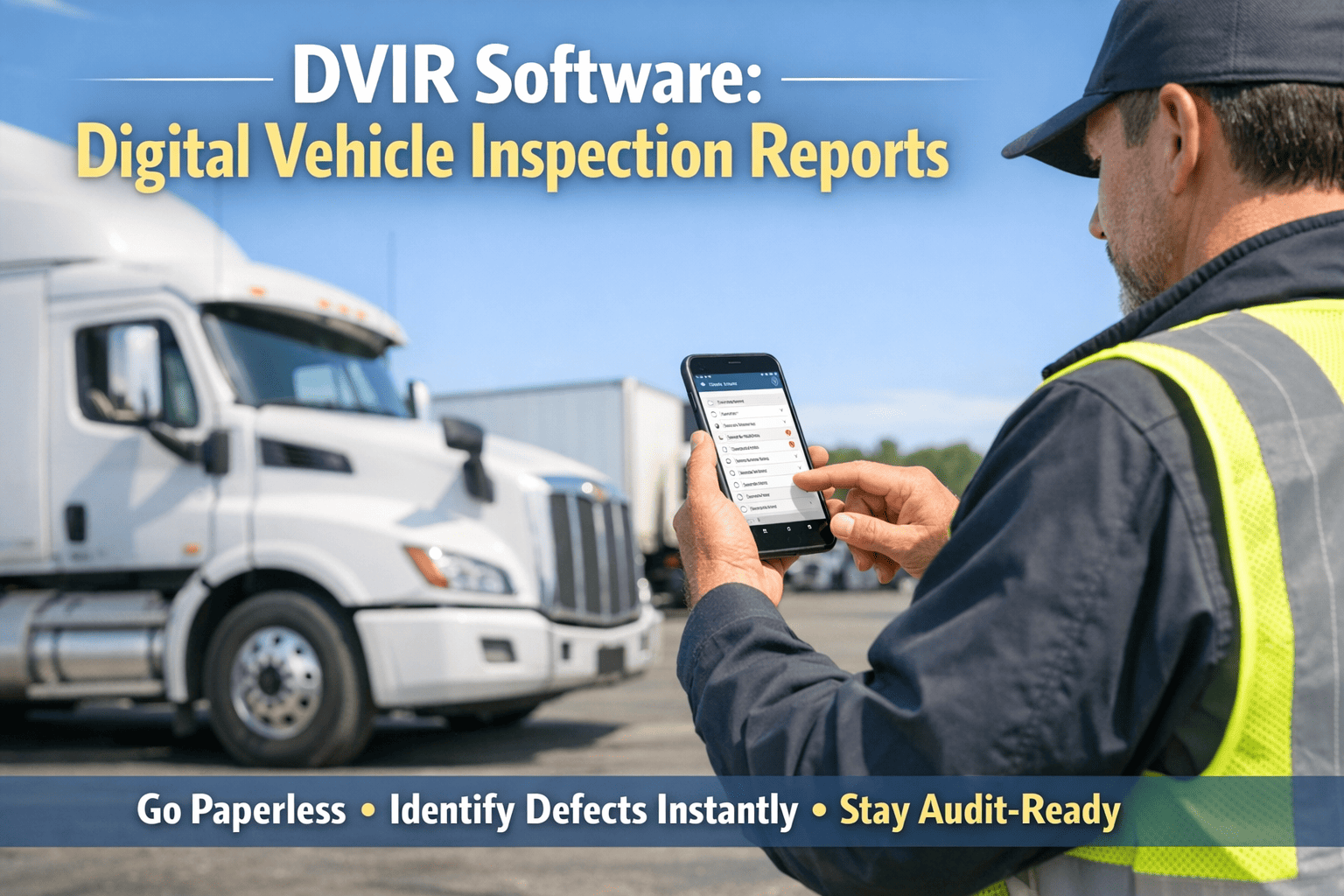
Every commercial fleet manager has experienced the same moment: a driver hands in a paper DVIR at shift end, three boxes ticked, signature scrawled in four seconds. By the time maintenance reviews it the following morning, the vehicle has completed two more runs. If a brake defect or tyre fault existed on that unit — it was already on the road. Paper-based driver vehicle inspection report processes were built for a world without real-time data. That world is gone. Oxmaint's digital DVIR software closes the gap between defect occurrence and maintenance action — from hours to minutes — protecting your fleet, your drivers, and your compliance record. Book a demo or start a free trial today.
87% of Fleet Defects That Cause Roadside OOS Citations Were Present — and Detectable — at the Last Pre-Trip Inspection
Fleets operating paper DVIR processes have a 24% defect under-reporting rate. Digital DVIR software with mandatory field enforcement closes this gap structurally — not through driver training, but through system design.
What Is DVIR Software and Why Does Every Commercial Fleet Need It?
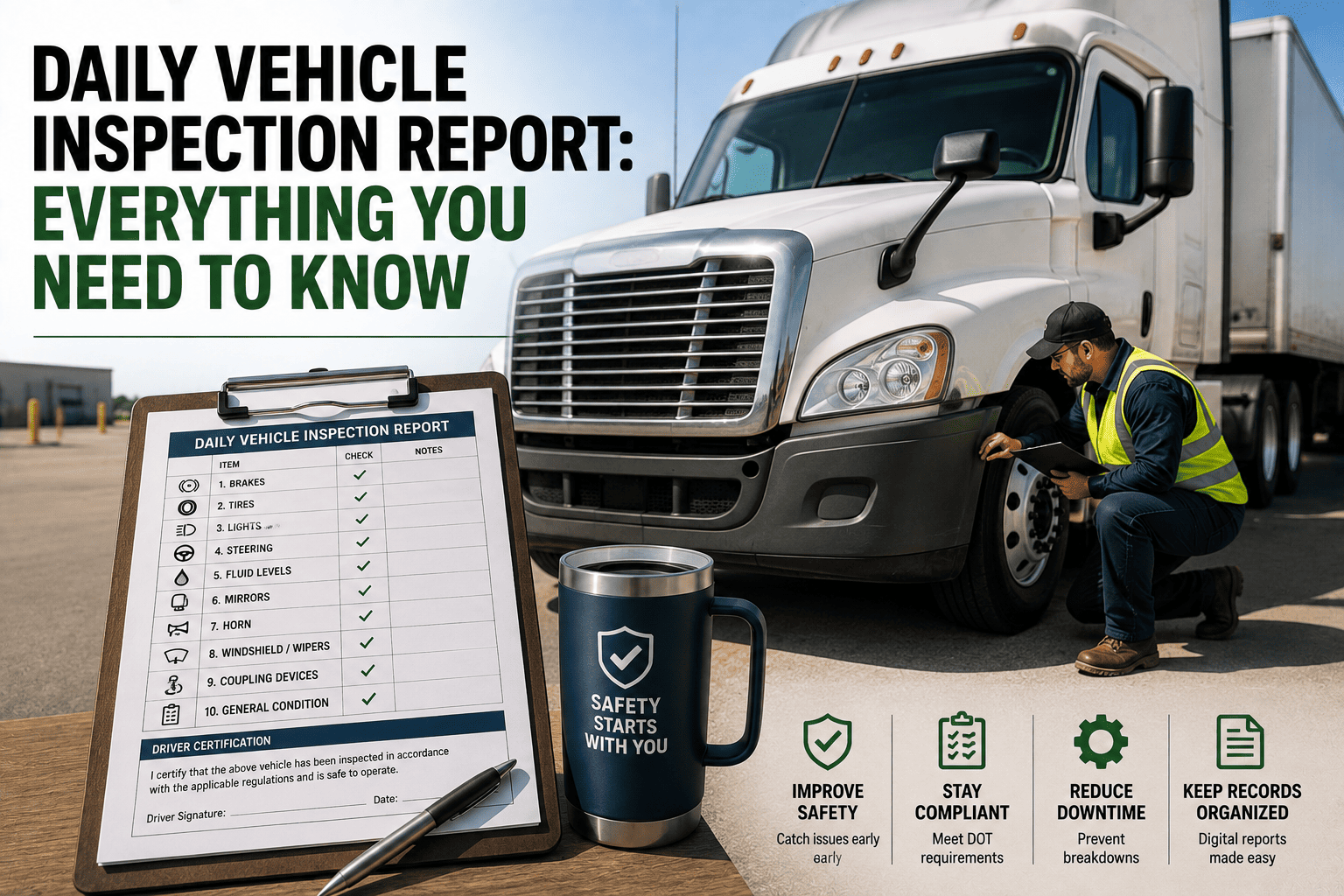
A Driver Vehicle Inspection Report is a federally mandated document under 49 CFR Part 396.11 and 396.13. Every commercial motor vehicle driver operating under FMCSA jurisdiction must complete a pre-trip and post-trip inspection, document findings, and certify the vehicle's condition before and after operation. Digital DVIR software replaces paper forms with a structured mobile workflow — enforcing completion, capturing photo evidence, and creating a permanent, searchable compliance record that paper never could.
The operational difference between paper and digital is not cosmetic. It is structural. Paper DVIRs allow drivers to skip items, describe defects vaguely, and submit records that maintenance cannot act on until hours later. Oxmaint's electronic DVIR platform makes omission impossible, defect descriptions photo-verified, and maintenance notification instantaneous. The compliance obligation is the floor — the operational improvement is the ceiling.
The 5 Operational Failures That Paper DVIRs Guarantee
Paper DVIR failures are not random — they follow predictable patterns rooted in process design, not driver behaviour. Understanding each failure mode is the prerequisite to evaluating any fleet inspection app. Each of these five failures has a direct dollar cost attached to it.
Reporting Delay
Paper defects reach maintenance 4 to 12 hours after occurrence in multi-depot operations. During that window, the vehicle is re-dispatched. Safety-critical defects — brake fade, steering play, tyre separation — do not wait for morning paper reviews.
Forced Item Skipping
Under departure deadlines, cab interior items are systematically skipped on paper forms. Fluid levels, emergency equipment, and seatbelt function — items without obvious visual defects — are routinely omitted even by experienced, conscientious drivers.
No Photo Evidence
A handwritten defect description has no timestamp, no GPS tag, and no visual context. During FMCSA audits, post-incident investigations, or insurance claims, written-only records are routinely challenged. Photo evidence makes the record legally defensible.
Audit Record Gaps
Forms get misfiled, damaged, or left in cabs. A standard DOT audit requesting 90 days of DVIR records for 12 specific units takes paper operations one to three business days to fulfil — and is rarely complete. Gaps create civil penalty exposure regardless of actual vehicle condition.
Generic Templates
A single paper form applied across dry vans, flatbeds, tankers, and reefer units misses the type-specific inspection requirements for each. Flatbed load securement counts, reefer temperature unit checks, and tanker placarding verification all require asset-type specific workflows that paper cannot provide.
How Oxmaint Digital DVIR Works: From Driver Inspection to Maintenance Action
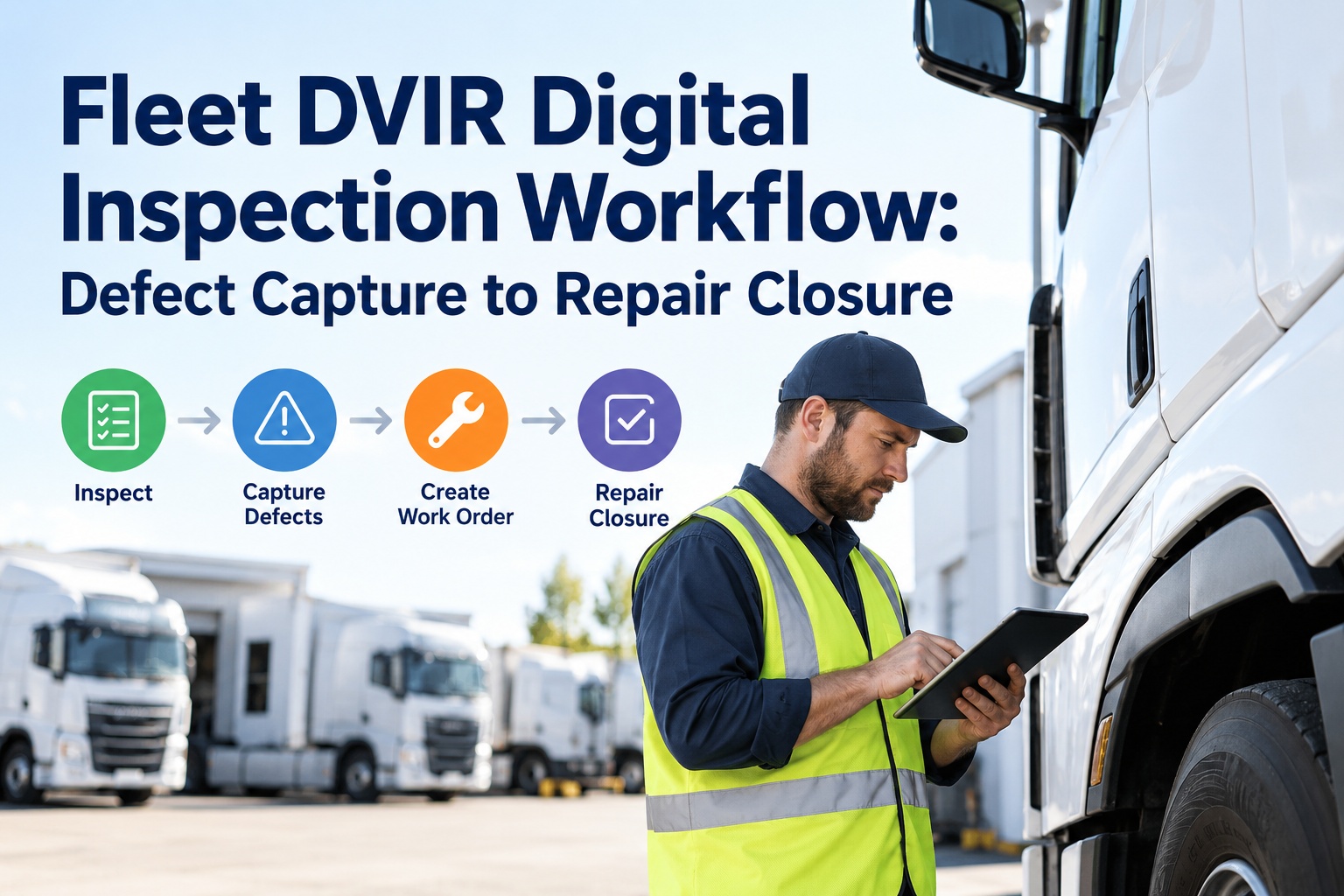
Oxmaint's DOT inspection software does not simply digitise a paper form. It builds an automated pipeline from driver inspection submission to maintenance work order creation — with every step documented, time-stamped, and connected to the asset's service history. Book a demo to see the full workflow with your vehicle types.
Paper DVIR vs Digital DVIR: Every Metric That Matters to Fleet Managers
The structural differences between paper and electronic driver vehicle inspection reports are not marginal. They are categorical. Every comparison below is based on real operational data from commercial fleets — not projected estimates. Start a free trial to measure the difference on your own fleet.
Stop Discovering Defects at the Roadside. Find Them at the Depot.
Oxmaint's fleet inspection app enforces complete pre-trip and post-trip DVIRs, surfaces defects in under three minutes, and keeps your compliance record audit-ready without any manual filing. Fleets using Oxmaint reduce roadside OOS citations by 61% and eliminate the paper trail that creates FMCSA audit exposure.
4 Inspection Zones Every Digital DVIR Must Cover
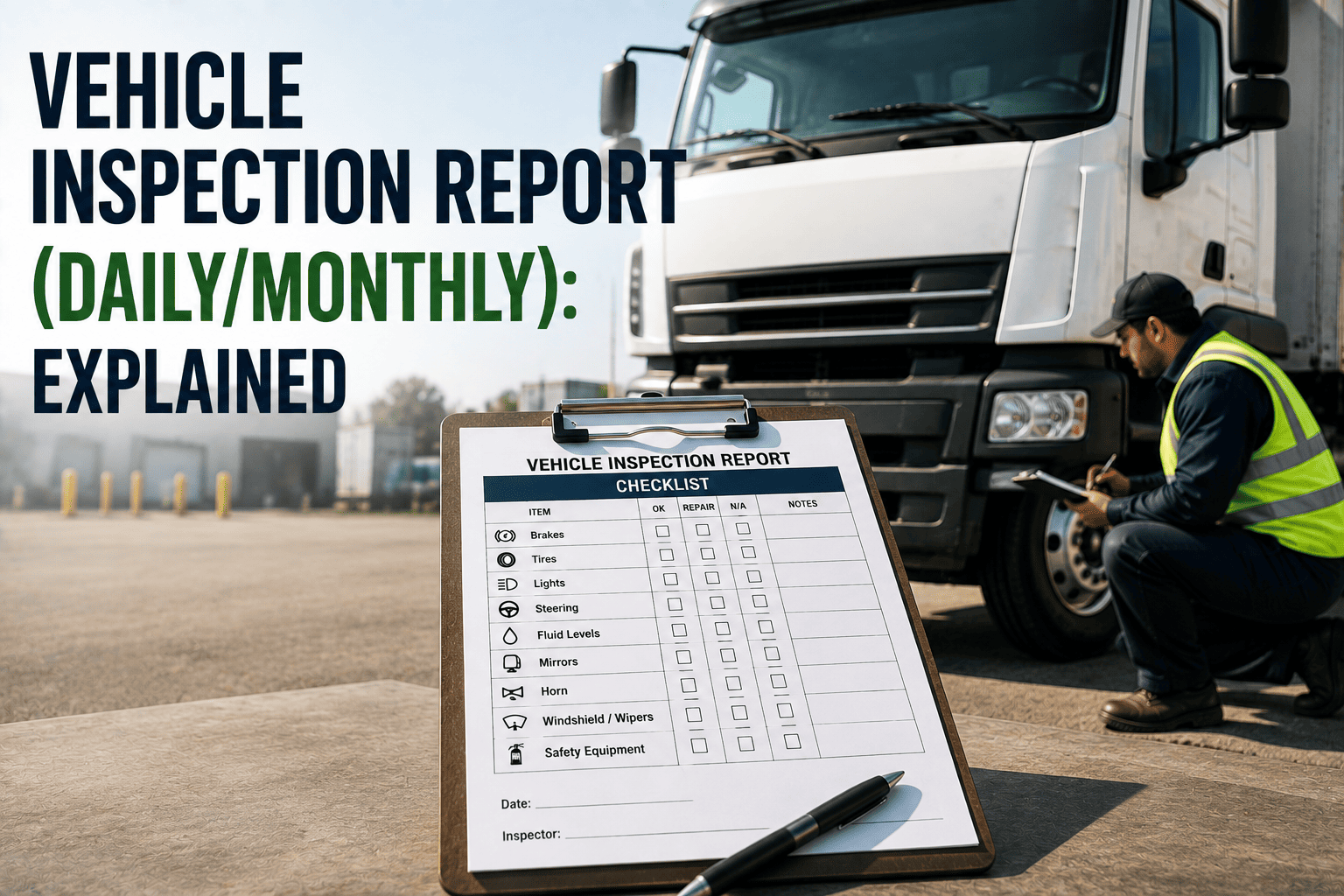
Federal regulations require a systematic vehicle inspection — not a walk-around. Oxmaint's digital DVIR software organises inspections into four structured zones per vehicle type, with mandatory items in each zone that match FMCSA Part 396 requirements and can be extended by your own maintenance engineers for carrier-specific policy.
Pre-Trip Exterior Walk-Around
Tyre pressure and tread depth across all axles. Brake system and air line integrity. Headlamps, tail lights, brake lights, and turn signals. Fifth wheel engagement and kingpin wear. Coupling devices and safety chains. Photo evidence required on every flagged item before submission is permitted.
Cab and Engine Compartment
Engine fluid levels against all marked indicators. Steering wheel free play within DOT tolerance. Emergency equipment present and serviceable. Seatbelt latch function and mirror positioning. Horn, wipers, and defroster operation. These items are most frequently omitted on paper forms under dispatch pressure.
Trailer and Load Securement
Cargo securement devices: count, WLL verification, and condition. Trailer body structural integrity and door locking bar function. Service brake line and breakaway cable connection. ABS indicator light confirmation. Conspicuity tape integrity per 49 CFR 393. Template auto-populates per trailer type — flatbed, reefer, tanker, or dry van.
Post-Trip Condition Report
New defects discovered during operation documented with structured fields. Fuel and fluid consumption anomalies flagged for fleet analysis. Digital driver signature with GPS and timestamp — legally equivalent to handwritten signature for FMCSA records. Mechanic sign-off linked directly to defect record, visible to next driver before their pre-trip begins.
Oxmaint DVIR Features Built for Commercial Fleet Compliance
Oxmaint's DOT inspection software is purpose-built for commercial fleet operators — not adapted from a generic asset management platform. Every feature addresses a specific operational failure in the DVIR compliance workflow.
What Fleet Operators Report After 90 Days on Oxmaint
A regional LTL carrier operating 140 power units reduced their FMCSA roadside out-of-service rate by 61% in the first eight months after switching to Oxmaint's electronic DVIR and asset management system. Their experience reflects the pattern seen consistently across commercial fleets of all sizes. Book a consultation to model the impact for your specific fleet.
Days 1–7: Driver Adoption Without Resistance
Drivers completed the five-minute app orientation and submitted digital DVIRs independently on day one. Completion rates moved from 71% on paper to 98% digital within the first 30 days. The guided checklist format made thorough inspections faster — not slower — than paper. Digital DVIRs average 3.8 minutes versus 12 minutes on paper forms completed under time pressure.
Week 1–2Days 30–60: Safety-Critical Defects Caught at the Depot
In the first quarter, the carrier's maintenance team received 340 defect alerts through Oxmaint — 47 classified as safety-critical. All 47 were addressed before the vehicle entered service. Under paper operations, the same inspection cycle had a 24% skip rate on cab interior items. On paper, none of those 47 defects would have generated a maintenance notification before the vehicle's next dispatch.
Month 1–2Days 60–90: FMCSA Audit Completed in Half a Day
When the DOT auditor requested 90 days of DVIR records for 12 specific units, the safety manager exported the complete set in six minutes using Oxmaint's compliance dashboard. The same retrieval on their previous paper system had taken two full business days and was never fully complete. Zero record gaps. Complete mechanic sign-off chains on every defect. No preparation work required before the auditor arrived.
Month 2–3Month 6+: PM Intervals Recalibrated From Real Defect Data
Six months of DVIR defect data revealed that three specific trailer units were generating brake adjustment defects at twice the fleet average. Oxmaint's analytics triggered an investigation — a supplier batch issue was found. PM intervals on all affected trailers were reduced, preventing a potential cascade of roadside failures. This outcome is not possible with paper DVIRs: the data does not exist in a structured enough form to detect cross-fleet patterns.
Month 6+Frequently Asked Questions
Is Oxmaint's digital DVIR legally compliant with FMCSA Part 396.11?
Can drivers complete DVIRs without a cell signal?
How quickly can a fleet of 50+ vehicles be deployed?
Does Oxmaint integrate with TMS or ELD systems?
What happens when a driver reports a safety-critical defect?
Can inspection templates be customised per vehicle type?
Make Every Vehicle Inspection Count. Go Paperless in Days, Not Months.
Oxmaint's DVIR software gives your fleet real-time defect visibility, FMCSA-compliant record keeping, and the mobile tools your drivers will actually complete. Setup takes 48 hours. Payback typically occurs within 60 days. No heavy implementation fees, no long-term lock-in, no paper.