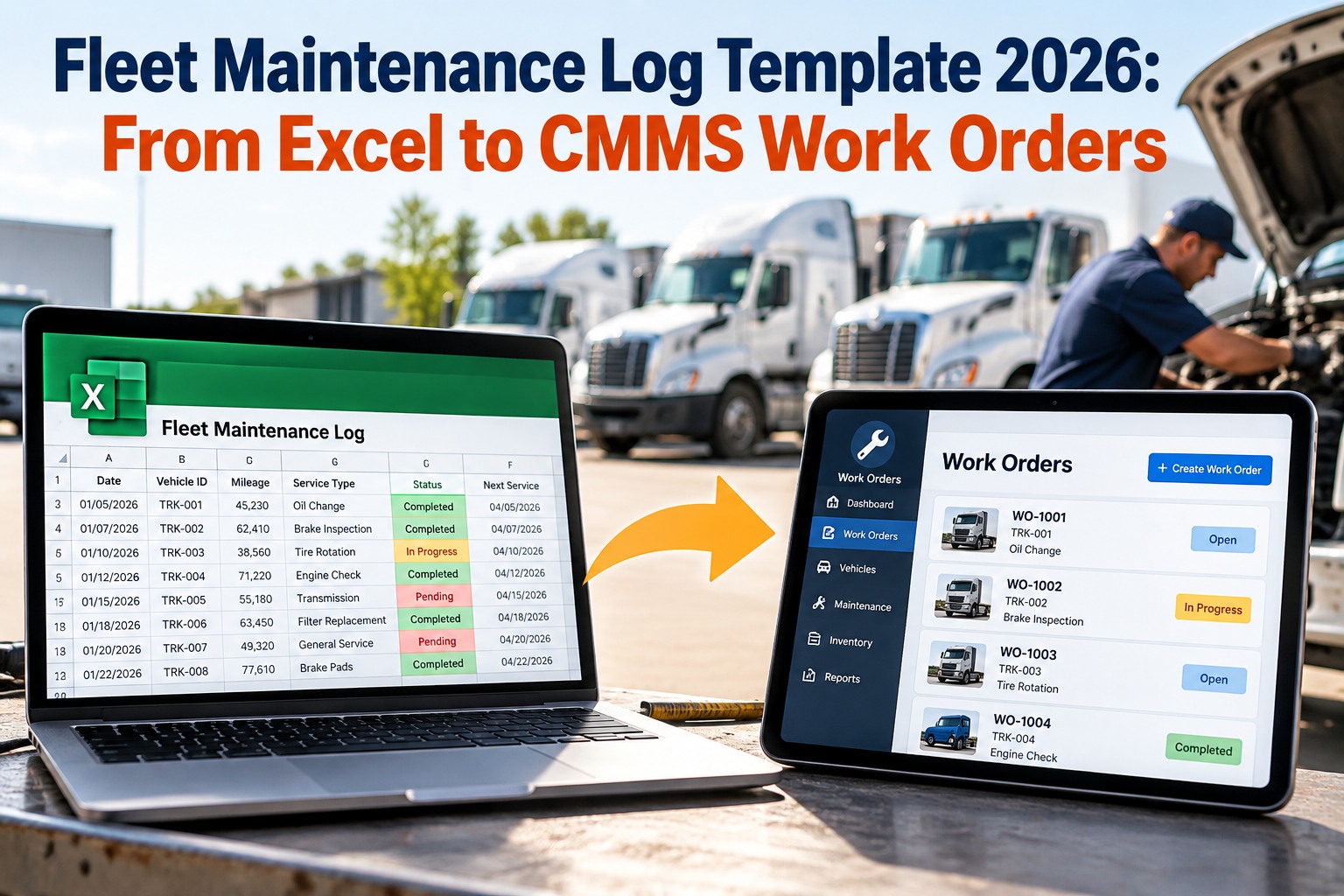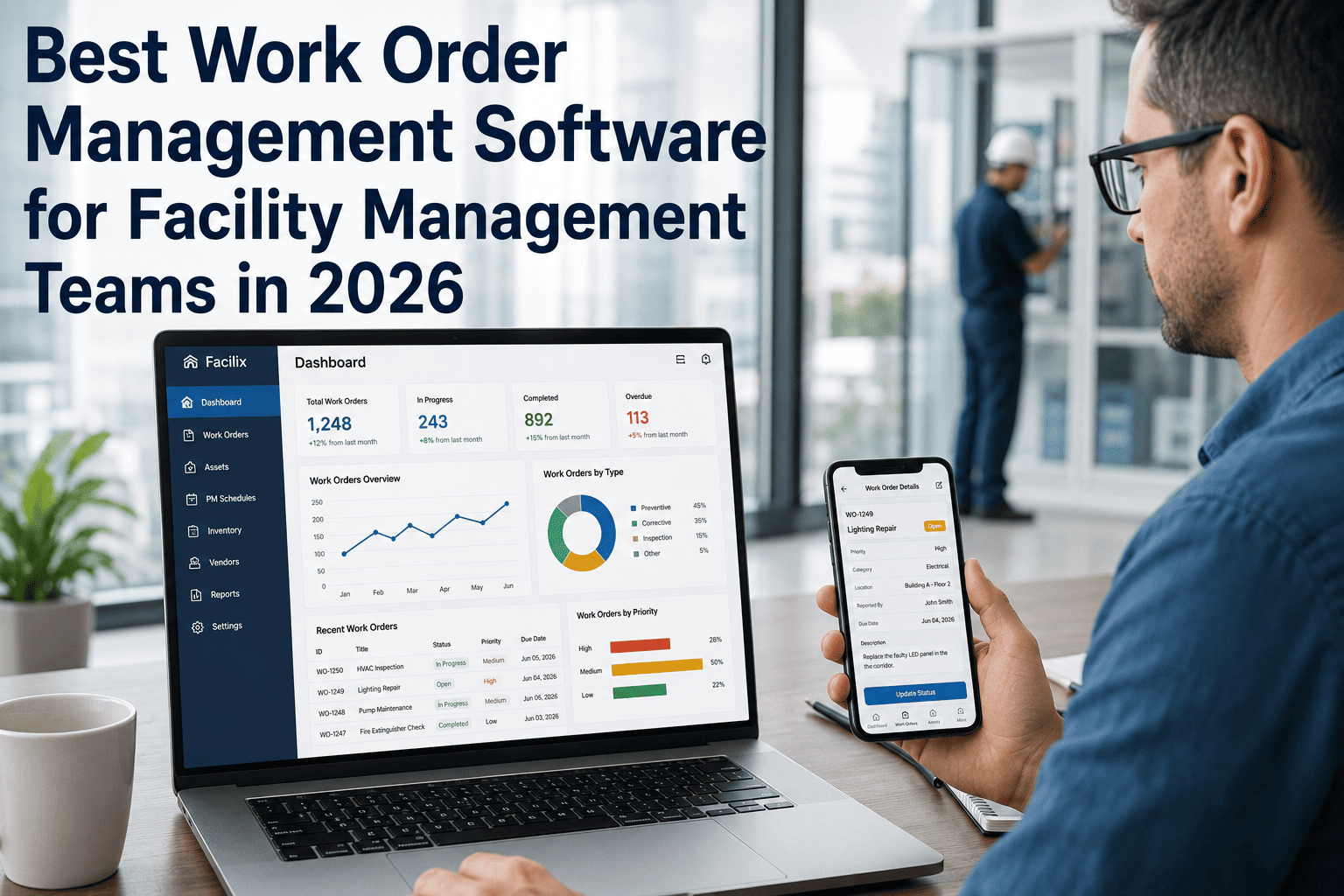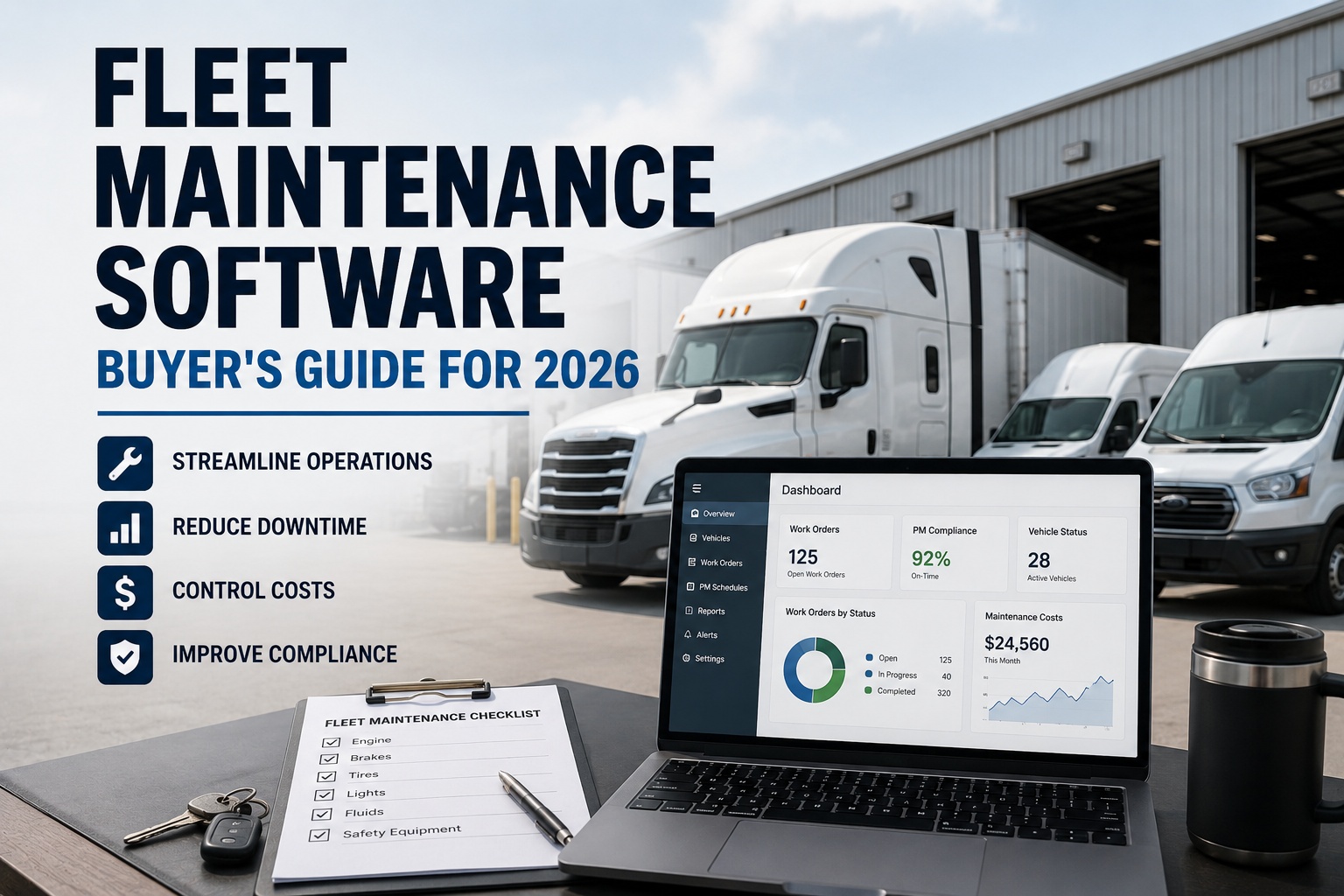
Fleet maintenance software is the system of record that keeps every vehicle, trailer, and powered asset in your fleet road-ready, compliant, and cost-controlled — and choosing the right platform in 2026 is a decision that will shape your maintenance operations for the next five to ten years. The best fleet maintenance software consolidates work orders, preventive maintenance scheduling, parts inventory, and compliance reporting into a single, mobile-accessible platform so your technicians spend less time on paperwork and more time turning wrenches. This buyer's guide walks maintenance and reliability leaders through the features that actually move the needle, the integrations that protect your investment, and the pricing models worth comparing — whether you run a 30-vehicle regional fleet or a 3,000-unit enterprise operation. OxMaint's AI-powered CMMS and EAM platform is built to meet that bar, and you can Start Free Trial to see it on your own assets today.
Choosing fleet maintenance software is a 7-figure decision. Are you evaluating it like one?
A 200-vehicle fleet typically spends $180K–$420K annually on maintenance labor, parts, and unplanned downtime. The platform you select this year will govern every work order, PM trigger, and DOT audit for the next decade. Use this framework to choose with confidence.
What fleet maintenance software actually fixes — and what it costs you to wait
Reactive maintenance costs 3–5× more than a planned, preventive approach. Here is what that looks like in real dollars for a typical mid-size fleet.
A regional logistics operator running 180 mixed-units was spending $42K per year on emergency road service and paper-driven compliance gaps. After migrating to a modern fleet maintenance platform with automated PM triggers and mobile work orders, they cut unplanned downtime 34% and recovered $61K in the first 12 months — a payback period of under five months on software that will run their operation for the next decade.
Fleet maintenance software features that separate platforms from toys
When you build your fleet maintenance software comparison shortlist, these are the non-negotiable capabilities that determine whether the platform will scale with you.
Automated PM Scheduling
Time-, mileage-, and engine-hour-based triggers that auto-generate work orders before service intervals lapse. If the platform cannot layer multiple triggers on one asset, it is not enterprise-grade.
Mobile Work Orders
Technicians need to open, update, and close work orders from the bay or the roadside — with photo capture, parts consumption, and digital signatures. Offline mode is mandatory for dead-zone yards.
DVIR & Compliance
Electronic Driver Vehicle Inspection Reports tied directly to work orders, plus FMCSA / DOT audit logs. A defect flagged at 6 AM should auto-create a corrective work order by 6:05.
Predictive Analytics
AI-driven failure prediction that learns from work-order history, telematics feeds, and parts-wear patterns to flag assets at risk before they fail — the difference between preventive and predictive maintenance.
Parts & Inventory Tracking
Real-time stock levels, multi-warehouse transfers, and automatic reorder points. Parts should decrement from inventory the moment a technician logs them on a work order — no double entry.
Telematics & API Integration
Open REST APIs and pre-built connectors for major telematics providers (Geotab, Samsara, KeepTruckin) so odometer and engine-hour data flows into PM triggers without manual imports.
Why integration architecture decides whether your fleet software survives year three
The #1 reason fleets rip out a CMMS after 18 months is not missing features — it is that the platform could not connect to telematics, fuel cards, ERP, or payroll without custom middleware.
| Integration Layer | What to Verify Before Signing | Red Flag |
|---|---|---|
| Telematics / GPS | Native connectors for your provider; real-time odometer and engine-hour sync into PM triggers | "CSV export available" — means manual uploads |
| Parts & Procurement | Two-way sync with ERP (SAP, Oracle, Dynamics); PO creation from work orders | One-way import only; no auto-reorder |
| Fuel Cards | Automated fuel-transaction ingestion tied to asset ID for cost-per-mile analytics | Requires third-party integration platform at extra cost |
| ERP / Accounting | Standard REST API with webhooks; GL coding on every work order line item | Closed API; data lock-in |
| HR / Payroll | Technician labor-hour export for payroll allocation by asset or job code | No labor-cost tracking at the work-order level |
Fleet maintenance software pricing: what you will actually pay in 2026
Fleet maintenance platforms typically price per asset or per user. Understanding the total cost of ownership over a 5-year horizon prevents sticker shock when you scale.
| Pricing Model | How It Works | Best For | Watch Out For |
|---|---|---|---|
| Per Asset / Month | Flat fee per vehicle or powered asset; unlimited users | Fleets with high technician-to-vehicle ratios | Tier minimums that force overpayment at 50 units |
| Per User / Month | Fee per named user; assets often unlimited | Small teams managing many assets | Cost spikes when you onboard drivers to DVIR |
| Tiered Bundles | Feature tiers (Basic / Pro / Enterprise) with asset brackets | Growing fleets that need predictability | Predictive analytics locked behind top tier only |
| Consumption / Hybrid | Base platform fee + per-work-order or per-API-call charges | Seasonal or variable-volume operations | Unpredictable monthly bills; hard to budget |
How OxMaint maps to every item on your fleet software checklist
OxMaint is an AI-powered CMMS and EAM platform built for maintenance and reliability teams that cannot afford unplanned downtime. Here is how it directly addresses the gaps in this buyer's guide.
AI-driven PM automation
OxMaint ingests telematics odometer and engine-hour feeds, then auto-generates preventive work orders at the exact interval — eliminating missed PMs that cause 40% of unplanned breakdowns. Outcome: cut unplanned downtime 30–50%.
Offline-first mobile work orders
Technicians open, photograph, and close work orders from any bay or roadside location — even with no signal. Parts decrement automatically and digital signatures capture FMCSA compliance. Outcome: eliminate paper work orders and 4+ hours of daily admin per tech.
Predictive failure analytics
OxMaint's AI engine learns from historical work orders, parts-wear data, and real-time sensor feeds to flag assets at risk of failure 7–21 days before they break. Outcome: shift from reactive to predictive maintenance without hiring a data scientist.
Open API & native integrations
REST APIs and pre-built connectors for Geotab, Samsara, KeepTruckin, SAP, and Oracle mean your telematics, ERP, and fuel-card data flows into OxMaint on day one. Outcome: go live in weeks, not quarters, with zero custom middleware.
See OxMaint on your fleet — book a 30-minute demo
Walk through automated PM scheduling, mobile work orders, and predictive analytics on your own asset data. We will map your fleet to the platform live.
Fleet maintenance software: answers buyers search for most
What is the best fleet maintenance software for small fleets in 2026?
The best fleet maintenance software for small fleets (under 50 assets) is a cloud-based CMMS that offers per-asset pricing with no minimum tier, mobile work orders, and automated PM scheduling — without enterprise implementation overhead. OxMaint supports small operators with a self-service Start Free Trial that has you creating work orders in under 15 minutes, then scales to thousands of assets without re-platforming.
How much does fleet maintenance software cost per vehicle?
Fleet maintenance software pricing in 2026 ranges from $8 to $35 per asset per month, depending on features, user count, and integration depth. Most platforms also charge a one-time implementation fee of $2K–$15K. A 150-vehicle fleet should budget $18K–$63K annually for software, which typically pays for itself in 4–8 months through reduced unplanned downtime and parts optimization.
Can fleet maintenance software integrate with telematics providers?
Yes — modern fleet maintenance platforms like OxMaint offer native connectors to major telematics providers (Geotab, Samsara, KeepTruckin, Verizon Connect) that pipe odometer, engine-hour, and fault-code data directly into PM triggers and work orders. Before buying, verify that the integration is real-time and bidirectional, not a scheduled CSV import, and that it does not require a third-party middleware subscription.
How long does it take to implement a fleet maintenance system?
A cloud-based fleet maintenance system typically takes 2–6 weeks to implement for a mid-size fleet (50–500 assets), including data migration, user training, and telematics integration. OxMaint accelerates this with guided asset import templates and pre-built integrations — most fleets are fully live within 14 days. Legacy on-premise systems can take 3–6 months and are a major reason fleets switch.
What is the difference between fleet management software and fleet maintenance software?
Fleet management software focuses on vehicle tracking, routing, fuel consumption, and driver behavior — the operational side of moving vehicles. Fleet maintenance software (a CMMS for fleets) focuses on keeping those vehicles road-ready: work orders, preventive and predictive maintenance, parts inventory, and compliance reporting. Many fleets use both in tandem, with telematics data from the management platform feeding PM triggers in the maintenance platform.
Stop managing fleet maintenance in spreadsheets.
Deploy OxMaint's AI-powered CMMS and cut unplanned downtime 30–50% in your first year. Book a demo or start your free trial today.
Free 14-day trial · No credit card required