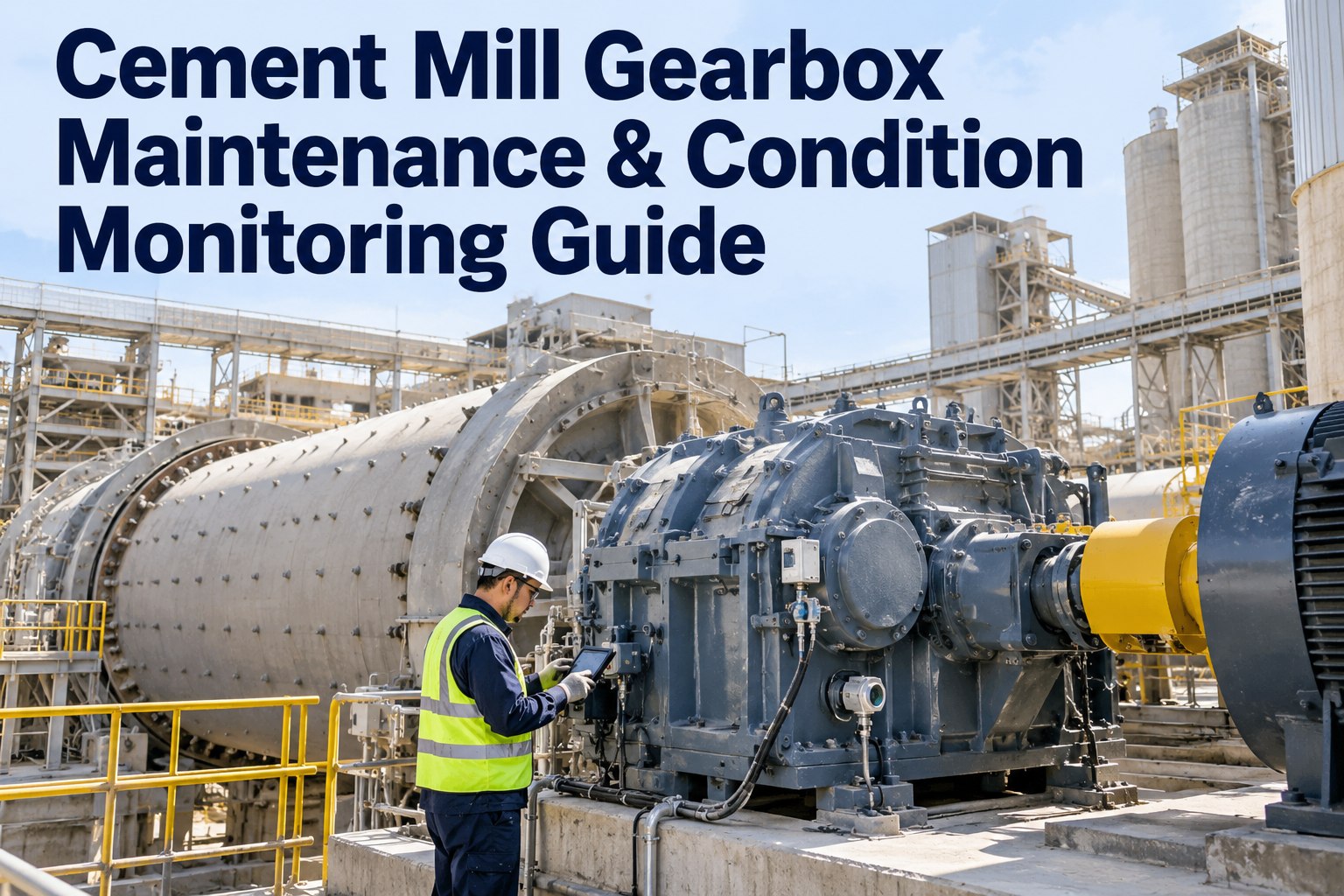
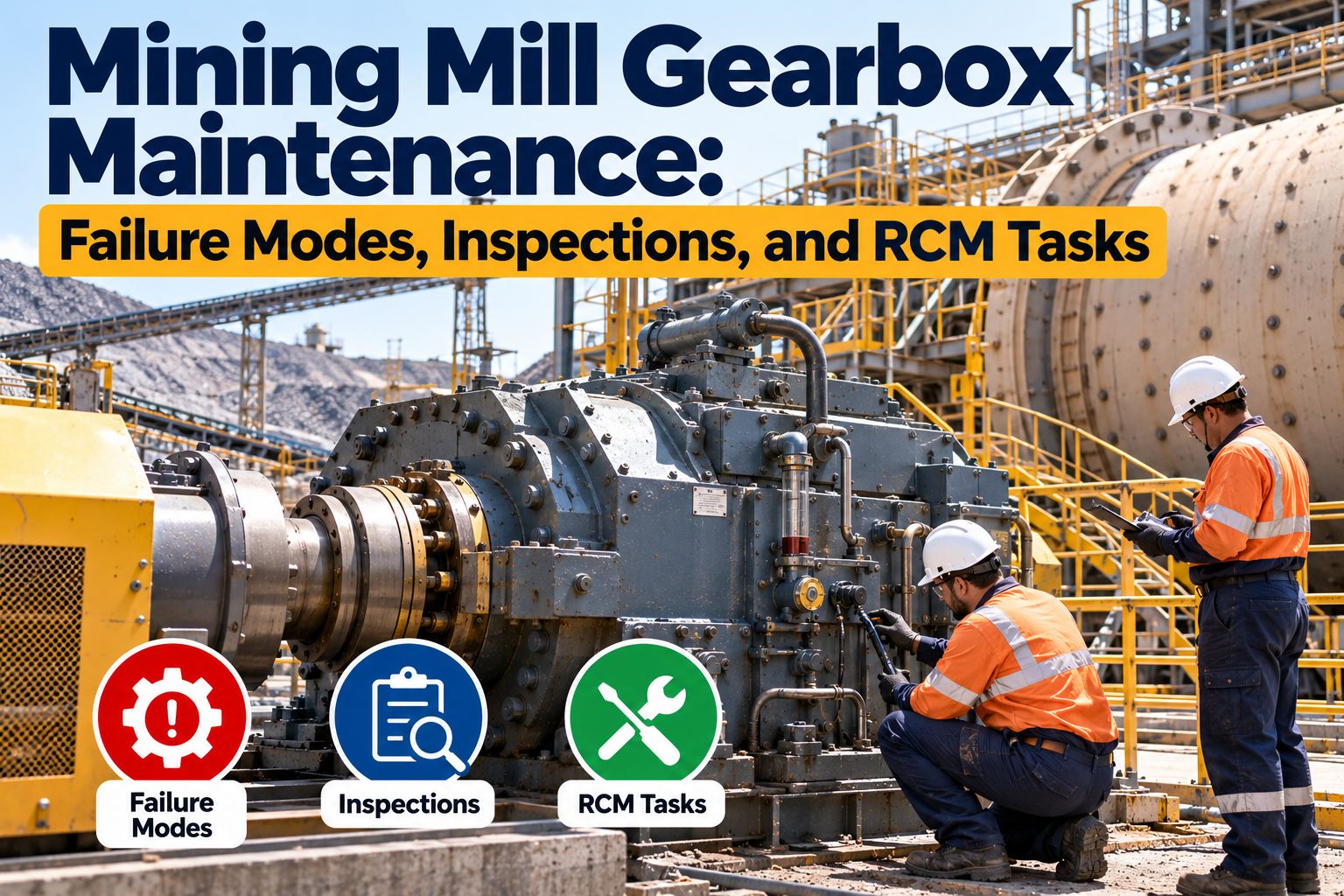
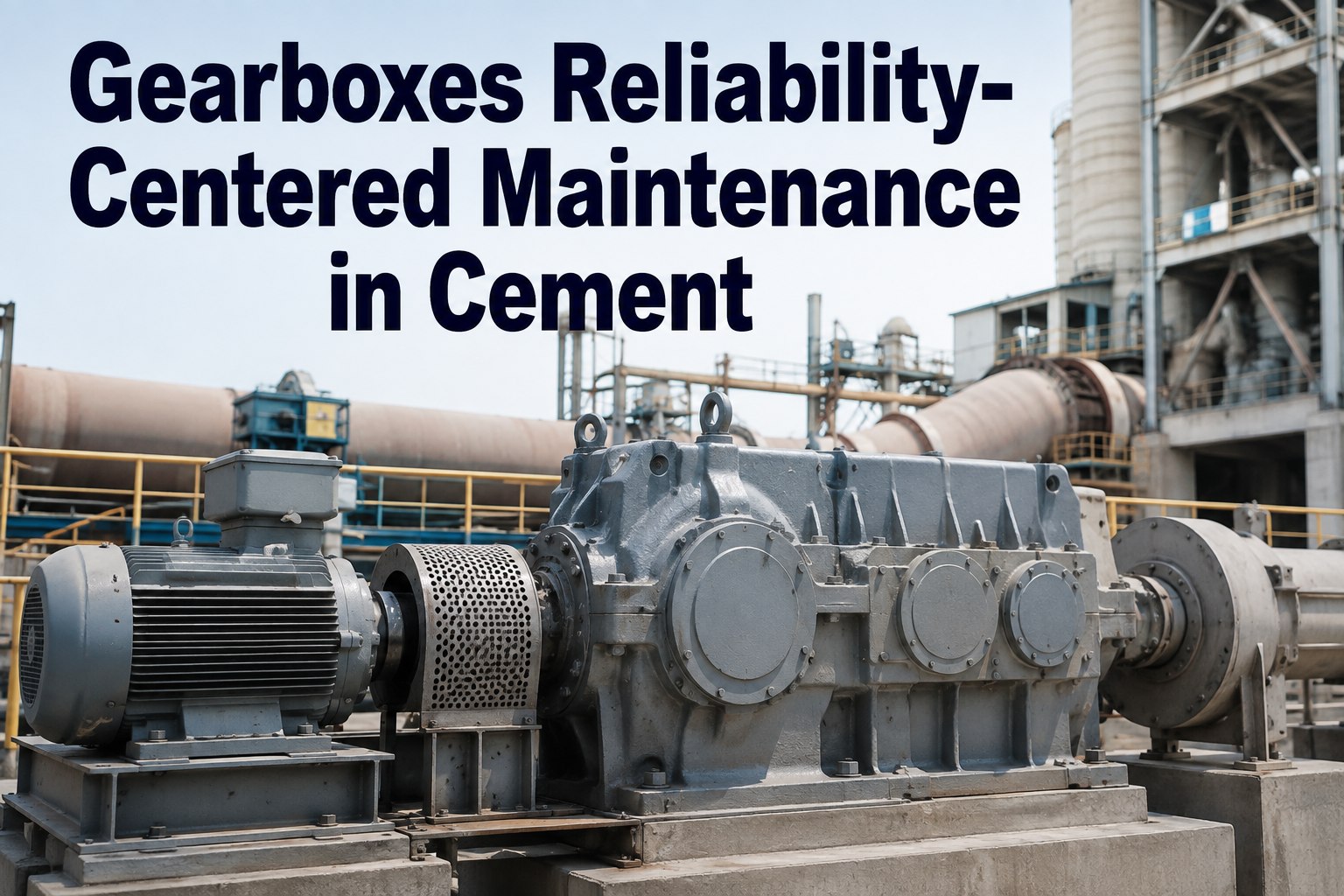
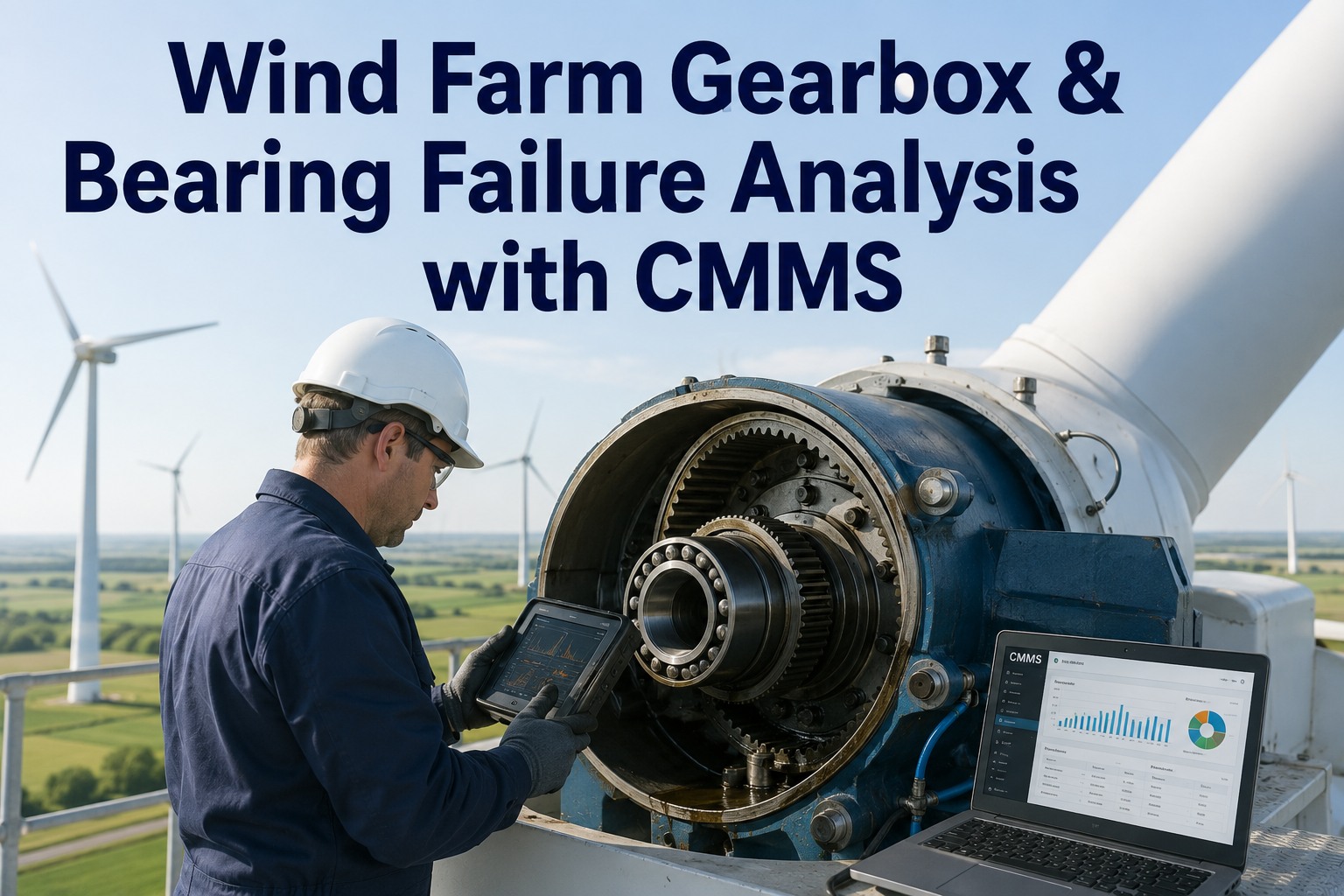
Cement Mill Gearbox Maintenance and Condition Monitoring Guide
In a cement mill, the gearbox works in one of the harshest environments in heavy industry — continuous high torque, shock loads from grinding, and an atmosphere thick with abrasive clinker dust that finds its way into the oil. When it fails, the whole grinding circuit stops, and major gear sets can carry lead times of weeks to months. The good news: these failures are among the most predictable in the plant. This guide covers the real failure modes, the ISO-based monitoring thresholds that catch them early, and how OXMAINT AI turns those signals into scheduled work orders. See it on your mill fleet with a live demo.
Gearbox trouble in a dusty mill rarely stays quiet — but the warning signs get scattered across vibration logs, oil reports and paper rounds that nobody reads together. OXMAINT AI is the AI-powered CMMS that connects inspections, condition signals and PM schedules in one platform, so an early sign becomes a planned repair instead of a stopped mill.
Why the Cement Mill Gearbox Is So Hard to Keep Alive
The gearbox itself is robust — what kills it is the environment. Fine clinker dust is abrasive, and once it's in the oil it grinds away bearing and gear surfaces faster than any design margin can absorb. Three conditions make cement mill drives uniquely demanding. Start free and map your mill's gearbox risk in OXMAINT AI.
Abrasive Dust
Clinker dust in the oil causes "three-body abrasion." If cleanliness drops from ISO 4406 16/14/11 to 20/18/15, bearing and gear life can be cut by half.
Shock & High Torque
Grinding delivers uneven, high-torque loads. In VRMs, a torque spike can stress the gearbox to a halt in seconds; in ball mills, girth-gear backlash cascades into the pinion within days.
No Easy Bypass
A failed mill drive stops the grinding circuit, and replacement gear sets for large units carry lead times of weeks to months — so an unplanned failure is measured in production, not just parts.
The 5 Failure Modes to Watch — and How They Announce Themselves
Each failure mode speaks through a different channel. A tooth fracture screams in vibration but is nearly silent in oil until it's already cracked; slow additive depletion shows in oil weeks before any vibration shifts. Knowing which signal leads for which mode is the whole game. Book a demo to see failure-mode tracking in OXMAINT AI.
Tooth Wear & Pitting
Surface fatigue on gear flanks from thin lubricant film and abrasive contamination. Progresses to micropitting, then deep pitting and tooth loss.
Leads in: Oil + Vibration
Pinion-to-Gear Misalignment
Uneven load distribution across the girth gear / pinion mesh. Drives backlash, edge loading and accelerated wear — one of the top three stoppage causes in ball mills.
Leads in: Vibration
Lubrication Film Breakdown
Loss of oil film from contamination, wrong viscosity or additive depletion. The proximal cause behind most bearing and gear surface failures.
Leads in: Oil + Temperature
Bearing Race Fatigue
Spalling and pitting on bearing raceways, often from marginal lubrication or ingested particles. Shows as rising temperature before oil or vibration register clearly.
Leads in: Temperature → Vibration
Root Cracking & Tooth Fracture
Bending fatigue at the tooth root, ending in a broken tooth. Violent in vibration data — but often nearly invisible in oil analysis until the fracture has occurred.
Leads in: Vibration
The Two-Sensor Rule
Oil says what. Vibration says where.
Oil analysis is the leading indicator — it catches wear debris and contamination before damage is visible. Vibration is the location indicator — it tells you exactly which gear or bearing is failing. Neither is enough alone; correlated, they catch silent internal pitting that a single channel filters out as background noise. OXMAINT AI keeps both on one turbine record so they read as one story.
The Data Is Already Being Collected. It's Just Scattered.
Most plants log vibration from accelerometers, temperatures from PT100 sensors, and oil results from the lab — but in three disconnected systems. No one sees the combined risk until a failure happens. OXMAINT AI pulls all three into one gearbox record and raises a work order the moment a threshold is crossed.
Vibration Thresholds That Aren't Guesswork: ISO 10816-3
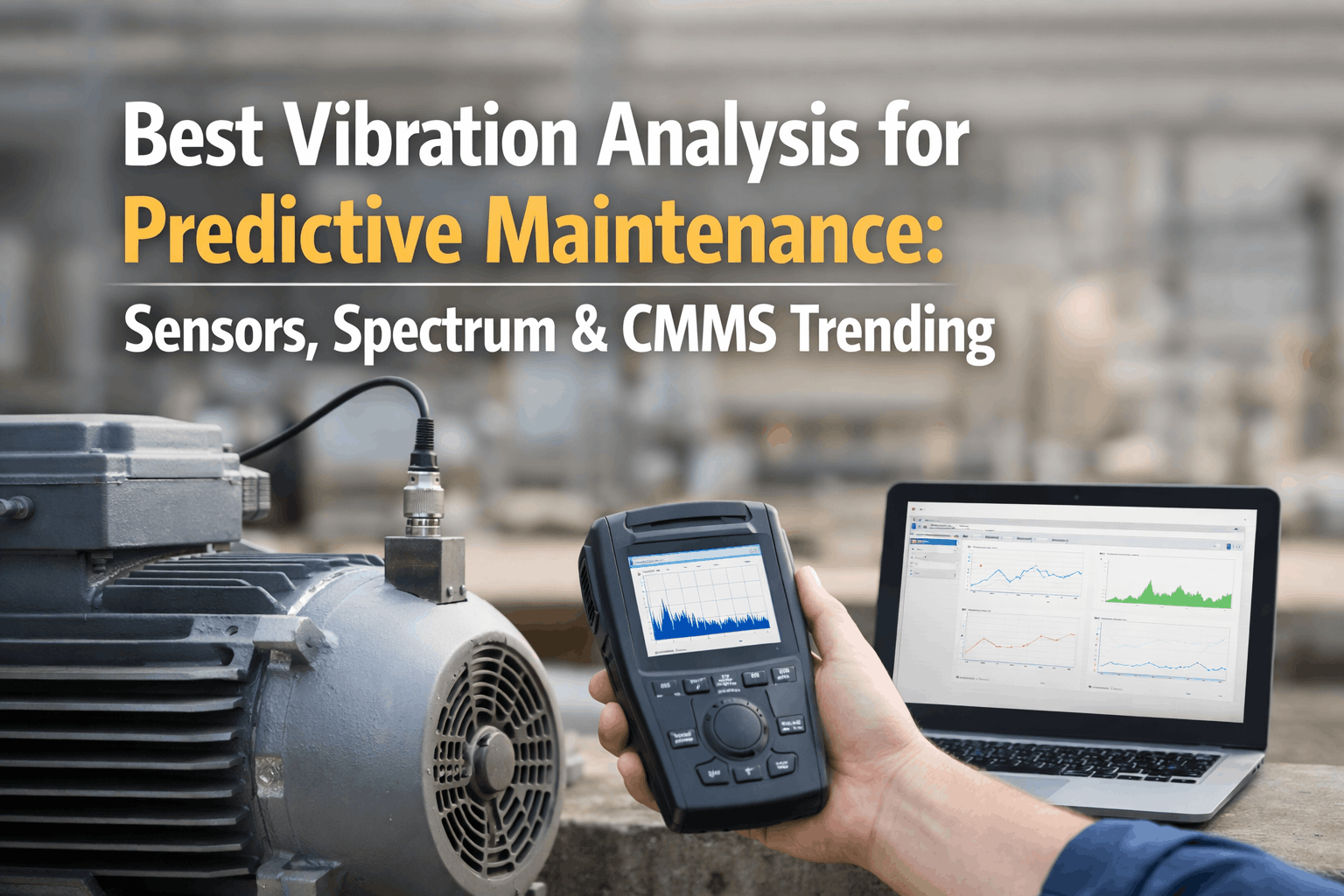
Vibration severity isn't subjective. ISO 10816-3 maps RMS velocity in mm/s to four zones that translate directly into a maintenance response — from a fresh-machine baseline to "stop before it self-destructs." OXMAINT AI holds these thresholds per asset and fires the matching work order automatically when a reading crosses a band. Book a demo to see these zones applied mill by mill.
Zone A
New / Acceptance
Baseline after a major overhaul. The reference for all future deviation thresholds.
Action: record as baseline
Zone B
Unrestricted Running
Acceptable for long-term operation. The trend-watch zone where drift starts to matter.
Action: advisory alarm at +20% drift
Zone C · ~7.1 mm/s
Limited Duration
Run only until corrective work can be scheduled. The early-warning threshold for mill drives.
Action: auto-generate inspection WO
Zone D
Damage Likely
Vibration severe enough to damage bearings, gears or the mill body. Escalate immediately.
Action: high-priority WO, plan stop
Thresholds vary by machine group, mounting and power rating — treat ~7.1 mm/s as an indicative Zone C boundary for typical mill drives, not a universal setpoint.
Oil: The Leading Indicator You Can't Afford to Skip
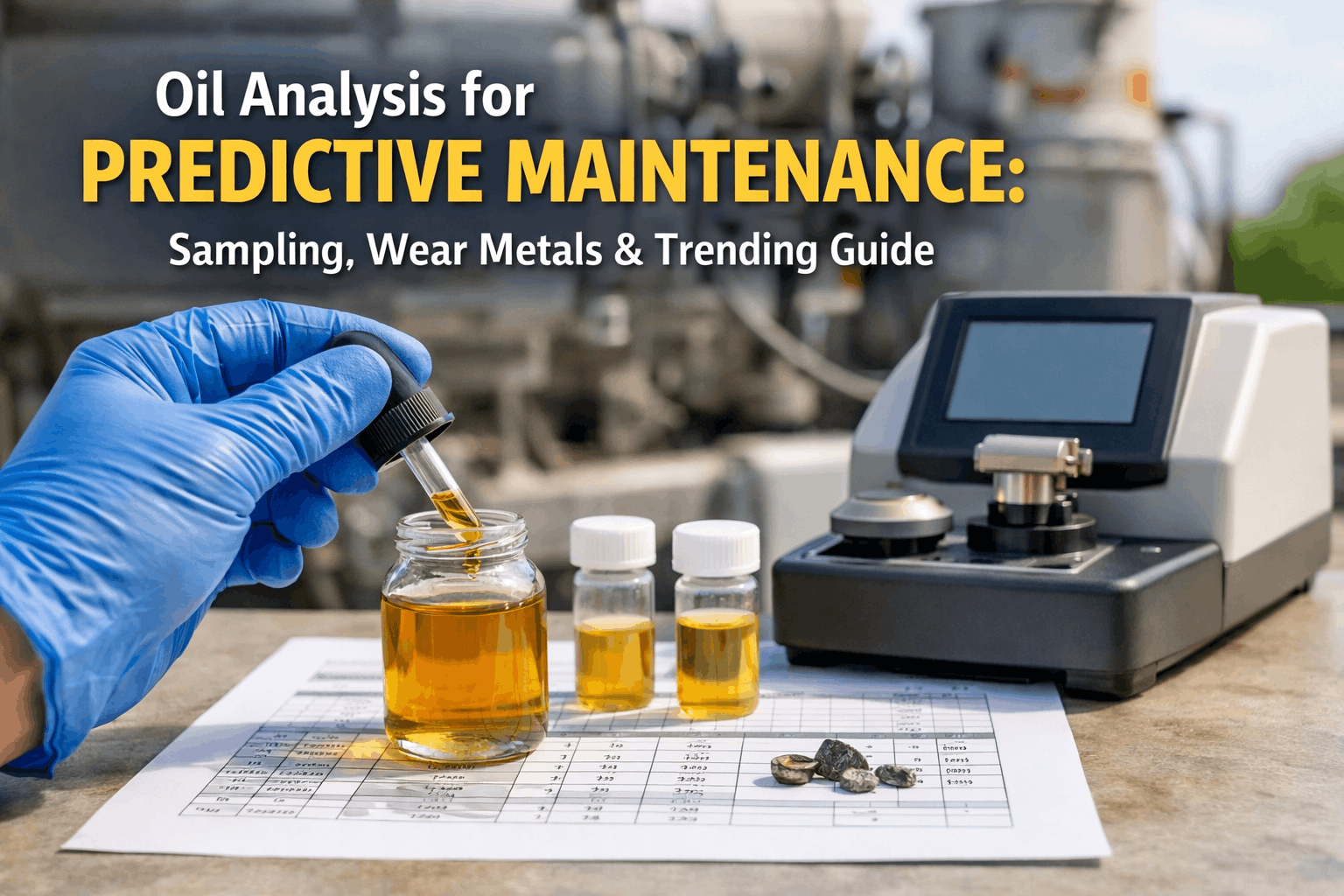
In a dust-heavy mill, oil condition is the earliest and cheapest failure signal you have — and contamination is the dominant failure driver, not gear or bearing wear itself. These five parameters, trended sample over sample, catch trouble months out. OXMAINT AI ingests lab results and alarms on each. Sign up free and schedule oil sampling in OXMAINT AI.
ISO 4406 Cleanliness
Particle count. A drop from 16/14/11 toward 20/18/15 can halve gear and bearing life — the single most important number in a dusty plant.
Wear Metals
Iron and other wear-metal ppm reveal active internal wear long before it's audible. A climbing count between samples means accelerating damage.
Viscosity
Thinning or thickening points to contamination or thermal degradation — a film problem before it becomes a wear problem.
Water & TAN
Moisture and rising acid number signal additive depletion and corrosive conditions that quietly attack tooth surfaces.
Sampling Discipline
Roughly 90-day oil sampling plus visual stopped inspections keep the diagnostic trend unbroken — under high cement-mill load, oil can degrade well before its rated life.
Building It Into an RCM Program
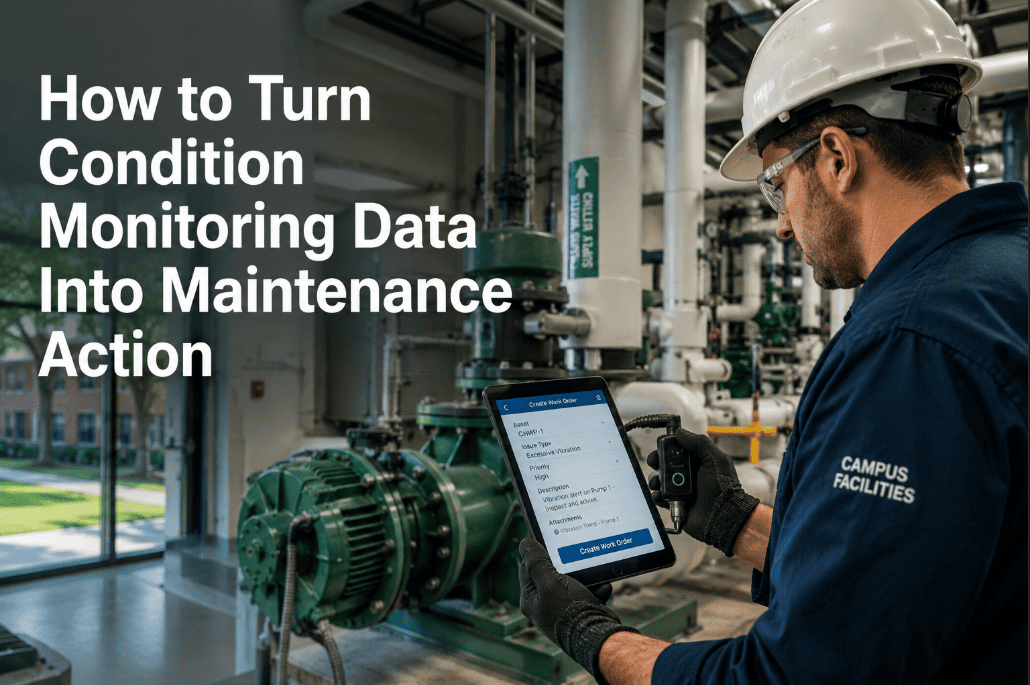
Reliability-centered maintenance focuses your effort on the failure modes that actually drive downtime instead of servicing everything on a calendar. For a mill gearbox that means a simple loop: identify the modes, assign the right monitoring stream, set thresholds, and let breaches generate work — then feed the outcome back to sharpen the next cycle. OXMAINT AI runs that full loop. Book a demo to see the RCM cycle in OXMAINT AI.
1
Register the asset. Each planetary stage, pinion shaft and output bearing as its own component under the parent gearbox — with condition score and history.
2
Map modes to signals. Assign each failure mode its leading channel — oil, vibration or temperature — so nothing is monitored blind.
3
Set thresholds. ISO 10816 velocity zones and ISO 4406 / wear-metal limits per component, tuned to the machine, not a generic default.
4
Auto-generate work. A breach fires a corrective work order pre-populated with the abnormal value, deviation and asset history.
5
Close the loop. Completed work feeds back so intervals and thresholds refresh from real operating data, not the original binder.
Where OXMAINT AI Fits: From Signal to Work Order
Monitoring only pays off if the signal becomes an action. OXMAINT AI turns every gearbox data stream into a scheduled, parts-ready work order — the CMMS layer that makes condition-based decisions happen at plant speed. Here's what it puts in your team's hands. Sign up free and connect your first mill's data feeds.
Component-Level Asset Registry
Planetary stages, pinion shafts and output bearings each carry their own condition score, PM schedule and work-order history — QR-tagged and mobile-accessible in the field.
Threshold Work Orders
When an oil or vibration reading breaches its limit, OXMAINT AI creates a corrective work order automatically — with the abnormal value, deviation magnitude and suggested action already filled in.
Correlated Condition View
Vibration, oil and temperature on one record, so a rising temperature, a climbing debris count and a vibration trend read as one health story — not three dashboards.
Condition-Based Scheduling
Move oil changes and PMs off the calendar and onto real condition — so oil that degrades early gets changed on time and healthy oil isn't dumped prematurely.
Multi-Mill, Multi-Site View
Each mill runs its own work queue while directors see a unified cross-site view — PM compliance, oil status and alert counts benchmarked across the fleet.
Fast, Hardware-Light Setup
Build a mill gearbox registry with PM templates, oil thresholds and vibration baselines using the sensors you already have — no rip-and-replace required.
"
Our main drive gearbox lives in a dust cloud, and manual oil sampling was slow and hazardous. The real problem wasn't collecting data — it was that vibration logs, temperature rounds and lab reports never met in one place. Once we routed all three into OXMAINT AI per gearbox, a climbing wear-metal trend and a shifting harmonic peak finally showed up as one alert. We scheduled the fix during a planned stop instead of finding out the hard way.
Maintenance Manager · Integrated Cement Works
Frequently Asked Questions
What causes most cement mill gearbox failures?
Contamination — abrasive clinker dust entering the oil — is the dominant driver, ahead of gear or bearing wear itself. It causes three-body abrasion that accelerates surface fatigue, so lubrication and alignment management are the two highest-value maintenance factors.
How early can condition monitoring catch a problem?
It depends on the channel: oil debris and wear-metal trends can flag internal wear months out, vibration spectral analysis typically gives 6–10 weeks on gear-tooth and bearing fatigue, and temperature trending catches marginal lubrication before either. Layering all three gives the widest window.
What vibration level should trigger action?
ISO 10816-3 maps RMS velocity to zones; for typical mill drives, roughly 7.1 mm/s marks the Zone C boundary where you run only until corrective work is scheduled. Exact setpoints depend on machine group, mounting and rating, so baseline each asset and alarm on drift above it.
Why not just change the oil on a fixed schedule?
Under high cement-mill load and dust ingress, oil can degrade well before its rated calendar life — so fixed intervals either waste good oil or run degraded oil too long. Condition-based sampling (around every 90 days, trended) matches the change to the oil's actual state.
Does OXMAINT AI replace my vibration or oil-analysis system?
No — it connects to them. OXMAINT AI ingests vibration readings, temperature data and lab oil results per gearbox and turns any threshold breach into a scheduled, parts-ready work order. You keep your monitoring; OXMAINT AI makes it actionable.
Turn Gearbox Signals Into Scheduled Repairs — Not Stopped Mills.
Every mill gearbox failure leaves a trail in your vibration, oil and temperature data before it stops production. Connect those feeds to OXMAINT AI and catch it while it's still a planned repair.