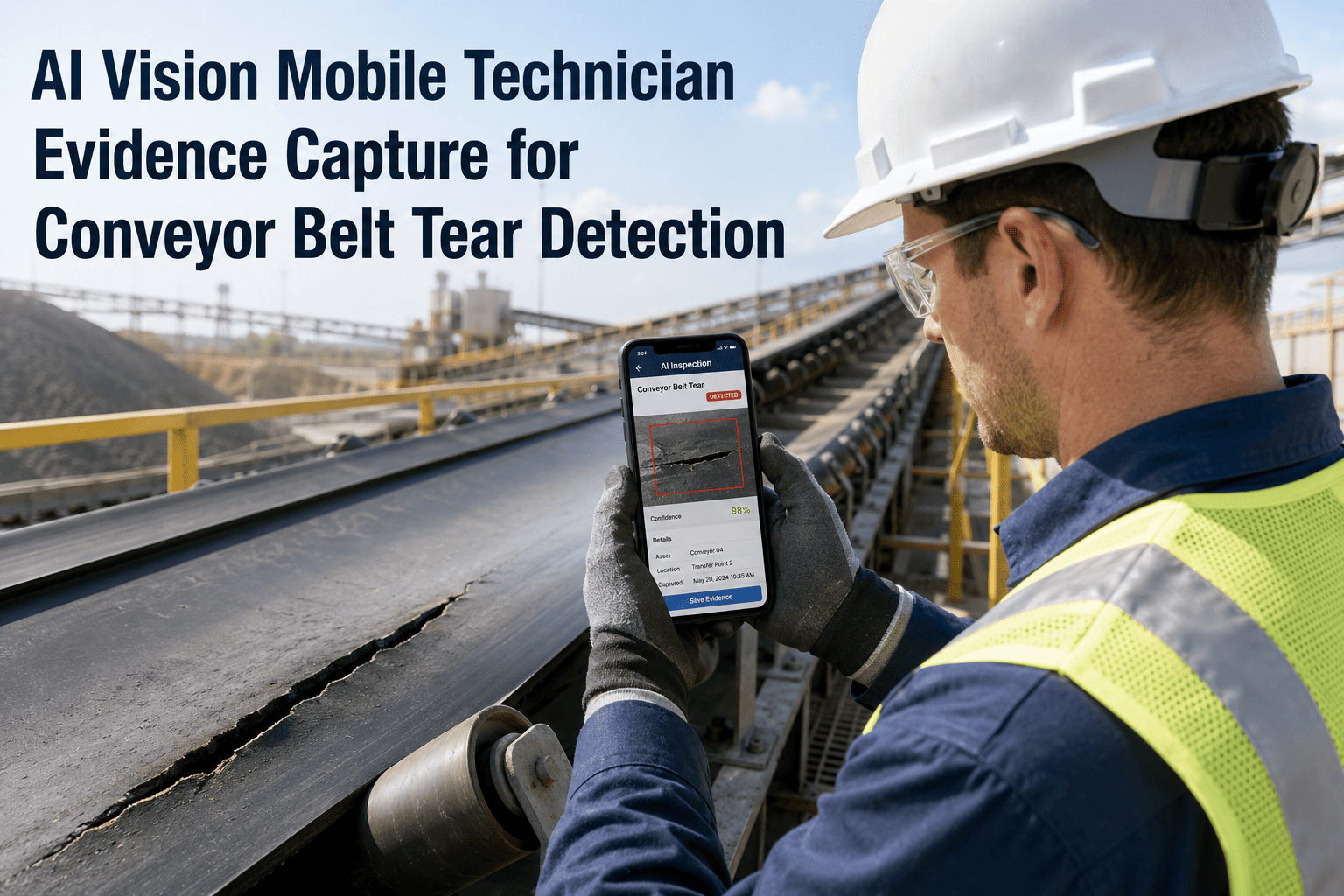
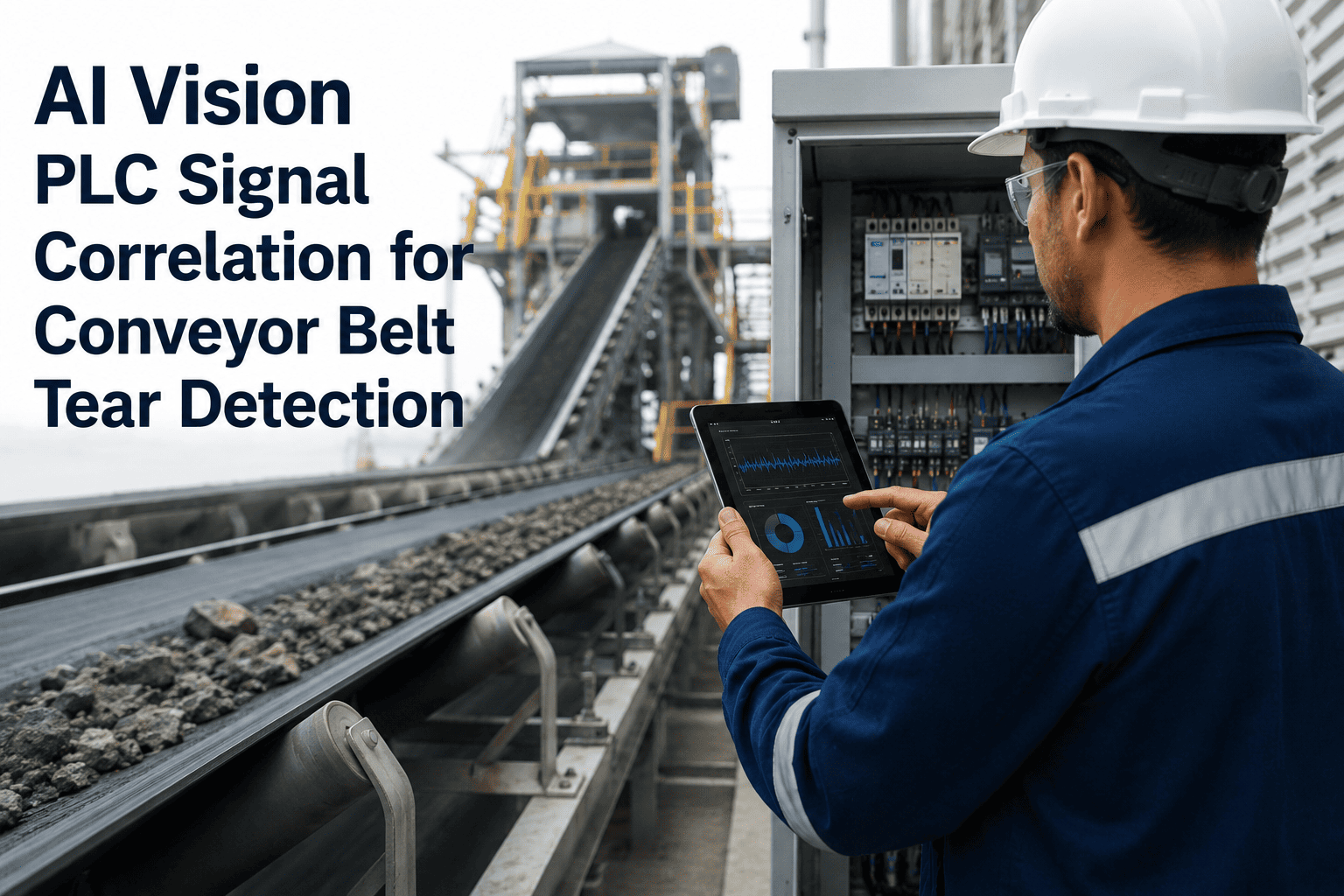
A small longitudinal tear in a conveyor belt rarely shuts down a mine the day it appears — it shuts the mine down three weeks later when nobody logged it and it ran the full length of the belt under load. Technicians walk past these tears during routine rounds constantly, but without a fast way to capture and classify what they see, the finding stays in someone's memory instead of a maintenance system. OxMaint's AI Vision capture lets a technician photograph a tear from their phone and turns it into a classified, prioritized work order before they've walked to the next idler. Book a demo to see it running on your belt inspection rounds.
Mining · AI Vision Mobile Capture
AI Vision Mobile Technician Evidence Capture for Conveyor Belt Tear Detection
No defect captured
Surface wear logged
Tear flagged critical
Why Tears Get Missed
The Gap Between Spotting a Tear and Logging It
Technician sees a tear mid-shift
→
No phone-based way to log it without stopping the round
Tear is noted verbally to a supervisor
→
Detail and exact location are lost by end of shift
Tear reappears in the same belt section
→
No history exists to show this is a recurring failure point
Capture the Tear the Moment It's Spotted
OxMaint's mobile capture turns a technician's photo into a classified work order with belt location and severity attached automatically.
Tear Classification
How the AI Model Reads Different Belt Defects
| Defect Type |
Visual Signature |
Severity |
Recommended Action |
| Longitudinal tear |
Straight-line split along belt travel direction |
Critical |
Stop belt, inspect before restart |
| Edge fraying |
Irregular wear along belt edge |
High |
Schedule repair within days, monitor closely |
| Surface gouging |
Localized cuts from trapped material |
Medium |
Add to next planned maintenance window |
| Cover wear |
Gradual thinning of top cover rubber |
Low |
Track for belt replacement planning |
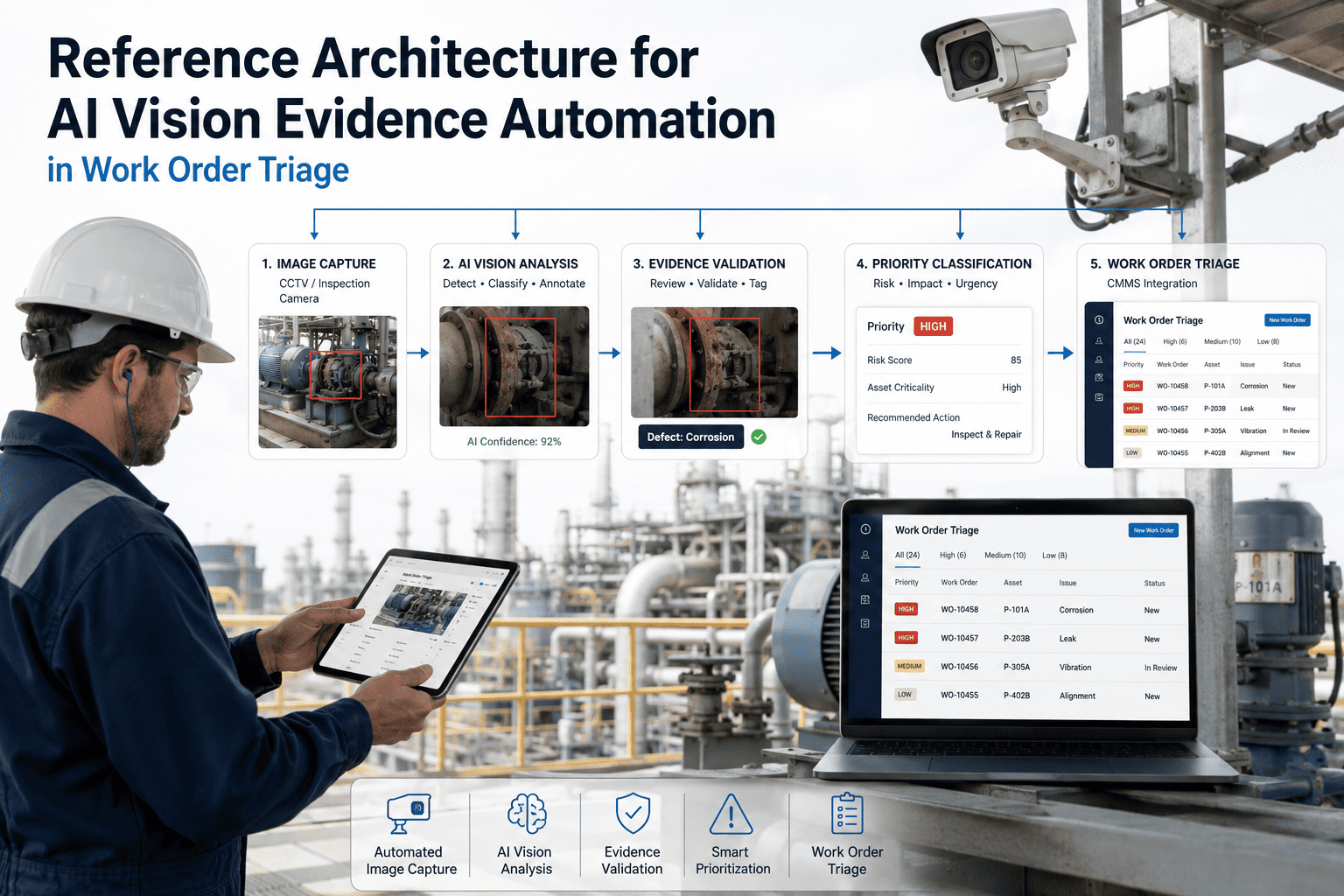
From Phone to Work Order
What Happens After the Technician Takes the Photo
01
Photo Captured
Technician photographs the tear through the mobile app during a normal belt inspection round, no extra device needed.
02
Tear Classified and Located
The AI model identifies tear type and severity, while location tagging attaches the finding to the correct belt and conveyor segment.
03
Work Order Routed
A prioritized work order opens automatically and routes to the belt maintenance crew, with the photo attached as evidence.
04
Uptime Analytics Updated
The closed record feeds belt failure history, helping reliability teams identify recurring tear locations before they escalate.
Expert Review
What Mining Reliability Researchers Say About Belt Failure Detection
Conveyor belt failures remain one of the costliest sources of unplanned downtime in mining operations, and early visual detection of tears and edge damage consistently outperforms scheduled inspection alone in preventing full-length belt failures.
— Mining Engineering, Bulk Material Handling Reliability Research
Mobile photo-based reporting tools are closing a long-standing gap in mining maintenance, where defects observed during routine rounds historically went undocumented unless they were severe enough to justify a formal inspection report.
— International Journal of Mining Science and Technology, Field Data Capture Studies
FAQs
Frequently Asked Questions
Does the technician need to stop the belt to capture a usable photo?
No, most tears and surface defects can be photographed while the belt is running during a normal inspection round, and the system flags critical tears that may warrant a stop based on severity.
Start a free trial to test capture during your own belt rounds.
How does the system know which belt and section the photo came from?
Location tagging is configured during onboarding so each capture point along the conveyor maps to a specific belt segment in your asset register, removing the need for manual location entry.
Book a demo to see how belt segments are mapped.
Can this work in underground or low-light mining environments?
The classification model is built to handle variable lighting conditions common in underground operations, and capture works through the same mobile app technicians already carry.
Does recurring tear data help with belt replacement planning?
Yes, classified defect history accumulates by belt segment, making it straightforward to identify sections with repeat failures that may justify earlier replacement rather than continued spot repairs.
Sign up free to start building that segment-level history.
AI Vision for Mining
Give Every Tear a Path From Phone Photo to Closed Work Order
OxMaint connects mobile technician captures to classified, routed work orders and belt-level uptime analytics built for mining maintenance teams.