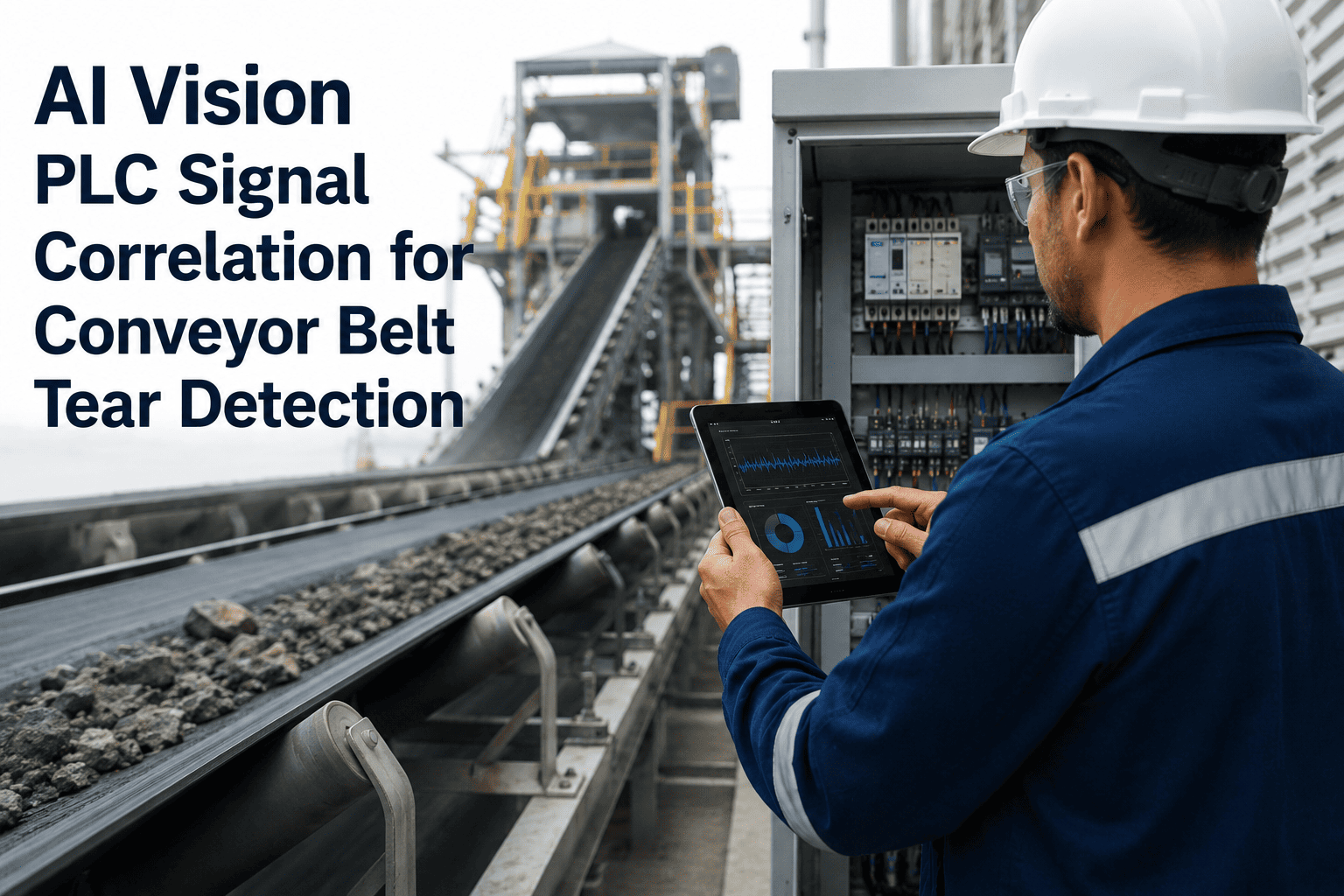
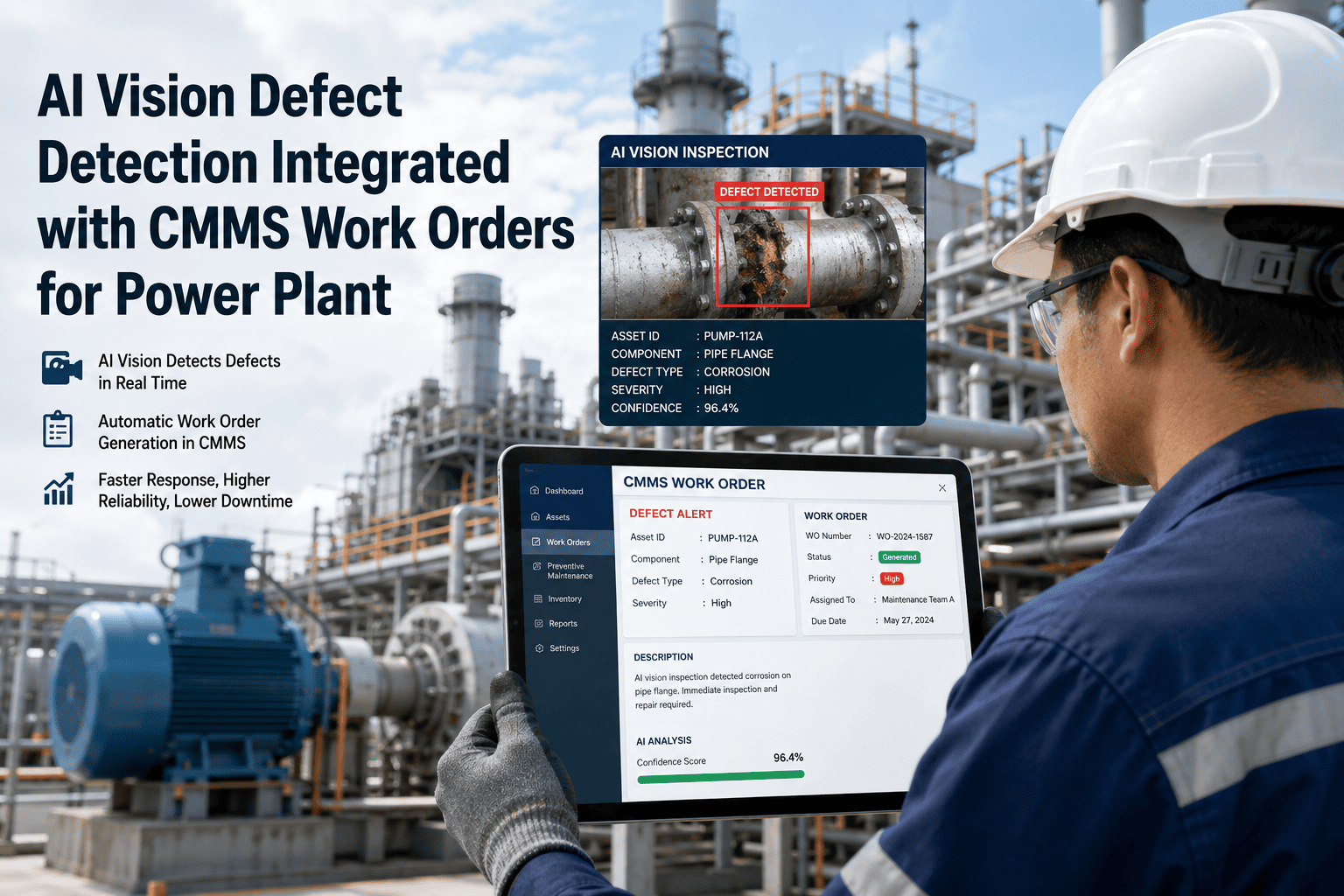
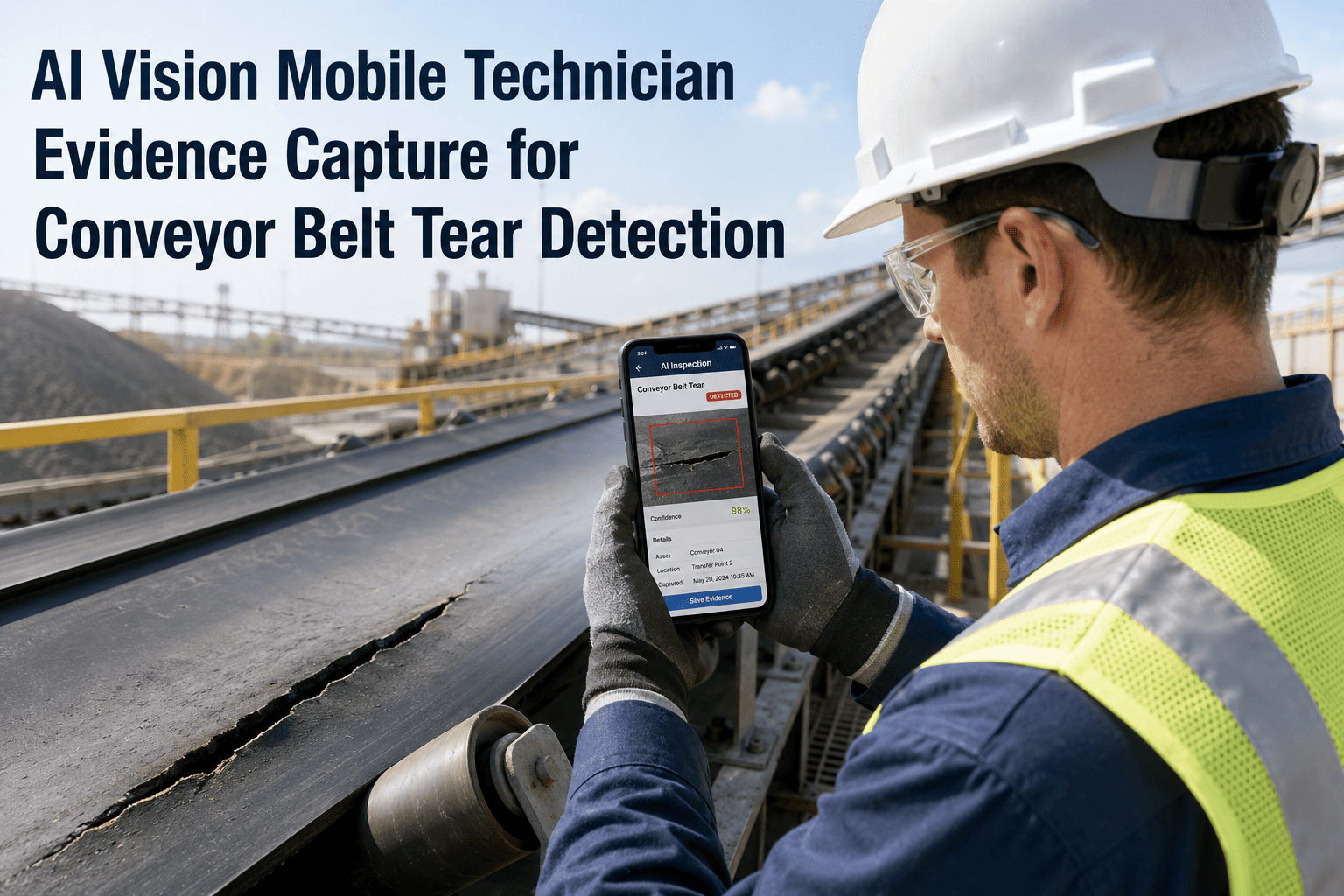
A conveyor belt tear discovered by a PLC speed differential alarm alone tells you the belt has already failed — it does not tell you where the tear is, how severe it is, or whether the surrounding structure is at risk. OxMaint's AI Vision platform combines PLC signal data with real-time camera feeds to detect the precursors of belt tears — surface cuts, edge fraying, splice fatigue — before the PLC alarm threshold is ever reached. The result: predictive tear prevention, not reactive tear response. If your mine is still relying on PLC alarms as the primary tear detection method, you are catching failures after they happen. Book a demo to see PLC-correlated AI vision tear detection live on mining conveyor data.
Mining AI Vision · Conveyor Reliability
AI Vision PLC Signal Correlation for Conveyor Belt Tear Detection in Mining
$480K–$1.2M
Average cost of a major conveyor belt tear at a mid-size open pit mine (lost production + repair)
4–18 hrs
Unplanned downtime per major tear event without predictive detection
72 hrs
Average pre-tear detection window when AI vision + PLC correlation is active
Why PLC Alone Is Not Enough
The Detection Gap Between PLC Alarms and Real Tear Conditions
Detects speed differential — belt already torn or jammed
No location data — technician must walk entire belt to find damage
No severity assessment — damage extent unknown until inspection
Binary alarm: run or stop — no predictive warning stage
Structural damage secondary — splice and edge degradation invisible
Detects surface cuts, fraying, splice fatigue 48–72 hrs before tear
Pixel-level location heatmap — exact damage position on belt
AI severity score (1–10) with recommended action (monitor/repair/stop)
PLC speed data fused with vision to confirm damage propagation rate
Splice and edge wear tracked longitudinally across shift cycles
Correlation Architecture
How OxMaint Fuses PLC Signals With AI Camera Data
1
PLC Signal Ingestion
Belt speed, motor current, tension sensor, and slip detection signals ingested via OPC-UA or Modbus in real time. Baseline signal profiles established per belt section.
→
2
AI Camera Frame Analysis
Camera frames timestamped to match PLC signal timestamps. AI model analyzes belt surface at 60 fps — classifying cuts, tears, splice conditions, and edge wear per frame.
→
3
Signal-Vision Correlation Engine
PLC anomalies cross-referenced with AI defect detections at the same timestamp. Correlation score generated: visual damage + PLC deviation = high-confidence tear precursor alert.
→
4
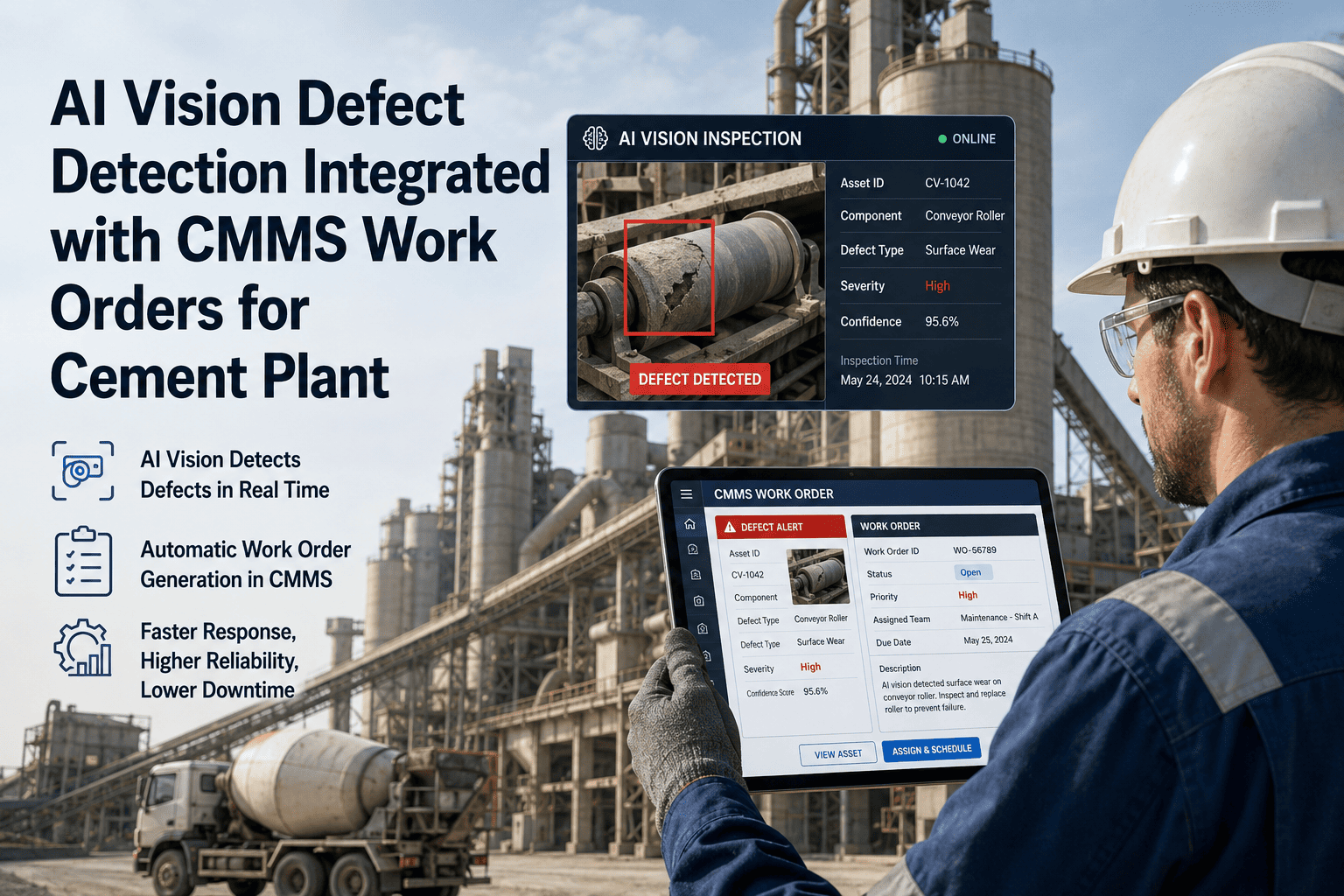
Auto Work Order in OxMaint CMMS
Correlated alerts auto-generate a CMMS work order with: belt position, defect image, severity score, PLC signal log, and recommended parts. Technician dispatched with full context.
Stop Reacting to Tears. Start Preventing Them.
OxMaint correlates your existing PLC infrastructure with AI vision — no new sensors required for pilot deployment. Book a demo to see detection accuracy on your belt specifications.
Detection Performance
AI Vision + PLC Correlation vs. PLC-Only Detection: Benchmark Data
| Detection Metric |
PLC Alarms Only |
AI Vision Only |
AI Vision + PLC Correlation |
| Pre-tear detection window |
0 hrs (post-event) |
24–36 hrs |
48–72 hrs |
| Tear location accuracy |
Full belt inspection required |
±2 m belt position |
±0.3 m with PLC belt tracking |
| False positive rate |
18% (vibration artifacts) |
12% (lighting variation) |
4% (cross-validated) |
| Splice failure detection |
Not detected until failure |
Detected at 60% degradation |
Detected at 30% degradation |
| Unplanned downtime reduction |
Baseline (0%) |
28% |
47% |
Expert Review
Mining Engineering Research on Belt Tear Detection
"PLC-based belt protection systems represent necessary but insufficient infrastructure for modern mining conveyor reliability. Their fundamental limitation — detection only after mechanical failure thresholds are crossed — means they prevent catastrophic runaway events but cannot prevent the 80% of belt damage events that begin as surface defects detectable by vision weeks before PLC alarm thresholds are reached. AI vision systems that correlate with PLC telemetry close this gap and represent the current reliability engineering standard for high-throughput mining operations."
— International Journal of Mining, Reclamation and Environment, Belt Condition Monitoring, Vol. 38, 2024
"Correlated AI vision and PLC signal analysis reduces conveyor-related unplanned downtime by 40–55% in documented implementations at major iron ore and coal operations. The correlation architecture is the key differentiator — vision alone generates false positives from dust and lighting; PLC alone misses surface degradation. Together, the two data streams cross-validate each other and produce detection confidence scores high enough to automate work order generation without human review for the majority of events."
— Mining Technology: Transactions of the Institutes of Mining and Metallurgy, Vol. 133, 2024
FAQs
Frequently Asked Questions
Does OxMaint require replacing our existing PLC belt protection system?
No — OxMaint integrates with your existing PLC infrastructure via OPC-UA or Modbus protocols, reading signal data without interfering with protection system logic. The AI vision cameras are installed as an additional monitoring layer, not a replacement for belt protection. Your existing emergency stop and speed differential protection systems remain fully operational.
Book a technical integration demo to confirm compatibility with your PLC make and model — OxMaint has verified integration profiles for Allen-Bradley, Siemens, and Rockwell Automation belt protection controllers.
How are AI vision cameras installed on an operating conveyor without production stoppage?
Standard OxMaint camera installations on conveyor belts use engineered mounting brackets that can be attached to existing structural steel during planned maintenance windows — typically 2–4 hours per camera position. Camera positioning is pre-engineered based on belt width and speed to ensure full surface coverage at production throughput. A typical 800-meter underground conveyor requires 3–5 camera positions and can be fully instrumented during a single planned maintenance window.
Start a free trial to access OxMaint's conveyor camera positioning calculator for your belt specifications.
What conveyor belt conditions can OxMaint's AI vision detect that PLCs cannot?
OxMaint's AI model detects: longitudinal cuts and surface lacerations (pre-tear), transverse cracks at splice points, edge wear and fraying indicating lateral load imbalance, cover wear exposing carcass layers, and foreign object embedment. None of these conditions generate PLC alarm signals until they have progressed to structural failure — typically 48–72 hours after they first become visually detectable.
Book a demo to see OxMaint's defect classification library applied to your belt type (rubber, PVC, steel cord) and operating conditions.
Mining Conveyor AI
From PLC Alarm Response to AI-Driven Tear Prevention
OxMaint fuses your existing PLC signals with AI camera feeds to detect belt tears 48–72 hours before they happen — and auto-generates the work order your technician needs before the PLC alarm ever fires.