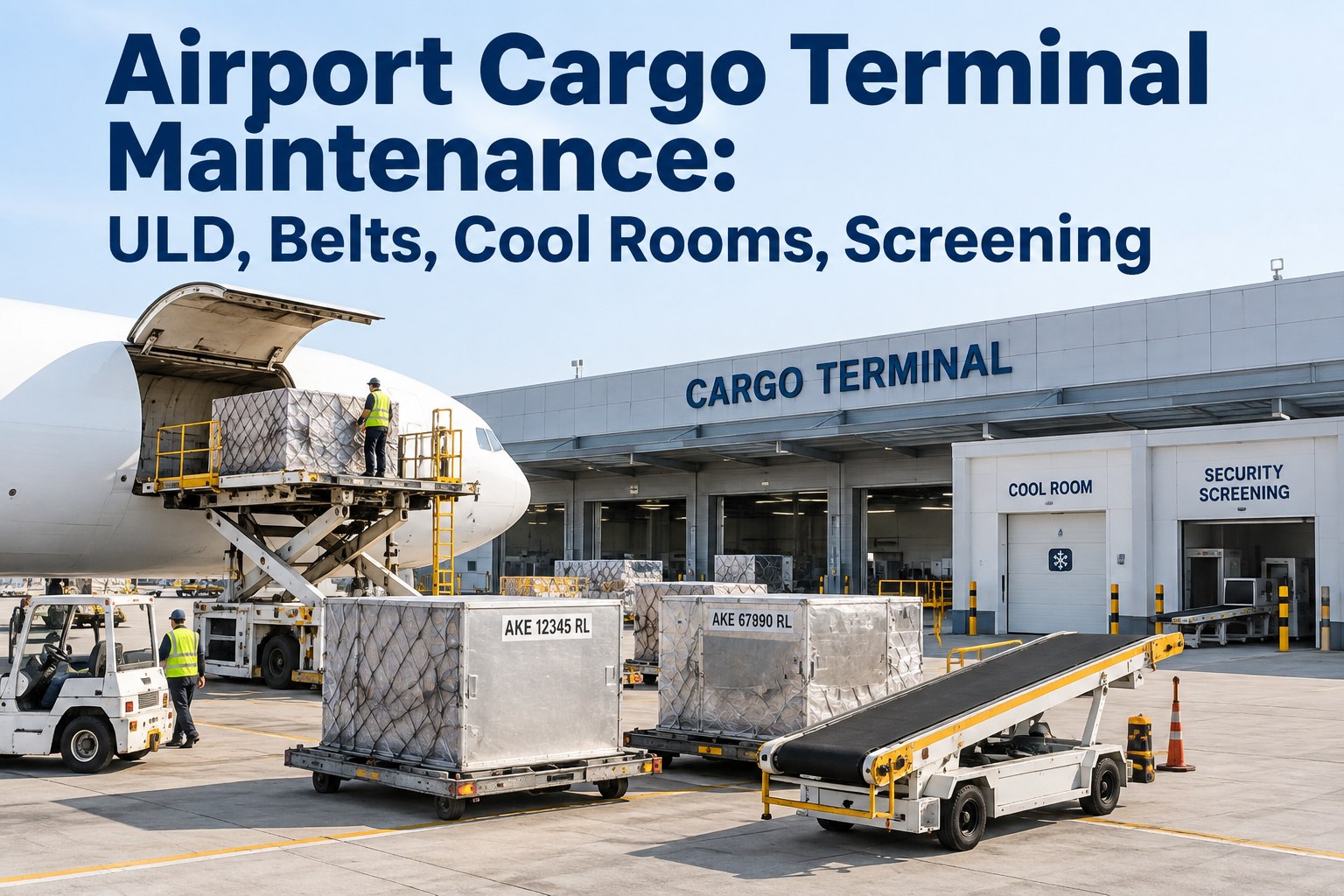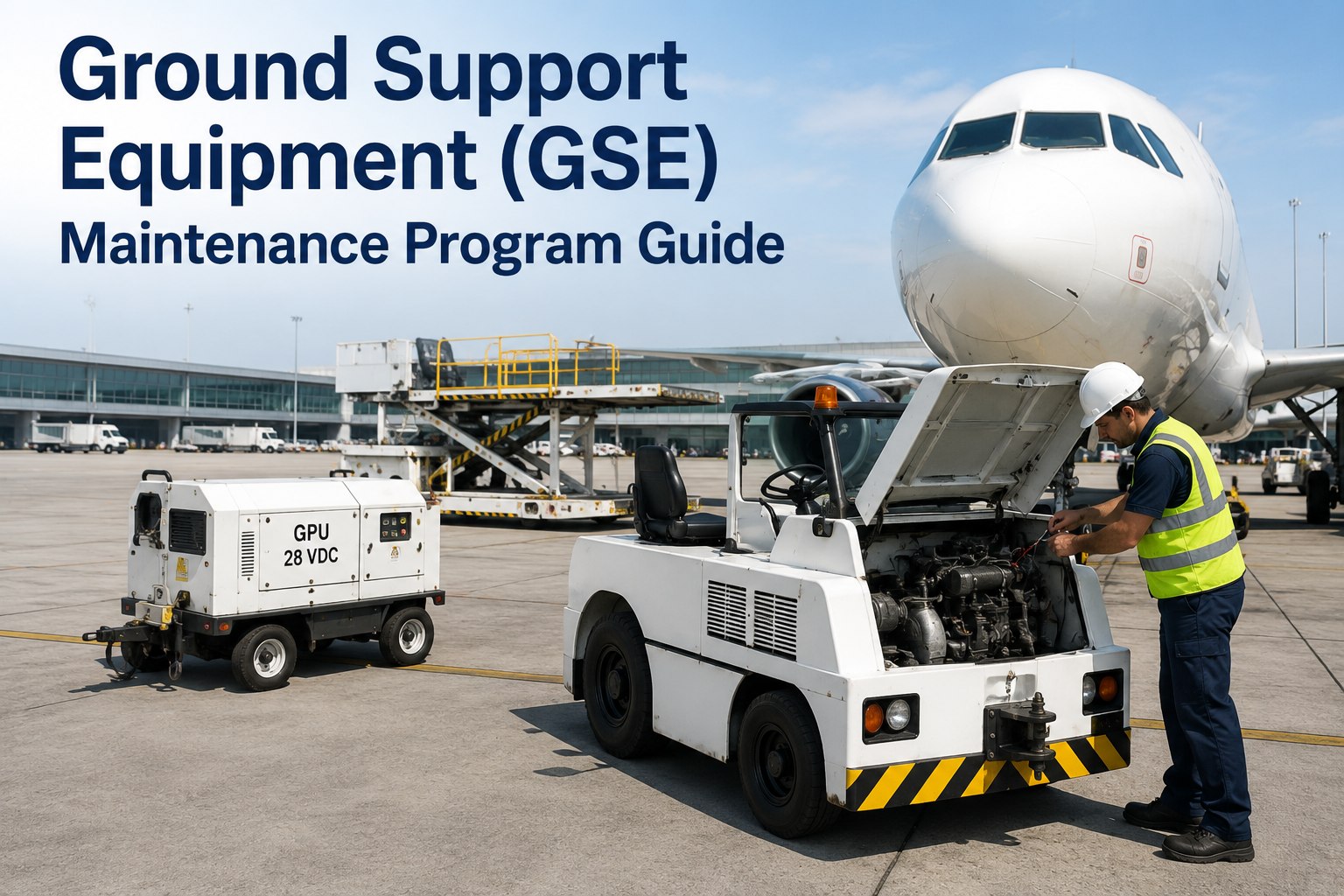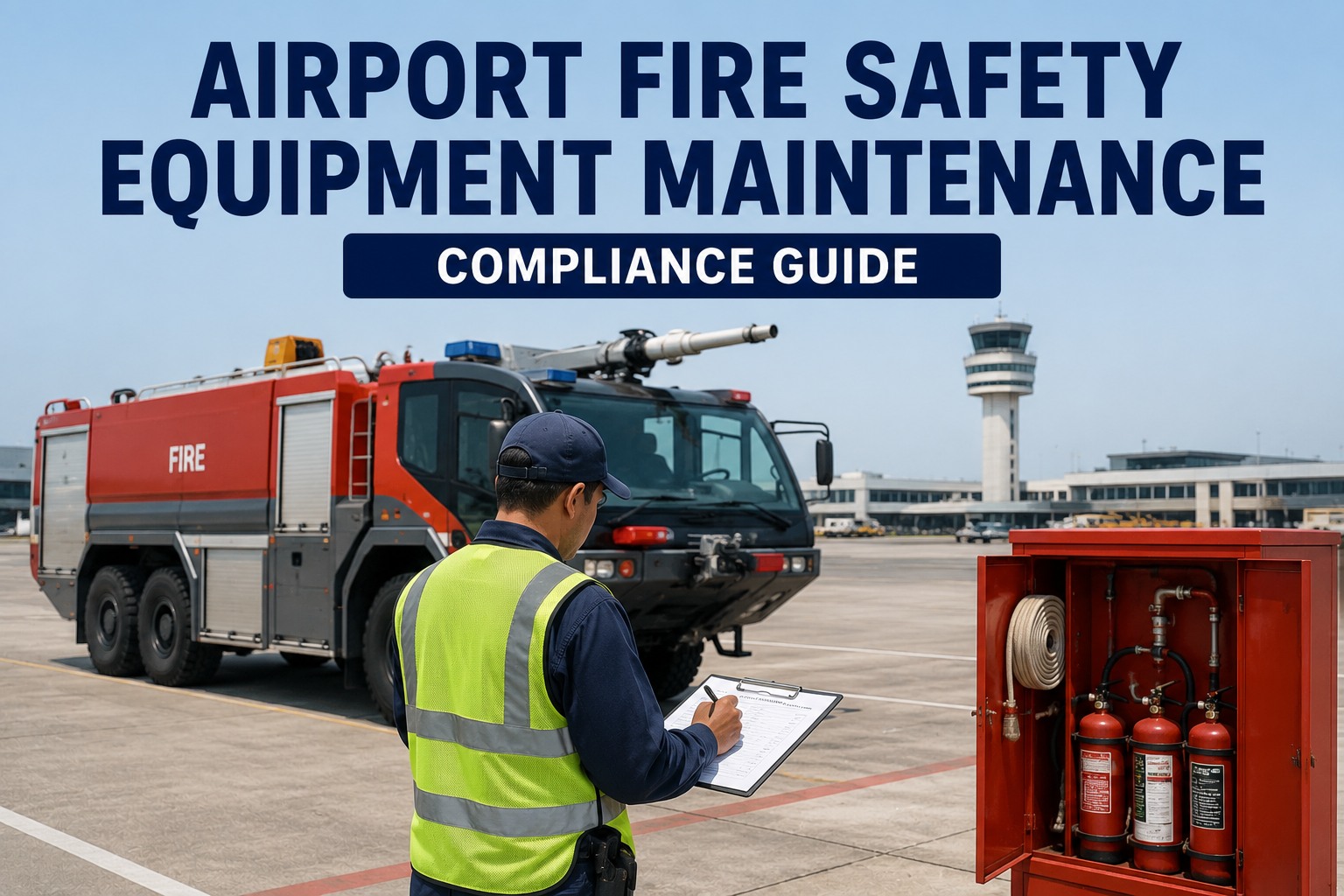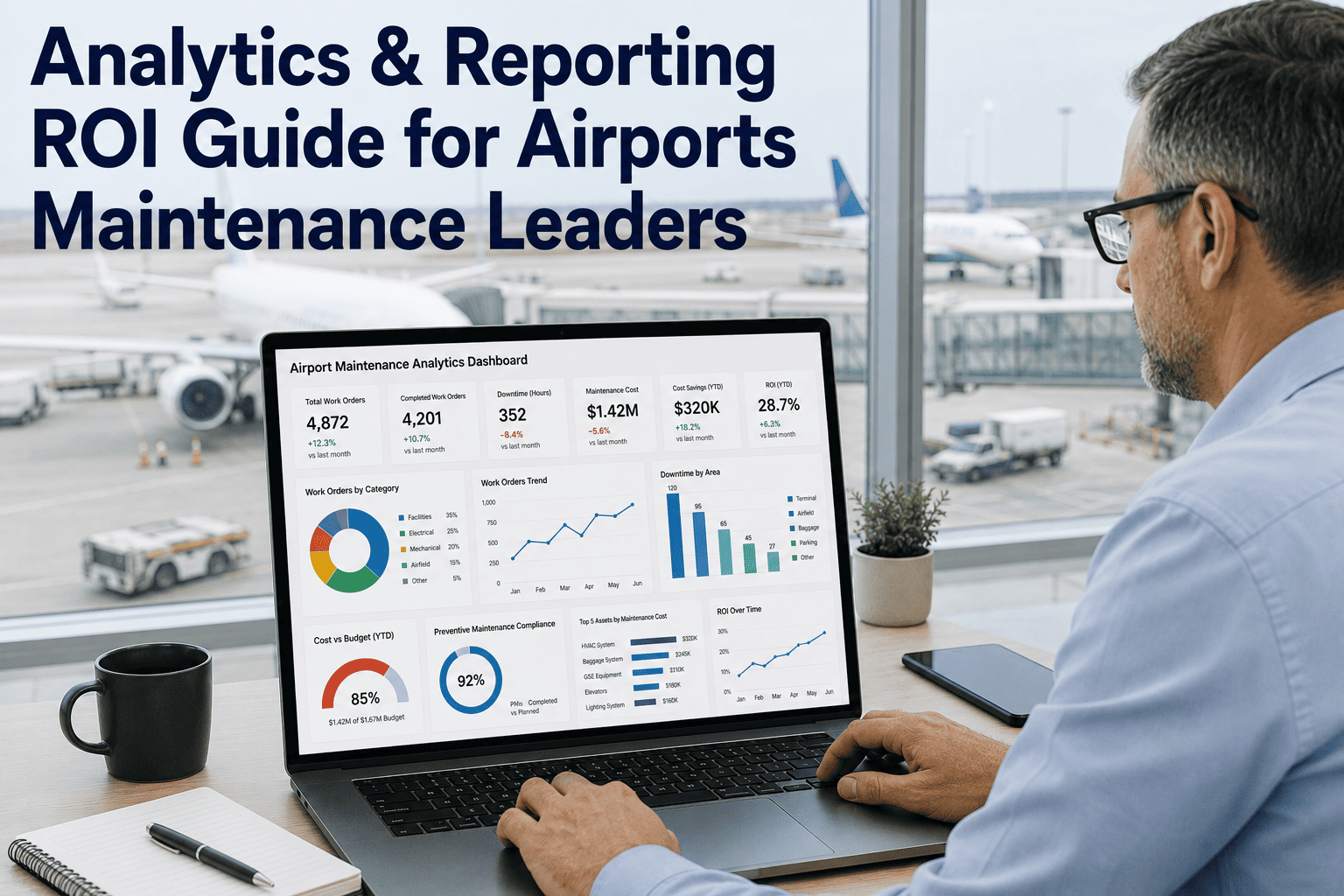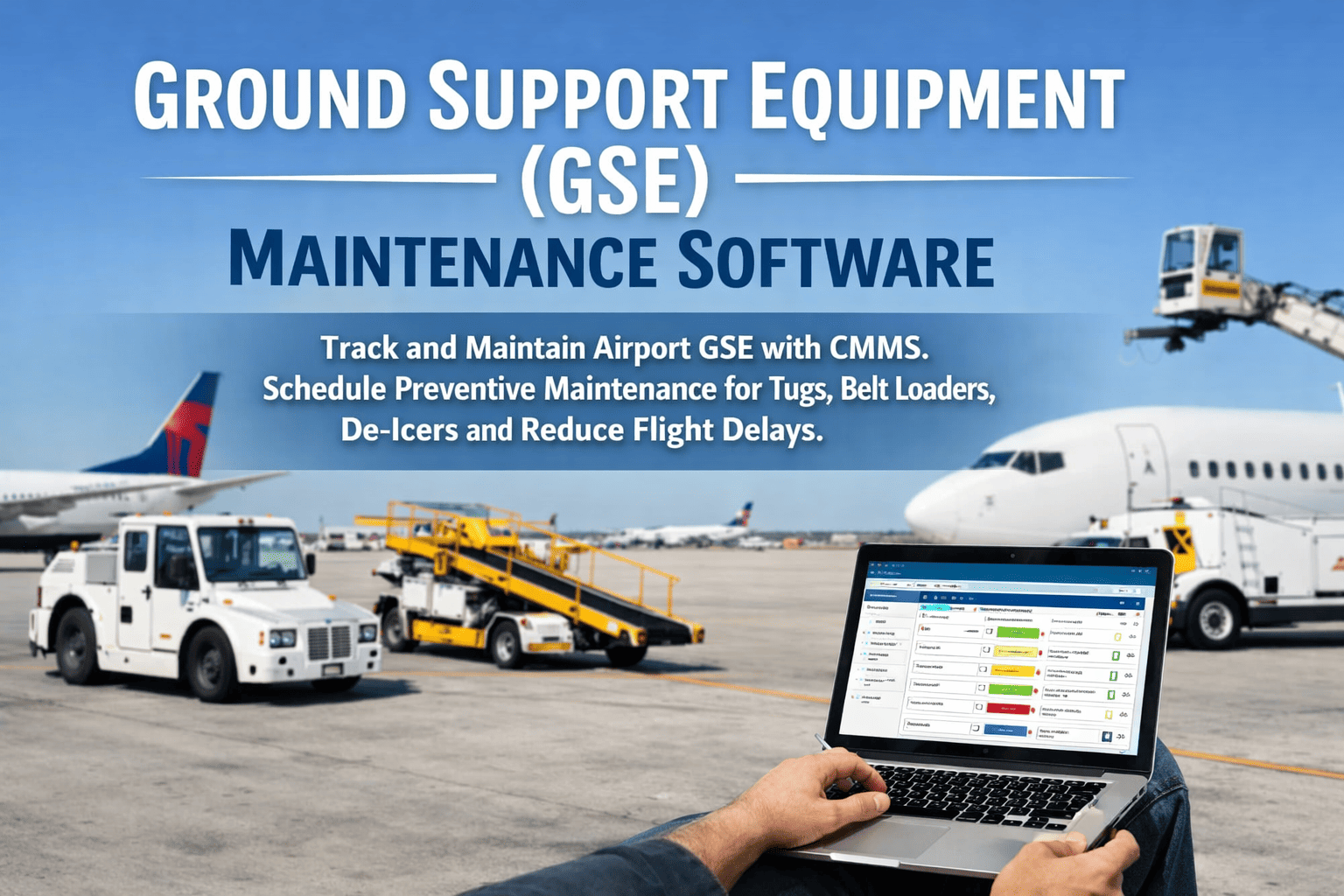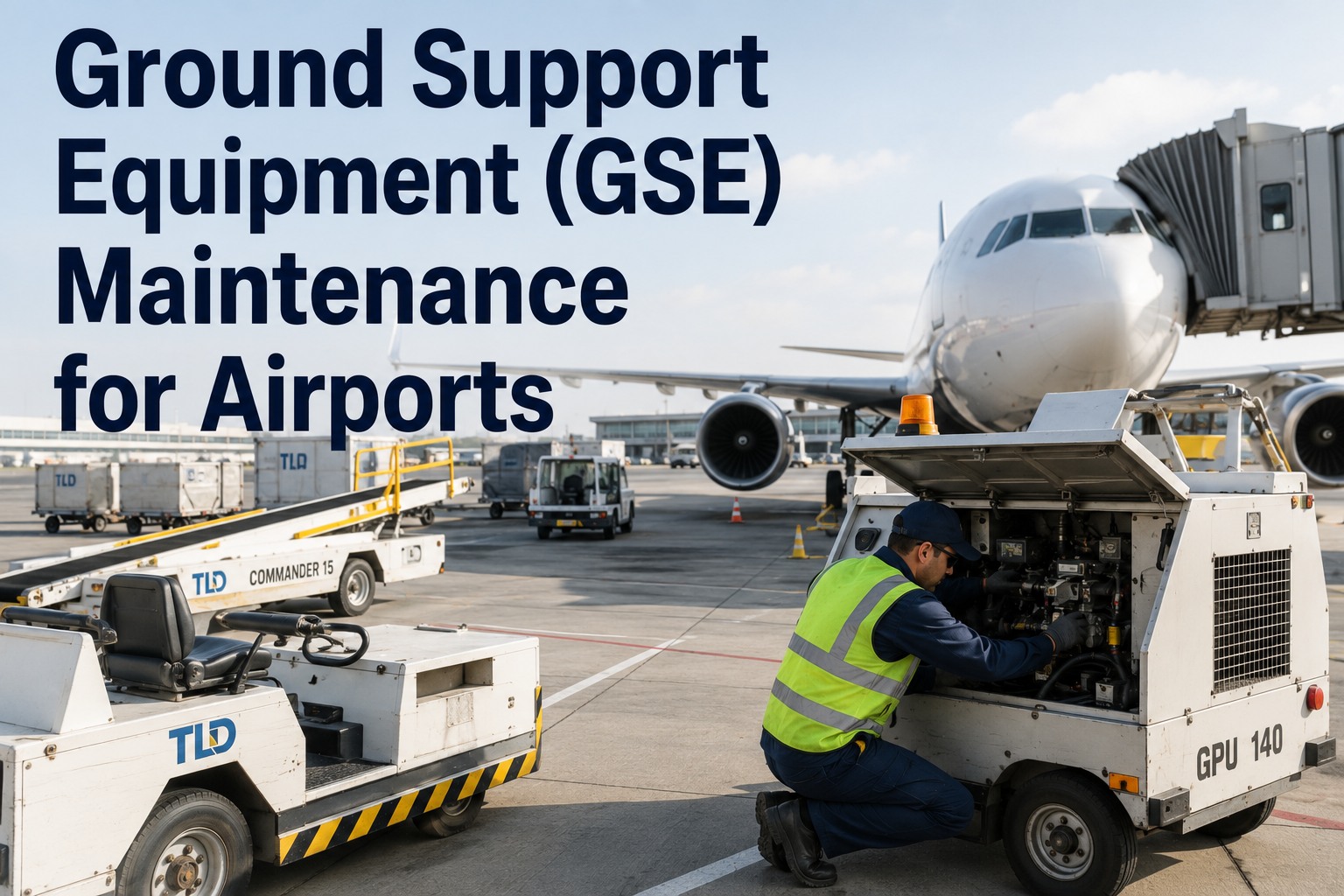
Ground support equipment maintenance is the operational backbone of every airport turnaround — when a tug, belt loader, or ground power unit fails at the gate, the ripple effect costs airlines an estimated $50–100 per minute in delays and disrupts connections across the network. A structured GSE maintenance program combining preventive schedules, real-time asset tracking, and compliance documentation is what separates high-on-time-performance ground handlers from those bleeding revenue to unplanned breakdowns. OxMaint brings AI-powered CMMS capabilities to airport ground operations teams, replacing paper work orders and whiteboards with predictive maintenance analytics, DOT-ready audit trails, and cross-airline coordination tools. See how your operation can cut unplanned GSE downtime 30–50% — Start Free Trial and configure your first asset library in minutes.
GSE Maintenance Software
Every Minute of GSE Downtime Costs Your Operation — and Your Airline Partners
Belt loaders, tugs, pushbacks, and GPUs sit at the critical path of every gate turn. When they fail unscheduled, turns extend, slots slip, and penalties stack. OxMaint replaces reactive spreadsheet maintenance with a structured CMMS built for the airside reliability and compliance standards ground operations demand.
The Cost of Reactive GSE
Why Airport GSE Maintenance Programs Fail on Spreadsheets
Most ground handlers manage 200–800 GSE assets across multiple airlines, gate ranges, and shift rotations — yet 60% still track preventive maintenance on spreadsheets, clipboards, or legacy software built for hangar MRO, not ramp operations.
No visibility into asset-level PM compliance
Without a central CMMS, supervisors can't see which belt loaders are past due for hydraulic service or which GPUs have missed load-bank testing. By the time a failure surfaces at the gate, the maintenance window is already lost and the delay is live.
Paper work orders vanish at shift handover
Paper-based GSE work orders routinely lose defect notes between shifts. A tug reported with soft brakes at 06:00 becomes an unrecorded defect by 14:00 — and a ground incident by 22:00. Digital, timestamped work orders eliminate that gap entirely.
Cross-airline coordination breaks without shared asset records
Shared-use GSE fleets serving multiple carriers need auditable maintenance records per airline SLA. Spreadsheets can't produce an instant compliance report for a Delta audit at 4 PM or a United line check at 7 AM — OxMaint can, in one click.
Spare-parts stockouts extend ground equipment downtime
When a pushback tractor needs a filter and the parts cage doesn't have it, the asset sits cold for 2–5 days waiting on procurement. Integrated inventory tracking with min/max reorder triggers keeps critical GSE parts on hand and assets in service.
GSE Preventive Maintenance
Airport GSE Maintenance Checklist by Equipment Category
A defensible GSE maintenance program covers every asset class on the ramp — from powered equipment to non-motorized units. Below is the PM framework OxMaint pre-loads for ground operations teams, mapped to typical OEM service intervals and DOT inspection cycles.
Powered Ground Power Units (GPUs)
6 PM Tasks- Engine oil and filter service (250 hrs)
- Output voltage and frequency load-bank test (90 days)
- Cable and connector insulation inspection (30 days)
- Fuel system leak check and filter water separator (180 days)
- Battery and charging system load test (90 days)
- Emissions and exhaust system inspection (annual)
Belt Loaders & Baggage Tractors
7 PM Tasks- Hydraulic system pressure and leak inspection (150 hrs)
- Belt condition, tracking, and tension adjustment (30 days)
- Brake system pad thickness and function test (60 days)
- Tire pressure, tread depth, and lug torque (14 days)
- Engine fluid levels and filter service (250 hrs)
- Lights, horn, and backup alarm function check (7 days)
- DOT annual inspection and decal renewal (365 days)
Pushback Tractors & Tow Tugs
6 PM Tasks- Tow hitch and shear pin inspection (daily walkaround)
- Transmission fluid and differential service (500 hrs)
- Weight transfer braking system test (30 days)
- Engine diagnostics and DTC scan (90 days)
- Tire condition and pressure monitoring (7 days)
- Annual structural and hitch certification (365 days)
Non-Motorized & Servicing Units
5 PM Tasks- Cart axle, wheel bearing, and tire inspection (90 days)
- De-icer truck spray system calibration (seasonal)
- Passenger stair hydraulic and tread inspection (30 days)
- Cargo loader platform level and safety sensor check (60 days)
- Reflective markings and lighting function (30 days)
| Asset Category | Typical Fleet Size | PM Interval (Hours) | Annual Inspections | Critical Failure Risk |
|---|---|---|---|---|
| Baggage Tractors / Tugs | 40–120 | 250 hrs | DOT + OEM | Brakes, steering, hitch |
| Belt Loaders | 15–60 | 150 hrs | DOT + OEM | Hydraulics, belt, engine |
| Pushback Tractors | 8–30 | 500 hrs | Structural cert | Transmission, tow hitch |
| Ground Power Units | 20–80 | 250 hrs | Emissions + load-bank | Output failure, fuel leak |
| Air Start Units | 5–25 | 300 hrs | OEM + emissions | Compressor, fuel system |
| De-Icing Trucks | 6–20 | Seasonal + 200 hrs | Calibration cert | Spray system, boom |
How OxMaint Helps
GSE Maintenance Software Built for the Airside Environment
OxMaint maps directly to the way ground operations teams actually work — gate-range asset assignment, shift-based work order handover, multi-airline SLA tracking, and DOT-ready compliance reporting. Here is what changes when a GSE fleet moves from spreadsheets to OxMaint.
Pre-Built GSE PM Libraries
OxMaint ships with preventive maintenance templates for tugs, belt loaders, GPUs, pushbacks, de-icers, and passenger stairs — pre-mapped to OEM hour-based and calendar intervals. Assign a 250-hour belt loader service in two clicks; the system auto-generates the work order when telemetry or meter readings trigger the threshold.
Outcome: 40–60% reduction in missed PMs within the first quarter.
Predictive Analytics on GSE Telemetry
Feed engine hours, fault codes, vibration data, and fluid analysis results into OxMaint's AI engine. The platform flags assets trending toward failure — a belt loader with rising hydraulic temperature, a GPU with intermittent voltage dips — and generates a corrective work order before the breakdown reaches the gate.
Outcome: 30–50% cut in unplanned ground equipment downtime.
DOT & Airport Compliance Audit Trail
Every work order, inspection, part replacement, and sign-off is timestamped, geotagged, and stored in a tamper-evident record. Generate a DOT inspection history for any tug or a full airline SLA compliance report for any GSE asset in one click — no more scrambling through filing cabinets the morning of an audit.
Outcome: audit prep time drops from days to under 30 minutes.
Spare-Parts Inventory with Auto-Reorder
Track filters, hydraulic hoses, brake pads, and belts by part number, bin location, and min/max threshold. When a GPU oil filter is consumed on a work order, OxMaint decrements stock and auto-generates a purchase requisition when the reorder point is hit — so the part is on the shelf before the next service is due.
Outcome: parts stockouts eliminated; GSE downtime from parts wait cut by 70%.
A 350-Asset GSE Fleet at a Mid-Size Hub
Consider a ground handler operating 350 GSE units across 24 gates at a mid-size international airport. Before OxMaint, the team ran maintenance on spreadsheets and paper work orders — averaging 22 unplanned equipment breakdowns per month, with each failure causing an estimated 18 minutes of added gate time and $1,800 in delay impact. Annualized, that's roughly $475K in preventable delay costs, plus $85K in emergency repair premiums and expedited parts shipping.
After implementing OxMaint's CMMS with PM libraries, predictive analytics, and parts inventory integration, unplanned GSE breakdowns dropped to 9 per month in Q2 and 6 per month by Q4 — a 73% reduction. PM compliance rose from 64% to 96%. The handler recovered an estimated $345K in delay cost avoidance and $60K in emergency repair savings in the first 12 months, against a platform investment of under $30K. Payback: less than 90 days.
ROI & Payback
What a GSE Maintenance Program Costs — and What It Saves
The economics of GSE maintenance software are straightforward: the cost of unplanned downtime at the gate dwarfs the cost of the platform. Here's the breakdown for a typical 200–400 asset ground operation.
Annual GSE Downtime Cost Formula
Unplanned Breakdowns / Month × Avg Gate Delay (min) × Delay Cost / Min × 12 + Emergency Repair Premium = Annual Downtime Cost
Example: 22 breakdowns × 18 min × $100 × 12 + $85K = $561K/yr
| Cost / Savings Category | Before OxMaint (Annual) | With OxMaint (Annual) | Savings |
|---|---|---|---|
| Unplanned GSE breakdown delay cost | $475,000 | $128,000 | $347,000 |
| Emergency repair & expedited parts | $85,000 | $25,000 | $60,000 |
| Audit prep & compliance reporting labor | $42,000 | $6,500 | $35,500 |
| Parts inventory carrying (overstock) | $68,000 | $41,000 | $27,000 |
| OxMaint platform investment | $0 | —$28,000 | —$28,000 |
| Net Annual Savings | — | — | $441,500 |
See OxMaint on Your GSE Fleet
Book a 30-Minute Demo — See Your Ramp in OxMaint
We'll load your GSE asset list, map your PM intervals, and show you exactly where the downtime and compliance gaps are — live, in 30 minutes.
GSE Maintenance FAQ
Frequently Asked Questions About GSE Maintenance
What is GSE maintenance and why is it critical for airport operations?
GSE maintenance is the structured preventive, corrective, and predictive upkeep of ground support equipment — tugs, belt loaders, GPUs, pushbacks, de-icers, and servicing carts — that aircraft depend on during gate turns. It is critical because a single GPU or belt loader failure can extend a turnaround by 15–30 minutes, triggering cascading delays across an airline's network and costing $100+ per minute in gate occupancy and missed slots. A formal GSE maintenance program ensures equipment availability when the aircraft blocks in, protecting on-time performance and airline SLA compliance.
How often should ground support equipment be serviced?
Most powered GSE requires preventive maintenance every 250 operating hours for engine-driven equipment (tugs, belt loaders, GPUs) and every 500 hours for heavy-duty units like pushback tractors. Calendar-based inspections — DOT annuals, brake checks, hydraulic inspections — typically run on 30-, 60-, 90-, or 365-day cycles depending on the asset and local airport authority requirements. OxMaint's pre-built PM libraries auto-generate work orders at the correct interval based on meter readings or calendar triggers, so no service is missed.
What does GSE maintenance software do that spreadsheets can't?
GSE maintenance software provides real-time asset-level PM compliance visibility, automated work-order generation based on meter readings or telemetry, digital shift-handover with timestamped defect tracking, spare-parts inventory with auto-reorder, and one-click compliance reporting for DOT and airline audits. Spreadsheets are static — they can't trigger a work order when a belt loader hits 250 hours, can't flag a GPU trending toward failure, and can't produce an instant audit trail. See the difference live — Book a Demo and we'll map your fleet in the platform.
How long does it take to implement a CMMS for airport GSE?
A typical GSE fleet of 200–400 assets can be fully onboarded in OxMaint within 10–14 days. The process includes importing your asset register, mapping PM intervals from OEM manuals, configuring parts min/max levels, and training ramp mechanics and supervisors on mobile work orders. OxMaint ships with pre-built GSE PM templates, so configuration is fast — most teams are running digital work orders within the first week. You can start a Start Free Trial and have your first assets loaded in under an hour.
How does GSE maintenance software handle multi-airline compliance?
OxMaint tracks maintenance history, inspection records, and SLA compliance at the individual asset level, with tags for airline, gate range, and service contract. When a specific airline audits your GSE records, you generate a filtered compliance report for every asset that served their aircraft — including PM currency, open defects, and last inspection dates — in one click. This eliminates the manual record-pulling that typically consumes 2–3 days per airline audit and reduces audit findings from incomplete documentation.
Start in Minutes
Stop Losing Gate Minutes to GSE Breakdowns
Load your fleet, map your PMs, and run your first digital work orders today. OxMaint is built for the ramp — and ready for your operation.
Free 14-day trial · No credit card