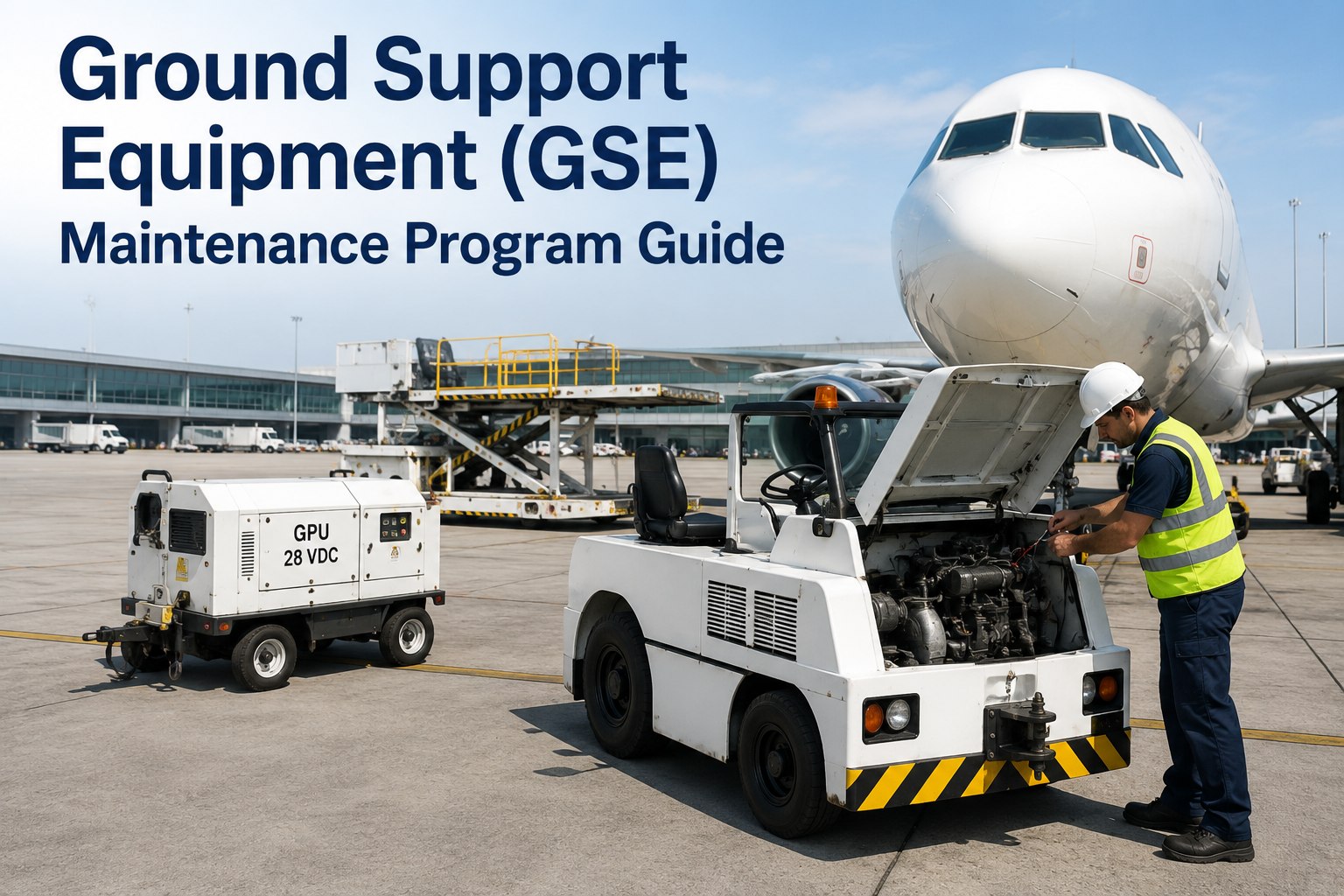
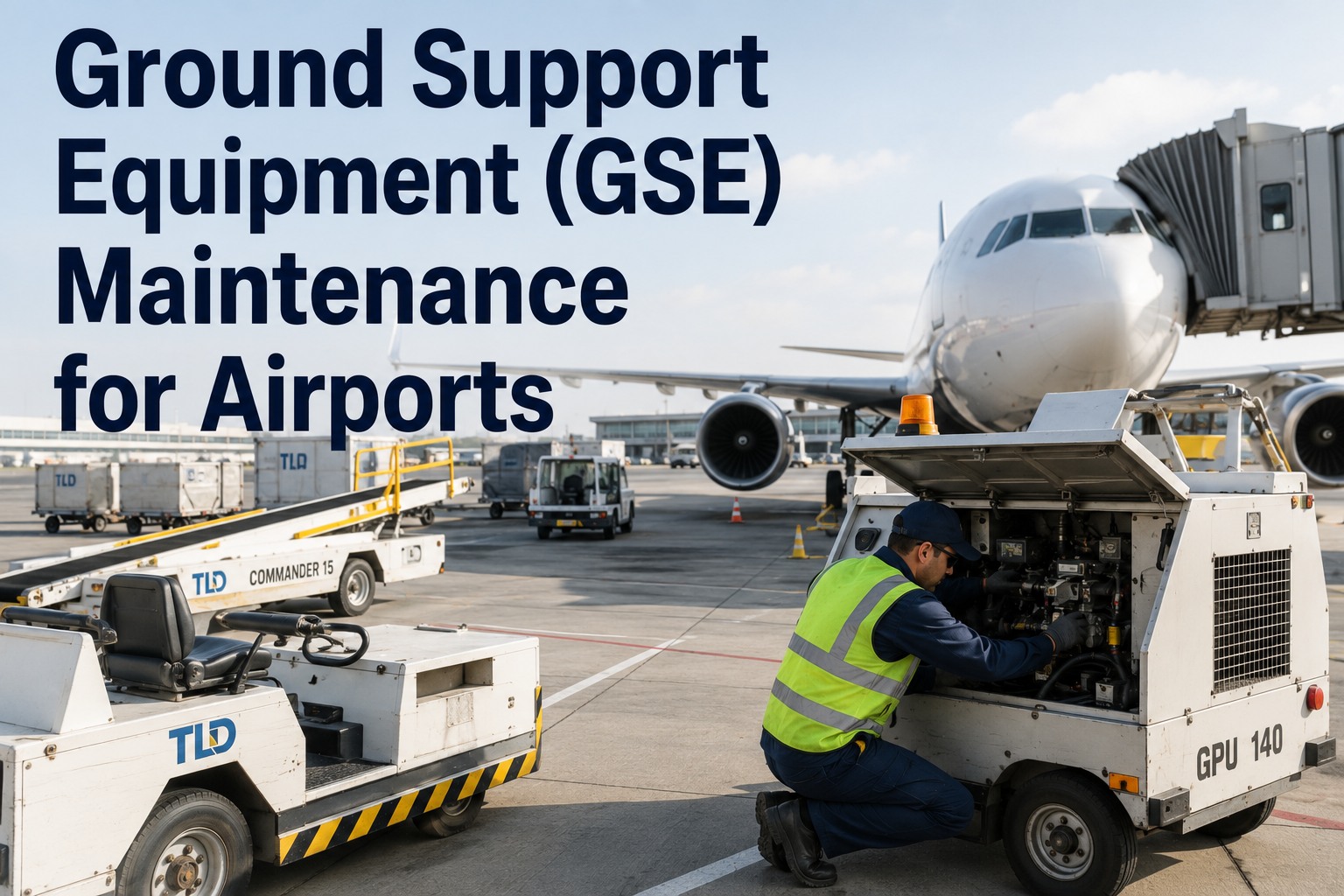
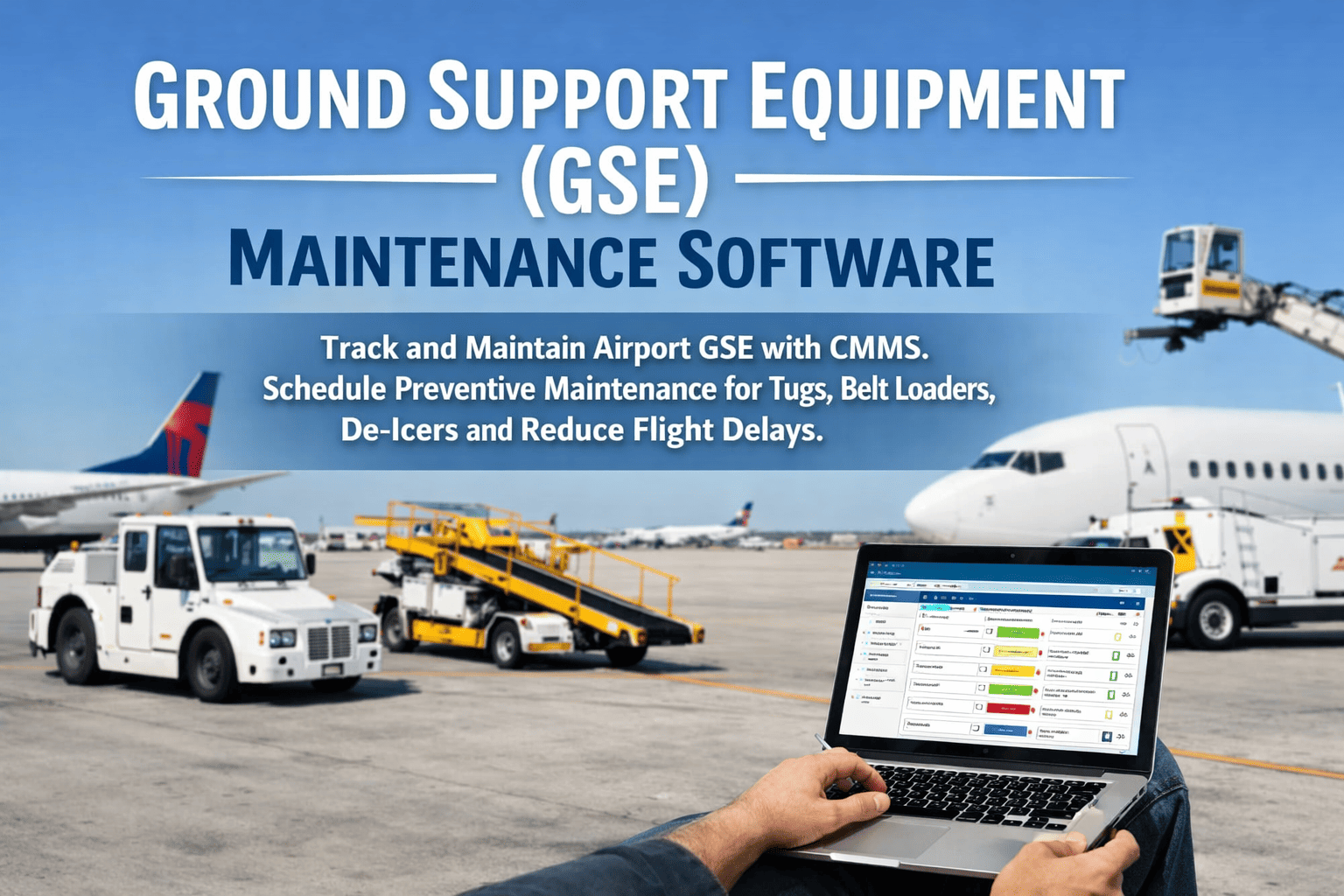
A single failed tow tractor on a busy morning turn-around slot does not just delay one aircraft — it creates a ripple across the entire ramp operation. Gate holds, delayed fuel bowser runs, missed push-back windows, and downstream crew disruptions compound within minutes. Ground Support Equipment failures are the silent operational risk that ramp and airport operations managers inherit when preventive maintenance programmes exist in paper binders, whiteboard schedules, and spreadsheets that nobody updates between quarterly audits. GSE fleets — spanning tow tractors, ground power units, aircraft loaders, conveyor belt loaders, de-icing vehicles, passenger stairs, and fuel bowsers — operate under demanding duty cycles in outdoor environments with regulatory inspection requirements that paper-based programmes cannot reliably track. Sign in to OxMaint to implement a digital GSE maintenance programme across your entire ramp fleet from day one. Book a demo to see how OxMaint tracks every piece of GSE from tow tractor to de-icing rig on a single fleet management dashboard.
Airport GSE fleets are operationally unique. Equipment operates continuously across multiple shifts in outdoor environments subject to extreme weather conditions, high-vibration duty cycles, and operational pressures that routinely delay scheduled maintenance in favour of ramp availability. The result is a predictable degradation pattern: deferred inspections accumulate, component wear exceeds service limits, and equipment fails at the worst possible moment — during peak operations when every asset is in active use and no spares are available.
Paper-based PM programmes make this pattern worse, not better. When inspection records live in binders and maintenance due dates are tracked on whiteboards, the information required to intervene preventively — which unit is nearest its 500-hour service interval, which GPU has an open defect not yet cleared, which de-icing vehicle last had its hydraulic fluid tested — is never visible to the operations supervisor making the availability decision. Sign in to OxMaint to get real-time GSE availability and maintenance status visibility across your entire ramp fleet.
of unscheduled GSE removals from service occur on equipment that had an open inspection or PM item logged more than 14 days prior — but never actioned because no automated escalation existed.
Book a DemoEach category of ground support equipment carries distinct maintenance intervals, inspection requirements, and failure modes. OxMaint configures a dedicated PM schedule for every GSE type in your fleet — tracking service due dates by hours, cycles, and calendar against each individual asset's actual usage. Sign in to OxMaint to configure PM schedules for your GSE fleet across all equipment types listed below.
High-duty-cycle ramp workhorses operating across every turn-around. Tow tractors require 250-hour and 500-hour PM schedules covering engine oil and filter, transmission fluid, brake system inspection, tow hitch wear check, and battery state-of-health on electric variants. Pushback tugs add nose gear coupling inspection and hydraulic accumulator pressure testing to the standard PM scope.
Diesel and electric GPUs are safety-critical assets — a GPU failure during aircraft boarding forces APU start or delays departure. Maintenance programmes cover generator load bank testing, cable and connector inspection for arc damage, coolant system servicing, and voltage regulation calibration. Diesel GPUs add fuel filter, air filter, and exhaust system inspection. Sign in to OxMaint to configure GPU PM schedules with automated cable inspection alerts.
Cargo loaders and passenger loading bridges operate under significant hydraulic load cycles. PM programmes focus on hydraulic cylinder seal integrity, platform levelling sensor calibration, drive motor brush inspection on electric units, and load cell verification. Safety interlock systems require monthly functional testing to confirm they prevent operation outside aircraft door alignment parameters. Book a demo to see OxMaint's hydraulic GSE PM scheduling.
De-icing vehicles have strict regulatory maintenance requirements tied to fluid system integrity and spray nozzle calibration. Glycol contamination in hydraulic systems is the leading cause of de-ice rig failures. PM programmes cover fluid tank integrity inspection, pump pressure testing, nozzle calibration verification, boom hydraulic seals, and heated fluid line integrity. Many regulators require seasonal recertification before the first winter operation date. Sign in to OxMaint to set up seasonal de-icing fleet recertification workflows.
Baggage tugs are among the highest-utilisation GSE assets on the ramp, often completing 40–60 duty cycles per shift. PM programmes address drive belt tension and wear, axle bearing inspection, tow bar coupling wear gauging, and battery management on electric tug variants. Conveyor belt loaders add belt tension calibration, roller bearing inspection, and hydraulic lift system servicing.
Passenger stairs and jet bridges are directly passenger-facing — any structural defect or mechanical failure creates immediate safety and liability exposure. Stair units require weekly visual inspection of handrail integrity, step surface condition, and wheel brake function. Motorised boarding bridges add drive motor inspection, levelling platform hydraulic check, and airport authority recertification on annual cycles. Book a demo to see OxMaint's passenger boarding equipment inspection scheduling.
Deferred GSE maintenance does not produce a single repair event — it produces a cascade. Each stage of the cascade is more expensive and more operationally damaging than the one before it. Understanding the cascade is the strongest argument for digital PM scheduling that prevents deferral from happening in the first place.
| GSE Type | Daily Check | PM Interval | Annual Requirement | Regulatory Framework | OxMaint Tracking |
|---|---|---|---|---|---|
| Tow Tractors | Fluid levels, brake, lights | 250 / 500 hrs | Load test, full PM, recertification | IATA AHM 913, local authority | Automated |
| Ground Power Units | Cable, connector, voltage check | Monthly + 500 hrs | Generator service, load bank test | IATA AHM 914, IEC standards | Automated |
| Aircraft Loaders | Interlock, hydraulic, platform level | Quarterly | Load certification, hydraulic full service | IATA AHM 912, LOLER (UK/EU) | Automated |
| De-Icing Vehicles | Fluid level, pump pressure, hose check | Weekly + pre-season | Seasonal recertification, nozzle calib. | SAE AMS 1428, local authority | Automated |
| Baggage Tugs | Battery, coupling, brake check | 200 / 500 hrs | Full drivetrain, battery capacity test | IATA AHM 910, CE marking | Automated |
| Passenger Stairs | Handrail, step surface, brakes | Quarterly | Structural inspection, authority cert | IATA AHM 915, local authority | Automated |
| Fuel Bowsers | Valve integrity, meter calibration | 500 hrs + quarterly | Pressure vessel cert, meter recalib. | ATEX, DEF STAN, local fuel regs | Automated |
Every GSE asset visible in real time with current status — serviceable, on PM, defect raised, AOG, or in maintenance. Operations supervisors see which assets are available for the next turn-around before the aircraft arrives at the gate, without radio calls to the maintenance team. PM due forecasts by hours and calendar give maintenance planning the 24–72 hour visibility needed to schedule services without disrupting ramp operations. Sign in to OxMaint to activate the GSE fleet availability dashboard for your ramp operations team.
OxMaint generates PM work orders automatically when each asset reaches its configured service threshold — whether measured in operating hours, duty cycles, or calendar days. Technicians receive PM assignments on their mobile devices with the full scope of work, required parts list, and estimated time. Completed PM events update the asset's service history automatically, advancing the next due date without any manual calculation. Overdue PM items escalate to supervisors with configurable alert timing. Book a demo to see automated GSE PM scheduling configured for mixed-interval fleets.
Ramp operators and maintenance technicians raise defects on any GSE asset directly from their mobile device — describing the fault, attaching a photo, and classifying severity as Safety, Operational, or Advisory. Safety-classified defects automatically remove the asset from the serviceable pool and notify the maintenance supervisor. Advisory defects remain in service with a visible flag pending next scheduled PM. Every defect is timestamped, attributed, and linked to the asset's maintenance history — creating the documentation trail that ramp safety audits require. Sign in to OxMaint to activate digital defect management for your GSE fleet.
OxMaint tracks regulatory certification expiry dates for every GSE asset — annual load certifications, pressure vessel recertification, seasonal de-icing recertification, and authority-specific inspection requirements — generating alerts 30 and 7 days before each expiry. Operator licence management tracks each ramp operator's GSE type authorisations and licence renewal dates, preventing unqualified operators from using equipment types for which their licence has lapsed. Book a demo to see OxMaint's GSE certification and operator licence tracking module.
We were managing a fleet of 68 GSE units across three terminals with a combination of spreadsheets and a whiteboard in the maintenance bay. Our unscheduled AOG rate on GSE was running at about four incidents per week — mostly tow tractors and GPUs going down during morning banks. Within 60 days of deploying OxMaint, we had PM compliance across the entire fleet above 94% and our unscheduled AOG events dropped to fewer than one per week. The certification tracking module alone probably saved us from an authority finding — we discovered three units operating on expired annual certifications that the spreadsheet had missed entirely.
Frequently Asked Questions — GSE Fleet Maintenance Management
One failed tow tractor at the wrong moment costs more than a year of preventive maintenance for your entire fleet. OxMaint makes sure that moment never arrives.
Real-time fleet availability. Automated PM scheduling. Digital defect logging. Certification expiry alerts. Operator licence tracking. Audit-ready compliance packages. Active from your first GSE registration.