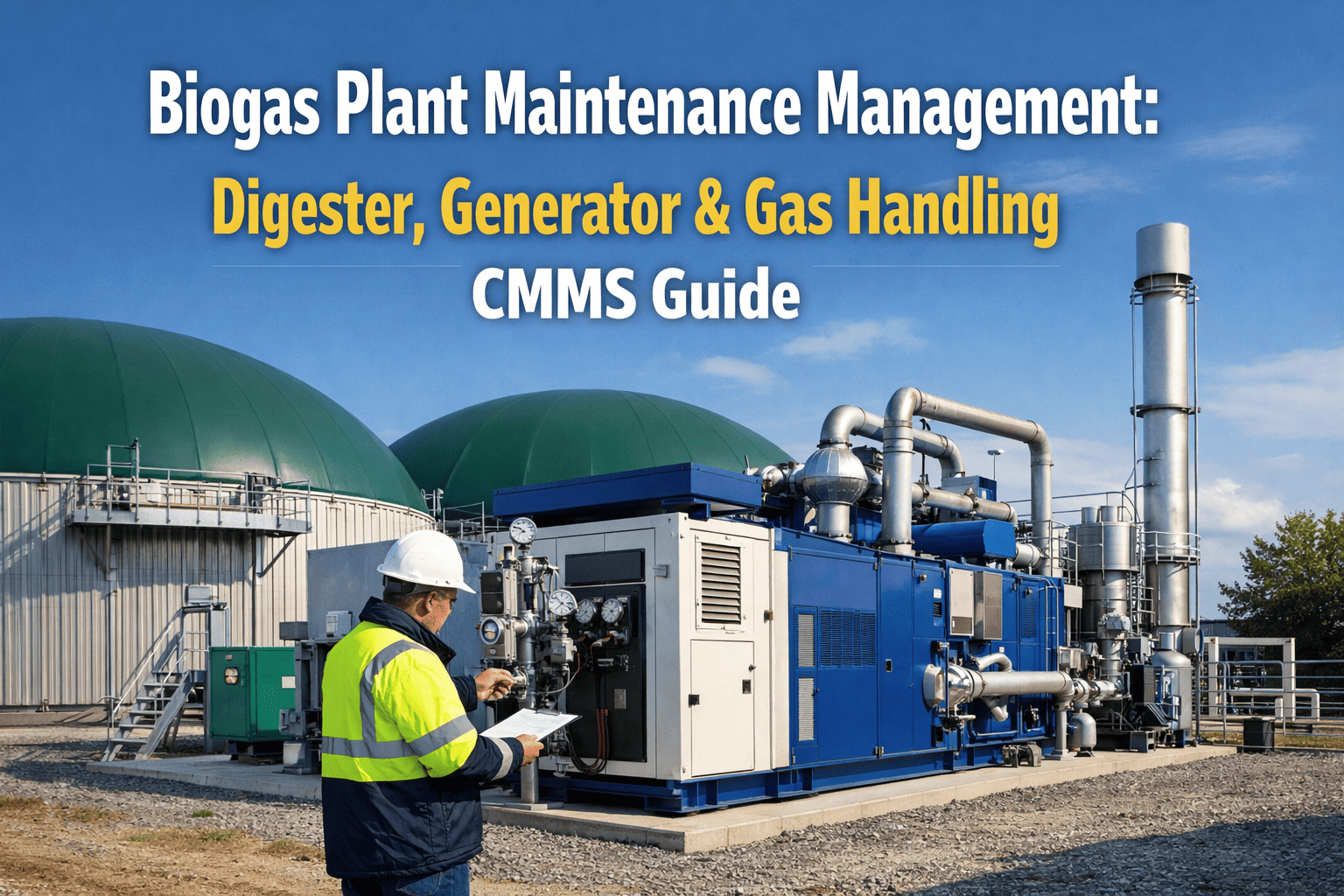
An anaerobic digester running at 85% biogas yield instead of 95% is costing a wastewater treatment plant or biogas facility between $40,000 and $120,000 in lost energy revenue per year — before counting the emergency dewatering costs when a digester foams over, the regulatory exposure when pH drifts outside permitted range, or the capital cost of a membrane cover failure that could have been prevented with a quarterly inspection. Digester mixing, heating, and membrane systems are among the most maintenance-intensive assets in any biogas or wastewater operation, and the most likely to be running on reactive maintenance schedules with no structured PM programme. Oxmaint changes that. Book a demo to see how Oxmaint manages digester PM and process monitoring across your full operation.
10-15%
Biogas yield reduction from suboptimal mixing and temperature control in poorly maintained CSTR digesters
$120K
Annual lost energy revenue from a single digester running at 85% yield vs 95% in a mid-size biogas facility
6.8-7.4
Critical pH operating window for methanogenic bacteria — deviation outside this range causes digester failure within 48-72 hours
4.8x
Cost premium for reactive digester repairs versus planned maintenance — membrane cover failures average $180,000 emergency vs $38,000 planned
Your Digester Performance Gap Is a Maintenance Scheduling Problem. Oxmaint Fixes It.
Mixer inspection schedules, heating system PM, membrane condition checks, pH monitoring alerts, and desludging calendars — all managed in Oxmaint with automated work orders before failures reduce yield or trigger permit violations.
Four Digester System Types — Four Different Failure Profiles
Digester Maintenance Context
Anaerobic digesters operate as integrated biological and mechanical systems where equipment failure and process deviation amplify each other. A mixer failure at 38°C mesophilic temperature creates stratification that reduces biogas yield within 24 hours. A heating coil scaling event of 3mm reduces thermal efficiency by 18%. A membrane cover pinhole creates an oxygen ingress risk that can kill methanogenic bacteria within 72 hours. Structured preventive maintenance is not optional in anaerobic digestion — it is the difference between a profitable biogas asset and a regulatory liability.
Mixing
Digester Mixing Systems
CSTR slow-speed mechanical mixers, gas recirculation mixing, hydraulic jet mixing, or draft tube configurations. Mixing ensures uniform temperature, substrate distribution, and prevention of scum layer accumulation. Bearing failure is the primary mechanical risk — detectable by vibration monitoring 4-6 weeks before failure.
Primary risk: Bearing failure, shaft seal leak, scum accumulation
Daily check
Monthly inspection
Heating
Heating and Heat Exchange Systems
Internal heating coils, external heat exchangers, or combined wall heating systems maintaining mesophilic (35-40°C) or thermophilic (50-55°C) operating temperature. Scale buildup at 3mm reduces efficiency by 18%. Temperature deviation of more than 2°C from setpoint reduces biogas yield by 8-12% within 48 hours.
Primary risk: Scale buildup, coil fouling, pump failure, insulation degradation
Daily temp monitoring
Quarterly descale
Membrane
Membrane Cover Systems
Double-membrane biogas storage covers, floating covers, or fixed steel covers on primary digesters. Membrane integrity is the primary biogas safety system — pinhole failures allow oxygen ingress that inhibits methanogenic bacteria, and gas leaks create explosive atmosphere risk. Membrane life is 15-25 years with inspection; 8-12 years without.
Primary risk: Pinhole leaks, UV degradation, anchor wear, pressure differential failure
Weekly visual
Quarterly inspection
Process
pH and Process Monitoring
Continuous pH, VFA/alkalinity ratio, ammonia concentration, and hydrogen sulfide monitoring. pH outside the 6.8-7.4 window indicates process instability that will suppress methanogenesis. VFA accumulation predicts process failure 3-7 days before pH drops — the leading indicator that reactive operations miss.
Primary risk: Process instability, methanogen inhibition, regulatory permit breach
Continuous sensor
Weekly lab analysis
Digester System Performance: Maintained vs Unmaintained
Biogas Yield and System Efficiency Impact of Maintenance Programme
With Structured PM (Oxmaint)
Heating Efficiency
90-95%
Mixing Effectiveness
92-96%
pH Stability (in range)
97-99%
Unplanned Shutdowns/yr
0-1 events
Without Structured PM (Reactive)
Heating Efficiency
65-74%
Mixing Effectiveness
67-76%
pH Stability (in range)
70-78%
Unplanned Shutdowns/yr
3-6 events
Complete Digester PM Schedule: What Oxmaint Automates
Every PM Task in This Table — Automated in Oxmaint From Day One
Mixer bearing checks, heating system descale triggers, membrane inspection schedules, pH monitoring alerts, and desludging calendars all auto-generated and dispatched to your team without manual scheduling intervention.
How Oxmaint Manages Digester PM and Process Monitoring
Mixing PM
Mixer Bearing and Seal Maintenance Scheduling
Mixer assets registered in Oxmaint with OEM service intervals per bearing type, seal specification, and lubrication grade. Monthly bearing checks and quarterly seal inspections auto-generated. IoT vibration sensor integration triggers early warning work orders when vibration exceeds baseline threshold — 4-6 weeks before bearing failure.
Heating PM
Heat Exchanger and Heating Coil Descale Triggers
Heating system delta-T monitored continuously via temperature sensor integration. When delta-T deviation exceeds 5°C from clean-exchanger baseline, Oxmaint auto-generates a descale work order before efficiency loss compounds. Quarterly descale schedules serve as backstop when sensor integration is not active.
Membrane
Membrane Inspection and Pressure Monitoring
Weekly visual inspection checklists and monthly pressure differential tests scheduled automatically per digester. Annual structural inspection work orders generated with qualified inspector assignment and certificate upload requirement. Pressure differential alerts trigger immediate work orders when readings deviate from design specification.
Process Monitor
pH, VFA, and Ammonia Alert Management
Process sensor data from pH probes, online VFA analysers, and H2S monitors feeds Oxmaint directly via REST API or SCADA integration. When pH drops below 7.0 or VFA/alkalinity ratio exceeds 0.3, Oxmaint generates an immediate corrective action work order and alerts the process engineer without human triage delay.
Desludging
Desludging Calendar and Sludge Volume Tracking
Desludging programmes scheduled in Oxmaint against digester active volume targets. Sludge blanket level readings logged against each digester asset. When active volume drops below 85% of design, a desludging work order is automatically generated and scheduled before hydraulic retention time (HRT) is compromised.
IoT Integration
SCADA and Sensor Integration for Condition-Based PM
Oxmaint integrates with digester SCADA and BMS platforms via OPC-UA, Modbus, or REST API. Temperature, pressure, gas flow, pH, and vibration data feeds asset condition scores and triggers condition-based work orders automatically — replacing fixed-interval PM with maintenance that responds to actual digester condition.
Compliance
Permit Compliance and Regulatory Documentation
Environmental permit conditions for pH range, gas emissions, and effluent quality tracked in Oxmaint with automatic alerts before permit thresholds are breached. All monitoring records stored with timestamps for Environment Agency (UK), EPA (USA), or equivalent regulatory submissions — audit-ready on demand.
Multi-Site
Portfolio Dashboard for Multi-Digester Operations
Operators running multiple digesters across sites see all vessel status, PM compliance rates, active process alerts, and upcoming maintenance tasks from one Oxmaint dashboard. Biogas yield trends per digester visible at portfolio level — identifying which vessels are underperforming before the annual report makes it visible.
Implementation Roadmap: Digester PM in Oxmaint
Digester Asset Registry and System Classification
All digesters registered in Oxmaint with vessel type (CSTR, UASB, plug flow), current operating temperature, active volume, and mixing system configuration. Mixing, heating, membrane, and instrumentation assets tagged per vessel with OEM service intervals and current maintenance status.
Deliverable: Complete digester asset registry with PM classification per system
PM Schedule Activation and Process Alert Configuration
Mixing, heating, membrane, and desludging PM schedules activated with auto-generated work orders per frequency. pH, VFA, temperature, and pressure alert thresholds configured per digester with corrective action work order templates. SCADA and sensor integration connected via API where available.
Deliverable: All PM schedules live with process alert triggers active per digester
Performance Dashboard and Compliance Reporting
Biogas yield trend dashboard activated per vessel. Permit compliance monitoring configured with regulatory threshold alerts. Environmental monitoring logs structured for agency submission format. Operations team and process engineers configured with role-appropriate mobile access to their digester work queues and process alerts.
Deliverable: Live performance dashboard and regulatory compliance monitoring per vessel
AI Condition Monitoring and CapEx Forecasting
AI condition-based maintenance activated using accumulated sensor data for predictive bearing wear and heating system efficiency trend analysis. Membrane condition scoring generates replacement timing recommendations based on inspection history and age. Rolling 5-10 year CapEx model for vessel relining, membrane replacement, and major equipment overhauls generated from Oxmaint asset condition data.
Deliverable: AI predictive maintenance and data-driven CapEx planning for all digester assets
Results: Digester Performance Outcomes from Oxmaint Deployments
+14%
Biogas Yield Improvement
Average biogas yield improvement at CSTR digesters in the first 12 months after Oxmaint PM programme activation, from optimised mixing and heating system maintenance
Zero
Unplanned Membrane Failures
Unplanned membrane cover failures in Oxmaint-monitored digesters with weekly inspection schedules active — versus 1 to 2 events per 3-year period at reactive-maintenance facilities
$96K
Annual Energy Revenue Recovered
Average annual energy revenue recovered at a 2-vessel CSTR biogas facility after closing the yield gap from 81% to 94% through structured mixing and heating PM
68%
Reduction in reactive work orders at digesters within 12 months of Oxmaint PM activation — from emergency callouts to planned, scheduled maintenance interventions
6 wks
From Oxmaint activation to first structured PM schedule running across mixing, heating, membrane, and process monitoring systems at a new biogas facility deployment
97%
pH in-range compliance rate at CSTR digesters with Oxmaint pH alert monitoring active — process instability events identified and corrected before permit breach threshold is reached
2 hrs
Time to assemble a complete regulatory compliance monitoring submission from Oxmaint records, versus days of manual data extraction from SCADA logs and paper inspection forms
Frequently Asked Questions
How does Oxmaint integrate with digester SCADA systems for process monitoring alerts?
Oxmaint connects to digester SCADA and BMS platforms via OPC-UA, Modbus TCP/IP, or REST API. pH, temperature, pressure, gas flow, and vibration data streams into Oxmaint asset condition records in real time. When any parameter crosses a configured alert threshold, Oxmaint auto-generates a corrective action work order and sends mobile notifications to the assigned process engineer.
Start free or
book a demo to see SCADA integration configured for your digester control system.
What is the recommended frequency for digester mixing system maintenance?
Monthly bearing vibration checks with lubrication per OEM grade and interval, quarterly shaft seal inspections, and monthly scum layer depth measurements are the minimum structured programme. IoT vibration monitoring on mixer bearings extends this to continuous condition monitoring, catching bearing degradation 4-6 weeks before failure.
Book a demo to see mixing PM scheduling configured for your digester type and mixer specification.
How does Oxmaint handle membrane cover inspection scheduling and failure alerts?
Weekly visual inspection checklists and monthly pressure differential tests are auto-generated per digester vessel in Oxmaint. Pressure differential sensor integration triggers immediate work orders when readings deviate from design specification. Annual structural inspection work orders are generated with required evidence attachments.
Start free to configure membrane inspection schedules for your vessel count today.
Can Oxmaint manage desludging schedules based on active volume measurements rather than fixed calendar intervals?
Yes. Sludge blanket level readings are logged against each digester asset in Oxmaint after each measurement. When active volume drops below the configured threshold — typically 85% of design volume — Oxmaint automatically generates a desludging work order and schedules contractor mobilisation before HRT is compromised.
Book a demo to see condition-triggered desludging scheduling for your digester programme.
How does Oxmaint support environmental permit compliance documentation for regulators?
Environmental permit conditions including pH operating range, effluent quality limits, and gas emission parameters are configured in Oxmaint with automatic alerts before breach thresholds are approached. All monitoring records are stored with timestamps and are exportable in formats suitable for Environment Agency (UK), EPA (USA), and equivalent EU and UAE regulatory submissions.
Start free or
book a demo to configure your permit compliance monitoring in Oxmaint.
What is the typical deployment timeline for Oxmaint at a biogas or wastewater digester facility?
Most digester facilities complete asset registration, PM schedule activation, and process alert configuration within 3 to 4 weeks with no IT project required. SCADA integration is typically completed in week 2 to 3. The full PM programme — mixing, heating, membrane, and process monitoring — is running by end of week 4.
Book a demo to review the deployment timeline for your vessel count and site configuration.
Stop Losing Biogas Yield to Deferred Maintenance. Oxmaint Makes Structured Digester PM Operational in 4 Weeks.
Biogas operators and wastewater treatment facilities in the USA, UK, UAE, Canada, and Europe are using Oxmaint to close the yield gap, eliminate unplanned membrane failures, keep pH in permit range, and document every maintenance intervention for regulatory submissions. Structured PM is not expensive. Unstructured failures are.
Mixer Bearing PM
Heat Exchanger Descale Triggers
Membrane Inspection Scheduling
pH and VFA Process Alerts
SCADA Integration