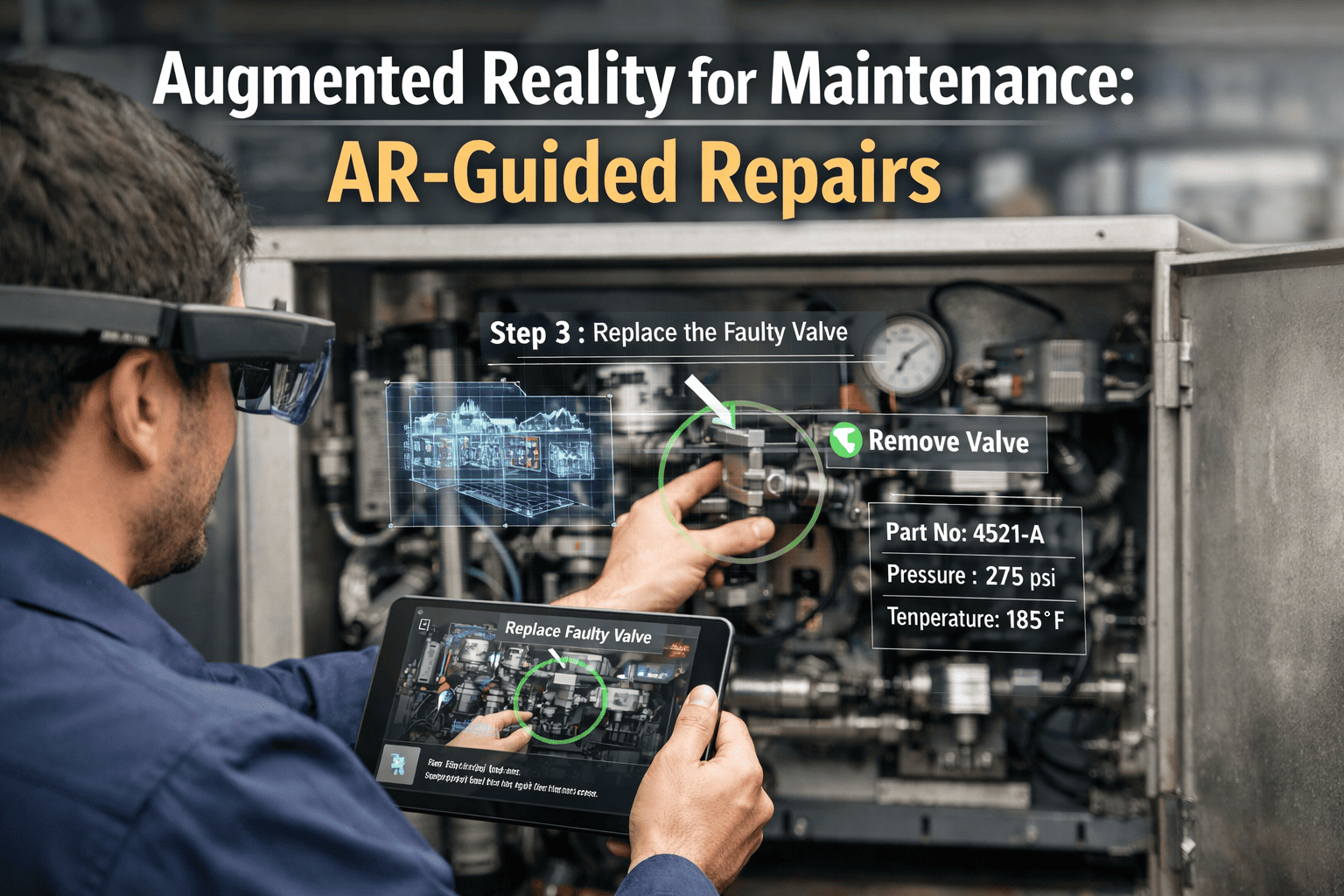
When a critical pump fails at 2AM, your newest technician should not be searching a paper manual under fluorescent lights. AR-guided maintenance overlays step-by-step repair instructions, live sensor data, and digital twin visuals directly onto the equipment — in the technician's field of view. Integrated with Oxmaint CMMS, every work order becomes a guided repair experience.
Equip Every Technician with the Knowledge of Your Best Engineer
Why Traditional Maintenance Documentation Is Failing Industrial Teams
Complex maintenance procedures have historically relied on paper manuals, lengthy PDFs, and phone calls to remote experts who cannot see what the technician sees. As experienced engineers retire, they take decades of tribal knowledge with them — leaving newer technicians to navigate critical repairs with inadequate guidance, rising error rates, and mean time to repair figures that keep climbing quarter over quarter.
The consequences are not just operational. A single missed step during a high-stakes repair can create safety incidents, regulatory violations, and cascading equipment failures that cost far more than any technology investment. Oxmaint's AR integration solves this by embedding guided visual work instructions directly into every CMMS work order — no separate app, no paper, no guesswork on the floor.
Paper Manuals and Outdated PDFs
Technicians navigate complex repair sequences from static documents that cannot react to what is actually happening on the equipment — leading to missed steps, incorrect part selections, and repeat failures.
High Mean Time to Repair
Without contextual guidance, technicians spend significant time diagnosing before they can even begin the repair. Every hour of troubleshooting is an hour of production loss that compounds across the maintenance calendar.
Skills Gap and Knowledge Loss
Retiring engineers take irreplaceable institutional knowledge with them. New technicians lack the experience to handle unfamiliar equipment confidently — increasing error rates and dependence on senior staff who are no longer available.
Costly Expert Dispatch Travel
When a repair exceeds a technician's capability, the default response is to fly in a specialist. Travel time, logistics, and day rates for senior engineers make this approach expensive and slow — even for problems that could be solved remotely with live visual guidance.
What AR-Guided Maintenance Actually Looks Like on the Floor
Augmented reality maintenance bridges the gap between a physical asset and its entire body of digital knowledge — manuals, sensor readings, repair histories, and expert annotations — delivering that knowledge to the technician's line of sight at the exact moment of need. The impact is immediate: troubleshooting that previously took hours completes in minutes. Repairs that required senior oversight become solo competencies for junior technicians.
AR Work Instructions Overlaid on Equipment
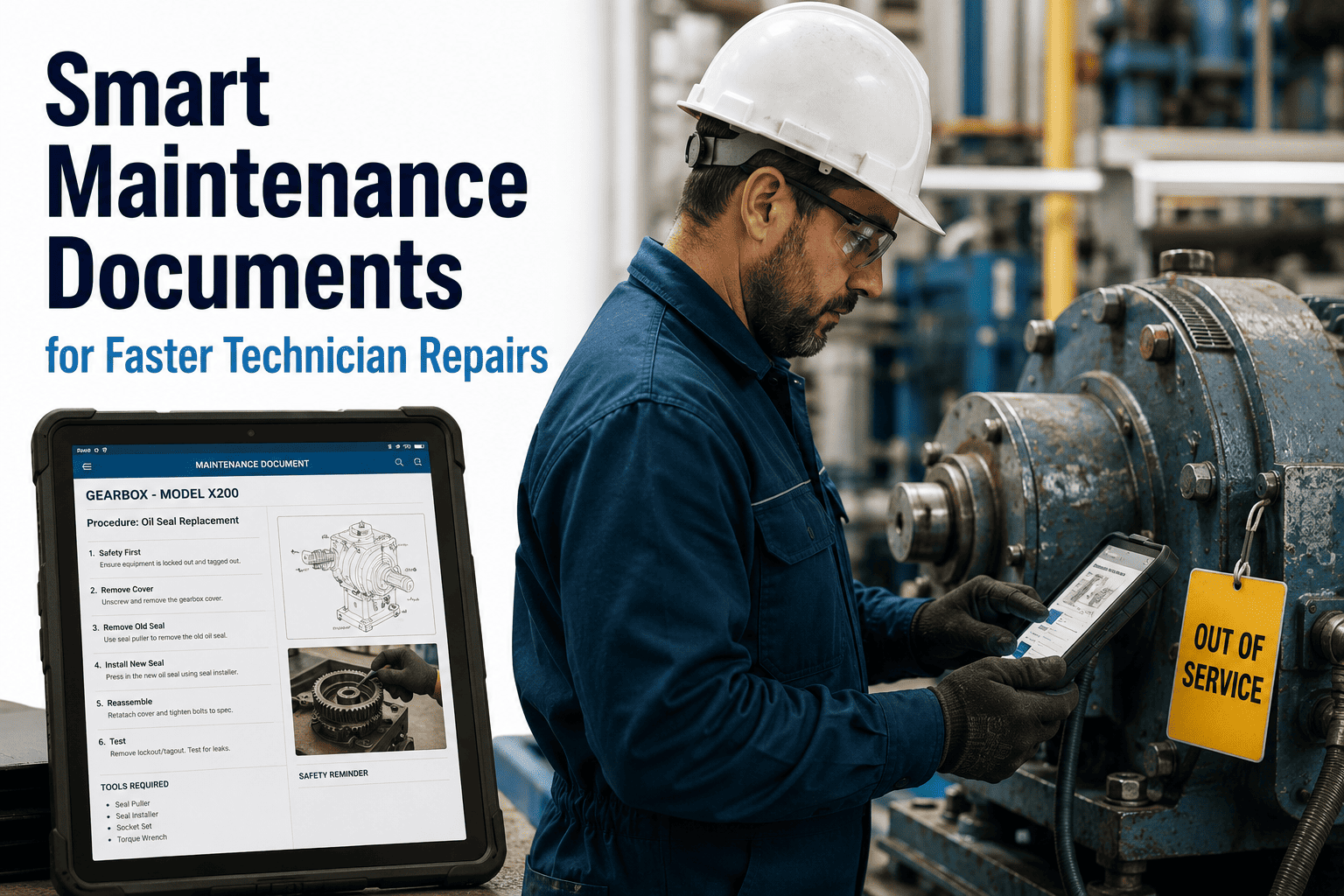
Complex maintenance procedures are presented as interactive, context-sensitive overlays directly on the physical machine. As a technician moves through each step, the AR interface displays exactly what to do next — with 3D exploded views for disassembly, colour-coded component highlights, and dynamic instruction updates if conditions change during the repair.
Compared to a traditional paper manual, AR work instructions reduce error rates substantially by eliminating interpretation from complex 2D schematics. Technicians see the correct bolt, the correct torque value, and the correct sequence — simultaneously — without looking away from the work. This drives the first-time fix rate from an industry average of 67% to over 90% for AR-equipped teams. Start a free trial to see how Oxmaint delivers AR work orders.
What the Technician Sees
Step-by-step overlay on the physical component in real-time field of view
3D exploded part diagrams replacing flat schematics and PDFs
Colour-coded component highlights showing exact location of target parts
Real-time alerts if a safety step is missed or a threshold is exceeded
Torque values, clearance measurements, and part numbers at the point of use
Live IoT Sensor Data and Digital Twin Overlay
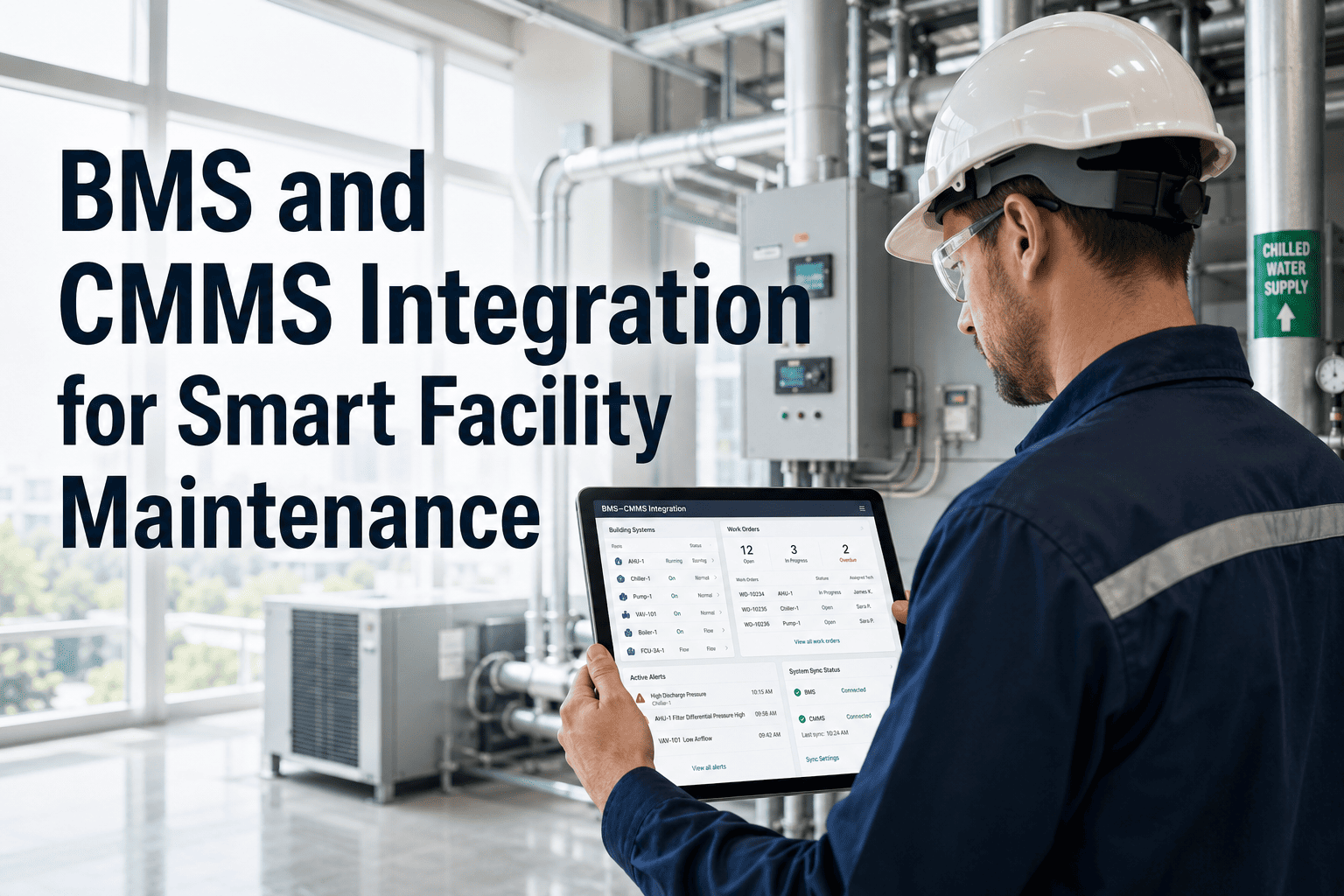
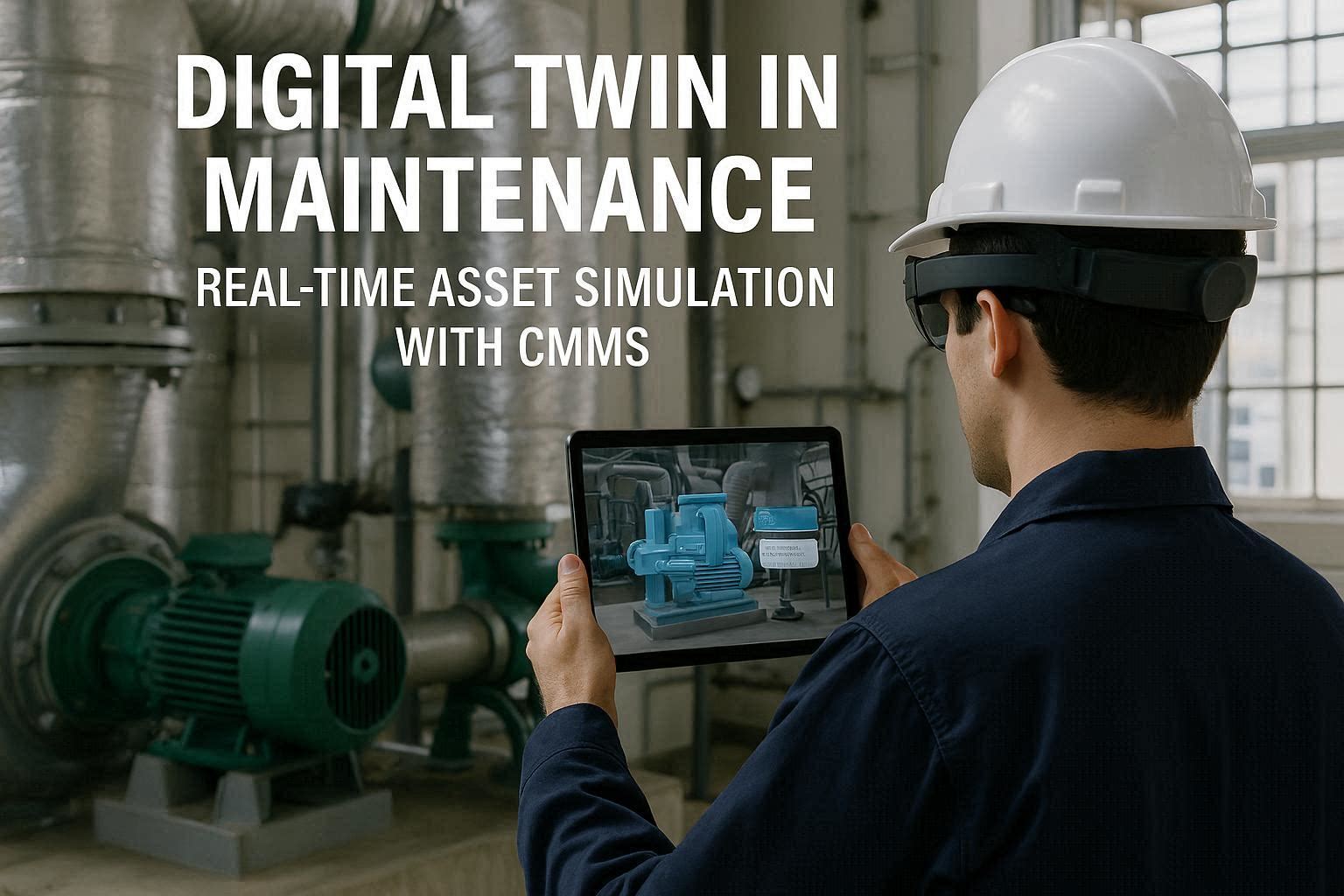
AR becomes far more powerful when it displays real-time equipment health data alongside repair instructions. Connected to Oxmaint's CMMS and IoT sensor streams, the AR interface can show current vibration signatures, temperature readings, pressure values, and predictive maintenance alerts directly on the physical asset — giving the technician full context about the machine's current state while executing the repair.
This combination of digital twin data and visual guidance enables proactive interventions. A technician servicing a pump can see a thermal anomaly flagged on the impeller housing in their field of view — and address it during the scheduled maintenance visit rather than waiting for a failure callback. Book a demo to see the Oxmaint IoT and AR integration in action.
Live Data Overlays Available
Real-time vibration, temperature, and pressure readings per asset
Digital twin component status mapped to the physical machine surface
Full maintenance history and previous work order notes in context
Predictive alerts flagging anomalies detected by AI models before visible failure
Remote Expert Assistance with Live AR Annotation
When a technician encounters an unfamiliar problem, AR remote support connects them instantly to a senior engineer or OEM specialist — anywhere in the world. The expert sees exactly what the technician sees and can draw annotations directly onto the physical equipment in the technician's field of view. This is fundamentally different from a video call: the guidance sticks to the real-world object as the technician moves around it.
The business case is straightforward: a senior expert can guide an on-site technician from any location, eliminating travel expenses and delays. AR remote maintenance tools alone represent a market growing from $2.8 billion in 2025 to $6.4 billion by 2035 — because the savings on expert dispatch travel are immediate and easy to measure. Sign up to access Oxmaint's remote guidance tools.
Remote AR Session Capabilities
Expert annotations that lock to 3D real-world surfaces as the technician moves
Shared field of view — expert sees exactly what the technician sees, live
Sessions recorded and stored in CMMS work order records for future reference
No specialist travel required — saves thousands per incident on remote sites
Give Every Technician AR-Guided Repair Instructions Through Their Oxmaint Work Orders
A new work order in Oxmaint instantly triggers the correct AR-guided workflow for the assigned technician. Completion data, time, notes, and photos automatically push back into the work order record — creating a closed-loop system that improves with every repair.Oxmaint AR Integration Features for Industrial Maintenance Teams
Every AR feature in Oxmaint is built to solve a specific problem that maintenance teams face on the floor — not to add technology complexity. Sign in to explore the full capability set with your own assets and work orders.
Visual Work Instructions
CMMS work orders automatically surface the correct AR procedure for the assigned asset and fault type. Instructions display as 3D overlays on the physical equipment — no manual document retrieval needed on the floor.
Digital Twin Integration
Live digital twin data from Oxmaint overlays on the physical asset — showing component health, sensor readings, and anomaly flags in the technician's field of view at the exact moment of repair.
Remote Expert Guidance
Connect field technicians to remote specialists via live shared AR sessions. Experts annotate directly onto the technician's view of the physical equipment — no travel required, no context lost between the phone call and the repair.
Knowledge Capture and Transfer
AR sessions generate structured repair data — steps taken, time per step, deviations, notes — that feeds back into the CMMS and builds institutional knowledge. Retiring engineers' expertise becomes embedded in the workflow rather than walking out the door.
Compliance and Audit Trails
Every AR-guided repair is automatically logged with a timestamped record of steps completed, safety checks confirmed, and technician sign-off. Regulatory audits and ISO compliance reviews draw from the same CMMS record — no separate documentation required.
Hardware-Agnostic Deployment
Oxmaint AR works across smart glasses, tablets, and smartphones — allowing teams to start with mobile devices during pilot phases and graduate to hands-free smart glasses as adoption scales. No single hardware vendor lock-in.
AR Maintenance Across Industrial Sectors
AR-guided maintenance delivers measurable gains in every industry where complex equipment, safety requirements, and skills gaps create maintenance challenges. The table below shows how different sectors are deploying AR and what outcomes they are achieving — with Oxmaint managing the CMMS layer that triggers and records every guided repair session.
Scroll horizontally on mobile
| Industry | Primary AR Use Case | Key Benefit | Typical Outcome |
|---|---|---|---|
| Manufacturing | Interactive assembly and repair work instructions | Reduced defect rates, faster line changeover | Up to 40% reduction in repair time |
| Oil and Gas | Remote expert guidance for offshore and hazardous sites | Eliminated specialist travel to remote locations | Thousands saved per incident in travel costs |
| Automotive | Engine diagnostics and precision assembly guidance | Faster diagnosis, reduced specialist dependency | First-time fix rate rises from 67% to 91% |
| Aerospace | Engine overhaul, avionics repair, tolerance verification | Error reduction in high-consequence precision work | Compliance documentation fully automated |
| Energy and Utilities | Field technician guidance on turbines and grid infrastructure | Remote consultation eliminates expert dispatch delays | Significant reduction in mean time to repair |
| Pharmaceutical | GMP-compliant procedure verification and step logging | Regulatory compliance automated at point of repair | Audit-ready records without manual documentation |
Real-World Impact: Equipment Manufacturer AR Deployment
A major equipment manufacturer implemented AR-assisted field service across their technician network. Before AR, field technicians relied on PDF manuals and phone support from specialists who could not see the physical equipment. Complex fault diagnoses took multiple visits, first-time fix rates were below 70%, and expert travel costs were a significant operational line item.
After deploying AR-guided work instructions integrated with their CMMS, work orders triggered the correct AR procedure automatically when assigned. Remote experts could annotate directly onto the technician's view of the equipment from a central support hub — eliminating the need for specialist dispatch in most cases. Every session generated structured data that improved future procedures.
AR-assisted field service reduced average repair time by 32% and increased first-time fix rates from 67% to 91% — resulting in millions of dollars in saved downtime costs for customers.— Field Service Director, Major Equipment Manufacturer (documented outcome)
How to Deploy AR-Guided Maintenance in 4 Phases
Successful AR maintenance programs start with a focused pilot on the highest-impact use case — typically the fault type with the worst first-time fix rate or highest expert travel cost. ROI from the pilot funds expansion. Most organisations achieve positive return within 12 to 18 months. Sign up to begin your pilot with Oxmaint's AR integration tools.
Use Case Selection and Baseline Measurement
Identify the 3 to 5 maintenance procedures with the worst first-time fix rates or highest MTTR
Document current baseline: average repair time, repeat failure rate, expert travel cost per incident
Select hardware approach — mobile tablet pilot or smart glasses for hands-free operations
Connect Oxmaint CMMS to the AR platform and map work order types to AR procedure library
Success KPI: Baseline metrics documented and AR procedure library built for pilot use cases
Pilot Deployment on Highest-Impact Procedures
Deploy AR-guided work instructions for selected pilot procedures to a small technician group
Enable remote expert guidance for complex fault types during the pilot window
Track first-time fix rate, MTTR, and technician feedback per guided procedure
Capture AR session data back into Oxmaint work order records to validate the closed-loop integration
Success KPI: Measurable improvement in first-time fix rate and MTTR documented for pilot procedures
Expand Procedure Library and Technician Coverage
Extend AR procedure library to cover the full preventive and corrective maintenance scope
Digitise retiring engineers' knowledge into guided AR workflows before they leave the organisation
Scale remote guidance to cover all shift patterns including nights and weekends
Train maintenance supervisors to review AR session analytics and improve procedure quality
Success KPI: All priority procedures covered, remote guidance available across all shifts
Continuous Improvement and ROI Measurement
Compare 12-month post-deployment metrics against baseline: MTTR, first-time fix rate, travel costs
Use AR session analytics to identify which procedures still drive high error rates or long completion times
Feed AR outcome data into Oxmaint's predictive maintenance models to improve future work order accuracy
Scale the validated programme to additional facilities using the proven procedure template library
Success KPI: Documented ROI exceeding program cost confirmed within 12 to 18 months of deployment
Common Questions About AR Maintenance Implementation
These are the questions maintenance managers and operations directors ask before committing to an AR deployment. If your scenario is not covered here, book a technical session with the Oxmaint team.
What hardware do technicians need to use AR-guided maintenance?
AR maintenance works across three main hardware types. Smart glasses such as RealWear, Microsoft HoloLens, or Google Glass Enterprise Edition provide a fully hands-free experience — ideal for confined spaces or tasks that require both hands on tools throughout. Industrial tablets are a lower-cost starting point for pilots and work well for bench repairs and accessible equipment. Smartphones are the lowest barrier to entry and sufficient for many mobile AR use cases. Oxmaint's AR integration is hardware-agnostic, so organisations can start with mobile devices and upgrade to smart glasses as adoption scales without rebuilding the procedure library.
How does Oxmaint connect work orders to AR repair procedures?
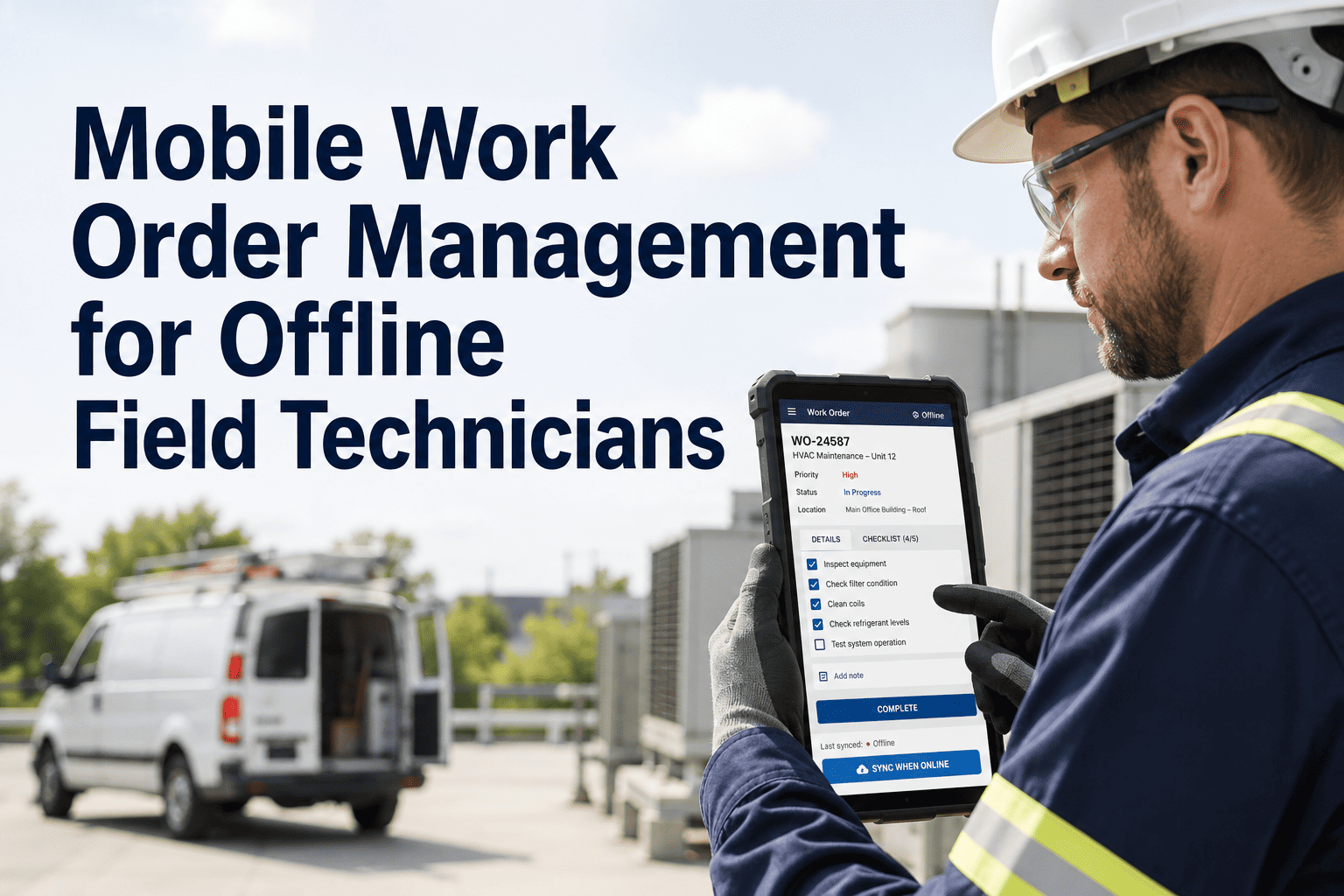
When a work order is created or assigned in Oxmaint, the system matches the asset type, fault code, and maintenance category to the corresponding AR procedure in the library. The assigned technician receives the work order notification with an AR launch button — tapping it opens the guided workflow directly on their device. Completion data including steps confirmed, time taken, and any deviations recorded automatically pushes back into the Oxmaint work order record. This creates a closed-loop system where every AR-guided repair enriches the CMMS data without requiring separate logging. Sign up to configure your first AR-linked work order type.
How long does it take to build an AR procedure library?
Most pilot programmes begin with 5 to 15 priority procedures — typically the repair types with the worst first-time fix rates or most frequent expert escalations. A single procedure can be built in 2 to 8 hours depending on complexity, using existing CAD data, maintenance manuals, and input from senior technicians. Modern AR authoring tools do not require programming knowledge. Within 4 to 6 weeks, most teams have a pilot library ready to deploy. The library expands continuously as more procedures are digitised and refined through real usage data captured by Oxmaint.
Does AR maintenance work in environments with limited connectivity?
Yes. AR maintenance platforms designed for industrial environments support offline mode — procedures and 3D models are pre-loaded to the device before the technician enters a low-connectivity zone such as a substation, underground facility, or remote offshore platform. Core repair guidance functions without an active network connection. Features that require live data — IoT sensor overlays, real-time remote guidance, and automatic CMMS sync — resume when connectivity is restored. This makes AR maintenance viable for the most operationally challenging environments where reliable connectivity cannot be guaranteed.
How do you measure the ROI of an AR maintenance programme?
The clearest ROI signals are mean time to repair reduction, first-time fix rate improvement, and expert travel cost elimination. Establish baseline metrics before deployment across all three dimensions. After 90 days of pilot operation, compare actuals to baseline. For most industrial organisations, the largest immediate payback comes from remote guidance eliminating specialist dispatch travel — which is simple to quantify per incident. Secondary savings accumulate from reduced equipment downtime, lower repeat failure rates, and faster onboarding for new technicians. Book a demo to build a tailored ROI model for your facility size and fault profile.