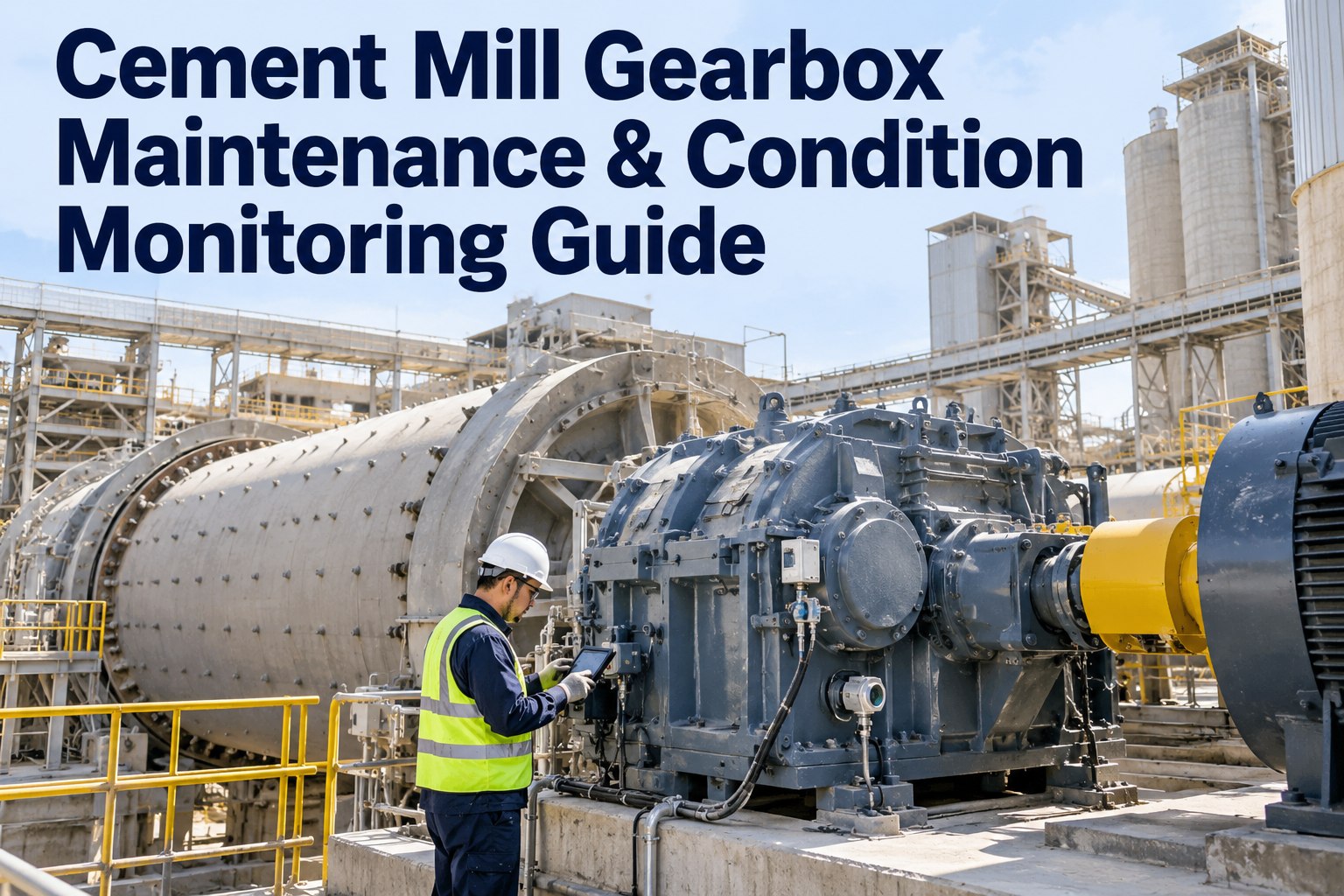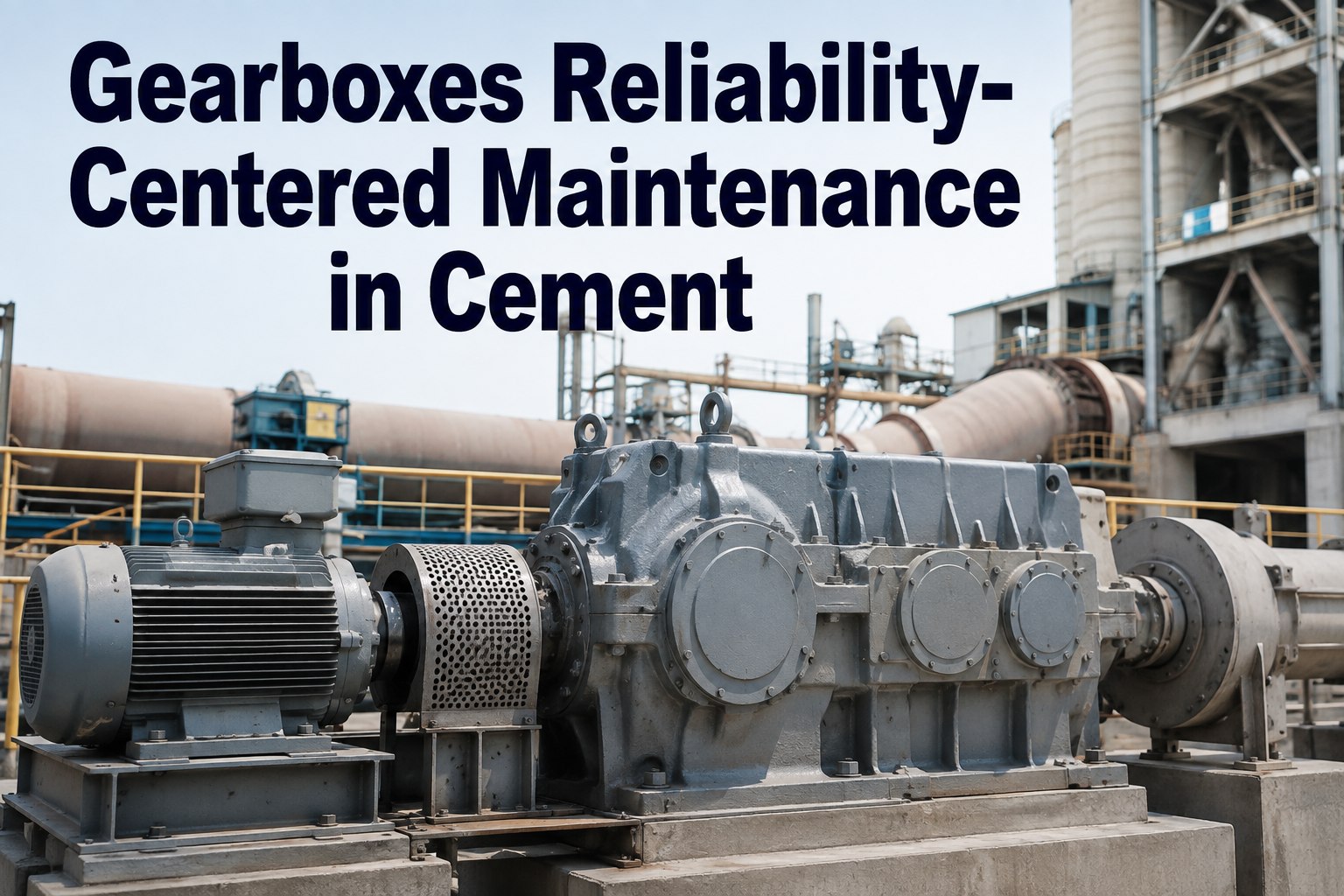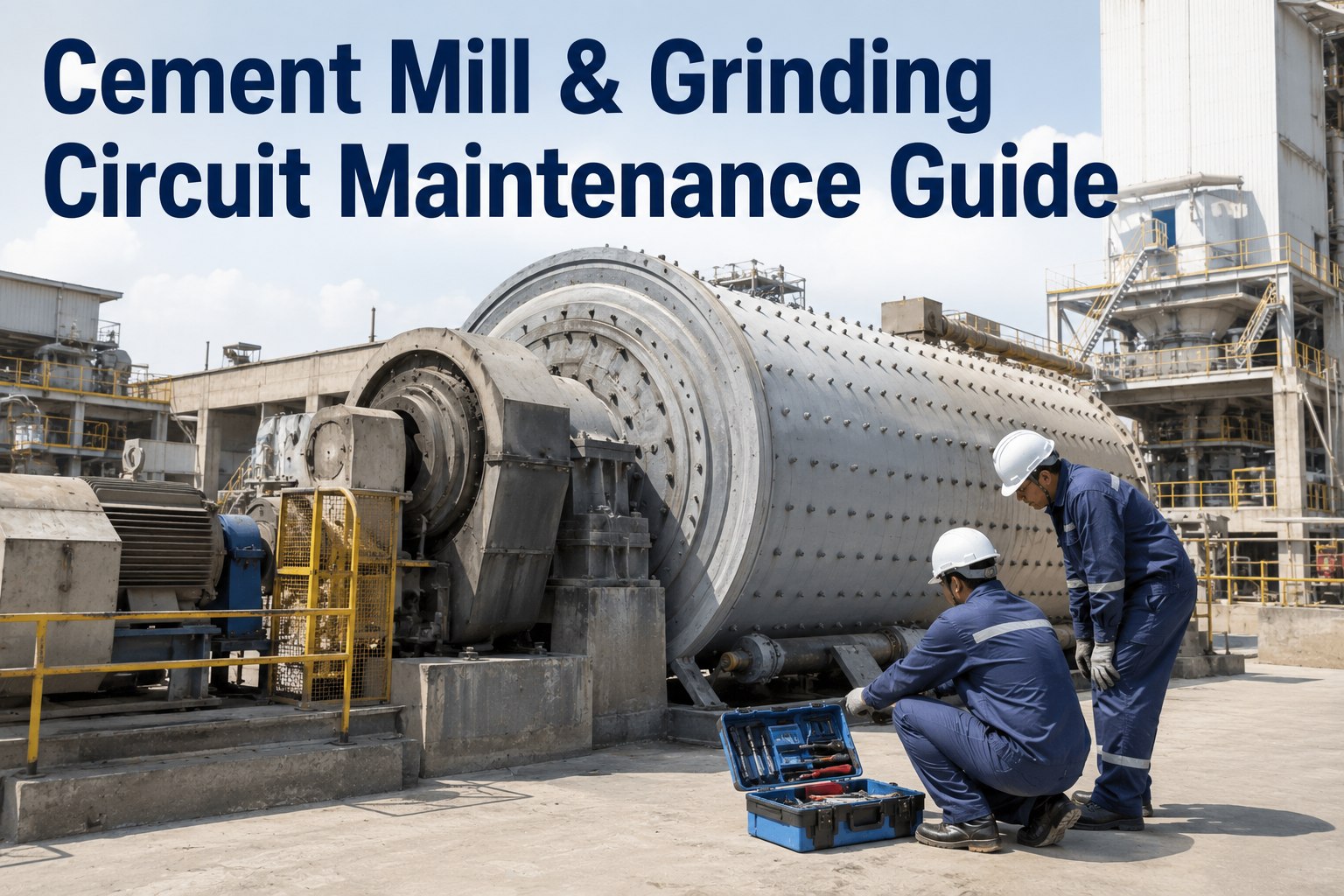
Cement mill maintenance and grinding circuit reliability directly determine a plant's power cost per tonne, product fineness and clinker factor — grinding alone consumes 60–70% of cement plant electricity, so even a 2% efficiency drift quietly erodes margin every day. Effective cement grinding maintenance spans ball mill maintenance, vertical roller mill maintenance, separator maintenance and the wear-parts inventory that keeps the circuit running at target throughput. This guide lays out the PM routines, wear-tracking practices and CMMS-driven reliability tactics that prevent unplanned outages — and shows how OxMaint helps teams operationalise them. You can Start Free Trial or read on for the full framework.
CEMENT GRINDING RELIABILITY
Is your grinding circuit leaking efficiency between scheduled overhauls?
Ball mills, VRMs and separators wear continuously. A CMMS-driven maintenance program protects grinding efficiency, stabilises product fineness and prevents the unplanned outages that cost cement plants $12K–$45K per hour in lost production.
WHY IT MATTERS
The real cost of reactive cement mill maintenance
A typical 1M tpa cement plant spends $6–9M annually on grinding-circuit power alone. When maintenance is reactive, three cost layers compound silently — until a bearing seizure or separator fan failure forces an unplanced stop.
Worked example
A 1.2M tpa plant running two ball mills and one VRM was scheduling girth-gear inspections every 4 months on a fixed calendar. After a pinion tooth fractured in month 3, the root-cause audit revealed tooth wear had crossed the alarm threshold in month 2 — but nobody had logged the ultrasonic thickness reading because the spreadsheet was on a clipboard in the mechanic's locker. The unplanned outage cost $312K in lost production and emergency parts air-freight. Migrating to OxMaint's meter-based PM triggers and digital inspection checklists eliminated the gap: the same inspection now auto-generates at 2,800 running hours, results are captured on mobile, and wear trends trigger a work order before the next failure window opens.
PM LIBRARIES
Ball mill and VRM maintenance: what a best-practice PM library covers
Cement grinding maintenance fails when routines live in people's heads. A structured PM library — deployed in a CMMS like OxMaint — ensures every critical component is inspected, measured and serviced on the right trigger, whether calendar-based or condition-based.
Rotating assembly & drive
- Girth gear tooth contact pattern & backlash — every 1,500 running hours
- Pinion bearing vibration trend (ISO 10816 velocity & shock pulse) — weekly
- Trunnion bearing oil temperature, flow & moisture — continuous / daily log
- Shell temperature scan for liner lift & breakage hotspots — bi-weekly
- Main motor winding RTD trend & coupling alignment — quarterly
Rollers, table & hydraulic system
- Roller sleeve wear measurement (caliper / laser) — every 2,000 hours
- Table liner hardfacing thickness & cracking inspection — monthly
- Hydraulic pressure cycle, nitrogen accumulator charge — weekly
- Roller bearing lubrication grease quantity & interval — auto-lube verified
- Mill fan vibration & damper position calibration — bi-weekly
Classifier & circuit efficiency
- Rotor cage vane wear & balance — every 4,000 hours
- Static vane adjustment & foreign-object check — monthly
- Separator fan impeller erosion & vibration — bi-weekly
- Air-slide & bucket elevator choke-point inspection — weekly
- Circulating load & Blaine fineness trend review — per shift
WEAR-PARTS STRATEGY
How to track grinding-circuit wear parts without spreadsheet chaos
Mill liners, diaphragm plates, roller sleeves, table segments and classifier cages are high-value, long-lead items. Running out stalls overhauls; overstocking ties up $200K–$800K in working capital. The fix is CMMS-linked wear-parts tracking with min/max reorder triggers and lead-time buffers.
| Wear part | Expected life | Lead time | Reorder trigger | Min stock |
|---|---|---|---|---|
| Ball mill liner plates (classifying) | 8,000–14,000 hrs | 10–14 weeks | 70% consumed | 1 full set |
| Grinding media ( forged balls, 25–60mm ) | Continuous top-up | 4–6 weeks | 30 days supply | 60 tons |
| VRM roller sleeve (hardfaced) | 6,000–10,000 hrs | 12–16 weeks | 3,000 hrs remaining | 1 per roller |
| VRM table liner segment | 8,000–12,000 hrs | 14–18 weeks | 4,000 hrs remaining | Full set |
| Separator rotor cage | 18,000–24,000 hrs | 10–12 weeks | Wear gauge >6mm | 1 unit |
| Diaphragm plates & grates | 10,000–16,000 hrs | 8–10 weeks | 60% consumed | 1 set |
HOW OXMAINT HELPS
OxMaint capabilities that protect grinding-circuit efficiency
OxMaint's AI-powered CMMS turns the PM library, wear-parts tracking and condition data above into one closed-loop system — from work-order generation through execution, spares reservation and analytics. Here is how four core capabilities map directly to cement grinding maintenance outcomes.
Meter-based & condition-based PM triggers
OxMaint generates grinding-circuit PM work orders on running hours, throughput tons or vibration thresholds — not just calendars — so girth-gear inspections, roller wear calipers and lube sampling happen at the right moment, every time.
Outcome: cut unplanned grinding-circuit downtime 30–50%.
Wear-parts inventory with auto-reorder
Track liners, media, sleeves and segments by asset with min/max and consumption-rate triggers. OxMaint reserves spares against work orders and flags reorder points with supplier lead-time buffers so overhaul spares are always staged.
Outcome: eliminate stock-out delays and free up 15–25% of spares working capital.
Digital inspection checklists on mobile
Replace clipboard rounds with guided mobile checklists that capture thickness readings, vibration velocity, temperatures and photos at the asset. Out-of-range values auto-create corrective work orders in real time.
Outcome: find failures 2–6 weeks earlier and shorten shutdown planning cycles.
Mill audit & reliability analytics
OxMaint's analytics dashboard correlates vibration, wear-rate, power draw and Blaine trends so reliability engineers can see which mill is drifting, which PM is overdue and what the next overhaul scope should include.
Outcome: stabilise specific power consumption and extend mean time between overhauls.
RELIABILITY ROADMAP
From reactive to predictive: a 6-month cement mill reliability timeline
Most cement plants can move from spreadsheet-driven, reactive grinding maintenance to a CMMS-based reliability program in four to six months. Here is the phased timeline OxMaint implementation engineers use with cement grinding teams.
Asset hierarchy & criticality ranking
Register every mill, separator, fan, conveyor and drive in OxMaint's asset tree. Assign criticality (A/B/C) by production impact and failure consequence. Import existing PM routines and spare-parts lists.
PM library build & mobile rollout
Convert ball mill, VRM and separator inspection routines into digital checklists with pass/fail thresholds. Deploy OxMaint mobile to mechanics and operators; begin capturing vibration, wear and temperature data at the asset.
Condition-based triggers & spares automation
Activate meter-based and threshold-based PM triggers. Link wear-parts inventory to work orders with auto-reorder. Out-of-range inspection readings now generate corrective work orders automatically.
Reliability analytics & predictive tuning
Use OxMaint analytics to identify recurring bad actors, tune PM intervals to actual wear rates and build predictive alerts from vibration and temperature trends. Measure MTBF, OEE and specific power consumption improvement.
BEFORE & AFTER
CMMS-driven vs. spreadsheet-driven cement grinding maintenance
The gap between a clipboard-and-Excel approach and a CMMS-driven reliability program is measured in downtime hours, power per tonne and audit readiness. Here is the direct comparison cement plants see after switching to OxMaint.
| Dimension | Spreadsheet / clipboard | OxMaint CMMS-driven |
|---|---|---|
| PM trigger accuracy | Calendar-based; missed when production shifts | Meter & condition-based; auto-generated at correct interval |
| Inspection data capture | Paper forms, transcribed days later, often lost | Mobile capture at asset; photos & readings in real time |
| Wear-parts visibility | Manual stock counts; stock-outs common | Live inventory with auto-reorder and work-order reservation |
| Failure prediction | Reactive — failure discovered at breakdown | Trend analytics flag drift 2–6 weeks before failure |
| Audit & compliance trail | Scattered folders, hard to reconstruct | Full digital history per asset, exportable in one click |
| Unplanned downtime | 15–25 hours per mill per quarter (typical) | 30–50% reduction within 6 months of go-live |
See OxMaint on your grinding circuit — book a 30-minute demo
We'll load your mill hierarchy, PM routines and wear-parts list into a live workspace and show you exactly how condition-based triggers, mobile inspections and reliability analytics will cut unplanned downtime at your plant.
FAQ
Cement mill maintenance — frequently asked questions
How often should a ball mill be inspected in a cement plant?
Critical rotating components — pinion bearings, girth gear tooth contact and trunnion oil conditions — should be inspected weekly via vibration and temperature monitoring, with full contact-pattern and backlash checks every 1,500 running hours. Shell temperature scans for liner breakage should run bi-weekly. Using a CMMS like OxMaint automates these intervals based on actual running hours rather than fixed calendars, which prevents both over-inspection and missed checks during shift changes.
What is the difference between ball mill maintenance and VRM maintenance?
Ball mill maintenance focuses on girth-gear and pinion integrity, trunnion bearing lubrication, liner wear and grinding media recharge. VRM maintenance centres on roller sleeve and table-liner wear, hydraulic system health, roller bearing lubrication and mill-fan erosion. Both require separator and classifier maintenance, but VRMs demand stricter hydraulic and hardfacing inspections. OxMaint's PM library covers both mill types with component-level triggers tailored to each wear mechanism.
How can a CMMS improve cement grinding circuit reliability?
A CMMS improves grinding-circuit reliability by automating PM generation on running hours and condition thresholds, capturing inspection data digitally at the asset, linking wear-parts inventory to work orders and trending vibration and wear data to predict failures. Plants using OxMaint typically cut unplanned downtime 30–50% within six months. You can Start Free Trial to pilot it on one mill before scaling plant-wide.
What are the most common causes of unplanned cement mill downtime?
The top causes are pinion and girth-gear failures from missed wear monitoring, trunnion bearing damage from oil contamination or temperature excursions, VRM roller-bearing failures linked to lubrication gaps, separator rotor imbalance from vane erosion and diaphragm grate breakage. Nearly all are preventable with condition-based PM triggers and mobile inspection checklists that catch out-of-range readings before they become failures.
How long does it take to implement a CMMS for cement mill maintenance?
A focused implementation for a cement grinding circuit — asset hierarchy, PM library, mobile checklists, spares linkage and analytics — takes four to six months from kick-off to measurable reliability gains. OxMaint provides pre-built cement PM templates and import tools that compress the foundation phase to 4–6 weeks for a typical two-mill circuit. To see the timeline mapped to your plant, Book a Demo with our implementation team.
Stop losing grinding efficiency between overhauls
Deploy OxMaint's AI-powered CMMS across your ball mills, VRMs and separators — and turn cement mill maintenance from a cost centre into a reliability advantage.
Free 14-day trial · No credit card