A single CIP failure in a food or beverage plant does not just mean a dirty tank — it means a potential recall, a failed audit, and production hours lost to emergency re-cleaning. Plants running 3–5 CIP circuits daily across pasteurizers, fillers, and mix tanks generate over 1,500 cleaning cycles per year — and every one of them needs verified documentation. The difference between plants that pass FSSC 22000 audits effortlessly and those that scramble is almost always the maintenance system behind the CIP program. Start tracking CIP maintenance with OxMaint — free.
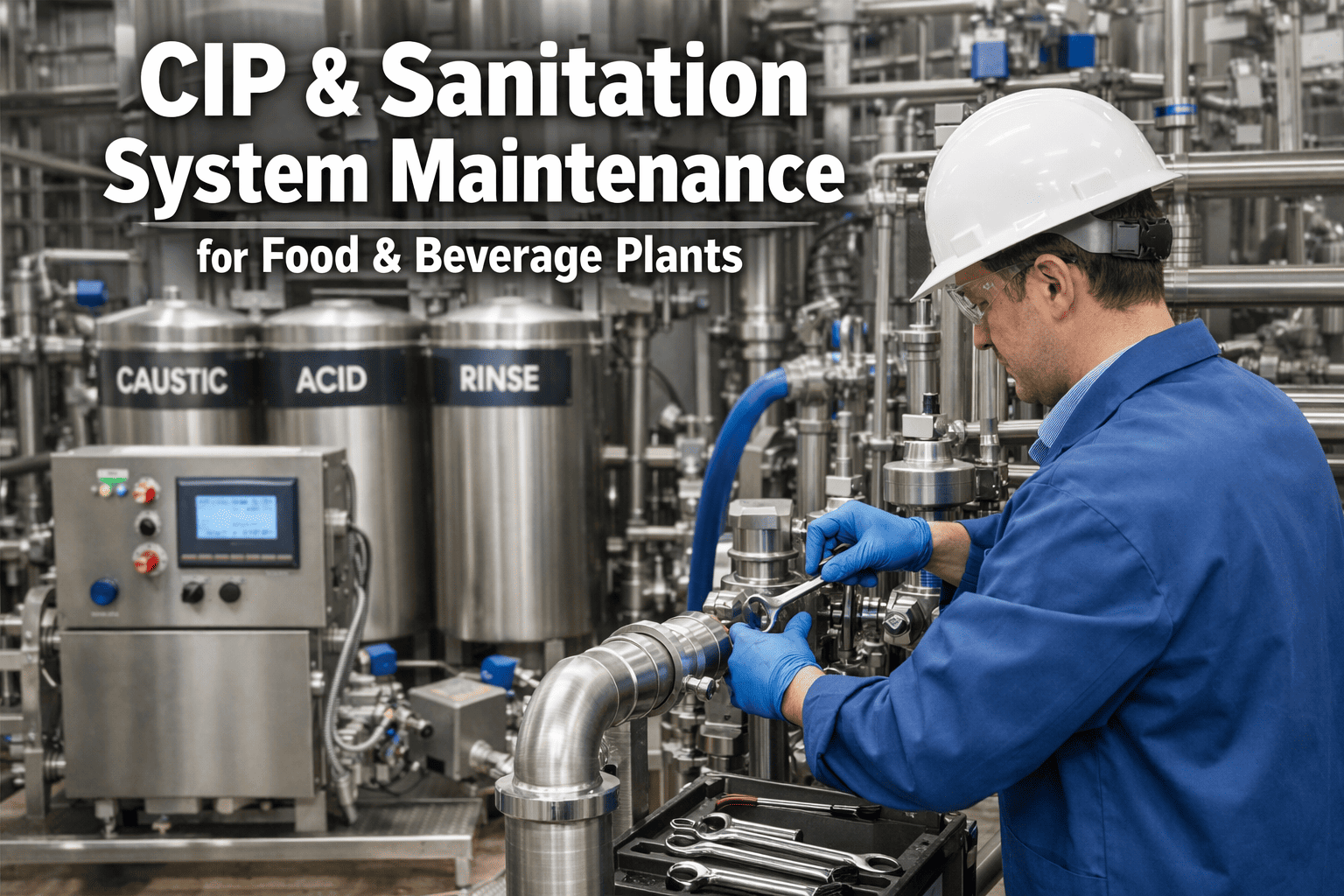
CIP and Sanitation System Maintenance for Food and Beverage Plants
Keep every CIP circuit audit-ready — automated PM scheduling, chemical dosing verification, valve inspection tracking, and sanitation validation documentation in one CMMS platform.
The CIP Maintenance Cycle — What Breaks and Why
CIP systems fail in predictable patterns — spray ball blockages, chemical dosing drift, valve seal degradation, and heat exchanger fouling account for over 85% of sanitation failures. Each failure point has a specific PM task and inspection frequency that prevents it. OxMaint automates these schedules and captures verification data at the point of execution, so nothing falls through the cracks.
Top CIP Component Failures — Frequency and Cost Impact
The table below shows the most common CIP component failures across food and beverage plants, their typical frequency without PM, and the cost impact when they cause unplanned downtime or a sanitation failure. Every one of these is preventable with the right maintenance scheduling system.
| Component | Failure Mode | Frequency (No PM) | Cost Per Event | PM Prevention |
|---|---|---|---|---|
| Spray Balls | Blockage / pattern loss | Every 6–8 weeks | $3,200 | Weekly visual + quarterly replacement |
| CIP Pump Seals | Leak / flow loss | Every 4–6 months | $5,800 | Monthly vibration check + seal schedule |
| Dosing Pumps | Calibration drift | Every 3–4 weeks | $1,800 | Monthly calibration + sensor verification |
| Sanitary Valves | Seat wear / cross-contamination | Every 8–12 weeks | $7,500 | Quarterly inspection + annual rebuild |
| Heat Exchangers | Fouling / gasket failure | Every 3–6 months | $12,000 | Monthly differential pressure monitoring |
| Conductivity Probes | Drift / false readings | Every 4–6 weeks | $2,400 | Bi-weekly calibration verification |
Chemical Dosing and Sanitation Verification — What to Track
Effective CIP maintenance goes beyond pump and valve PM — it requires tracking chemical concentrations, contact times, flow rates, and verification test results for every cleaning cycle. OxMaint captures all of this data digitally at the point of execution, creating audit-ready records that satisfy FSSC 22000, BRC, and SQF requirements without manual log books.
Plant Sanitation Manager Perspective
We went from paper CIP logs to OxMaint digital tracking in 3 weeks. Our BRC audit score jumped from 82% to 97%. The auditor specifically praised our sanitation verification records — they could trace every CIP cycle for 12 months in under 2 minutes.
Sanitation Manager — Dairy Processing Plant, WisconsinFrequently Asked Questions
Every CIP Cycle Documented. Every Audit Passed.
OxMaint automates CIP maintenance tracking and sanitation verification — live in 5 days, free to start.