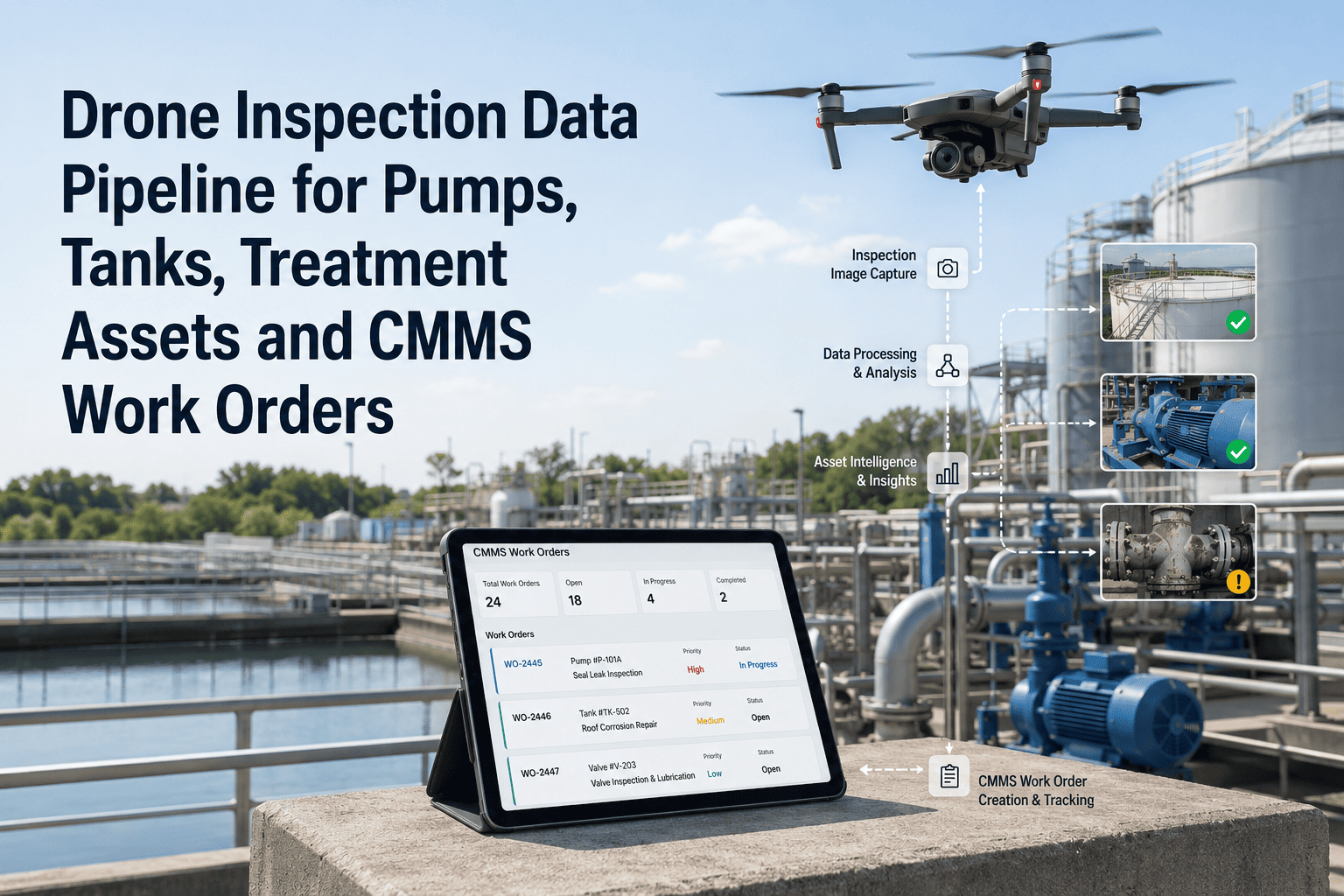
water-utility-maintenance-management-pumps-valves-and-distribution-assets

Water Utility Maintenance Management: Pumps, Valves and Distribution Assets


A water utility is spread across a whole city: pump stations, storage tanks, thousands of valves and hydrants, and miles of buried pipe. The people who know which valve sticks or which main keeps breaking often carry that knowledge in their heads. When they retire, or when a break happens at 2 a.m., the history is hard to find. Good water utility maintenance management puts every asset, inspection and repair in one record, so crews work from a plan instead of memory. This guide covers pumps, valves and distribution assets, and how to move from emergency repairs to planned work. OxMaint AI CMMS keeps that record connected to the work order.

Water Utilities · Public Works Asset Management · Pumps, Valves & Mains · 2026

Water Utility Maintenance Management: Pumps, Valves and Distribution Assets

When asset history lives in memory and paper, every main break starts from zero.

OxMaint AI CMMS connects field inspections, defects, work orders and preventive or predictive maintenance in one platform, so each pump, valve and main has a record crews can use.

1InspectionScan the asset, log condition
→
2Defect foundFailed items flagged
→
3Work orderAssigned to a crew
→
4PM & predictionSchedules built on history

The result: better asset visibility across stations, valves and the pipe network.

C-
grade for US drinking water infrastructure in ASCE's 2025 Report Card
~240,000
water main breaks per year in the US, down from 250,000 to 300,000 in 2018 (ASCE)
$625B
EPA's estimated 20-year drinking water infrastructure need
2M+ miles
of underground drinking water pipe, much of it decades old

Follow the Water: Where Maintenance Happens

Every stage of the system has assets that need regular attention. The map shows a simplified path from source to customer. Start free and register each asset along the path.

Treatment& source Pump stationpumps, motors Storagetanks, levels ValvesPRVs, hydrants Mainsto customers Sample, inspectVibration, seals, runtimeLevel and condition checksExercise and testLeaks, breaks, flushing Illustrative path. Every node is an asset with its own history and schedule.

Three Asset Classes, Three Playbooks

PUMPS & MOTORS
WatchVibration, motor temperature, seal leakage, runtime, pressure and flow
RoutineInspections, lubrication, alignment and seal checks on a schedule
LogRuntime, repairs, parts and each failure cause
VALVES & HYDRANTS
WatchSeized or leaking valves, hydrants that fail to operate or drain
RoutineExercise and inspection programs on a set cycle
LogLocation, last operated date, turns to close, condition
MAINS & SERVICES
WatchBreak and leak history, pipe age and material, pressure issues
RoutineLeak surveys, flushing, condition assessment where practical
LogEvery break with location, cause and repair details

Follow your state regulations, utility standards and engineering guidance for intervals and procedures. The lists above are general starting points.

You Can't Plan What You Can't Find

A valve that was last exercised years ago, or a main with three breaks in five years, only shows up as a risk if the records exist. OxMaint AI keeps each asset's history in one place, tied to the work done on it.

From Emergency Repair to Planned Work

Most utilities do all four types of work. The goal is to shift effort up the steps over time. Book a demo to plan your shift.

1 EmergencyBreak or failure. Fix now.
2 CorrectiveDefect found. Repair soon.
3 ScheduledExercise, inspect, service on a cycle.
4 PredictiveAct on condition and trends.

From Break History to Replacement Plan

1Log every breakLocation, pipe material, age, cause and repair.
2Spot repeatsSegments with multiple breaks stand out.
3Rank by consequenceWeigh customers affected and criticality.
4Plan the workFeed evidence into capital and maintenance budgets.

What Crews Should Capture on Every Job

☑ Asset ID and exact location
☑ Condition found, with a photo
☑ Cause or failure code
☑ Labor hours and crew
☑ Parts and materials used
☑ Follow-up work needed

How OxMaint AI Supports Water Utility Teams

Asset Management & QR

Each pump, valve and hydrant as a record. Scan to see history and open jobs.

Inspections

Digital checklists with photos; failed items create corrective work.

Work Orders

Assigned, tracked and recorded with labor and parts.

Preventive Maintenance

Exercise programs and station routines scheduled automatically.

Predictive Maintenance

AI reviews sensor, runtime and history data and raises proactive work orders.

Analytics & Audit Trails

Repeat-failure reports and traceable records for review and funding requests.

Explore OxMaint AI and see how it fits public works and utility teams.

Frequently Asked Questions

What does water utility maintenance management include?
Planning, inspecting and repairing pumps, valves, hydrants, tanks and mains, with a record of every asset and job.
How do we start with limited staff?
Begin with your most critical stations and valves, then expand. A simple register and a few routines beat a perfect plan that never launches.
Can records support funding requests?
Yes. Break history, repeat repairs and inspection findings give decision makers evidence for repair and replacement budgets.
Does a CMMS replace regulatory sampling programs?
No. It schedules and records maintenance work. Water quality and regulatory programs follow your own requirements.

Know Every Asset. Plan Every Repair.

Start with one pump station or one pressure zone, record every asset and job, and build the history your crews and budget need.


Share This Story, Choose Your Platform!