
Compliance management in modern industrial operations represents one of the most critical regulatory challenges facing organizations, with inadequate compliance systems costing companies an average of $15 lakhs per audit violation. Industry data reveals that 68% of organizations still rely on fragmented compliance approaches that create regulatory gaps, missed documentation requirements, and audit penalties. Systematic compliance management through CMMS platforms can reduce audit violations by 90%, streamline documentation processes by 75%, and decrease regulatory penalties by 85% while ensuring operational safety, and maximum regulatory alignment across complex industrial environments.
Oxmaint CMMS platforms provide the comprehensive compliance framework necessary for systematic regulatory management, incorporating industry standards, documentation requirements, and audit protocols into unified compliance systems that ensure continuous regulatory alignment, and operational excellence.
The Compliance Crisis: Critical Regulatory Challenges in Asset Management
Modern industrial operations must navigate complex regulatory environments where even minor compliance gaps can escalate into major audit violations that halt operations and devastate organizational budgets. Compliance management inefficiencies cascade throughout organizations, affecting operational continuity, regulatory standing, and total cost of compliance.
Documentation Requirements
87% of audit violations stem from inadequate documentation, including maintenance records, inspection reports, and compliance certificates that cost $8+ lakhs when improperly managed.
Regulatory Timeline Management
Regulatory deadline failures create cascading compliance issues, with missed inspections and certifications leading to penalties averaging $12+ lakhs per violation.
Audit Trail Maintenance
Incomplete audit trails compromise regulatory verification, creating liability exposures and penalty risks that can exceed $20+ lakhs during comprehensive audits.
Compliance Reporting Systems
Manual reporting processes create accuracy issues and submission delays, with reporting failures resulting in fines and regulatory sanctions averaging $15+ lakhs.
Multi-Site Coordination
Distributed operations require coordinated compliance management, with consistency failures across locations creating systematic violations and increased audit exposure.
Regulatory Change Management
Evolving regulations demand continuous adaptation, with outdated compliance procedures creating violations that compromise operational licenses and certifications.
The Financial Impact of Compliance Failures
Before implementing systematic CMMS compliance management, industrial operations experience significant regulatory inefficiencies that impact both operational performance and financial results:
- Audit penalty costs consuming 40% of compliance budgets while providing minimal preventive value against future violations
- Documentation inefficiencies averaging 35-40% of compliance staff time due to manual processes and fragmented systems
- Regulatory timeline failures creating emergency compliance situations and rushed certification processes with premium costs
- Multi-location consistency gaps with 45% of organizations struggling with coordinated compliance across distributed operations
- Audit preparation costs from disorganized records that can result in $25+ lakh emergency documentation efforts
Foundation Elements: Comprehensive CMMS Compliance Framework
Professional CMMS compliance systems provide the regulatory framework necessary for systematic compliance management, incorporating industry standards, documentation protocols, and audit requirements into unified compliance platforms that ensure continuous regulatory alignment and operational excellence.
Core Compliance Components and Architecture
Effective CMMS compliance frameworks integrate multiple regulatory streams and documentation criteria to create comprehensive compliance systems that balance thoroughness with operational practicality.
Regulatory Standards Integration
Comprehensive regulatory libraries including ISO standards, OSHA requirements, environmental regulations, and industry-specific compliance frameworks that ensure complete coverage.
Documentation Management Systems
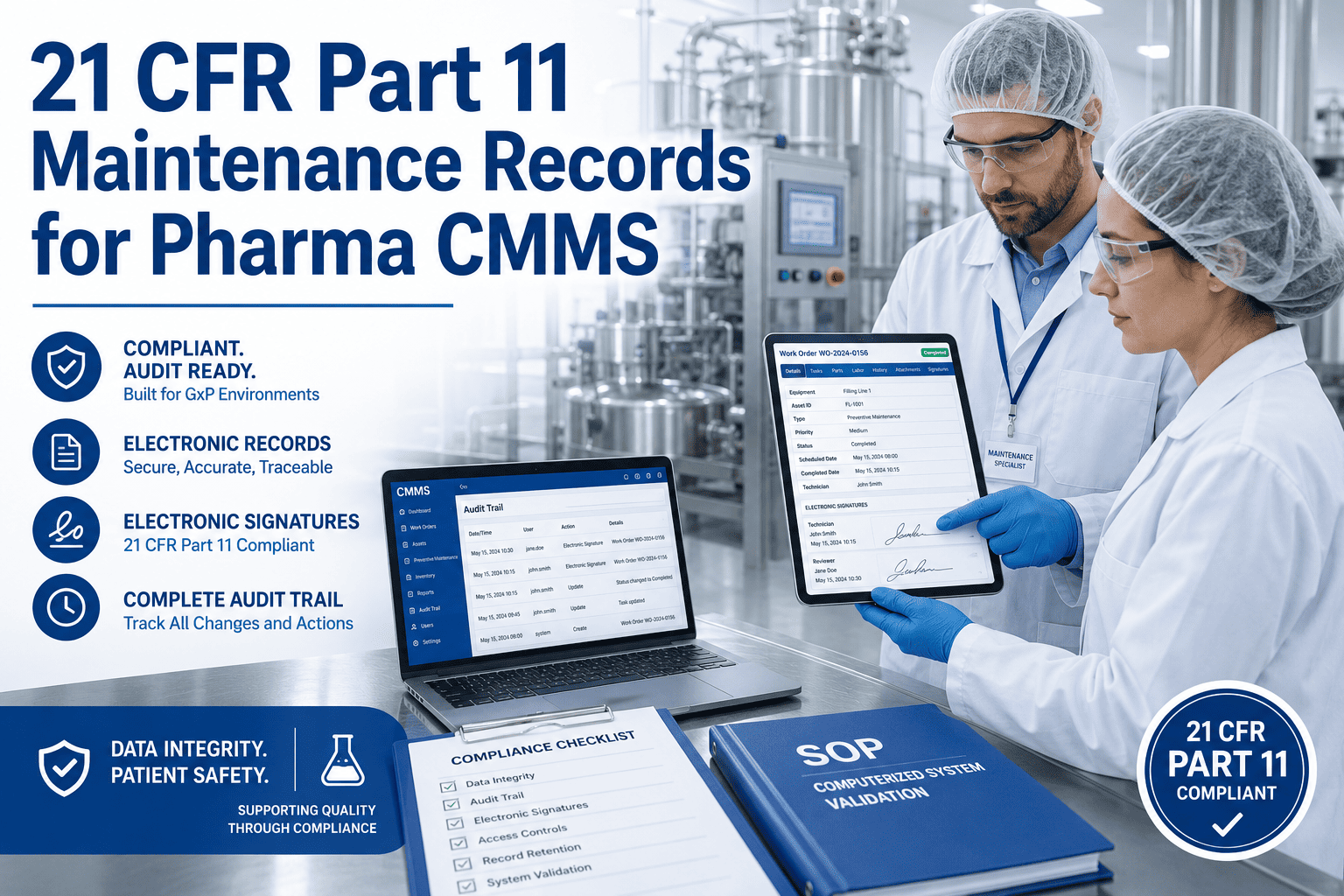
Centralized document control, version management, approval workflows, and retention policies that maintain regulatory documentation integrity and accessibility.
Audit Trail Automation
Automated activity logging, change tracking, approval documentation, and compliance verification that creates comprehensive audit trails for regulatory verification.
Compliance Monitoring Dashboard
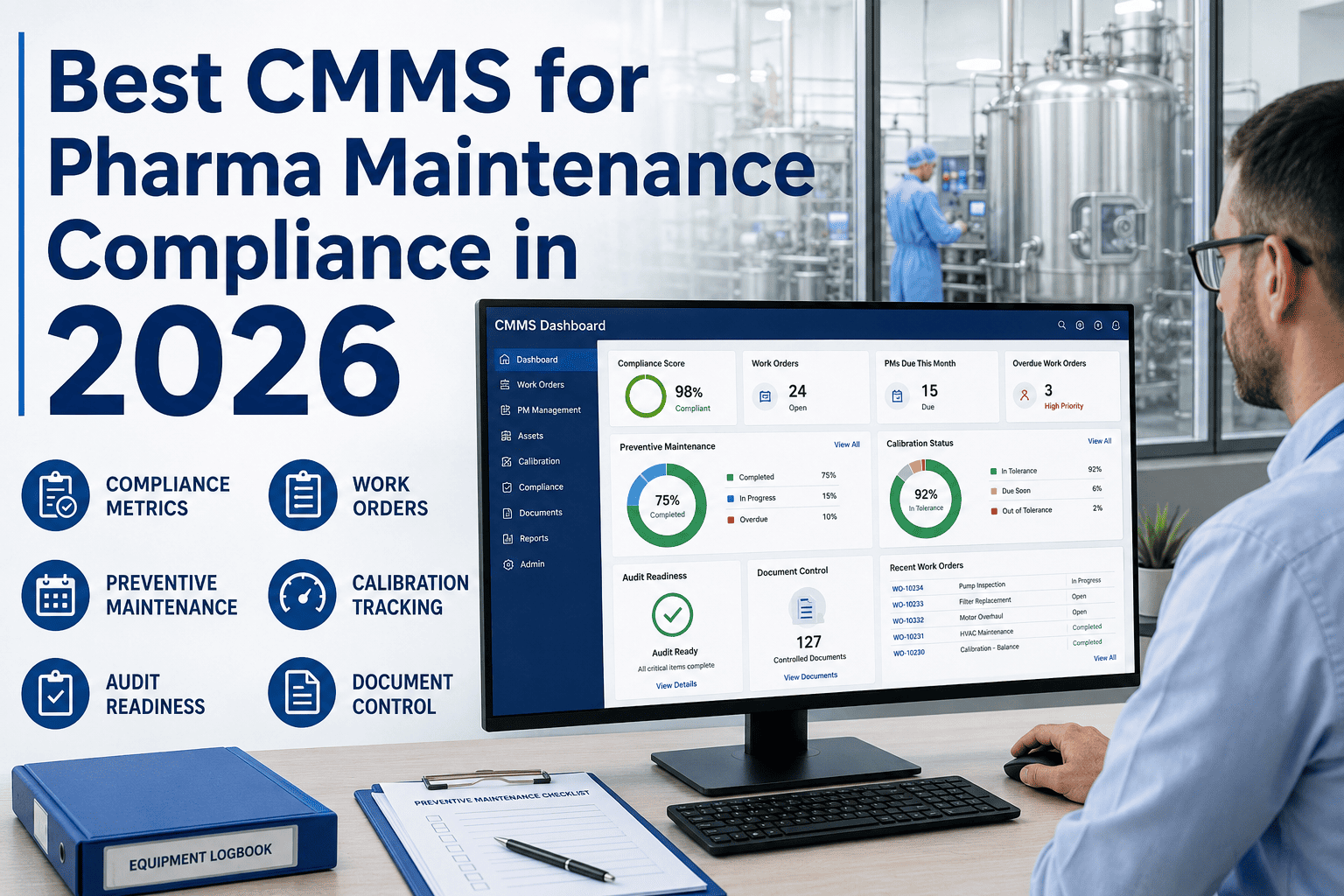
Real-time compliance status tracking, deadline management, violation alerts, and regulatory reporting coordination that ensures continuous compliance oversight.
Advanced Digital Compliance and Automation Capabilities
Smart Compliance Monitoring and Predictive Analytics
Modern CMMS compliance management transcends manual documentation to incorporate automated monitoring, predictive analytics, and intelligent alert systems that identify compliance risks weeks before traditional methods detect issues.
Automated Compliance Tracking
Systematic monitoring of compliance activities, automatic deadline alerts, and proactive notification systems that eliminate manual tracking inefficiencies.
Intelligent Document Generation
Automated report creation, compliance certificate generation, and regulatory submission preparation that reduces documentation time by 70%.
Predictive Compliance Analytics
Advanced algorithms that analyze compliance patterns to predict potential violations 4-8 weeks before occurrence, enabling preventive intervention.
Integrated Audit Management
Comprehensive audit preparation tools, finding management systems, and corrective action tracking that streamline audit processes and ensure continuous improvement.
Implementation Methodology and Best Practices
Phased Deployment Strategy for CMMS Compliance Systems
Successful compliance system implementation requires systematic deployment approaches that minimize operational disruption while maximizing compliance effectiveness and audit readiness across diverse operational environments and regulatory requirements.
Phase 1: Compliance Assessment
Current compliance status evaluation, regulatory requirement mapping, gap analysis, and system customization based on specific industry standards and operational characteristics.
Phase 2: System Configuration
Compliance framework setup, documentation template creation, workflow configuration, and integration planning with existing operational and management systems.
Phase 3: Pilot Implementation
Limited deployment with critical compliance areas, staff training, documentation validation, and process refinement to optimize system effectiveness and user adoption.
Phase 4: Full Deployment
Organization-wide implementation, comprehensive training programs, change management support, and ongoing optimization based on compliance performance and regulatory feedback.
Change Management and Adoption Strategies
Compliance system implementation success depends heavily on organizational adoption and cultural transformation, requiring comprehensive training programs and incentive structures that encourage proactive compliance practices.
Role-Specific Training Programs
Customized training for compliance officers, maintenance staff, supervisors, and auditors covering system operation, documentation standards, and regulatory procedures.
Performance Incentive Alignment
KPI structures and reward programs that recognize compliance excellence, documentation quality, and successful audit performance achievements.
Communication and Feedback Systems
Regular communication channels for compliance updates, regulatory changes, and user feedback integration to ensure continuous system optimization and effectiveness.
Compliance Champion Network
Identification and development of compliance champions who support system adoption and provide peer-to-peer training and ongoing technical support.
Analytics and Performance Monitoring Capabilities
Advanced Compliance Analytics and KPI Tracking
CMMS compliance analytics transform raw regulatory data into actionable insights that enable continuous improvement, performance optimization, and predictive compliance planning across operational environments and regulatory frameworks.
Real-Time Compliance Dashboards
Executive and operational dashboards providing immediate visibility into compliance status, regulatory deadlines, and performance trends across all operational segments.
Predictive Compliance Analysis
Advanced analytics identifying compliance risk patterns, performance trends, and optimization opportunities based on historical and real-time regulatory data.
Cost Avoidance Analytics
Comprehensive analysis covering prevented violations, avoided penalties, and compliance cost optimization that quantify CMMS value and ROI measurement.
Regulatory Performance Monitoring
Automated performance tracking ensuring compliance activities meet regulatory requirements, audit standards, and organizational objectives with exception reporting.
ROI and Operational Excellence Outcomes
Quantifiable Financial Benefits and Cost Avoidance
Systematic CMMS compliance management delivers measurable financial returns through multiple value streams that extend beyond direct penalty avoidance to encompass operational efficiency, audit readiness, and regulatory reputation benefits.
Operational Efficiency and Competitive Advantages
Comprehensive CMMS compliance management creates operational advantages that enhance competitive positioning through improved regulatory standing, predictable compliance costs, and enhanced operational reliability.
- Enhanced regulatory reputation with consistent compliance performance and proactive regulatory relationship management
- Improved operational reliability averaging 95%+ compliance rates compared to 80% with manual compliance approaches
- Reduced insurance premiums through documented compliance programs and improved risk management records
- Streamlined audit processes with comprehensive documentation and audit-ready systems reducing preparation costs by 70%
- Better operational predictability through planned compliance activities and eliminated emergency regulatory responses
Regulatory Framework Integration and Standards Compliance
Multi-regulatory compliance requirements make systematic CMMS management essential for industrial operations, with safety standards, environmental regulations, and industry certifications demanding coordinated compliance management and comprehensive documentation systems.
ISO Standards Compliance
ISO 9001, 14001, 45001 integration with systematic documentation, process control, and continuous improvement frameworks that ensure certification maintenance and audit success.
Safety Regulation Adherence
OSHA and safety standards compliance through systematic hazard identification, safety training documentation, and incident management that reduces violation risks.
Environmental Compliance Management
Environmental regulation adherence including emission monitoring, waste management documentation, and sustainability reporting that ensures regulatory compliance.
Industry-Specific Certifications
Sector-specific compliance requirements for pharmaceuticals, food processing, automotive, and other regulated industries with specialized documentation and validation needs.
Future Outlook and Innovation Roadmap
The CMMS compliance landscape continues evolving with emerging technologies that promise enhanced automation, predictive compliance monitoring, and integrated regulatory management that will further improve compliance effectiveness and operational efficiency.
Artificial Intelligence Integration
Advanced AI algorithms providing automated compliance monitoring, regulatory change detection, and predictive compliance risk assessment based on comprehensive operational data.
Blockchain Documentation
Immutable compliance records and regulatory documentation providing enhanced audit trails, verification capabilities, and regulatory confidence in documentation integrity.
IoT Sensor Integration
Internet of Things technologies enabling continuous compliance monitoring and automated regulatory data collection across distributed industrial operations.
Regulatory Intelligence Systems
Automated regulatory change tracking, impact assessment, and compliance adaptation systems that ensure continuous regulatory alignment and proactive compliance management.
Frequently Asked Questions
Ready to implement comprehensive CMMS compliance management for your organization?
Getting Started Book a Demo


.png)
