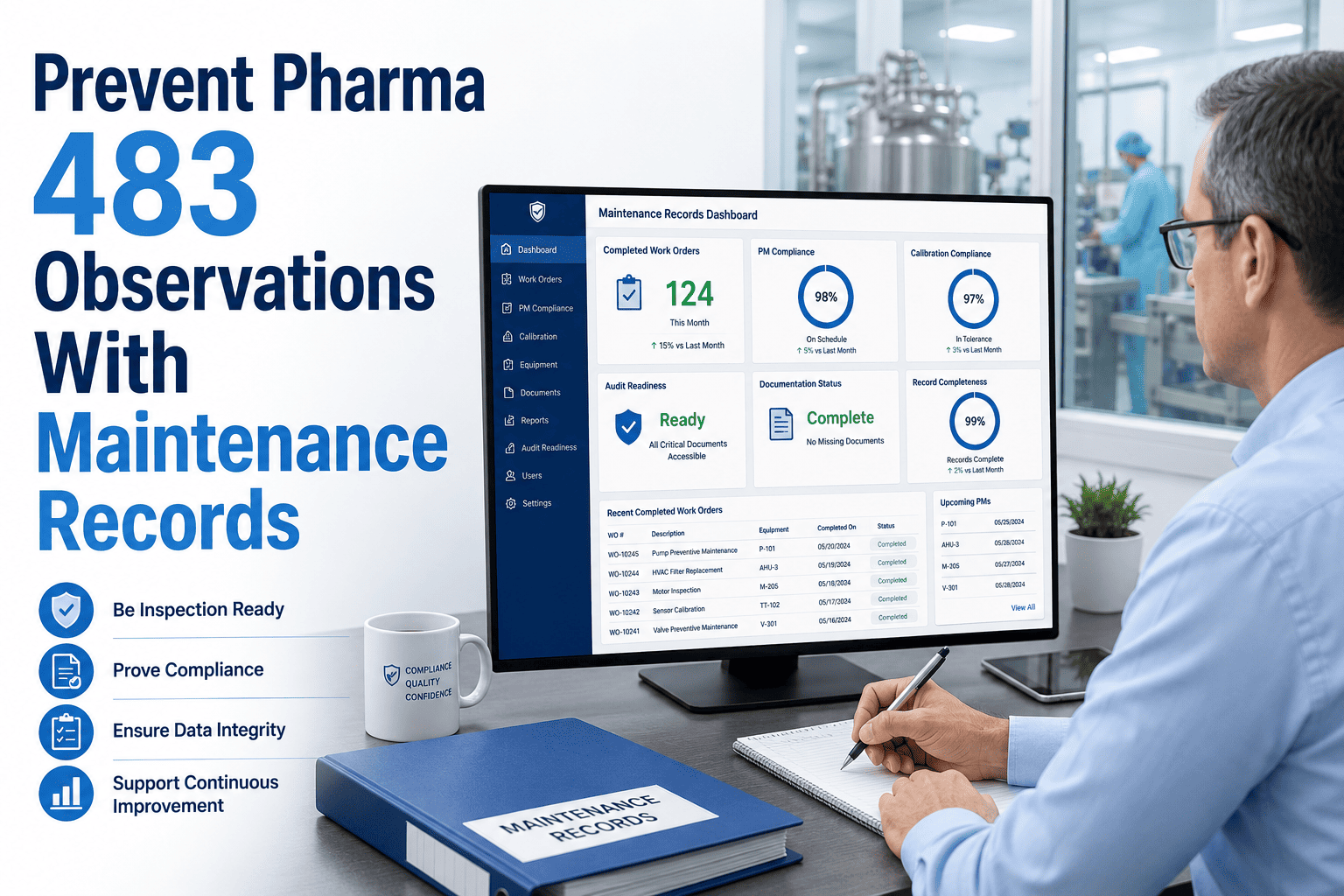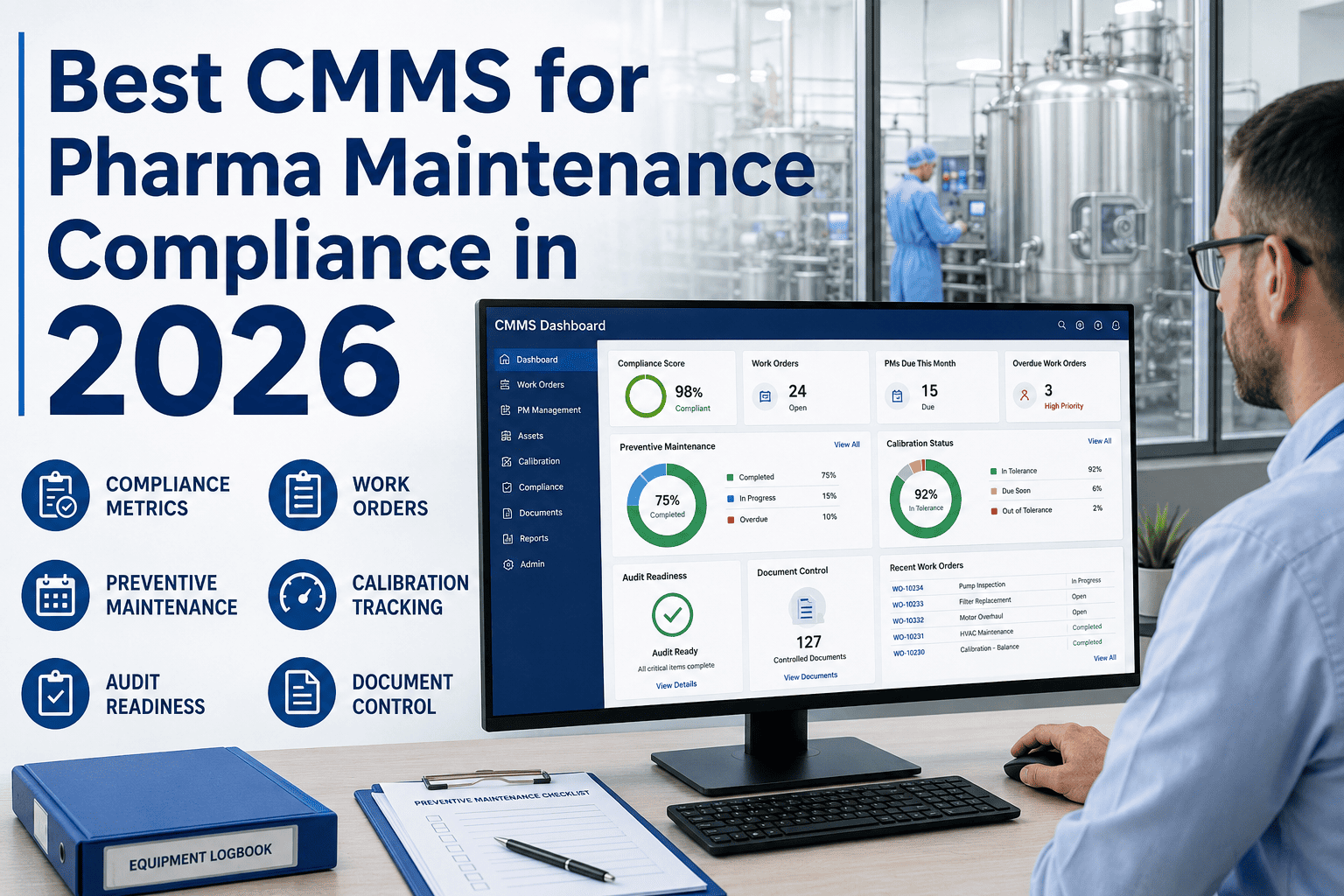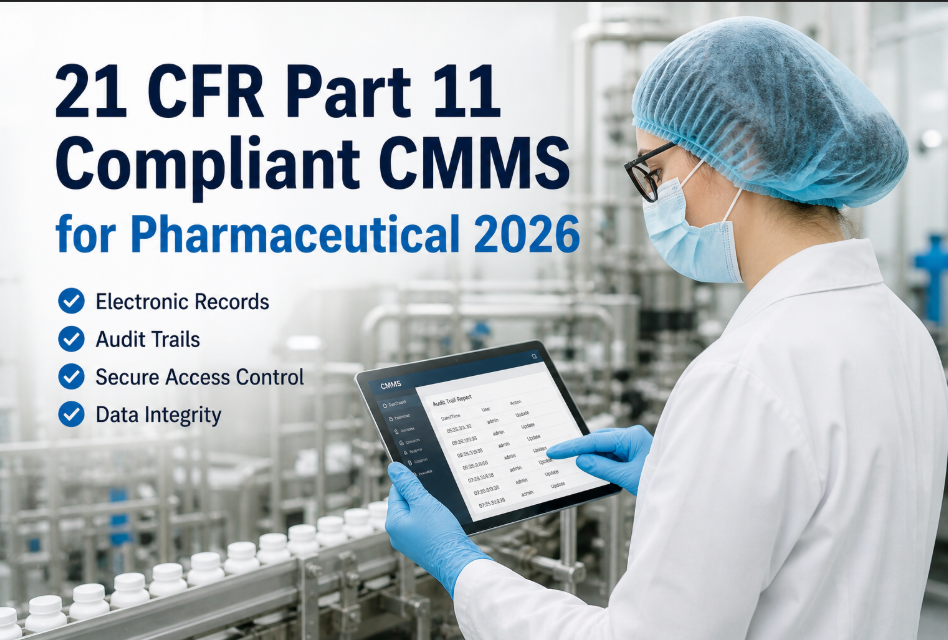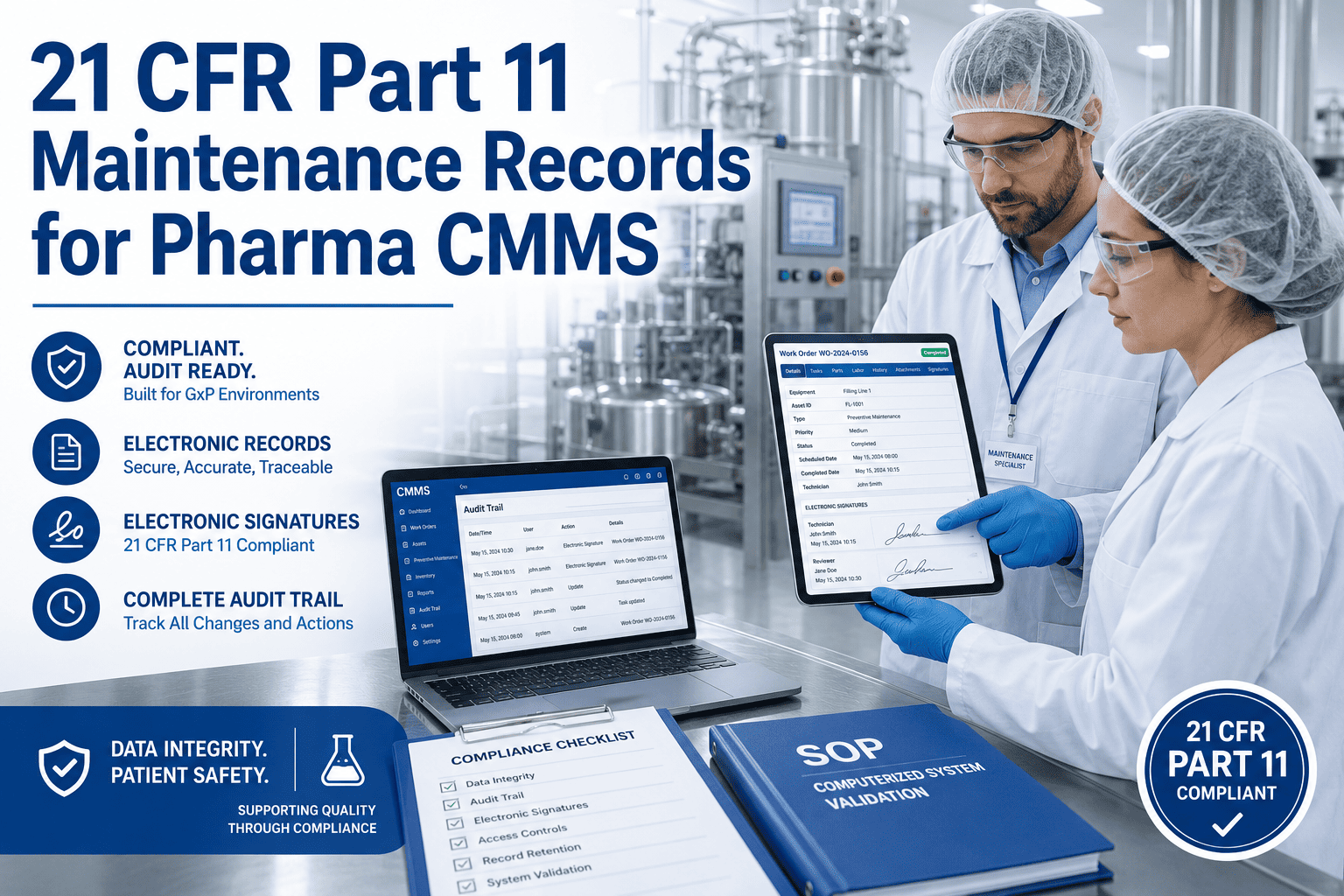
21 CFR Part 11 compliance is not optional for pharmaceutical manufacturers using electronic systems to create, modify, maintain, or transmit maintenance records. Every work order, calibration log, and inspection record stored electronically must meet the FDA's requirements for audit trails, electronic signatures, and access controls — or the records are considered non-compliant regardless of how thorough the maintenance actually was. OxMaint's pharma CMMS is built specifically around these requirements, turning a regulatory burden into a system that makes maintenance documentation faster and more complete than paper ever was.
Systems must be validated to ensure accuracy, reliability, consistent performance, and the ability to discern invalid or altered records.
Secure, computer-generated, time-stamped audit trails must record operator entries and actions that create, modify, or delete electronic records.
Limiting system access to authorized individuals through user-specific login credentials and role-based permission systems.
Signatures must be unique to one individual, cannot be reused or reassigned, and must link to their respective electronic records.
The 5 Part 11 Requirements That Apply to Maintenance Records
Most pharmaceutical companies understand Part 11 in the context of laboratory systems and batch records. Maintenance records are subject to the same requirements when they are stored electronically — and most CMMS systems used in pharma are electronic systems that create Part 11-covered records. Understanding exactly which requirements apply to each record type is the first step to building a defensible compliance posture.
Every create, edit, approve, and delete action on a maintenance record must be captured in an immutable, time-stamped log showing the original value, the new value, who made the change, and when. A technician changing a completion time, a supervisor editing a failure code, or a manager approving a calibration record — all must appear in the trail. In OxMaint, this log is automatic, permanent, and cannot be disabled by any user level.
Signatures on maintenance records must be linked to the signer's identity, include the printed name and date/time, and cannot be copied, pasted, or reused across records. OxMaint's e-signature module requires re-authentication at the point of signing — the user must confirm their identity before the signature is applied — meeting 11.200(b) authentication requirements for each signing event.
Role-based access controls must limit which users can create, modify, approve, or view each record type. A calibration technician should not be able to approve their own calibration records. OxMaint's role matrix separates creator, performer, reviewer, and approver functions with configurable permission levels per equipment class, record type, and plant location.
Electronic records must be retained and remain accurate and accessible throughout their required retention period — and must be readable throughout, not dependent on software that may be unavailable in future. OxMaint stores records in standard, non-proprietary formats and maintains complete retrieval capability including records from decommissioned equipment and closed work orders indefinitely.
The CMMS itself must be validated to demonstrate it consistently creates accurate, reliable maintenance records. OxMaint provides validation documentation including Installation Qualification (IQ) and Operational Qualification (OQ) protocols, configuration baseline records, and a formal validation summary report — reducing the qualification workload for pharma customers substantially compared to building validation packages from scratch.
Part 11 CMMS Compliance: What to Look for in Any System
| Requirement | Part 11 Section | What to Check | OxMaint Status |
|---|---|---|---|
| Immutable audit trail | 11.10(e) | Can any user delete or hide audit entries? | Fully compliant |
| User-unique e-signatures | 11.50, 11.200(b) | Does signing require re-authentication? | Fully compliant |
| Role-based access control | 11.10(d) | Can creators approve their own records? | Configurable RBAC |
| Record retention & retrieval | 11.10(c) | Are records retrievable after software updates? | Fully compliant |
| System validation package | 11.10(a) | Is IQ/OQ documentation provided by vendor? | IQ/OQ provided |
| Data integrity (ALCOA+) | Part 11 general | Are originals retained when corrections made? | Fully compliant |
21 CFR Part 11 for maintenance records is frequently treated as an afterthought in pharma CMMS implementations — teams focus on functionality and add compliance features later. This is a strategic mistake. The audit trail, signature, and access control requirements need to be built into the system architecture from day one, because retrofitting them onto a live system with existing records creates validation gaps that are themselves 483 findings. Choose a CMMS that ships Part 11 compliance as a core feature, not a paid add-on, and make sure the vendor can provide the validation documentation as part of the implementation package.