
Every organisation that operates physical assets — manufacturing plants, utility networks, hospital campuses, fleet operations — faces the same fundamental challenge: how to extract the maximum productive life from those assets at the lowest sustainable cost. The answer is not longer maintenance schedules or more technicians. It is better intelligence about what each asset costs, how it performs, when it degrades, and when replacing it becomes cheaper than maintaining it. Enterprise Asset Management software provides that intelligence — connecting maintenance history, performance data, cost accounting, and lifecycle forecasting into a unified platform that turns asset decisions from experience-based estimates into data-driven conclusions. In 2026, the distinction between EAM and CMMS has largely collapsed at the platform level: the best CMMS platforms now deliver EAM-level asset intelligence as a native capability, without the six-figure implementation costs and 18-month deployment timelines that defined enterprise asset management a decade ago.
Enterprise Asset Management (EAM) Software Guide 2026
What EAM software does, how it differs from CMMS, the five asset lifecycle stages it manages, and how OxMaint delivers EAM-level asset intelligence without enterprise-scale complexity or cost.
What Enterprise Asset Management Software Actually Does
EAM software manages the complete lifecycle of a physical asset — from procurement and commissioning through operation, maintenance, degradation, and eventual disposal or replacement. Where a basic CMMS tracks work orders and PM schedules, EAM tracks the total cost of ownership for each asset, models its remaining useful life, connects maintenance history to performance and reliability data, and generates the capital planning intelligence needed to make replacement versus repair decisions on evidence rather than intuition. Book a demo to see OxMaint's EAM capabilities for your asset base.
Asset Registry
Structured inventory of every asset — location hierarchy, specifications, documentation, warranty status, and full maintenance history accessible from a single asset record.
Total Cost of Ownership
Cumulative cost tracking per asset — maintenance labour, parts consumed, downtime cost, energy consumption — producing the TCO data required for replacement vs repair decisions.
Reliability and Performance Tracking
MTBF, MTTR, availability percentage, and OEE by asset and asset class — the metrics that distinguish high-performing assets from chronic problem assets requiring intervention.
Capital Planning Intelligence
Remaining useful life estimates, replacement cost modelling, and capital expenditure forecasting — the data that finance and operations teams need to plan asset investment cycles.
Regulatory Compliance
Statutory inspection records, certification history, and compliance documentation for each asset — instantly retrievable for regulatory inspection, insurance audit, or warranty claim.
AI-Assisted Asset Intelligence
Pattern detection across maintenance history, predictive failure modelling, and PM interval optimisation — converting structured asset data into actionable operational intelligence.
EAM vs CMMS: What's the Actual Difference in 2026?
The traditional distinction — CMMS manages maintenance execution, EAM manages asset lifecycle — has narrowed significantly as leading CMMS platforms have expanded their asset intelligence capabilities. In 2026, the practical question is not "EAM or CMMS" but "which platform covers both without requiring a $500K enterprise implementation." Sign up to evaluate OxMaint's EAM capabilities — free.
| Capability | Traditional CMMS | Traditional EAM | OxMaint 2026 |
|---|---|---|---|
| Work order management | ✓ | ✓ | ✓ |
| PM scheduling and automation | ✓ | ✓ | ✓ |
| Asset registry with full history | ~ | ✓ | ✓ |
| Total cost of ownership per asset | ✗ | ✓ | ✓ |
| MTBF / MTTR / reliability metrics | ~ | ✓ | ✓ |
| Capital planning and replacement modelling | ✗ | ✓ | ✓ |
| AI fault pattern detection | ✗ | ~ | ✓ |
| Mobile-first technician execution | ~ | ✗ | ✓ |
| Free plan available | ~ | ✗ | ✓ |
| Live in under 1 week | ~ | ✗ | ✓ |
| Typical implementation cost | $5K–$50K | $200K–$2M+ | Free to start |
| ✓ Full ~ Partial / add-on ✗ Not available · Based on 2026 platform capability documentation | |||
Swipe to view full table on mobile
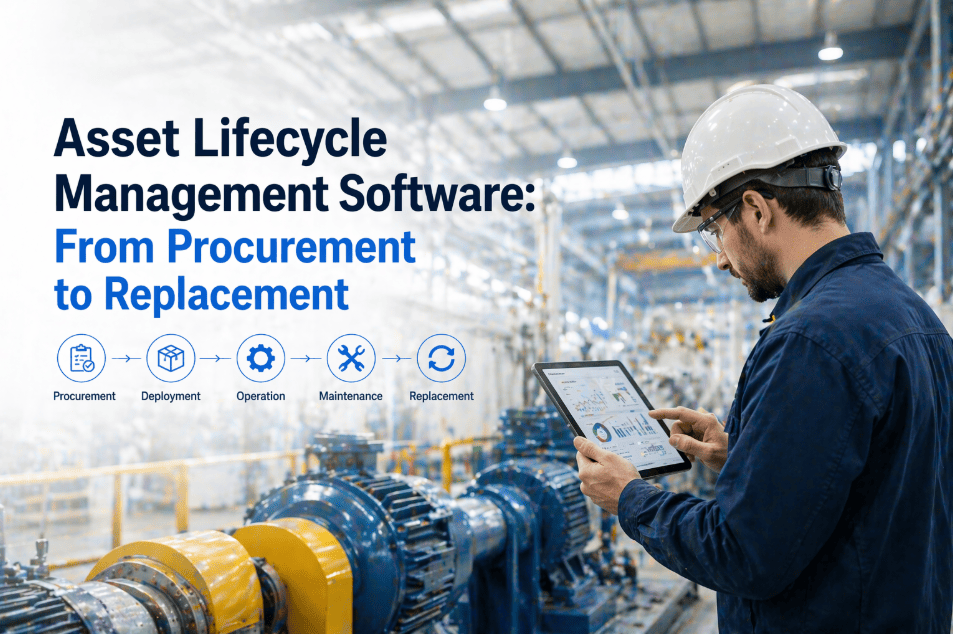
Five Asset Lifecycle Stages Managed by OxMaint EAM
EAM value is delivered across five lifecycle stages — from commissioning through disposal. Most organisations capture only stages 2–3 (maintenance and PM). Organisations that capture all five reduce TCO by 35% and make capital replacement decisions with data instead of estimates. Book a demo to activate all five lifecycle stages in OxMaint.
Acquisition & Commissioning
Asset record created with specifications, purchase cost, warranty terms, installation date, and baseline condition documentation. Commissioning PM template activated from day one — the asset enters service with its full lifecycle tracking initialised.
Operation & Performance Monitoring
Asset performance tracked through operational data — runtime hours, throughput, energy consumption, and output quality. Performance baselines established from first 90 days of operation. Deviations from baseline trigger investigation before degradation reaches failure threshold.
Maintenance & Reliability
Structured PM execution, reactive work order management, and condition monitoring data all accumulate in the asset record. Maintenance cost per asset tracked cumulatively. MTBF and MTTR calculated from work order history. AI pattern detection identifies chronic problem assets and recommends root-cause investigation.
Degradation & Capital Decision
As cumulative maintenance cost approaches a percentage of replacement value, OxMaint's capital planning module surfaces the replacement threshold alert. The decision is supported by actual TCO data — total maintenance spend to date, remaining useful life estimate, and replacement cost — rather than an engineering estimate based on asset age alone.
Disposal & Replacement
Asset retirement records the final disposal date, disposal cost or residual value, and the full lifecycle cost summary. The complete maintenance and performance history transfers to the replacement asset record as the baseline for comparison. The lifecycle intelligence accumulated over years does not disappear when the asset is retired — it becomes the benchmark for the next generation. Sign up to activate full asset lifecycle management in OxMaint — free.
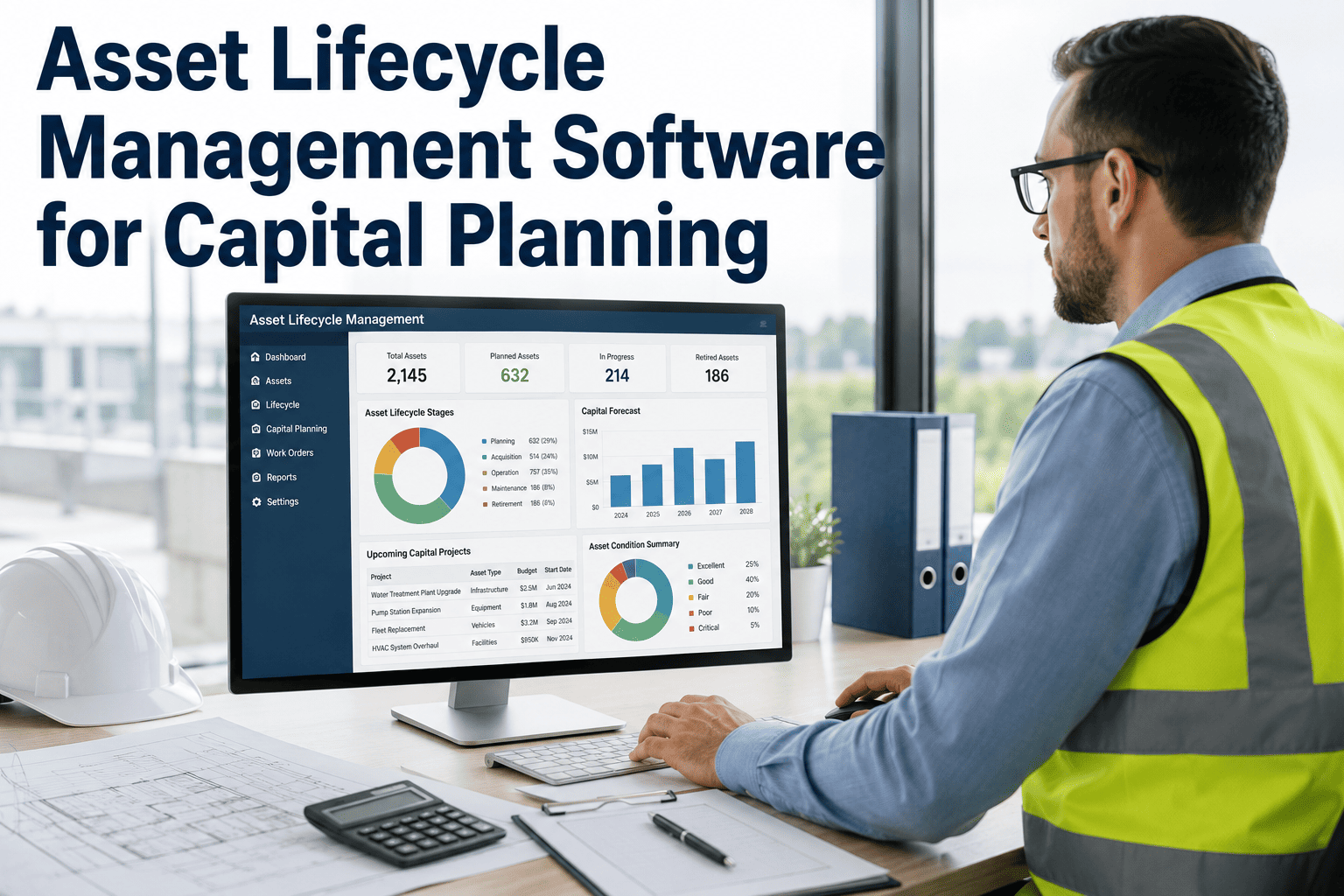
EAM Analytics Dashboard: What OxMaint Surfaces
OxMaint's analytics dashboard provides asset managers, maintenance directors, and finance teams with the asset intelligence required for operational and capital decisions — without manual data assembly or specialist reporting teams. Sign up to access your live asset analytics dashboard — free.
Frequently Asked Questions
What is Enterprise Asset Management software?
What is the difference between EAM and CMMS in 2026?
How does EAM software help with capital planning and asset replacement decisions?
Full Asset Lifecycle Intelligence. Without the Enterprise Price Tag.
OxMaint delivers EAM-level asset management — TCO tracking, reliability metrics, capital planning, and AI analytics — as a mobile-first cloud platform free to start and live in days, not months.
.png)


