A regional healthcare operator running 14 facilities discovered a $2.4M gap between what their balance sheet said their assets were worth and what an independent condition audit actually revealed. The asset register — maintained in spreadsheets across three different property management teams — had 387 pieces of HVAC, imaging, and diagnostic equipment listed as "operational" when the condition score was critical. Some items had been replaced years earlier with no paper trail. Others were running past their manufacturer-recommended replacement windows. There was no single version of the truth. Asset lifecycle management is not a spreadsheet problem — it is a data architecture problem, and the organizations that treat it as such are the ones whose CapEx plans actually match reality. If your lifecycle tracking still lives in multiple places, sign up to try Oxmaint free for 30 days or book a demo with our team.
Asset Lifecycle Management in 2026
The $9 Billion Market for Governing Assets From Purchase Order to Disposal Certificate
$9.02B
EAM market size by 2030
Growing at 9% CAGR from $5.87B in 2025, driven by lifecycle optimization mandates
27 hrs
Monthly unplanned downtime
Average manufacturing plant loss without structured lifecycle tracking
25–40%
Maintenance cost reduction
Delivered by facilities with comprehensive lifecycle data and CMMS adoption
88%
Report significant savings
Facilities with fully implemented lifecycle management platforms
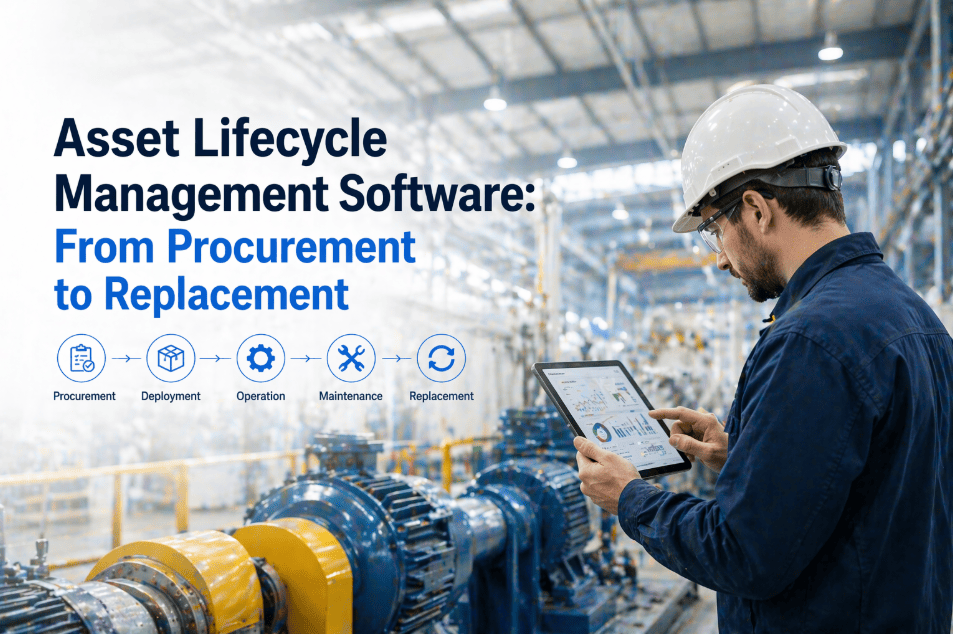
The Asset Lifecycle — Six Stages Every Piece of Equipment Passes Through
Every mission-critical asset in your portfolio — from an RTU on a retail roof to a centrifuge in a bioprocessing plant — travels the same six-stage journey from capital request to disposal certificate. A CMMS that only sees stage four (maintenance) misses the financial and operational picture entirely. True lifecycle management captures the full timeline, because the decisions made at stage one shape the cost profile of stages five and six. Want to see it running across your portfolio? Book a demo to walk through the workflow on your asset types.
01
Plan & Specify
CapEx request, spec sheet, total cost of ownership modeling
The stage where 60–70% of an asset's lifetime cost is locked in. Specification errors at planning compound through every later stage. Lifecycle platforms link spec decisions to real maintenance data from similar assets already in your registry.
02
Procure & Commission
Purchase order, vendor onboarding, commissioning checklist
Warranty terms, spare parts requirements, and manufacturer PM recommendations captured as structured data — not buried in a PDF filing cabinet nobody opens after year one.
03
Deploy & Baseline
Asset tag, hierarchy assignment, condition baseline
The asset enters the registry with a documented starting condition score. Every future reading is measured against this baseline — the foundation of credible remaining useful life estimates three, five, ten years downstream.
04
Operate & Maintain
Work orders, PMs, inspections, condition updates
The longest stage — 7, 15, 25 years depending on asset class. Every work order, every inspection, every failure mode feeds back into the asset's condition score and informs the next lifecycle decision.
05
Optimize & Refurbish
Condition audit, refurbishment ROI, extension analysis
The decision point most portfolios handle badly: repair, refurbish, replace, or repurpose. A properly maintained lifecycle record makes this a one-hour data review instead of a three-week investigation.
06
Retire & Dispose
Decommissioning, disposal certificate, residual value
Audit-grade disposal documentation — environmental compliance, chain of custody, residual value captured. The stage most organizations neglect, and the one that creates the biggest compliance exposure when neglected.
The Four Failure Modes of Lifecycle Management Without a Platform
Most organizations do not lack lifecycle data. They have years of it scattered across spreadsheets, maintenance logs, finance systems, and the retired memory of technicians who have since left. The problem is that the data is fragmented. Here are the four ways that fragmentation quietly erodes the value of the portfolio.
01
Multiple Sources of Truth, No Single Record
Finance has one asset register. Operations has another. Maintenance has a third — in three different spreadsheets. When an auditor asks for the current condition and book value of asset #A-1847, nobody can answer without a week of reconciliation.
Book a demo to see how a unified registry resolves this.
02
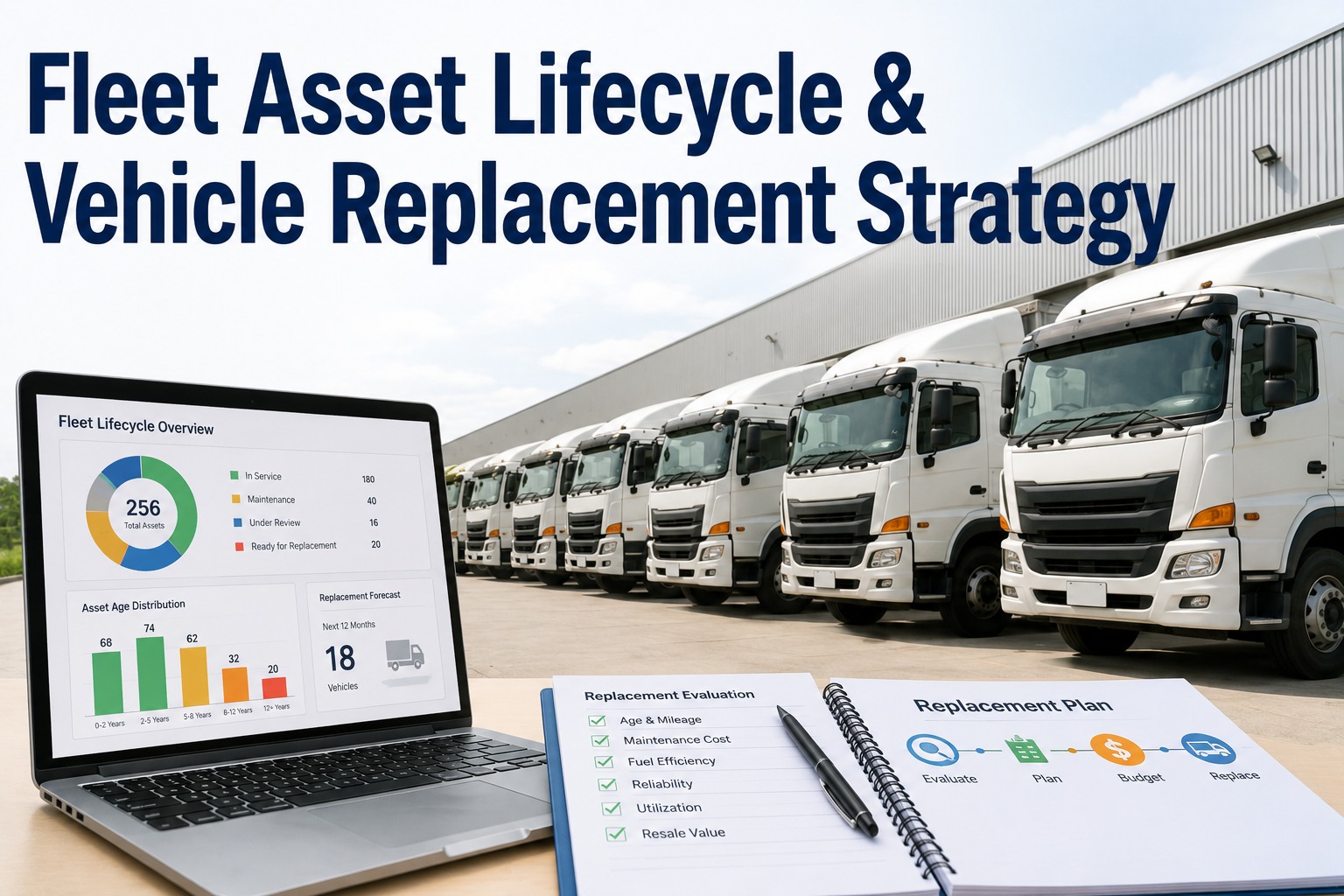
CapEx Forecasts Built on Guesswork
Without live condition data, the 5-year capital plan is an educated guess — roughly the same replacement schedule the building engineer ran in 2018, adjusted for inflation. Investors who have seen condition-based forecasts from competitors will not accept that methodology in 2026.
03
Warranty and Spare Parts Intelligence Lost
Manufacturer warranty terms, spare parts kits, and recommended PM intervals arrive with the asset and immediately disappear into a paper file. Three years later the team is ordering the wrong gasket kit because nobody remembered where the spec sheet was filed.
04
Disposal Documentation Creates Compliance Exposure
When assets are retired without proper chain-of-custody records — refrigerant recovery certificates for HVAC, electronic waste manifests for IT, hazardous material logs for industrial equipment — the organization carries the compliance liability indefinitely. Insurance and regulatory audits find these gaps first.
Full-Lifecycle CMMS
One Registry. Six Lifecycle Stages. Every Asset in Your Portfolio.
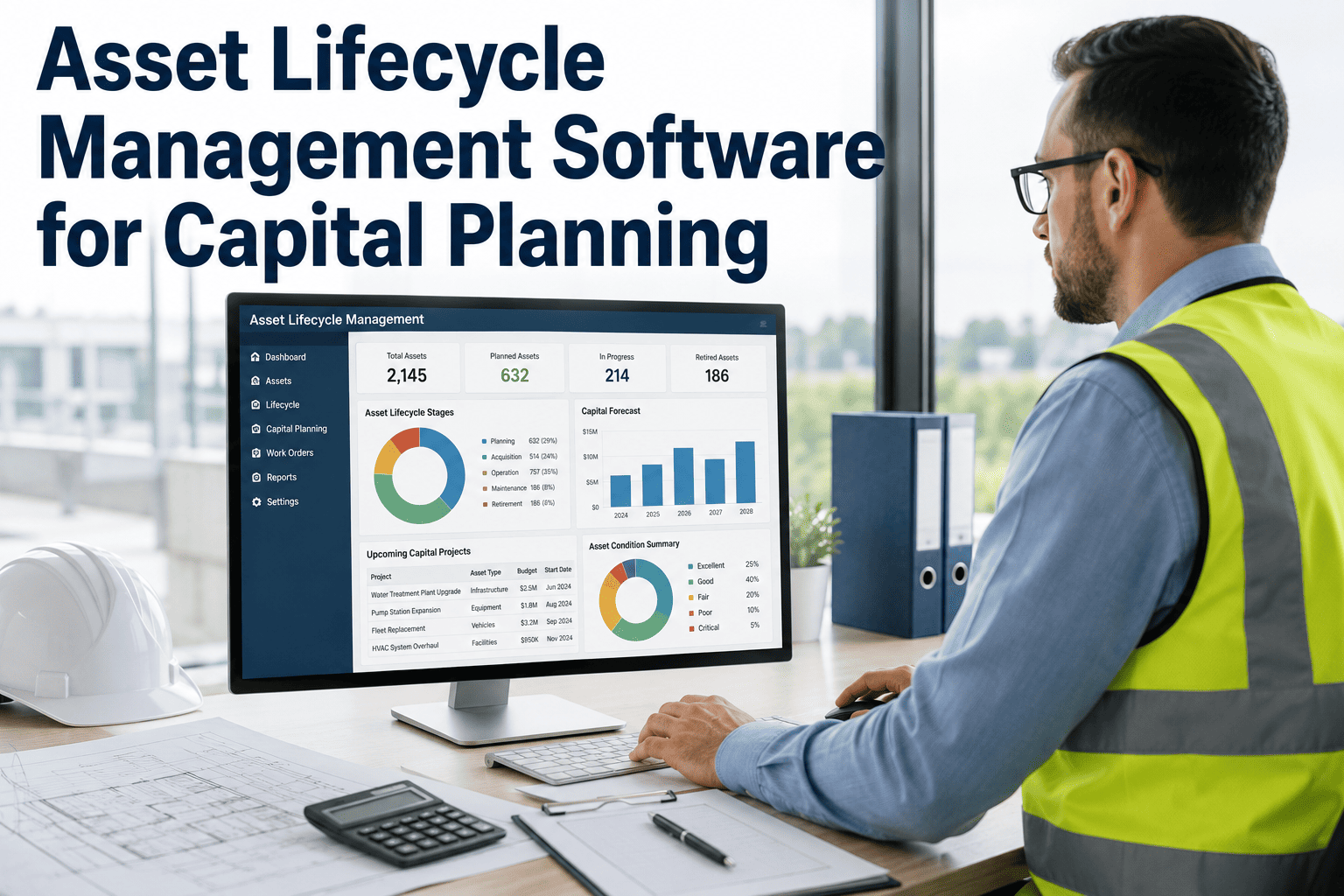
Oxmaint captures the complete lifecycle record for every asset — from the specification sheet at planning through the disposal certificate at retirement — so your operations team, your finance team, and your auditors all work from the same source of truth.
How Oxmaint Manages Every Stage of the Asset Lifecycle
Oxmaint is built around the reality that asset lifecycle management is a cross-functional discipline — finance, operations, maintenance, and compliance all need their own view of the same record, updated in real time, without manual reconciliation between systems. Here are the six capabilities that define full-lifecycle asset management in the platform. Ready to try it against your own asset list? Start a free trial or book a demo.
01
Complete Asset Registry With Hierarchy
Portfolio → Property → System → Asset → Component hierarchy, with every level linked to condition, cost, warranty, and maintenance history. No more reconciling finance and ops spreadsheets.
Single source of truth across all business functions
02
Condition Scoring on Every Asset
Live condition scores from inspection data, sensor readings, and work order history — not static age-based estimates. Critical assets show their actual remaining useful life, updated after every maintenance event.
Condition-based CapEx forecasting, not calendar guessing
03
5–10 Year CapEx Forecasting
Rolling capital plans built directly from live condition data. Investor-grade reporting that shows not just what needs to be replaced, but why — with the underlying maintenance and inspection history linked to each forecast line.
Investor and board-ready capital planning out of the box
04
Warranty & Vendor Documentation
Every spec sheet, warranty certificate, O&M manual, and vendor contact attached to the asset record. When a technician is standing in front of a failing compressor at 11pm, the right documentation is one tap away on their phone.
Zero wasted service calls from missing documentation
05
Spare Parts & MRO Procurement
Spare parts linked to specific assets with consumption-based reorder points. BOMs imported from manufacturer data. Emergency parts stockouts become a solved problem rather than a quarterly crisis.
20–30% reduction in inventory carrying cost
06
Audit-Ready Disposal Documentation
Retirement workflows capture disposal certificates, refrigerant recovery records, residual value, and chain-of-custody documentation. Compliance exposure closes with the work order — not three years later when the auditor finds the gap.
Retirement compliance handled automatically, not reactively
Lifecycle Management vs. Work Order Tracking — Why the Distinction Matters
A work-order-only CMMS manages maintenance. Full lifecycle asset management governs the asset from the day the purchase order is signed to the day the disposal certificate is filed. The gap between the two is where millions of dollars in capital decisions and compliance exposure live.
| Dimension |
Work Order Only CMMS |
Full Asset Lifecycle Platform |
| Scope of record |
Maintenance events only — stage 4 of the lifecycle |
All six stages from planning through disposal |
| CapEx forecasting |
Not supported — finance builds forecasts separately |
Built directly from live condition data |
| Condition tracking |
Static — age-based or last-PM-date estimates |
Live condition scoring updated continuously |
| Financial integration |
Manual reconciliation between ops and finance systems |
One record visible to both ops and finance in real time |
| Warranty & vendor data |
Attached as PDFs, rarely referenced |
Structured fields linked to work order workflows |
| Disposal documentation |
Informal — handled after retirement if at all |
Workflow enforces compliance at retirement |
| Investor reporting |
Custom reports compiled manually each quarter |
Portfolio-level dashboards always current |
Frequently Asked Questions
The questions operations leaders, portfolio managers, and finance teams bring to asset lifecycle platform evaluations — from single-facility operators to multi-site commercial portfolios.
What makes Oxmaint a lifecycle management platform rather than a work order tool?+
Oxmaint captures the full asset record across all six lifecycle stages — planning, procurement, deployment, operations, optimization, and disposal — in a single registry with hierarchy from portfolio down to component. Condition scoring is continuous. CapEx forecasting is built into the platform. Warranty, spare parts, and disposal documentation live with the asset record instead of scattered across separate systems.
Sign up free to see it configured on sample assets.
How does Oxmaint handle multi-site and multi-property portfolios?+
The asset hierarchy is Portfolio → Property → System → Asset → Component. Portfolio managers see rolled-up condition scores, CapEx forecasts, and cost performance across every property. Property managers see their site in operational detail. Technicians see their work orders and asset documentation. One registry, multiple views, no manual reconciliation between the levels.
Can lifecycle data be imported from existing spreadsheets or legacy systems?+
Yes. Oxmaint imports asset registers, maintenance histories, warranty data, and condition assessments from Excel, CSV, and major legacy CMMS and EAM platforms. Typical portfolio migration for 500–2,000 assets takes 2–4 weeks with structured data. Most teams run parallel for the first month before retiring the legacy system completely.
How does condition-based CapEx forecasting differ from age-based planning?+
Age-based planning assumes an HVAC unit at year 18 of a 20-year expected life will need replacement in 2 years. Condition-based forecasting looks at the actual inspection data, sensor readings, and work order history for that specific unit — and tells you whether it's tracking for replacement in 12 months or has 6+ years of life remaining. Across a 1,000-asset portfolio, the difference is typically 15–25% of the annual CapEx budget.
What does implementation look like for a mid-sized portfolio?+
A 5–15 property portfolio with 1,000–3,000 assets typically goes live on Oxmaint in 4–8 weeks. Setup covers asset hierarchy configuration, condition baseline capture, PM schedule loading, mobile user onboarding, and CapEx model calibration. No implementation fees. Most customers see their first condition-based CapEx forecast generated within 60 days of go-live.
Full Lifecycle Asset Management — Oxmaint
From Purchase Order to Disposal Certificate, Governed in One Platform.
Complete asset registry, condition-based CapEx forecasting, unified warranty and spare parts records, audit-ready retirement documentation — the six-stage lifecycle managed as one continuous record. Your operations team, your finance team, and your investors all read from the same page.
100%
Asset coverage across 6 lifecycle stages
5–10 yr
Rolling CapEx forecast horizon
1 registry
Ops and finance working from one record
4–8 wks
Go-live timeline for mid-sized portfolios
.png)


