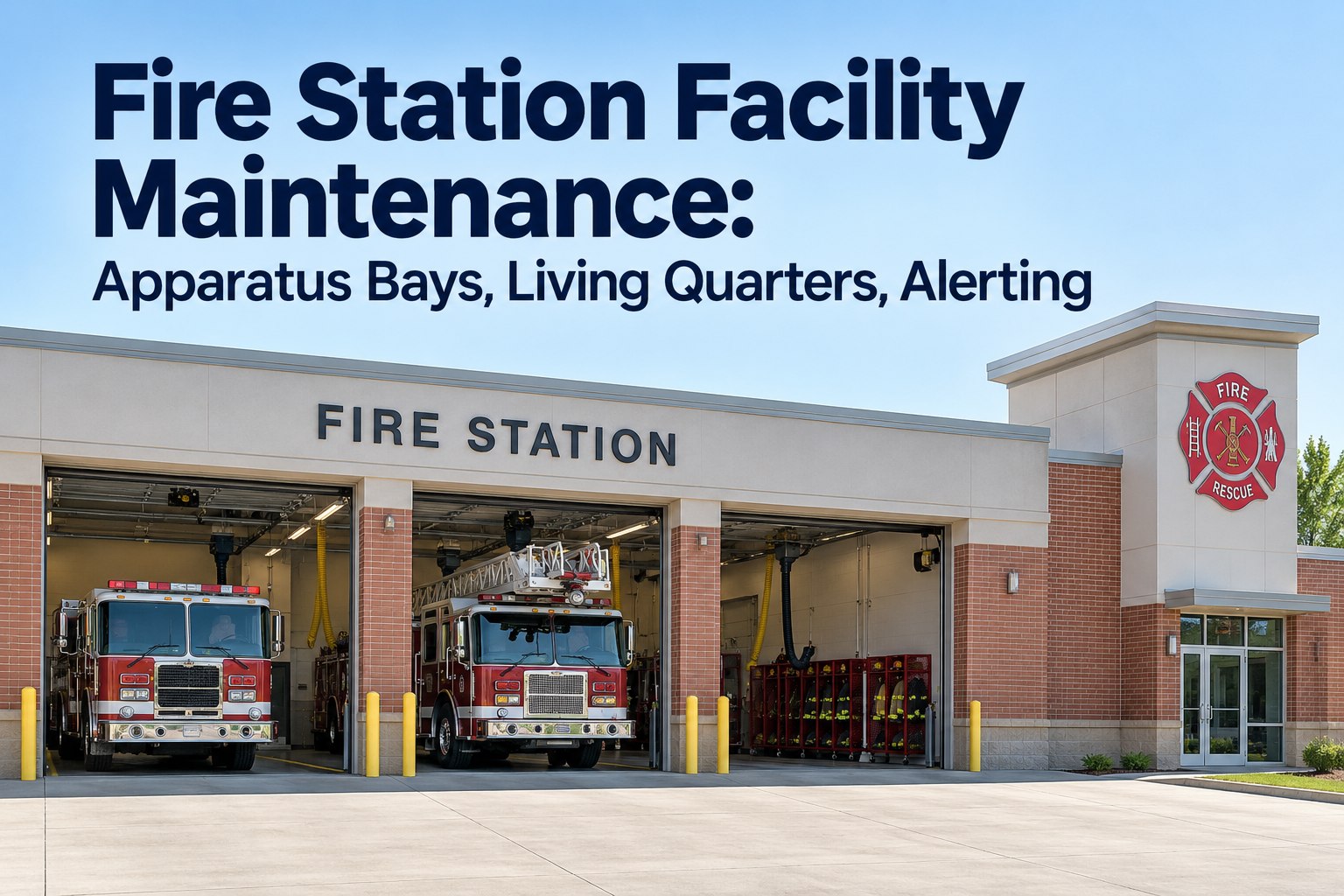
A fire station is three buildings wearing one roof. There's the apparatus bay an industrial garage where diesel apparatus idle and a source-capture exhaust system is quietly protecting crews from a Group 1 carcinogen. There's the living quarters — a 24/7 residence with kitchens, bunks, and HVAC that never switches off. And there's the alerting and life-safety layer — the station alerting system, backup power, and detection that must work at 3 a.m. when a call drops. When any one fails, the others are affected: a dead exhaust fan contaminates the bunkroom air, a tripped generator silences the alerting tones. This guide breaks the station into its three maintenance environments and shows how OxMaint keeps every asset in all three on a single, accountable schedule. Book a demo to map your station's assets and we'll flag the gaps live.
One Roof, Three Maintenance Environments
A fire station runs an industrial garage, a full-time residence, and a life-safety network at the same time — each with its own risks and cadence.
Apparatus Bays
Exhaust extraction, bay doors, floor systems
Living Quarters
HVAC, kitchen, bunkrooms, plumbing
Alerting & Life-Safety
Station alerting, backup power, detection
Why a Fire Station Is a Maintenance Outlier
An office building empties at night. A factory shuts a line for service. A fire station does neither — it runs at full readiness every hour of every day, which changes the whole maintenance calculus. You can't take the apparatus bay offline, you can't silence the alerting system for a test window whenever it's convenient, and the people who live in the building are the same people who respond to calls. Three pressures make the station unlike any other facility.
Never offline
Maintenance has to happen around a crew that could be dispatched mid-task. PMs get scheduled in windows, deferred, then forgotten — unless the system tracks them.
Health on the line
Diesel exhaust is a Group 1 carcinogen. A lapsed exhaust-extraction PM isn't a comfort issue — it's a direct occupational-health exposure for the crew that sleeps there.
Failure costs seconds
When alerting or bay doors fail, response time suffers. A stuck door or dead tone circuit turns a maintenance gap into a public-safety gap.
Environment 1 · The Apparatus Bay
The bay is the most industrial space in the building — and the most hazardous to the people who work in it. The single most critical system here is vehicle exhaust extraction, which captures diesel exhaust at the tailpipe before it fills the air the crew breathes. Every asset in this zone runs on a strict PM cadence because a failure is measured in either health exposure or lost seconds on a call.
Priority system
Vehicle Exhaust Extraction
Source-capture hoses, fans, and rail systems that grab diesel exhaust at the tailpipe. PM covers fan operation, hose seals, filter condition, and the auto-connect/release mechanism — the difference between clean bunkroom air and a carcinogen exposure.
Bay Doors
High-cycle overhead doors on the critical path of every response. Springs, tracks, openers, and safety sensors on a preventive schedule so a door never stalls a rig.
Floor Drains & Separators
Trench drains and oil-water separators that keep runoff compliant. Regular cleaning and inspection prevent backups and environmental violations.
Radiant / Unit Heat
Bay heating that keeps water tanks and lines from freezing. Seasonal service and combustion checks keep apparatus response-ready in winter.
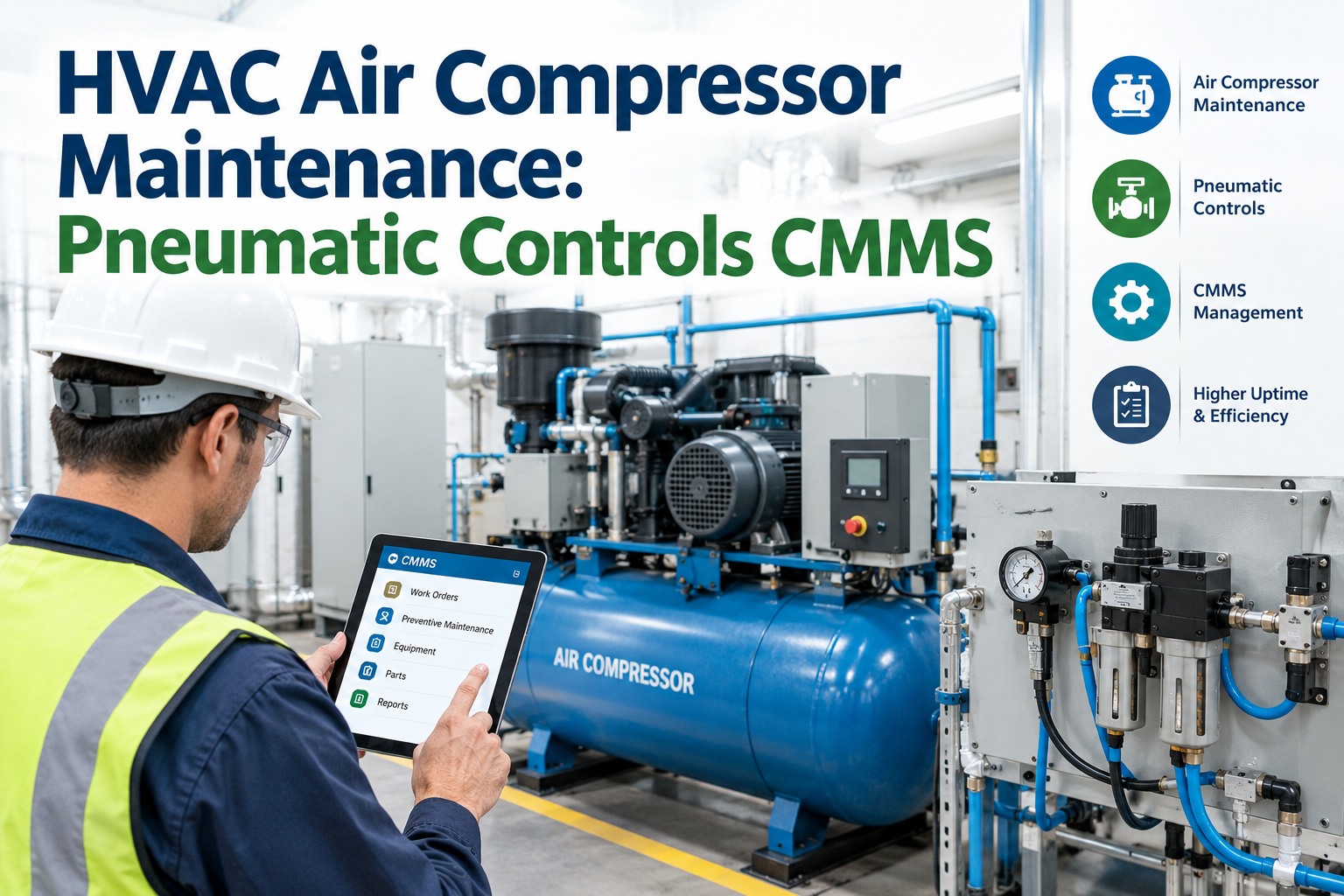
Compressed Air & Fill
Air compressors and SCBA fill stations. Filter changes, air-quality testing, and pressure checks keep breathing-air systems safe and certified.
Environment 2 · Living Quarters
Firefighters don't visit the station — they live in it, often for 24- and 48-hour shifts. The living quarters carry the same maintenance load as a small residential building, running continuously, with the added twist that comfort systems here directly affect the rest and readiness of the people responding to emergencies. Four asset groups drive the workload.
HVAC & Air Quality
Continuous heating and cooling with filter changes and coil service — plus separation from bay air so exhaust never migrates into living space.
Kitchen Equipment
Commercial-grade ranges, hoods, and refrigeration used hard every shift. Hood cleaning, suppression checks, and appliance PM keep a high-use kitchen safe.
Plumbing & Water
Bathrooms, showers, and water heaters on constant demand. Leak checks, water-heater service, and backflow testing prevent disruptions and damage.
Bunkrooms & Common Areas
Sleeping quarters, day rooms, and lockers. Lighting, electrical, and general upkeep keep rest spaces functional for round-the-clock crews.
See All Three Environments on One Dashboard
Working session with our team — bring your station's asset list. We'll map bays, living quarters, and alerting into a single PM calendar and show how OxMaint tracks every recurring check in one place, even around a crew that's on call.
Environment 3 · Alerting & Life-Safety
This is the environment where a maintenance lapse costs response time directly. The station alerting system, its backup power, and the building's own life-safety detection all have to work on the worst night of the year — which means they can't be tested "when there's time." They need a fixed, tracked schedule, and a documented result every cycle. Start a free trial and schedule your first life-safety PM in minutes.
System
What PM protects
Cadence
Station alerting
Tone/PA circuits, zone speakers, ramp-up timing, dispatch interface
Monthly function test
Backup generator
Fuel, coolant, load-bank performance, transfer-switch operation
Weekly run + annual load test
UPS & batteries
Battery health for alerting and comms during transfer
Quarterly check
Fire detection
Smoke/CO detection and alarm panel in the station itself
Per code inspection cycle
Emergency lighting
Egress lighting and exit signs on battery backup
Monthly + annual duration test
How OxMaint Runs Fire Station Maintenance
OxMaint puts every asset across all three environments — exhaust fans, bay doors, HVAC units, generators, alerting circuits — into one QR-tagged register, each on its own preventive schedule with a full history behind every scan. The result is a station where nothing critical rides on someone remembering. Book a demo to see your station mapped in OxMaint.
Register
Every Asset QR-Tagged
Scan any exhaust fan, bay door, or generator to pull its history, open work orders, and parts status on the spot.
Schedule
PMs That Survive a Call
Recurring checks stay on the calendar and re-surface if a crew gets dispatched mid-task — deferred, never dropped.
Protect
Exhaust-Extraction Tracking
The bay's most health-critical system gets its own PM cadence and a logged result every cycle — an occupational-health record, not a guess.
Mobile
Log It on the Floor
Crews close work orders, capture photos, and e-sign from a phone in the bay — no paper round-trip, no lost record.
Prove
Documented Test Results
Every alerting test, generator run, and detection check carries a timestamped result — the compliance trail an inspection expects.
Report
Multi-Station Visibility
Run one station or a whole department — PM compliance and open work by station on one dashboard.
Keep the Station Ready — Nothing Left to Memory
Move apparatus bays, living quarters, and alerting onto one system that schedules every PM, tracks exhaust-extraction health, and documents every life-safety test. Free forever plan available — no card required.
Frequently Asked Questions
What makes fire station maintenance different from other facilities?
A fire station is a 24/7 mixed-use building — an industrial apparatus bay, a full-time residence, and a life-safety alerting network under one roof. It never goes offline, the occupants live on site, and a maintenance lapse can cost either crew health or response time. That combination makes it unlike an office, a warehouse, or a standard residence.
Start free to organize your station's PMs.
Why is vehicle exhaust extraction the top bay priority?
Diesel exhaust is a recognized Group 1 carcinogen, and firefighters sleep in the same building as the apparatus. A source-capture extraction system removes exhaust at the tailpipe before it reaches the air the crew breathes, so a lapsed exhaust PM is a direct occupational-health exposure — not a comfort issue.
How do you maintain a building that's never offline?
You schedule around readiness and track everything so nothing gets lost. OxMaint keeps recurring PMs on the calendar and re-surfaces any check that gets deferred when a crew is dispatched mid-task, so maintenance fits around calls instead of competing with them.
What alerting and life-safety systems need regular PM?
The station alerting tones and PA, the backup generator, UPS batteries, in-station fire detection, and emergency egress lighting. Each needs a fixed test cadence and a documented result every cycle — because they all have to work on the worst night, not just when there's time to test.
Book a demo to set the schedule.
Can OxMaint manage multiple fire stations?
Yes. OxMaint tags every asset across bays, living quarters, and alerting, runs each on its own PM schedule, captures timestamped mobile results, and rolls PM compliance and open work up to a department-wide dashboard across every station. A free forever plan is available to trial the full workflow.

.png)