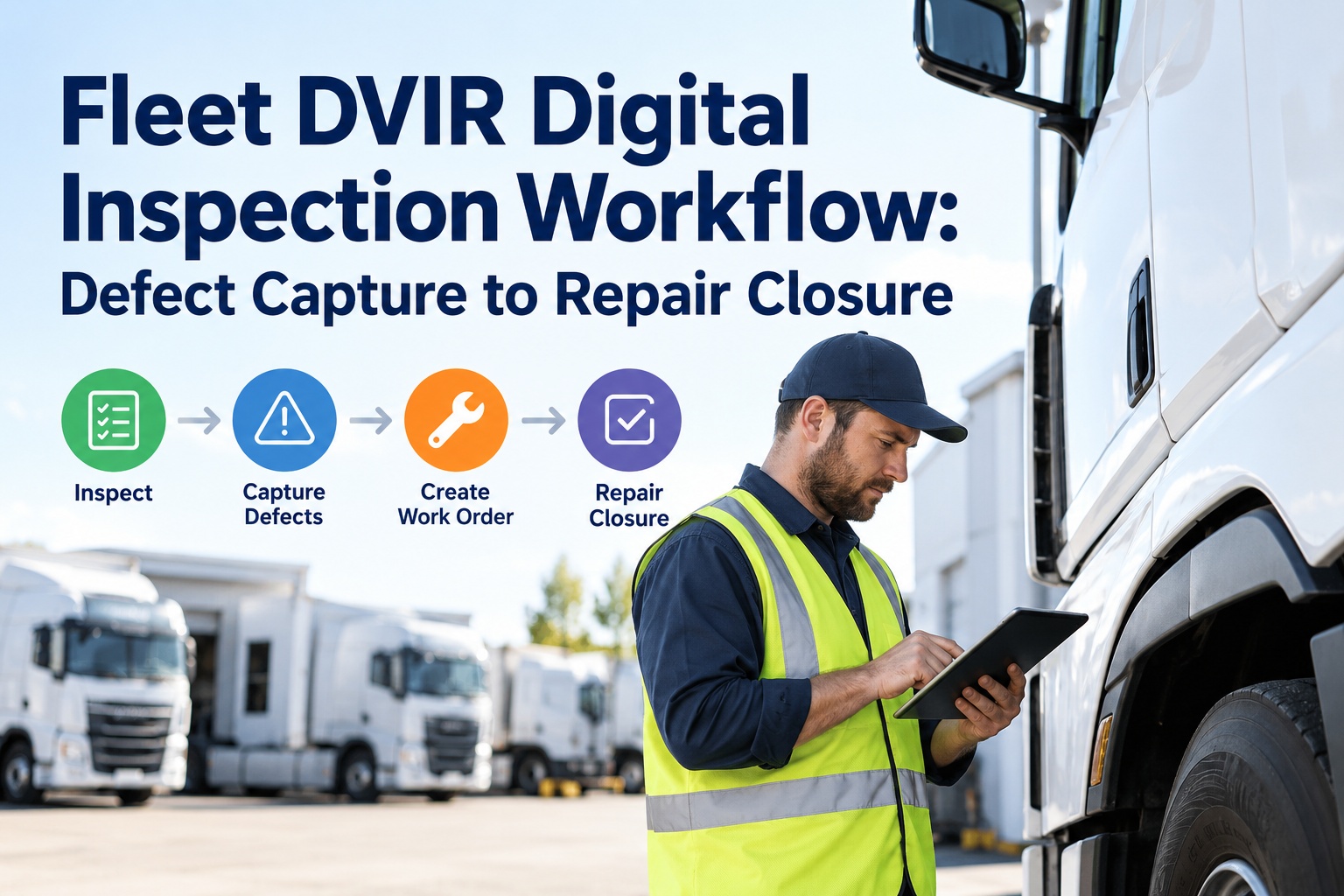
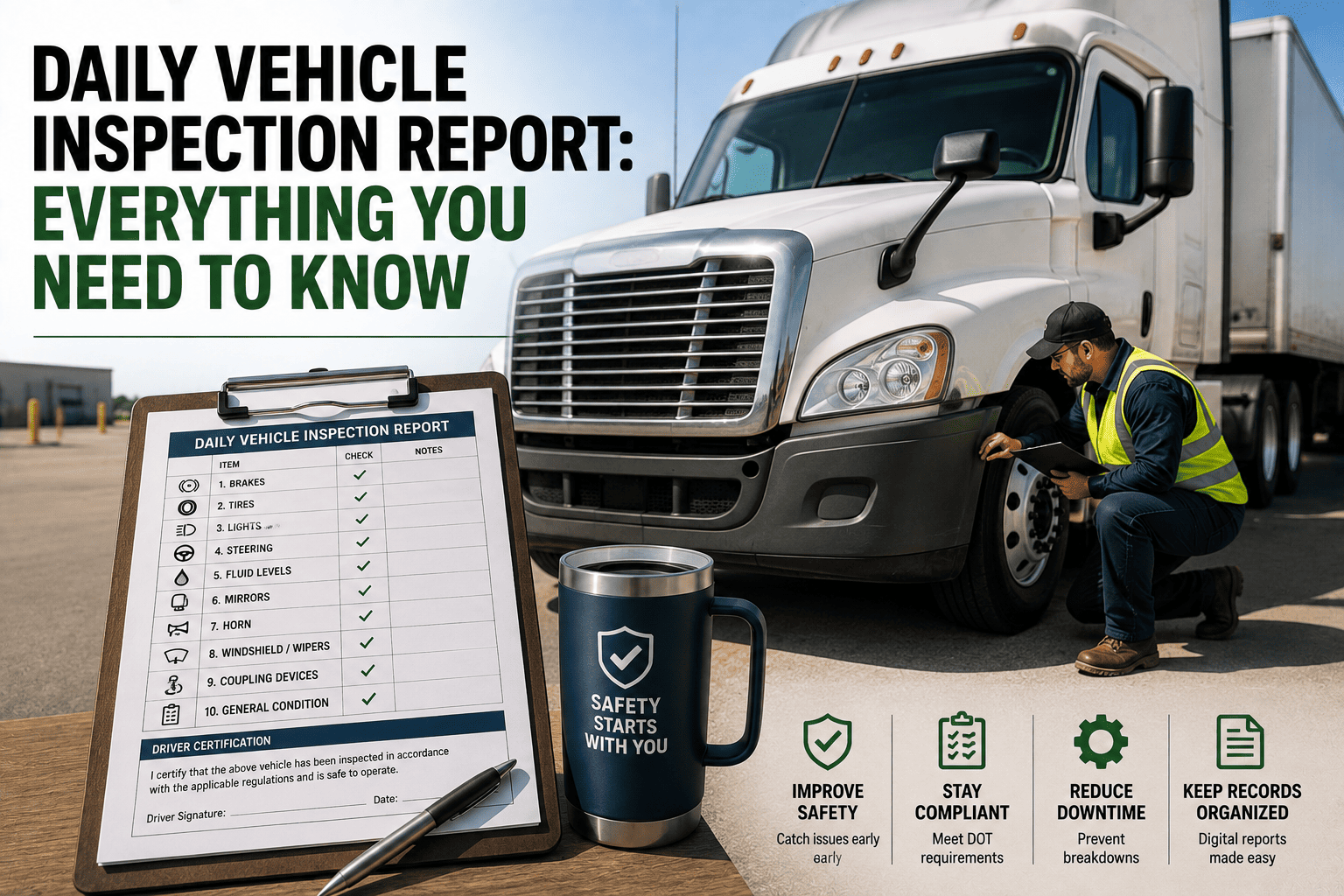
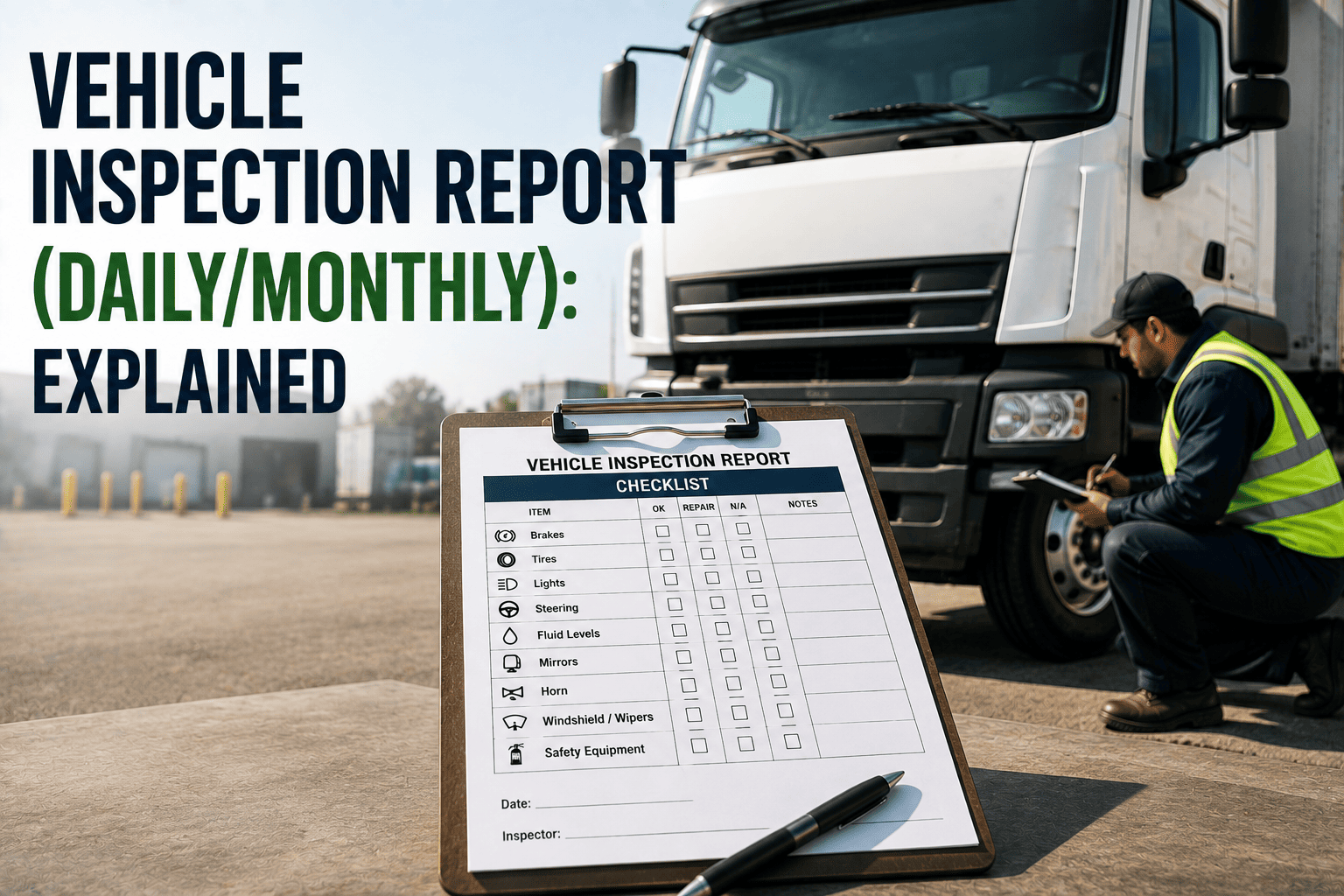
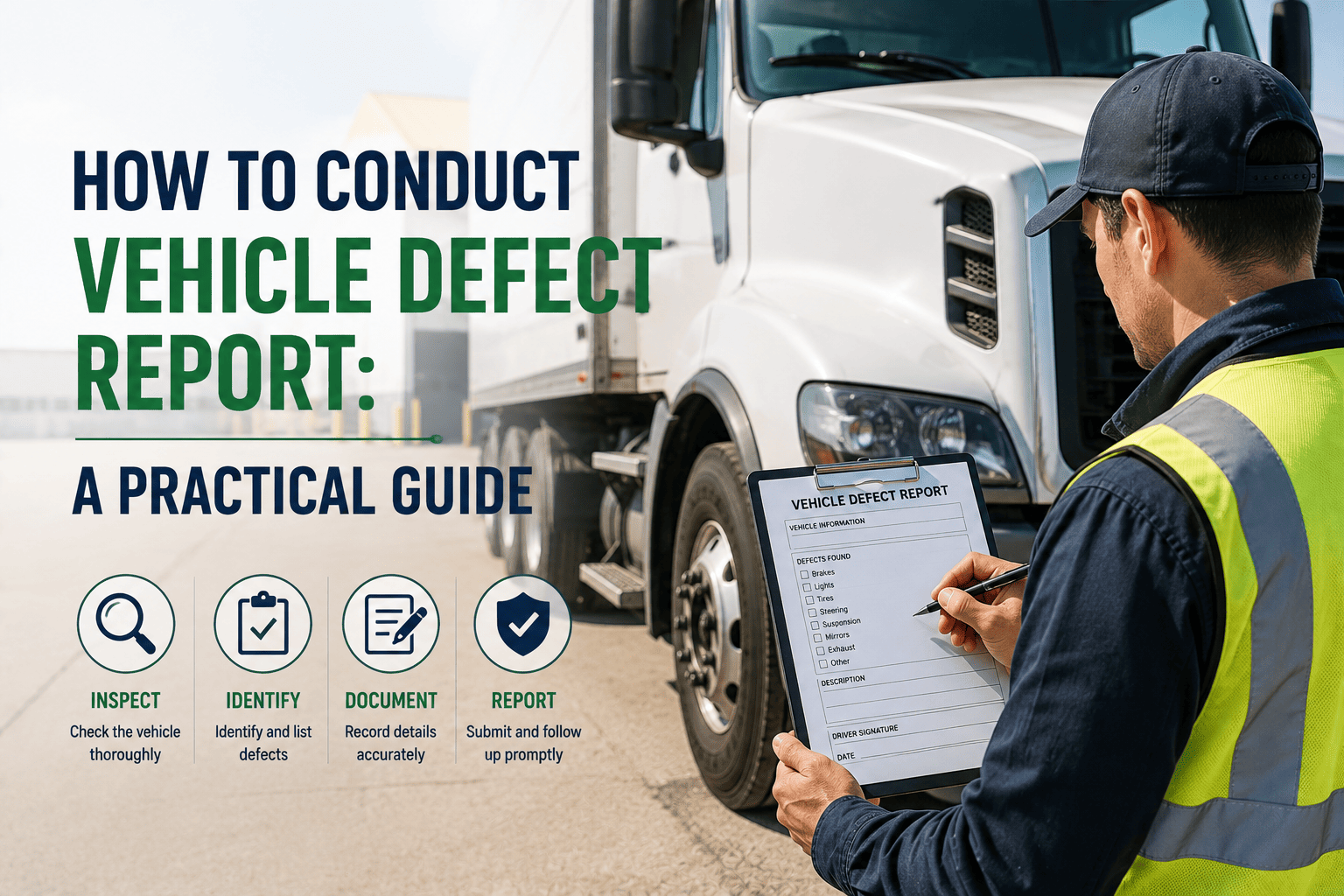
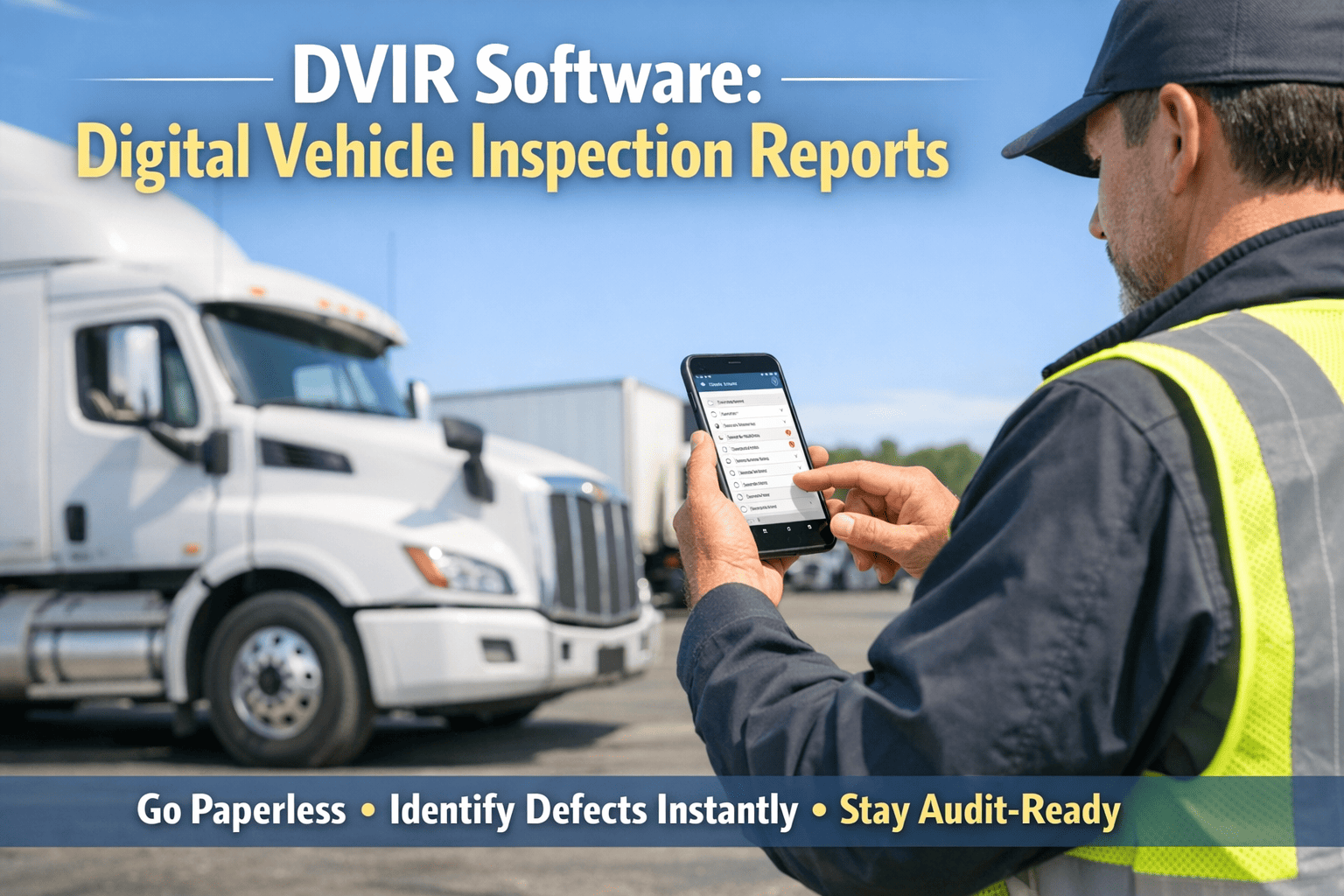
The Driver Vehicle Inspection Report is one of the most important — and most poorly executed — compliance documents in commercial trucking. Under FMCSA 49 CFR 396.11, every commercial motor vehicle operator must conduct a systematic pre-trip and post-trip inspection and document any defects that affect safe operation. Yet across US fleets, DVIR compliance is chronically broken: drivers fill out paper forms that no one reads until a DOT auditor asks for them, defects get written up but never linked to repair work orders, and the inspection record that was supposed to prevent a brake failure on I-70 is sitting in a filing cabinet 400 miles from where the truck currently is. Digital DVIR changes all of that — but only when the inspection data connects directly to the maintenance workflow that acts on it. Start running digital DVIRs in OxMaint — free trial, no credit card.
Fleet DVIR: Digital Pre-Trip & Post-Trip Inspection, Defect Tracking & DOT Compliance
Mobile pre- and post-trip inspection forms, photo-documented defect reporting, automatic repair work order generation, and FMCSA-compliant digital record retention — all in OxMaint, from any smartphone, with no paper and no back-office data entry.
OxMaint's mobile DVIR captures pre- and post-trip inspections with photo documentation, digital driver signature, and automatic defect-to-work-order routing — so the shop knows about a brake issue before the driver finishes their paperwork, not 3 days later when someone files the carbon copy.
Where Defect Resolution Time Is Lost — Paper vs Digital DVIR
The average paper DVIR defect takes 3.2 days from driver write-up to completed repair — not because the repair is complex, but because the paper never connects to the maintenance workflow. The gradient bars below show where time is consumed in each approach across a 50-vehicle fleet running 2 inspections per vehicle per day.
DVIR Compliance Requirements — What FMCSA Mandates
FMCSA 49 CFR 396.11 is not optional and not vague. It requires a specific set of inspection items, a specific defect notification process, and specific record retention requirements. OxMaint's digital DVIR is built around these requirements — not adapted from a generic inspection checklist. Every field, every signature requirement, and every retention rule is built in from day one. See OxMaint's DVIR configured for your fleet and vehicle types.
| FMCSA Requirement | CFR Reference | What It Requires | OxMaint Coverage |
|---|---|---|---|
| Pre-Trip Inspection | 396.11(a) | Driver reviews last DVIR, signs if defects corrected or no defects | Auto-populated |
| Post-Trip Inspection | 396.11(a) | Written report of defects affecting safe operation or required repairs | Mobile form |
| Defect Notification | 396.11(b) | Motor carrier must review, repair defects, and certify correction | Instant + work order |
| Driver Signature | 396.11(c) | Driver must sign report acknowledging defects identified | Digital signature |
| Mechanic Certification | 396.11(b)(2) | Certifying mechanic must sign that repairs were made or not needed | Tech sign-off |
| Record Retention | 396.11(c) | DVIRs must be retained for 3 months at principal place of business | Auto-archived |
| Inspection Items | 396.11(a)(1) | 17 required vehicle system categories must be inspected and documented | All 17 built in |
How OxMaint Digital DVIR Works — Step by Step
OxMaint's digital DVIR eliminates every manual handoff in the paper process — from inspection to defect routing to repair verification to DOT record archiving. The entire workflow runs on the driver's and technician's mobile devices, with no back-office data entry at any stage.
OxMaint pre-populates the last DVIR and any open defects for the vehicle. Driver sees immediately if yesterday's brake issue was repaired and certified before departing. Pre-trip review takes under 60 seconds.
All 17 FMCSA-required categories appear in sequence — brakes, lights, tires, coupling, steering, and more. Driver checks each item, marks pass/fail, and photographs any defect. Takes 2 minutes average on OxMaint vs 11 minutes paper.
Any defect flagged generates an immediate push notification to the assigned technician and a work order in OxMaint — with the defect photo, vehicle ID, and driver notes attached. Shop knows before the driver leaves the yard.
Technician receives the work order on mobile, completes the repair, logs parts used, and provides digital signature certifying the defect was corrected. The certification links directly to the original DVIR record automatically.
Driver completes post-trip inspection on mobile at end of shift — same systematic process, same photo documentation, same instant routing for any new defects. Both pre- and post-trip records link to the same vehicle day record.
OxMaint retains all DVIR records for 3 months (FMCSA requirement) with automatic extension to 14 months for vehicles with annual inspection records. Complete audit export available in 30 seconds from any device.
A DOT inspector pulled over one of our drivers in Ohio and asked for the last 30 days of DVIRs on the spot. The driver opened OxMaint, the inspector downloaded the PDF, and we were done in 4 minutes. That same request with our old paper system would have required someone back at the terminal to dig through filing cabinets for 2 hours — and hope the forms were legible.
Frequently Asked Questions
Paper DVIR Eliminated. DOT Compliant from Day One.
Mobile inspections, instant defect routing, and auto-archived DOT records — live in 5 days.