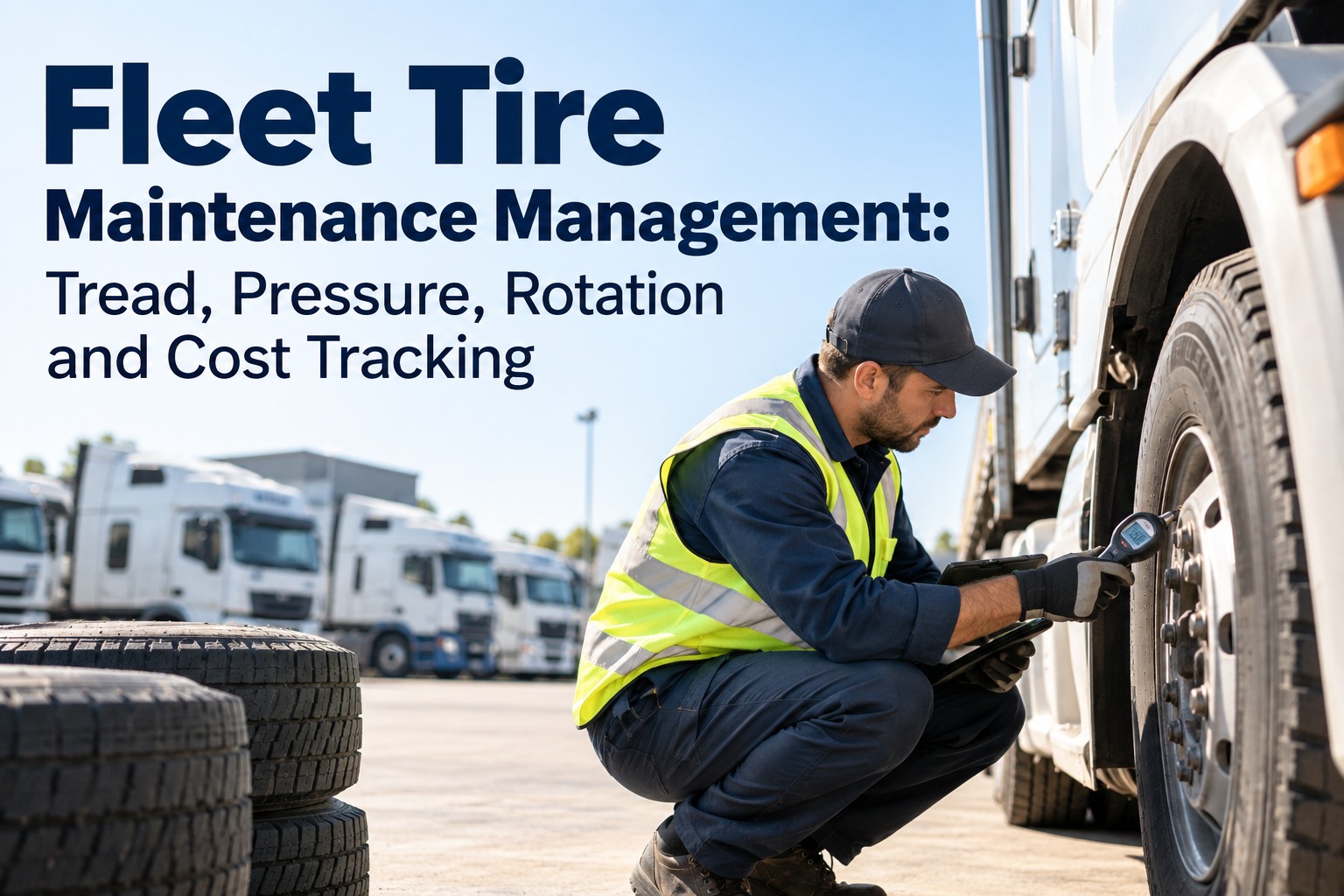
Tires are the second-largest operating cost in most fleets after fuel — and the one most often managed by guesswork. A steer tire run two sizes low on pressure burns extra fuel every mile and fails without warning; a drive tire pulled a week too early throws away good tread; a casing scrapped instead of retreaded is money left on the shoulder. Tread, pressure, rotation and cost are four dials on the same machine, and most fleets watch none of them closely. OXMAINT AI is the AI-powered maintenance management software that puts all four on one record — per tire, per position, per vehicle.
Fleet Tire Maintenance Management, Measured Not Guessed
A tire program is four things done consistently — reading tread before it's illegal, holding pressure, rotating for even wear, and tracking cost per mile. The OXMAINT AI maintenance management software schedules each check, turns a worn or low tire into a work order, and tracks every tire's life and cost to the position it ran.
Why Tires Earn a Program, Not a Glance
Left to the yard, tires are checked when one looks low and replaced when one blows. A program turns that into a measured routine — and the payback shows up in fuel, downtime and compliance at once; book a demo to put your tires on a program in OXMAINT AI.
Tread: Read It Before the Law Does
Tread is the clock on a tire's life and the line a roadside inspector measures. Know the minimums, read the wear pattern, and pull on a plan — not after a failure. The OXMAINT AI maintenance management software logs tread per position and flags the next one due; start free and track tread by position in OXMAINT AI.
Pressure: the Cheapest Lever With the Biggest Payback
Air is free, and nothing you do to a tire matters more. Underinflation is the leading cause of tire failure — it burns fuel, overheats the casing and ends in a blowout. A pressure routine, checked cold and held to the load, is the highest-return habit in the yard; book a demo to schedule pressure checks in OXMAINT AI.
Rotation and Alignment: Keeping Wear Even Across the Axle
Tires don't wear at the same rate by position — steers scrub, drives torque, trailers drag. Rotating on a schedule spreads that wear so a set reaches the end together, and irregular wear is the early sign of an alignment fault worth chasing. The OXMAINT AI maintenance management software keeps rotation on a cadence and ties odd wear to the vehicle; start free and put rotation on a schedule in OXMAINT AI.
You Can't Manage a Tire Cost You Never Tracked to a Tire.
Most fleets know their total tire spend and nothing underneath it. The OXMAINT AI maintenance management software tracks every tire by position and vehicle — purchase, rotations, repairs and retreads — so the cost finally has a tire's name on it.
Cost Per Mile: the Number That Runs the Program
Total tire spend tells you nothing about which tire, brand or position earns its keep. Cost per mile does — the whole cost of a tire over the miles it delivered, retreads included. Track it and the program makes its own decisions; book a demo to build cost per mile per tire in OXMAINT AI.
| What to track | Why it matters | What it answers |
|---|---|---|
| Purchase cost | The starting cost of each tire by position | What the program spends, and where |
| Miles delivered | The real distance each tire ran before pull | Which tires actually go the distance |
| Repairs & rotations | The service a tire took during its life | The true cost, not just the sticker |
| Retread value | The second and third lives of a good casing | Where casing management pays back |
| Cost per mile | Whole-life cost over miles delivered | Which brand and spec to buy next |
How OXMAINT AI Runs the Whole Tire Program
The four dials only work together on one record — per tire, per position, per vehicle. Here's what the OXMAINT AI maintenance management software brings to fleet tires; start free and build your tire program in OXMAINT AI.
We knew our annual tire spend to the dollar and had no idea which tires earned it. Tracking tread and pressure on a schedule, and cost per mile by position, changed how we buy — one brand we trusted was our worst on cost per mile once retreads were counted. Blowouts fell because soft tires became work orders instead of surprises. The roadside tire call is the line that fell the most.
Frequently Asked Questions
Put Every Tire on One Record — and Every Dollar on a Mile.
Run tread, pressure, rotation and cost as one program with the OXMAINT AI maintenance management software — checks scheduled per position, worn or low tires turned into work orders, and every tire tracked by vehicle through to cost per mile. Stop replacing tires by surprise and start managing them by data.


.png)

