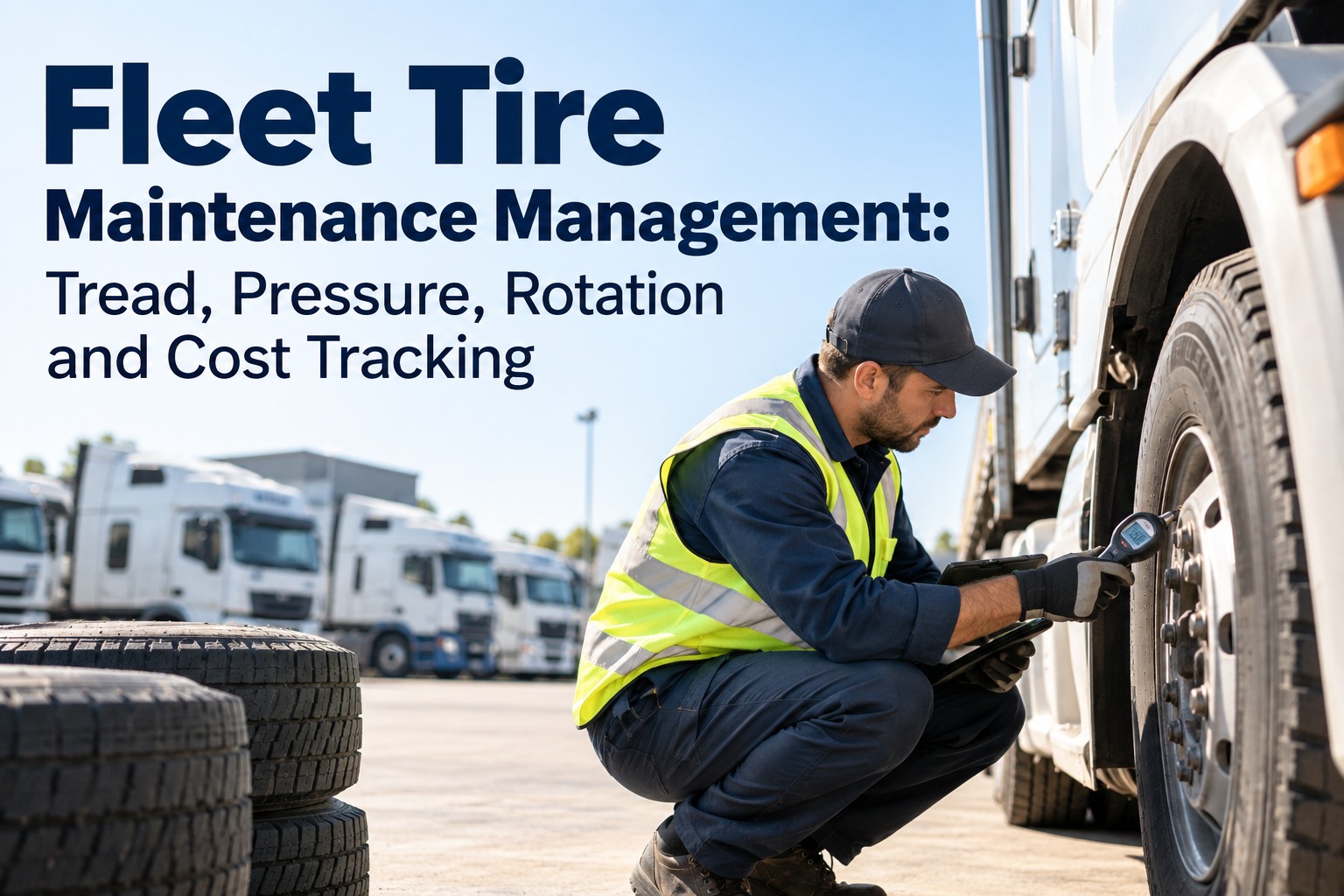
Tires are the second-largest variable maintenance expense in most commercial fleets after fuel — and the most avoidable. The American Trucking Associations estimates that under-inflation and irregular wear account for 40% of all premature tire replacements, costing US fleets $750 million annually in preventable tire spend. A Class 8 tire costs $450 to $650 to replace; a blowout on the road costs $850 in service call, labor, and lost time before the first phone call to the shop is even made. The difference between fleets running $28 per tire per month and those running $47 is almost always a systematic tire management program — rotation schedules tracked to actual mileage, pressure monitored at every pre-trip, tread depth logged and trended at every PM, and retread eligibility tracked per casing so the $130 retread is chosen before the $550 new tire. Start managing tire lifecycle costs in OxMaint — free trial, no credit card.
Fleet Tire Management Program: Inspection, Rotation & Replacement Optimization
Tread depth tracking, rotation scheduling, TPMS pressure monitoring, retread management, and tire lifecycle cost analysis — connected to OxMaint PM scheduling so every tire decision is driven by data, not guesswork.
OxMaint manages rotation schedules triggered by actual odometer mileage, tread depth logging per tire position, TPMS pressure alerts, retread eligibility tracking, and fleet-wide tire cost reporting — giving fleet managers the data to cut tire spend 20–35% without changing a single supplier.
Why Tire Costs Spiral Without Systematic Tracking
The four biggest tire budget leaks — under-inflation, missed rotations, over-specification on retreads, and reactive blowout response — share one characteristic: they are invisible without per-tire digital records. A fleet running pre-trip pressure checks on paper cannot trend pressure readings over time to catch a slow leak before it becomes a highway blowout. A fleet tracking rotation on a whiteboard cannot ensure every unit hits its rotation interval based on actual odometer reading rather than an estimated calendar schedule. And a fleet without tread depth records cannot know which tires qualify for retreading at $130 per casing versus which require $550 new tire replacement — so most of them default to new tires across the board.
OxMaint connects TPMS sensor data, live telematics odometer readings, and field-logged tread depth measurements into one per-tire record — so every rotation fires at the exact right mileage, pressure alerts go out before the shift starts, and the fleet manager sees the total tire cost per vehicle per month without opening a spreadsheet. The data that most fleets generate but never organize becomes the decision engine that drives a 20 to 35% tire cost reduction within the first year of systematic tracking. See how OxMaint tire tracking works for your fleet classes.
Fleet Tire Cost KPI Dashboard
Six tire program metrics tracked automatically in OxMaint — the numbers fleet managers and CFOs need to know whether tire spend is under control or quietly bleeding budget across the fleet.
Tire Inspection & Rotation Schedule by Vehicle Class
FMCSA regulations mandate commercial vehicles maintain tires in safe operating condition — specific frequencies and tread depth thresholds vary by vehicle class. OxMaint manages rotation schedules, tread depth measurements, and TPMS alerts for every class in one platform. See OxMaint's tire program configured for your fleet classes.
| Vehicle Class | Pressure Check | Tread Depth Check | Rotation Interval | Min Tread (DOT) |
|---|---|---|---|---|
| Class 3–4 Van / Light Truck | Weekly | Monthly | 5,000–7,500 mi | 2/32" |
| Class 5–6 Medium Duty | Weekly | Monthly | 10,000–15,000 mi | 2/32" |
| Class 7–8 Heavy Truck / Tractor | Daily (pre-trip) | Weekly | 25,000–35,000 mi | 2/32" steer / 1/32" drive |
| Tandem Drive Axle | Daily (pre-trip) | Weekly | 25,000 mi (cross & flip) | 1/32" drive |
| Trailer (Reefer / Flatbed) | Pre-dispatch | Monthly | 30,000 mi | 1/32" |
Technology Stack — Four Integrated Layers
The highest-performing fleet tire programs combine OxMaint with four connected technology layers — TPMS sensors, telematics mileage data, AI wear modeling, and retread partner integration — to move from reactive tire replacement to fully proactive lifecycle management where every replacement decision is made on data, not observation.
Retread Management — The Most Underutilized Savings in Fleet Tire Programs
The majority of commercial tire casings that meet retread eligibility criteria — no belt separation, no sidewall damage, tread depth not worn below minimum — are replaced with new tires because the fleet has no systematic way to track casing condition. A retread costs $120 to $150 per casing versus $450 to $650 for a new tire. On a 50-vehicle fleet with an average of 18 tires per unit, replacing 60% of eligible casings with retreads instead of new tires saves approximately $85,000 to $110,000 per year — without changing tire brand, supplier, or any other variable.
OxMaint tracks every tire as an asset — from the moment it is mounted on a specific vehicle and axle position, through every tread depth measurement, pressure reading, and rotation event, to the final dismount. At dismount, OxMaint captures whether the casing meets retread criteria and flags it for the retread program or marks it for disposal. The retread history is attached to the casing record, so second-life tires are tracked with the same rigor as new ones. This systematic approach to casing management is the single fastest lever to reduce fleet tire spend per mile — and it requires no capital investment, only consistent data capture.
Per-tire pressure readings feed into OxMaint in real time. Under-inflation alerts fire before the driver leaves the yard — catching the single leading cause of blowouts and premature wear before it becomes a $850 roadside service call.
Live odometer data from OBD-II or telematics triggers rotation work orders at exact mileage thresholds per vehicle — not estimated calendar intervals. Rotation PM fires when the unit hits the threshold, not when someone remembers to check.
AI models trained on tread depth history project end-of-life per tire position — recommending replacement timing that maximizes usable tread miles without crossing DOT minimums or risking a roadside violation.
We went from 14 blowout service calls in a year to 2 after implementing OxMaint's TPMS alerts and rotation scheduling. That one change saved $10,200 in roadside service — on top of a 22% reduction in tire replacement spend from better rotation compliance.
Frequently Asked Questions
Cut Tire Costs 20–35% Without Changing a Single Supplier.
Rotation scheduling, TPMS alerts, tread tracking, retread management — live in under 2 weeks.
.png)