A modern fleet vehicle produces 50 to 200 telemetry signals per minute — GPS fix, speed, fault codes, idle time, engine hours, DEF level, odometer, harsh-braking event. In most fleets, those signals land in a telematics portal nobody opens between quarterly reviews. The real value isn't the map; it's turning a J1939 fault code into a shop appointment before the truck reaches the next terminal. OXMAINT AI is the AI-powered CMMS and maintenance management software that ingests the GPS and telematics stream, scores it against the vehicle's PM schedule and fault-code library, and opens the work order automatically — so a 30-minute shop visit replaces a four-hour roadside service call.
GPS FLEET TRACKING · TELEMATICS INTEGRATION SOFTWARE · 2026
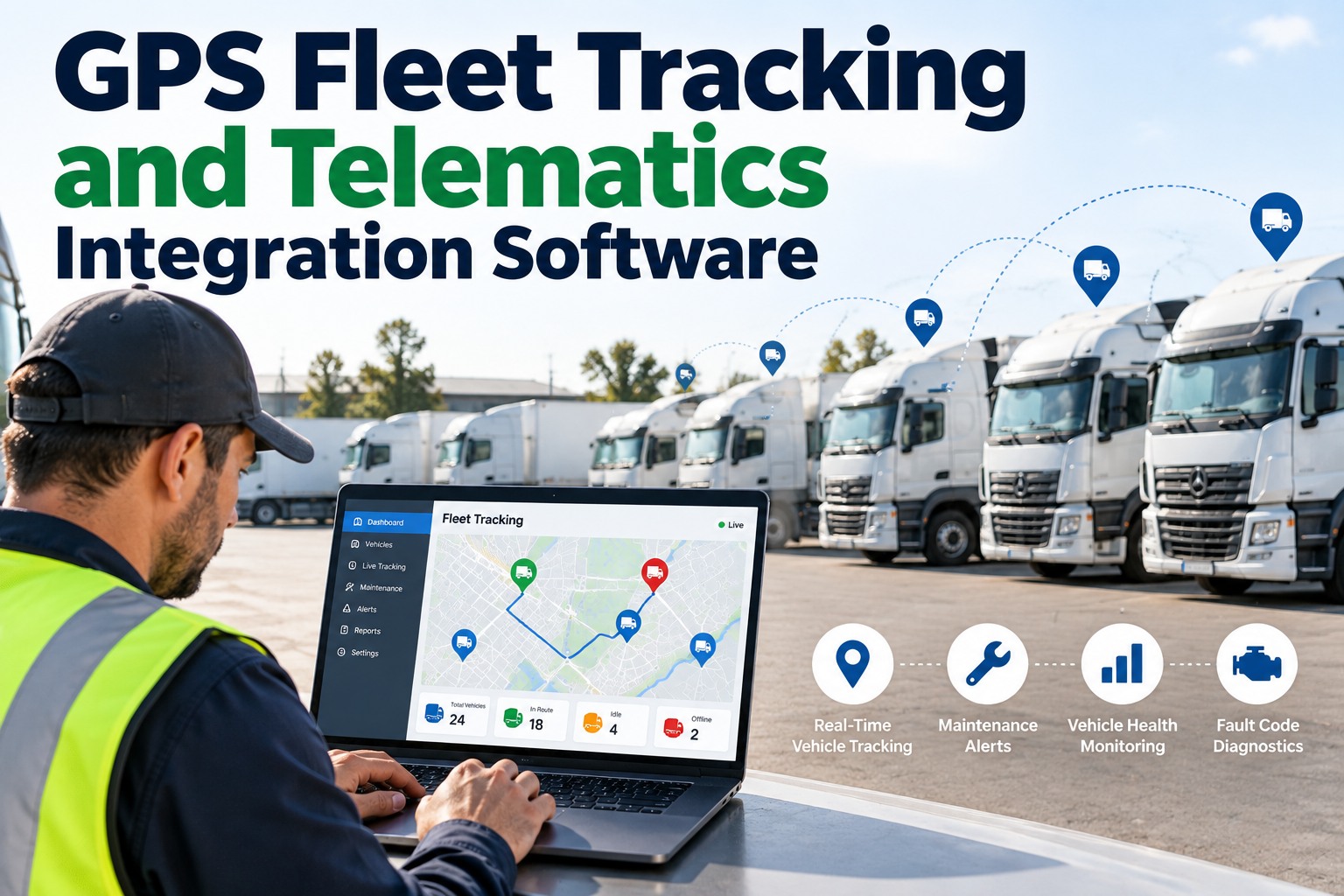
GPS Fleet Tracking and Telematics Integration Software
A GPS tracker on its own tells you where the truck is. Integrated with maintenance software it tells you when it needs the shop, which bay, and with what parts kitted. The OXMAINT AI software reads from any telematics provider — Geotab, Samsara, Verizon Connect, MiX, Lytx — and turns every meaningful signal into a scheduled or urgent work order.
PPosition
OOdometer
EEngine hrs
DDTC
FFuel / DEF
BBehavior
50-200
telemetry signals per minute from a modern commercial vehicle
J1939
SAE standard for heavy-duty vehicle fault codes carried by every major telematics provider
4-5×
cost multiplier of a roadside call-out over the same job done in-shop on a scheduled PM
1
unified vehicle view beats three vendor portals — one PM:CM ratio, one audit trail
The Six Telematics Signal Families — What Each Drives
A good integration isn't "all the data" — it is the six signal families that actually drive maintenance work. OXMAINT AI ingests each one and routes it to the right workflow — schedule a walkthrough of the signal-to-workflow mapping in OXMAINT AI.
POSITION
GPS lat/long, geofence, speed. Drives terminal-proximity dispatch, mileage-based PM triggers and route efficiency.
ODOMETER
Mileage read live from the ECU — the ground truth for PM intervals, warranty records and resale value.
ENGINE HOURS
Hours-based PM triggers for high-idle vehicles — refuse, aerial, airport GSE, generators on trucks.
DTC · FAULT CODES
SAE J1939 SPN/FMI pairs from the ECM — the actual check-engine language. The biggest early-warning signal.
FUEL / DEF / COOLANT
Levels, consumption, DEF dosing — low DEF or MPG drift signals faults long before a derate.
BEHAVIOR
Hard brake, harsh accel, over-rev, excessive idle — drive component wear and feed the driver coaching workflow.
The Fault-Code Prioritization Decoder
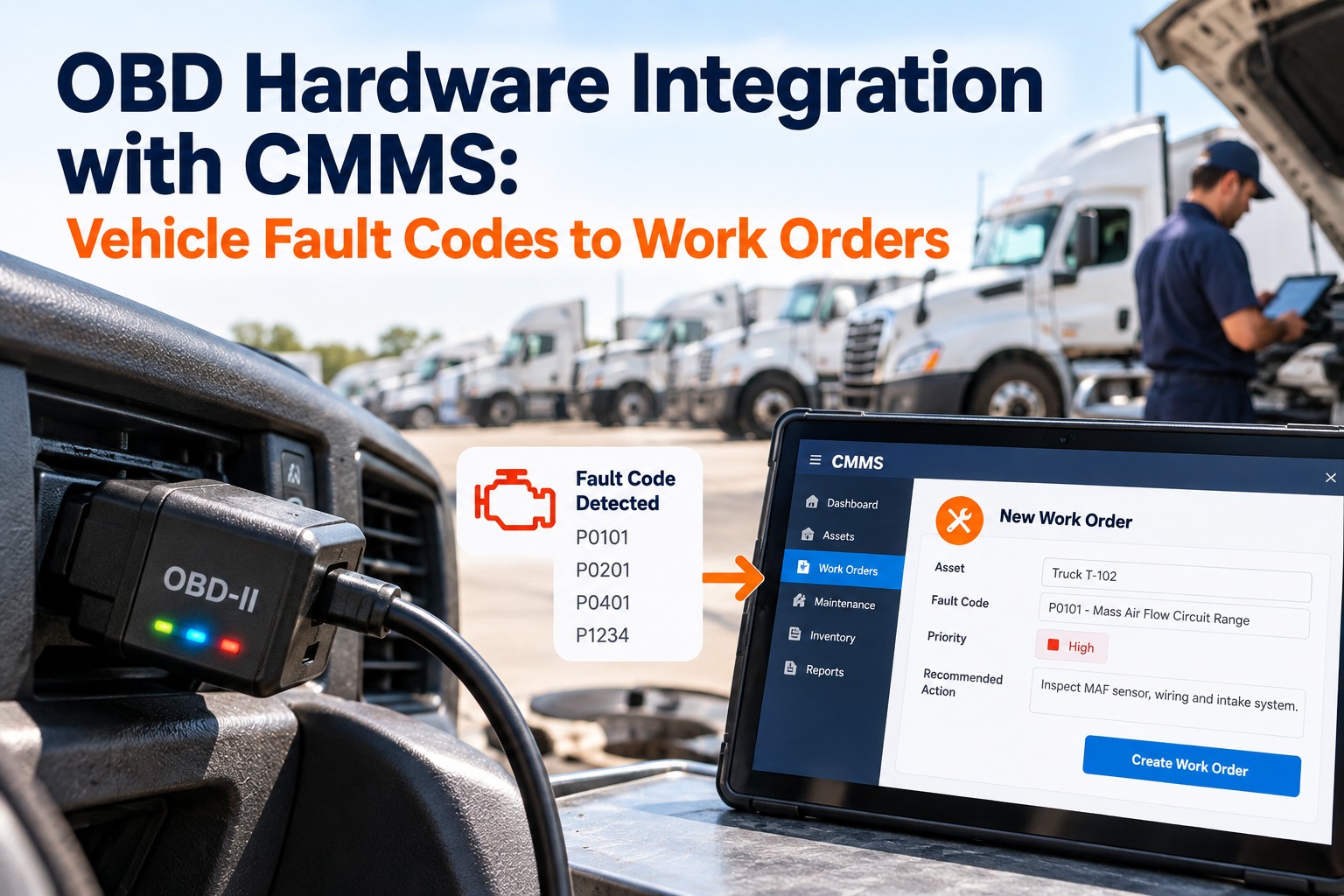
A J1939 DTC is not a work order on its own — it is a classification request. OXMAINT AI maps the SPN/FMI pair to a severity tier and the right action: continue, next PM, schedule now or get-off-the-road.
Severity
Typical SPN/FMI examples
What OXMAINT AI does
Info / log only
Sensor out-of-range reset — cleared on next key cycle
Logs against the vehicle; no WO raised
Next PM
EGR flow low (SPN 2791), low catalyst efficiency (SPN 3242)
Queue to the next scheduled PM work order; no urgency
Schedule now
Turbocharger boost low (SPN 102), DEF quality (SPN 4360)
Planned WO raised; dispatcher asked to route via shop within days
Get off road
Oil pressure very low (SPN 100 FMI 1), coolant very high (SPN 110)
Immediate stop-use alert to driver, dispatcher and shop
The Signal-to-Work-Order Workflow
The whole value of integration is the pipeline from the ECU to the shop. OXMAINT AI runs the five stages natively — the telematics provider ends at stage 2.
01
ECU
Vehicle's engine control module raises an SPN/FMI pair, logs odometer, engine hours, fuel level.
→
02
Telematics
Provider's device transmits the signal to the cloud with GPS context and timestamp.
→
03
OXMAINT AI ingest
OXMAINT AI reads the signal via API or webhook and matches to the vehicle in the fleet register.
→
04
Classify & route
Severity tier applied; PM due dates refreshed; DTC mapped to component; WO drafted automatically.
→
05
Dispatch & close
Driver, dispatcher and shop notified; mobile execution; parts kitted; closeout feeds the next cycle.
Live Fleet Health Board — One View, One Fleet
The fleet manager's morning view: every vehicle's health status, PMs due this week, open DTCs. OXMAINT AI generates it from the telematics stream directly — no vendor-portal round robin.
LIVE FLEET HEALTH BOARD · TERMINAL 02 · 07:00
T-042 TractorSPN 100 FMI 1 · low oil pressureGET OFF ROAD
T-087 ReeferDEF quality fault · SPN 4360Schedule shop 48h
T-104 Day-cabPM-B due at 10,250 mi (now 10,180)Book PM this week
V-311 VanEngine hrs milestone 1,000Oil service queued
T-205 TractorAll systems normalOK
The GPS Dot Isn't the Value. The Work Order Is.
Telematics providers sell dots on maps; the OXMAINT AI software turns those dots into shop appointments, parts kits and PM:CM ratio improvements — which is what moves the maintenance budget.
Integration Patterns — Pick One, Keep It Clean
Telematics-to-CMMS integration lands in one of three patterns depending on data volume and vendor stack. OXMAINT AI supports all three.
01 · WEBHOOK
Event-driven
Telematics provider pushes DTC and milestone events to OXMAINT AI as they happen. Lowest latency; best for fault-code and PM triggers.
02 · API PULL
Scheduled pull
OXMAINT AI pulls odometer, engine hours, fuel every 15-60 minutes. Right for high-signal data where real-time isn't required.
03 · WAREHOUSE
Shared data layer
Telematics data lands in a shared warehouse (Snowflake, BigQuery); OXMAINT AI reads from there. Best for multi-provider fleets.
How OXMAINT AI Runs Telematics-Driven Maintenance
The vehicle register, telematics ingest, DTC library, PM scheduler, severity router and audit trail all live natively in the OXMAINT AI maintenance management software — spin up a free account and connect your first telematics feed in OXMAINT AI.
Multi-Vendor Telematics Ingest
Reads from Geotab, Samsara, Verizon Connect, MiX, Lytx and any J1939 feed — vendor stays flexible, record stays single.
Live PM Trigger
PM intervals pulled from ECU odometer and engine-hour reads — no manual mileage entry, no drift.
DTC Severity Library
SAE J1939 SPN/FMI library mapped to severity tier and component — the right action, not just the raw code.
Get-Off-Road Alerting
Critical faults push to driver, dispatcher and shop simultaneously — the truck pulls over before the engine does.
Driver Behavior Loop
Hard-brake, harsh-accel and idle-time tied to component wear and driver coaching workflow — one record per driver per vehicle.
PM:CM Ratio Dashboard
Planned-vs-corrective work ratio tracked across the fleet — the number that proves the telematics investment is working.
Frequently Asked Questions
Which telematics providers does OXMAINT AI integrate with?
Does the GPS tracker have to come from the same vendor as the CMMS?
No — the whole point is vendor-neutral. Fleets with multiple terminals often run multiple telematics providers; OXMAINT AI reads from each and presents a unified fleet view.
What's the single highest-value signal to start with?
Live odometer feeding PM triggers — it eliminates missed and late PMs across the fleet in the first month. DTC ingest and get-off-road alerting come in the second wave.
How fast can we go live?
A single-provider integration typically goes live in 4-6 weeks — API credentials, vehicle mapping, DTC library tuned, severity thresholds set. Multi-provider warehouse integration is a bit longer.
Turn Every Signal Into an Action.
Put every GPS and telematics feed on the OXMAINT AI maintenance management software — live odometer-driven PMs, DTC severity routing, get-off-road alerts, driver behavior loop and unified fleet health board. The map was never the point; the shop appointment is.


.png)