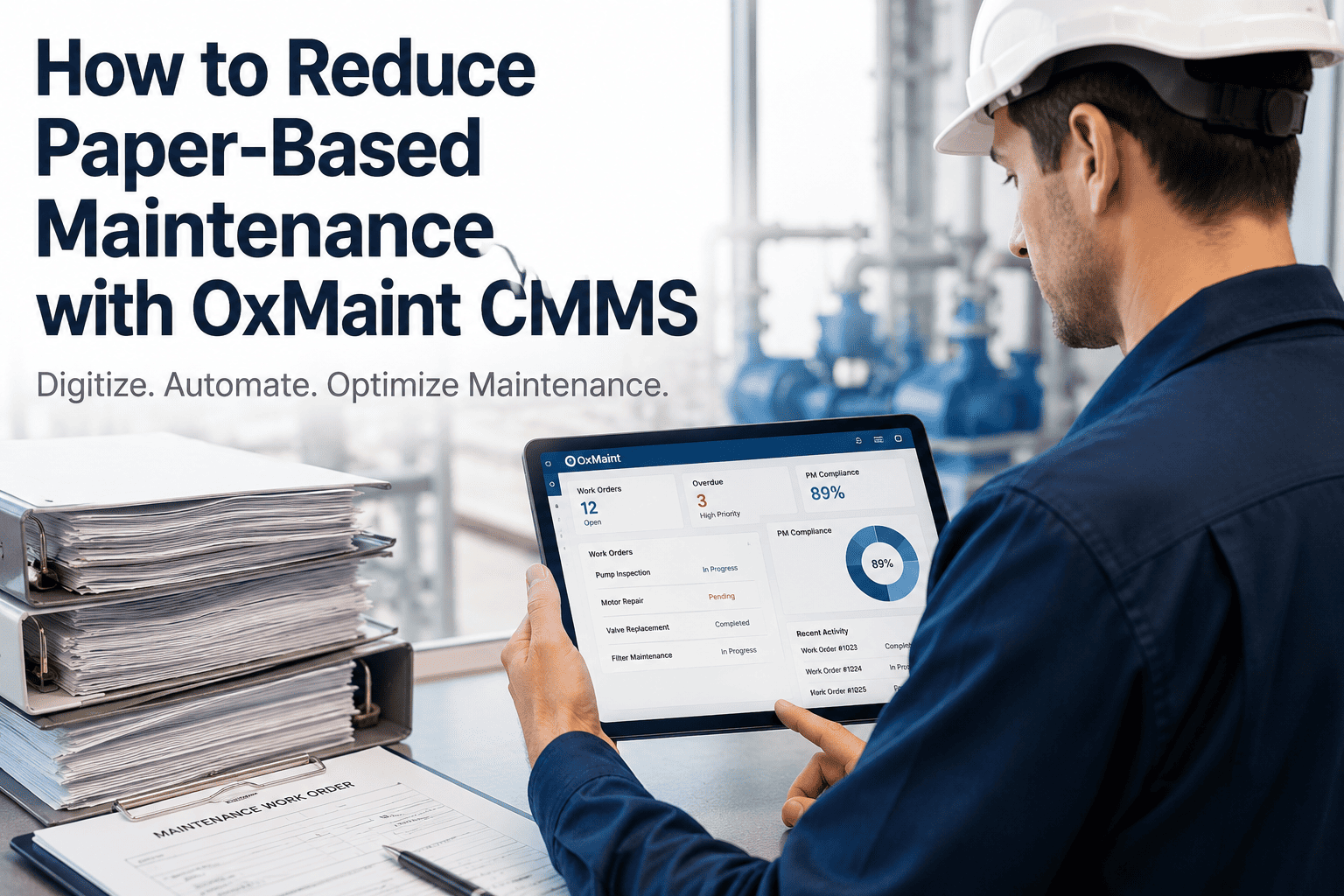
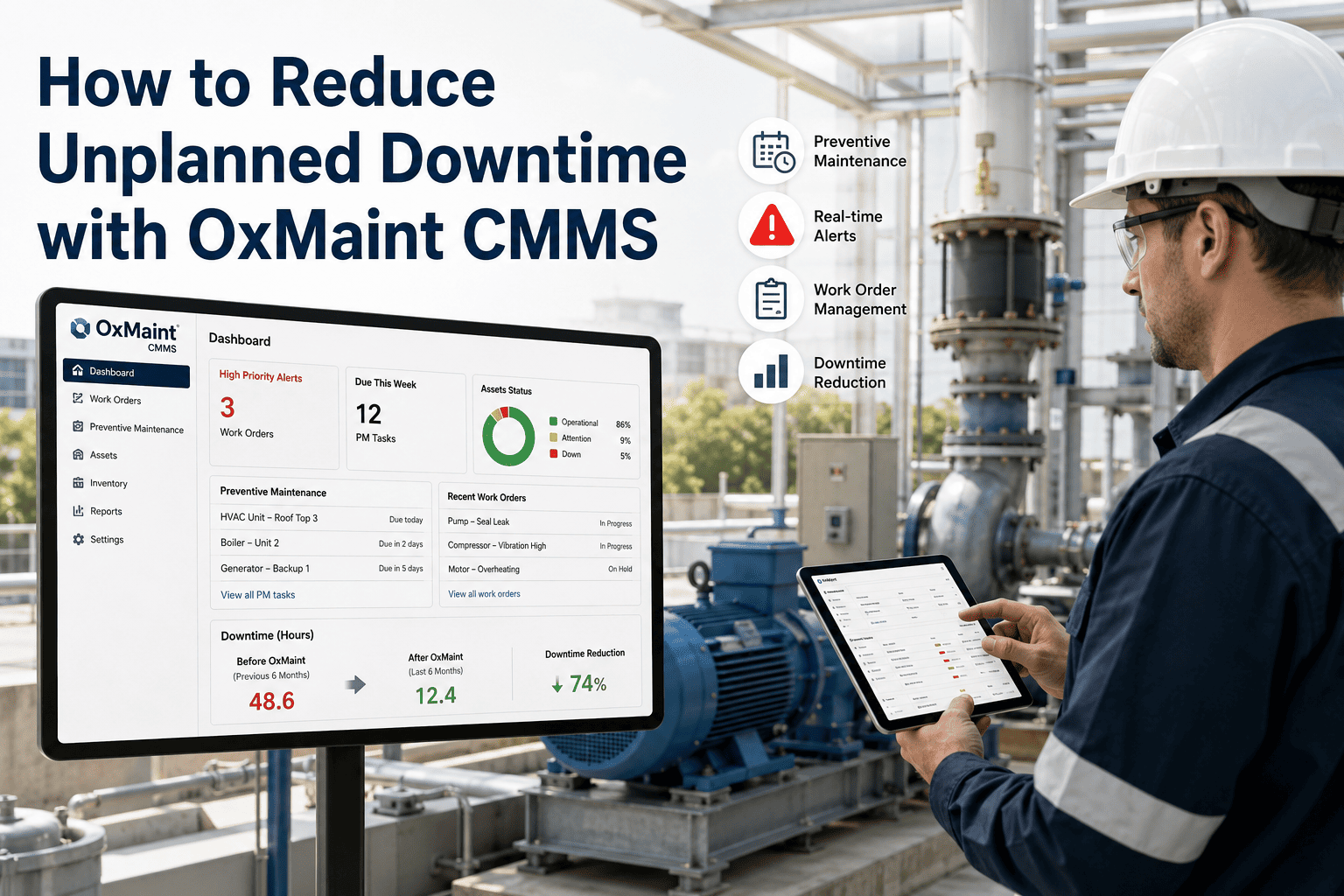
Paper-based maintenance systems are costing hospitality facilities more than they realize — missed work orders, lost inspection records, duplicate data entry, and zero visibility into technician performance. A 2023 BOMA study found that facilities still relying on paper logs spend 28% more per square foot on reactive repairs than those using digital CMMS platforms. The root issue is not the maintenance team — it is the system they are working in. OxMaint CMMS digitizes every step of the maintenance workflow, from work order creation to cost tracking, eliminating paper dependency and giving facility managers real-time control over downtime and costs. This guide walks through how to reduce paper-based maintenance, what to measure, and what results to expect.
Why Paper-Based Maintenance Breaks Down in Hospitality
Hotels, resorts, and hospitality venues operate across multiple floors, buildings, and asset categories simultaneously. Paper maintenance systems fail at scale because they depend on physical handoffs, manual record-keeping, and end-of-day reporting that is always behind real operations.
Ready to Replace Paper with a Live Dashboard?
OxMaint digitizes your entire maintenance workflow from day one — no extra hardware, no complex setup. Your team works, the system tracks everything automatically.
The Digital Transition Checklist: Paper to CMMS in 60 Days
Paper vs. Digital CMMS: Cost and Efficiency Comparison
| Metric | Paper-Based System | OxMaint CMMS | Improvement |
|---|---|---|---|
| Work Order Creation Time | 8–12 minutes (manual) | 90 seconds (mobile) | 85% faster |
| MTTR (Mean Time to Repair) | 4.5–6 hours average | 75–110 minutes | 60–70% reduction |
| PM Compliance Rate | 45–55% (manual scheduling) | 82–91% (automated) | +35–45 points |
| Audit Prep Time | 2–4 days (record assembly) | Under 30 minutes | 95% reduction |
| Maintenance Cost per Sq Ft | $4.80–$6.20 (reactive-heavy) | $3.10–$4.00 | 20–35% lower |
| Duplicate Data Entry | Every work order (3 entries) | Zero — auto-logged | 100% eliminated |
How OxMaint Eliminates Paper Without Disrupting Operations
Expert Review
The transition from paper to digital CMMS is not a technology project — it is a visibility project. The facilities that struggle longest with paper are the ones where managers have learned to operate without data, making reactive decisions based on intuition. When you introduce a live CMMS, the first thing that changes is not the maintenance — it is the conversation. Managers start asking different questions: why is MTTR rising on the third floor? Why is one technician's first-time fix rate 20% below the team average? Paper never let you ask those questions because it never had the answers. Digital maintenance platforms like OxMaint do not just replace paper — they create the operating intelligence that hospitality facilities have been missing entirely.
Results Hospitality Facilities See After 12 Months with OxMaint
Your Paper Records Are Hiding the Real Cost of Downtime
OxMaint surfaces that cost automatically — from day one, without extra data entry. See what your facility's maintenance data actually looks like in a live dashboard.
Frequently Asked Questions
How long does it take to fully eliminate paper-based maintenance with OxMaint?
Most hospitality facilities complete the transition from paper to fully digital within 45–60 days. The first two weeks focus on asset data import and QR code setup. Weeks three and four shift all new work orders to mobile. By day 60, the average OxMaint customer is running at 80%+ PM compliance with zero paper-based work orders in the system. The critical success factor is mobile adoption by the technician team — which typically happens within the first two weeks because mobile completion is faster than any paper alternative they were using before.
Will technicians actually use a mobile CMMS instead of paper?
Adoption rates are higher than most managers expect — because OxMaint mobile is built for technicians, not for managers. Work orders are single-screen, QR-scan-to-open, and one-tap-to-close. Technicians get full asset history before every job, which reduces return trips. In hospitality facilities, mobile adoption typically reaches 90%+ within three weeks because the alternative — walking back to a desk, filling a paper form, and waiting for supervisor assignment — is demonstrably slower. Resistance is almost always eliminated within the first work order cycle when technicians experience the time savings directly. Learn more at oxmaint.ai.
How does OxMaint handle downtime cost tracking that paper systems cannot?
OxMaint calculates downtime cost automatically by combining asset criticality ratings, labor hours logged to each work order, and parts costs pulled from inventory. When a refrigeration unit in a hotel kitchen goes down, OxMaint timestamps the fault, tracks technician response and repair time, logs parts used, and produces a cost-per-event figure without any manual calculation. Over time, this creates a cost-per-asset history that identifies which equipment is generating disproportionate downtime expense — information that directly informs CapEx decisions and PM frequency adjustments that paper systems can never provide.
Can OxMaint work for hospitality facilities with multiple properties?
Yes. OxMaint's portfolio dashboard displays every KPI — PM compliance, MTTR, reactive work ratio, downtime cost — across all properties simultaneously. Directors can drill from portfolio view to building to asset to individual work order in three clicks. Custom alerts notify the right manager the moment a property crosses a defined threshold — for example, when reactive work at a specific hotel exceeds 25% for two consecutive weeks. This multi-site visibility is what makes OxMaint particularly powerful for hospitality groups managing 5, 10, or 20 properties where monitoring each site individually is not operationally practical.


.png)