Not every incident report starts with a serious injury. Most start with something smaller — a near miss, a slip that didn't turn into a fall, a piece of equipment that behaved strangely for a second. Whether that moment turns into a usable record or just a story someone tells in the break room depends entirely on how easy it is to file the report right then, not three days later from memory. Sign up to give every employee a fast, guided way to file a report the moment something happens.
Why It Exists
A general workplace incident report has to work for every kind of event, from a minor first-aid case to a near miss nobody got hurt in, filed by anyone from a new hire to a twenty-year veteran. OSHA 1904 recordkeeping depends on that report being complete and timely, which means the form itself either makes accurate reporting easy or quietly discourages it every time someone has to dig up a paper form or remember a login nobody uses often.
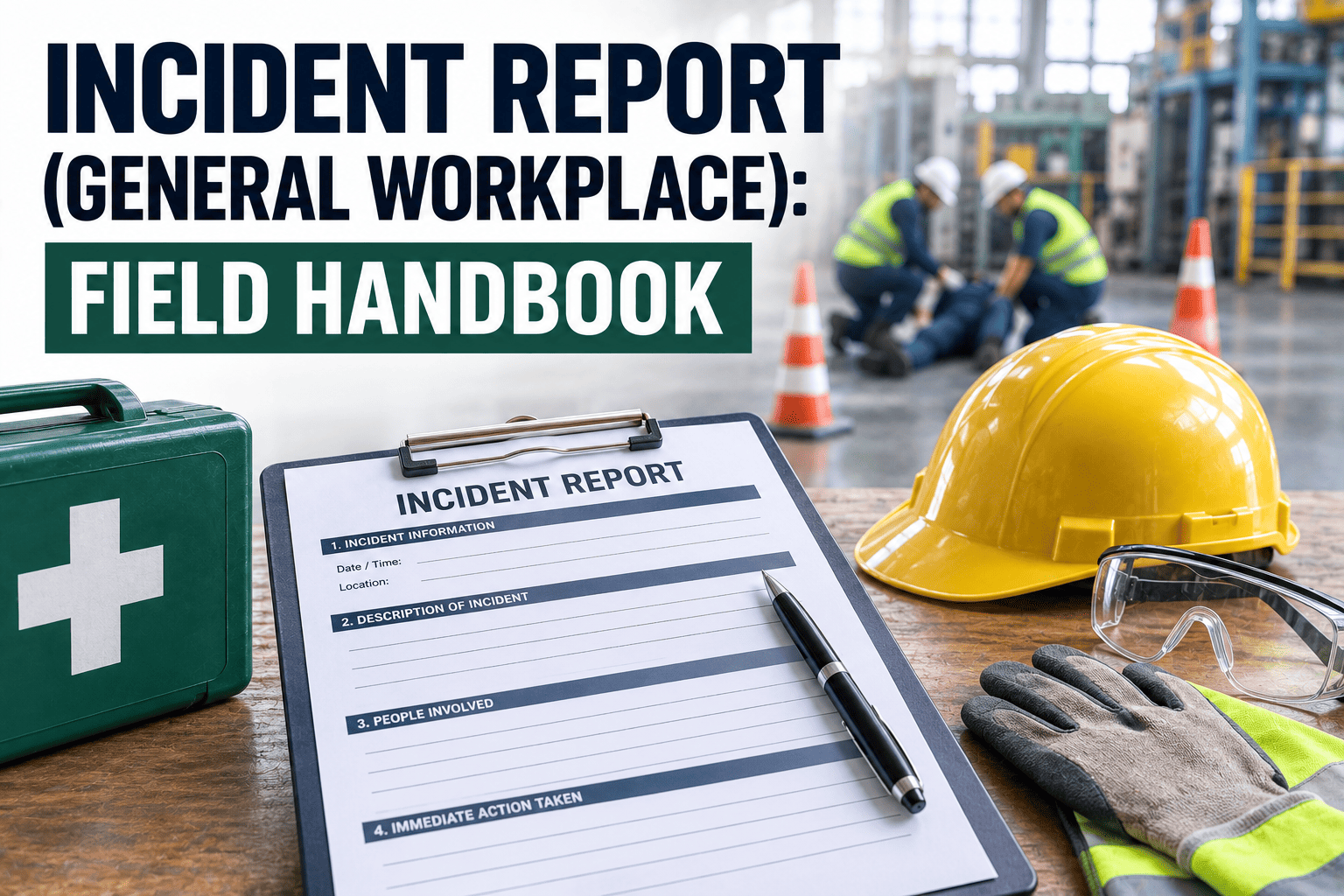
What Belongs In Every General Incident Report
Who, What, When, Where
The basic facts captured accurately and immediately, before details blur with retelling or time
Severity Classification
Near miss, first aid, recordable, or lost time, sorted correctly from the start so nothing gets under-reported
Photo Documentation
A picture of the area or equipment involved, taken before conditions change or get cleaned up
Immediate Action Taken
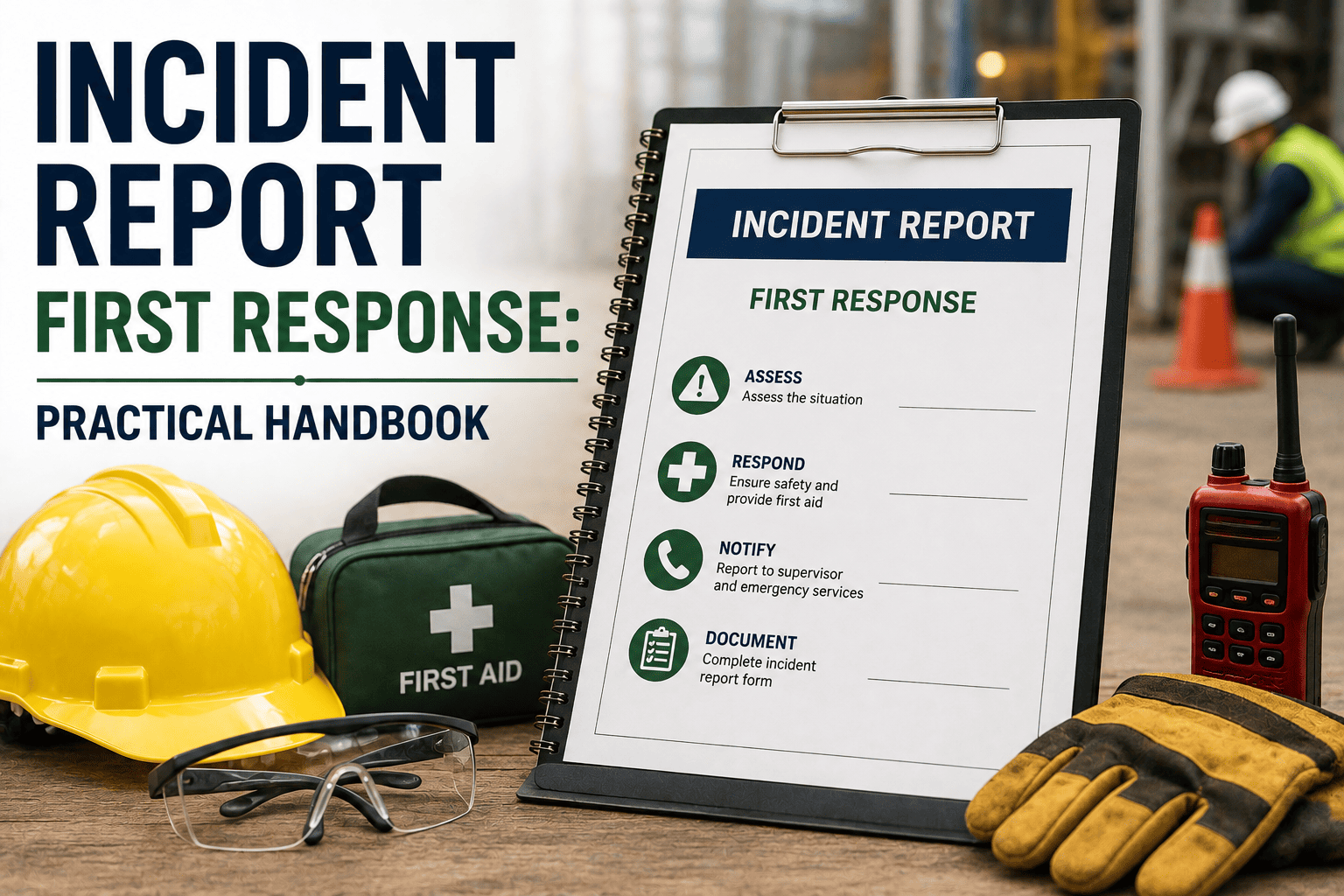
What was done on the spot, separate from the longer-term corrective action that follows the full review
Filing A Report That Actually Gets Used
File From Wherever The Incident Happened
A mobile-accessible form filed on the spot captures more accurate detail than one filled out later at a desk
Classify Severity Before Moving On
Getting the category right at intake avoids a reclassification argument weeks later during review
Route To The Right Reviewer Automatically
A report sitting unassigned in an inbox is a report that misses its follow-up window entirely
4
Close The Loop With Documented Follow-Up
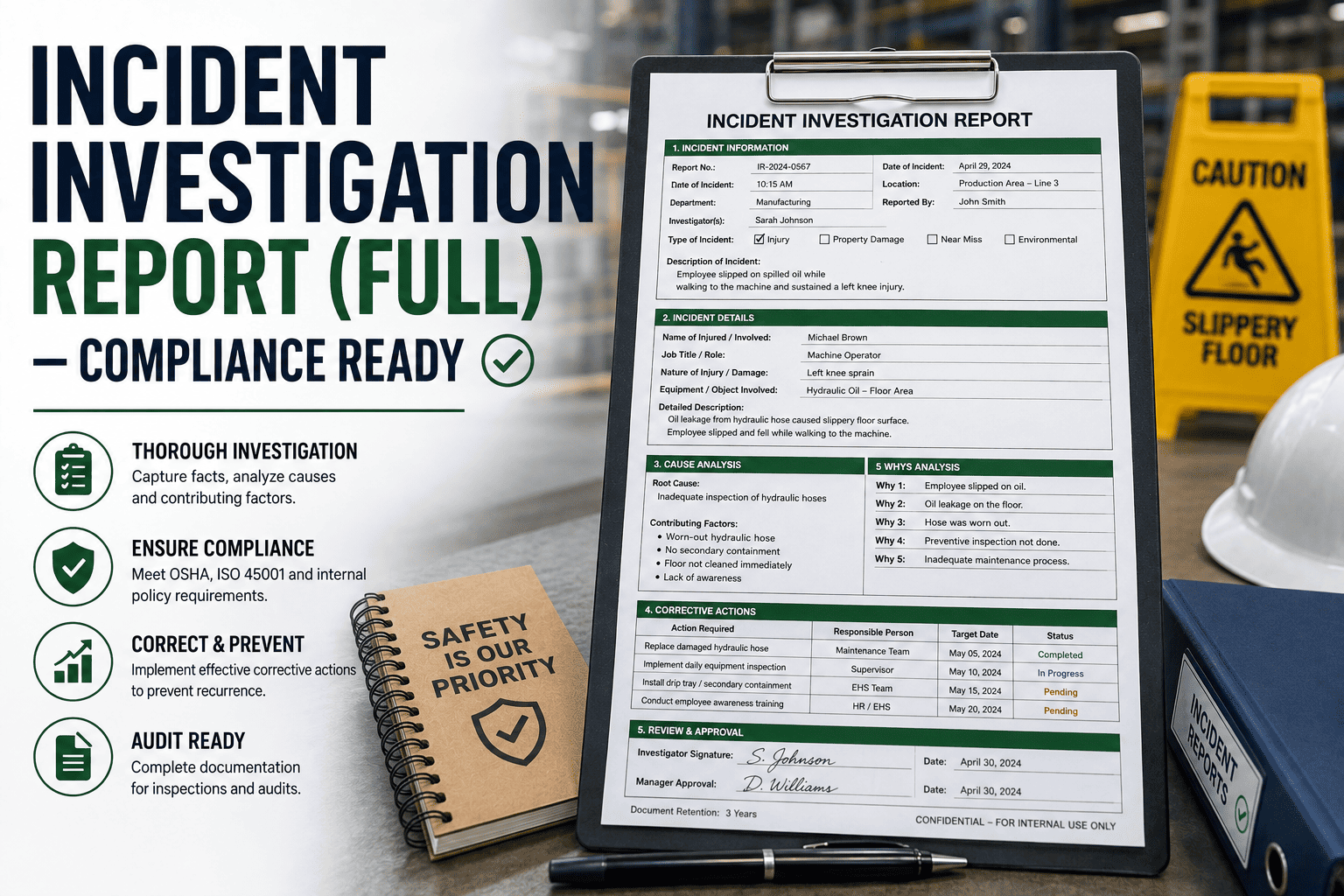
Every report gets a resolution logged against it, not left open indefinitely with no visible outcome
Make Reporting Easy Enough That People Actually Do It
OxMaint gives every employee a guided mobile form to file a report on the spot, with photo capture, automatic routing, and follow-up tracking built in. Sign up for a free trial to roll out easy incident reporting across your team, or book a demo to see it running on a live safety program.
Paper Form vs Mobile-First Reporting
| Factor |
Paper Form |
Mobile-First |
| Filing location |
Often filed later at a desk or office |
Filed at the incident location, in the moment |
| Near-miss reporting rate |
Typically low, since minor events feel like extra effort |
Higher, since filing takes under a minute from a phone |
| Routing to reviewer |
Manual handoff, dependent on someone remembering |
Automatic, based on severity and location rules |
| Follow-up visibility |
Easy to lose track of once the form is filed |
Status visible until the report is formally closed |
The Payoff
Most serious incidents were preceded by smaller ones that went unreported, which means the near misses a general workplace report captures are often the earliest warning a facility gets. Making it easy to report anything, not just the events that clearly cross a threshold, is what turns a reporting program into an actual early-warning system instead of a formality.
Frequently Asked Questions
Q
Should near misses be reported the same way as actual injuries?
Yes, near misses should go through the same reporting channel, since they often reveal the same underlying hazard an injury would have, just without the consequence, making them valuable evidence for preventing a future event.
Q
Who is responsible for classifying incident severity?
The employee filing the report typically makes an initial classification, but it should be reviewed and confirmed by an EHS lead or supervisor, since accurate classification affects both OSHA recordability and how urgently a follow-up is handled.
Q
What's the difference between immediate action and corrective action on a report?
Immediate action is whatever was done on the spot to make the situation safe, like isolating equipment or applying first aid, while corrective action is the longer-term fix identified after review that prevents the same incident from happening again.
Give Every Employee A Fast Way To Report What They See
OxMaint links mandatory safety checks, digital LOTO and permit workflows, photo evidence, and e-signatures directly to asset records, so every incident report comes with a defensible, real-time audit trail. Sign up for a free trial to roll out digital incident reporting across your team, or book a demo to see it working on live safety data.