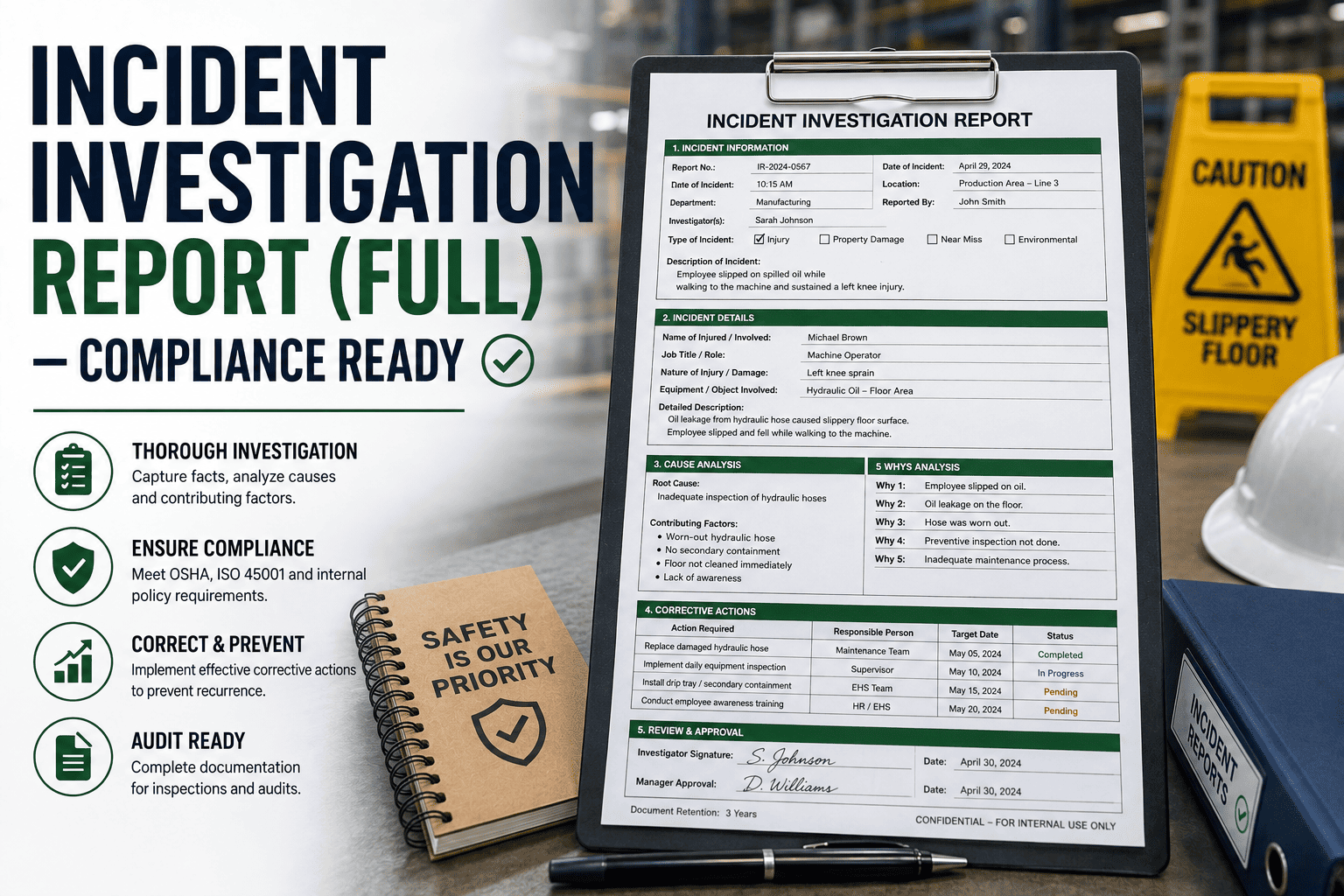
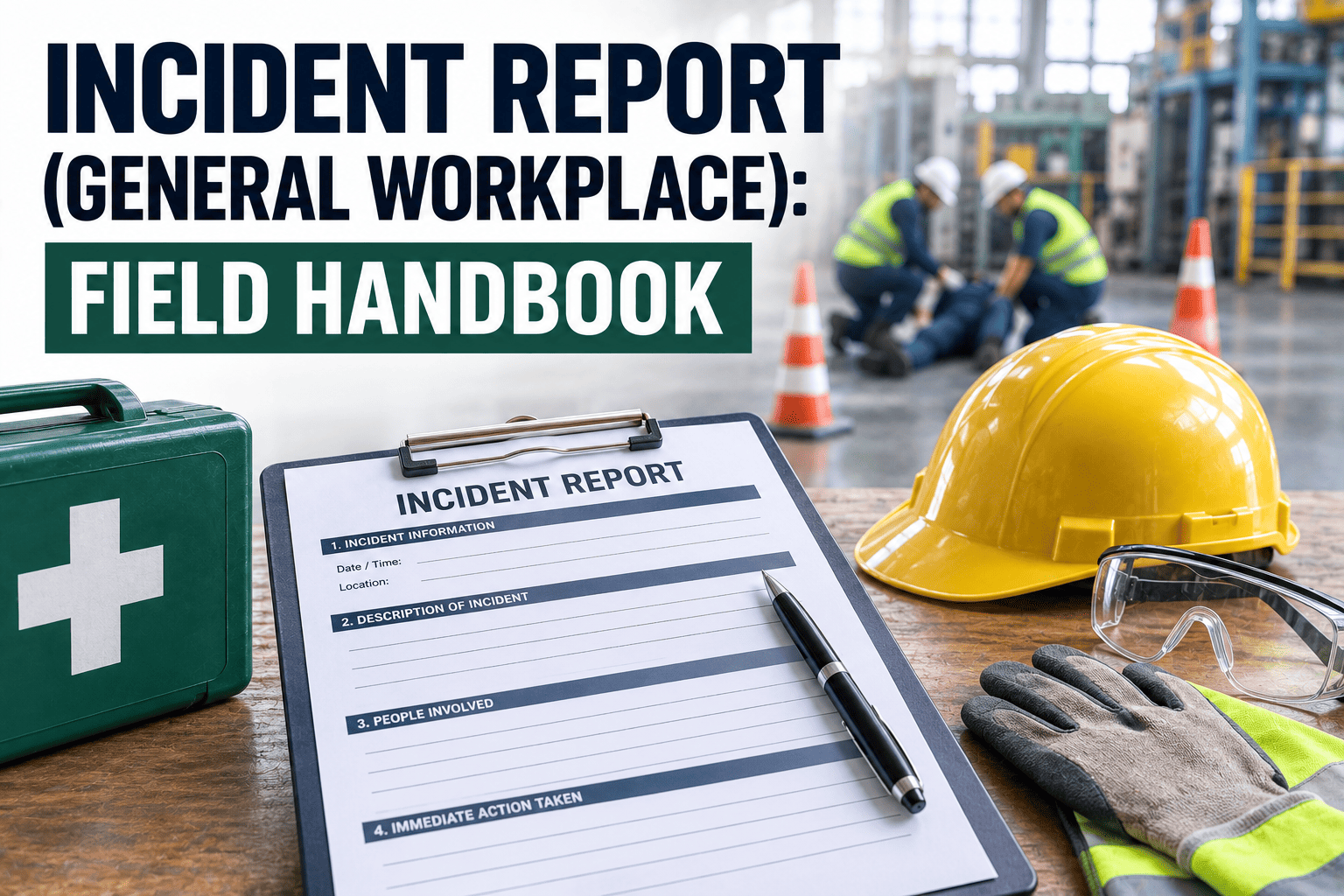
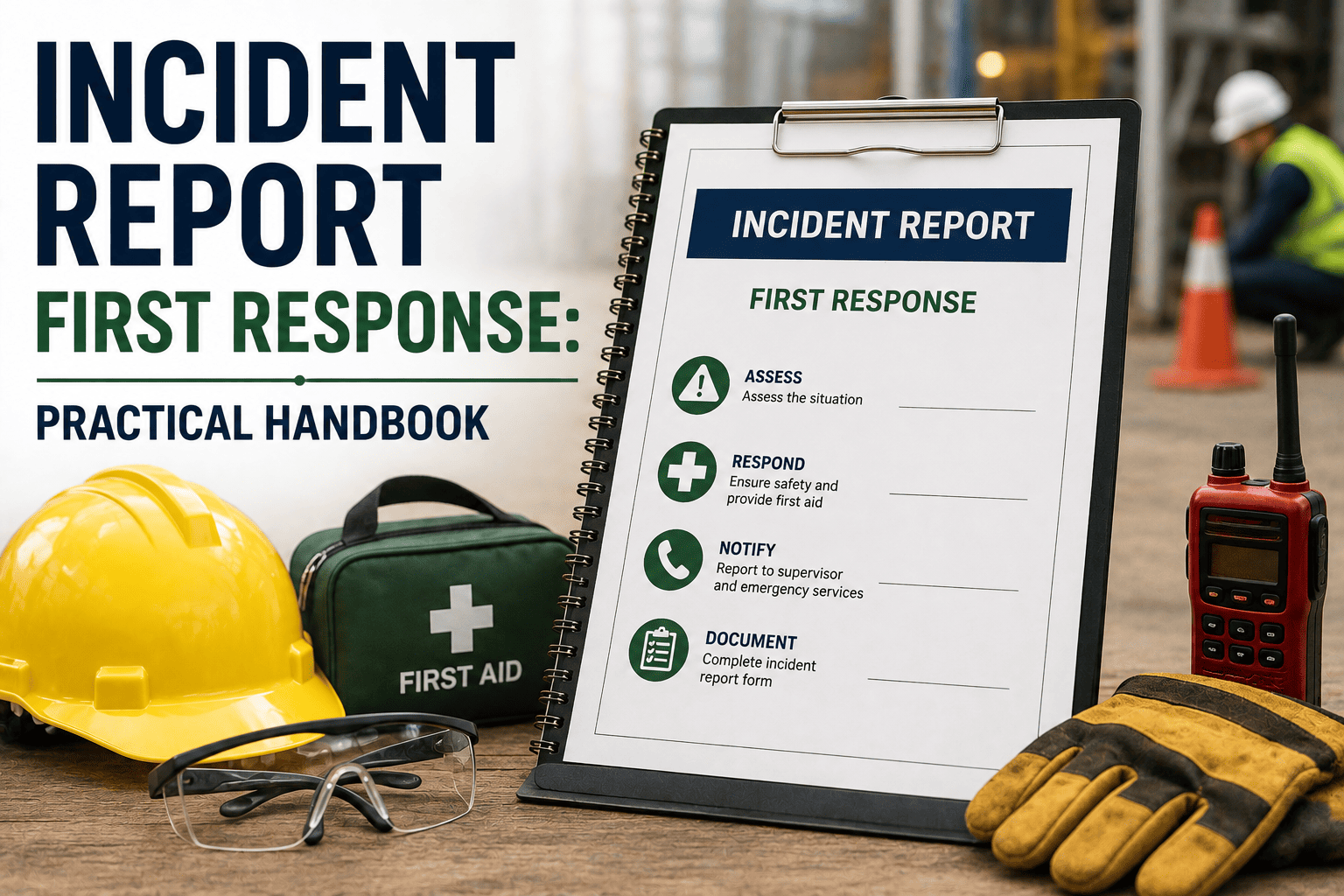
Most incident investigation reports look fine right up until an auditor asks for the corrective action follow-up, the timestamp on the root cause interview, or the photo that was supposed to be attached. The report exists, but the evidence trail behind it doesn't hold together. That gap between "we investigated it" and "we can prove exactly how" is where OSHA 1904 compliance programs actually fail. Sign up to capture every investigation step, photo, and signature in one auditable record from the start.
Why It Exists
A paper form filled out days after an incident, with details reconstructed from memory, doesn't hold up the same way a record captured in the moment does. OSHA 1904 doesn't just want to know an incident happened — it wants to see who investigated it, what was found, what corrective action followed, and whether that action was actually completed, all traceable back to the original event.
What A Defensible Investigation Record Actually Contains
Photo Evidence
Timestamped photos of the scene, equipment, and conditions captured before anything is moved or cleaned up
Root Cause Analysis
A structured method behind the conclusion, not just a stated cause with no reasoning trail to support it
Corrective Action Tracking
Every recommended fix tied to an owner, a due date, and proof it was actually completed, not just proposed
E-Signature & Timestamp
Verified sign-off from investigators and reviewers, time-stamped in a way a paper signature can't replicate
Running An Investigation That Holds Up Under Audit
Capture The Scene Immediately
Photos, witness names, and equipment condition recorded on the spot, before conditions change or memory fades
Interview Witnesses Separately
Individual accounts recorded before accounts get compared and unintentionally aligned with each other
Trace The Root Cause, Not Just The Trigger
The immediate cause is rarely the whole story; the investigation should work back to the contributing conditions
4
Assign And Verify Corrective Action
Every fix gets an owner and a due date, and closure requires proof it was completed, not just marked done
Stop Rebuilding Evidence After The Fact
OxMaint captures photos, e-signatures, and corrective action status at the moment of investigation, so the audit trail already exists instead of needing to be reconstructed. Sign up for a free trial to digitize your incident investigation workflow, or book a demo to see it running on a live safety program.
Paper-Based Investigation vs Digital Investigation
| Factor |
Paper-Based |
Digital |
| Evidence capture |
Photos and notes often added after the fact |
Time-stamped at the moment of capture |
| Corrective action follow-up |
Tracked in a separate spreadsheet, easy to lose |
Linked directly to the original incident record |
| Sign-off verification |
Handwritten signature, hard to date-verify |
E-signature with an independently verifiable timestamp |
| Audit readiness |
Requires manually assembling records before a visit |
Exportable on demand, already organized by asset and date |
The Payoff
A strong investigation record does more than satisfy an inspector — it's the evidence base that stops a similar incident from happening again. Teams that link every investigation to its corrective action, and every corrective action to its equipment history, build a safety program that protects people first and produces defensible documentation as a byproduct, not the other way around.
Frequently Asked Questions
Q
What does OSHA 1904 actually require beyond filling out a report?
Recordkeeping rules require accurate, timely documentation of the incident and, in practice, evidence that the investigation was thorough enough to identify a real cause and that any resulting corrective action was tracked through to completion, not just proposed.
Q
Why interview witnesses separately instead of as a group?
Group interviews tend to converge on a single shared narrative, even unintentionally, while separate accounts preserve the individual details that often matter most for identifying the actual root cause.
Q
What makes a corrective action count as closed for audit purposes?
Marking a task complete isn't enough on its own; auditors generally want to see verification that the fix was actually implemented, such as a follow-up inspection or a photo confirming the change, tied back to the original finding.
Build A Safety Program That Protects People And Survives Audit
OxMaint links mandatory safety checks, digital LOTO and permit workflows, photo evidence, and e-signatures directly to asset records, so every incident investigation comes with a defensible, real-time audit trail. Sign up for a free trial to digitize your incident investigation program, or book a demo to see it working on live safety data.